
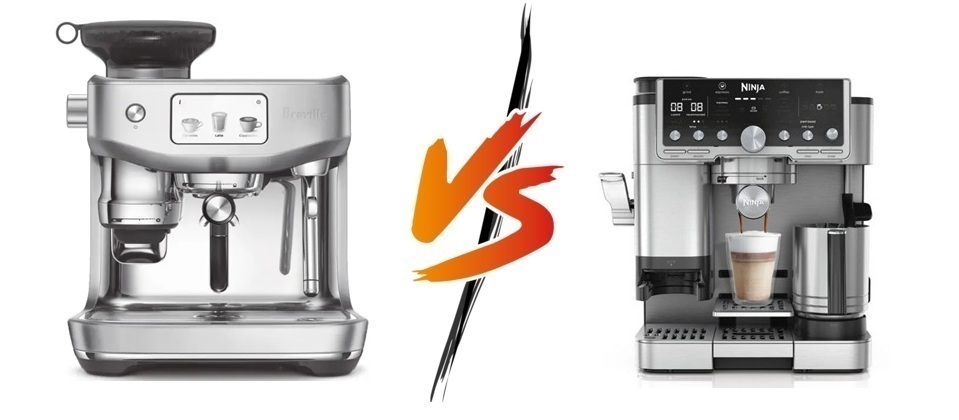
If you’ve been shopping for a premium home espresso machine lately, chances are you’ve come across the Breville Oracle Jet and the Ninja Luxe Café Pro. These two machines sit in very different corners of the espresso world, yet they target a surprisingly similar customer: someone who wants café-style drinks at home without needing years of barista experience.
The Oracle Jet is Breville’s attempt to push automated espresso closer to true specialty coffee territory. It combines assisted tamping, automatic milk texturing, and touchscreen controls into a machine that feels almost commercial. The Ninja Luxe Café Pro, on the other hand, approaches espresso from a convenience-first angle. It promises versatility, easier operation, and strong performance at a more approachable price.
After spending considerable time examining both machines, testing different beans, pulling multiple shot styles, frothing milk for cappuccinos and flat whites, and living with the day-to-day quirks of each machine, one thing became clear: these machines are designed for very different kinds of coffee drinkers.
This review dives deep into every major category that matters in real-world ownership: build quality, usability, espresso performance, grinders, milk systems, maintenance, noise, energy consumption, and long-term value. If you’re trying to decide between the two, this comparison should help you figure out which one fits your habits, budget, and expectations.
Breville Oracle Jet vs Ninja Luxe Café Pro Comparison Chart
If you click the links below, under the product images, you will be redirected to Amazon.com. In case you then decide to buy anything, Amazon.com will pay me a commission. This doesn’t affect the honesty of this review in any way though.
| Feature | Breville Oracle Jet | Ninja Luxe Café Pro |
|---|---|---|
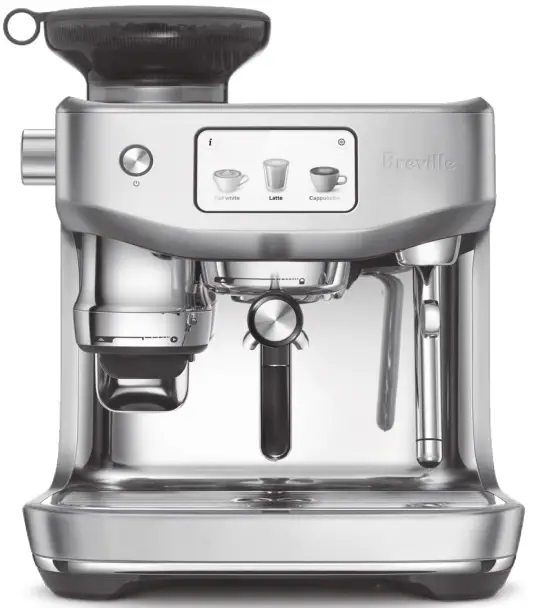 | 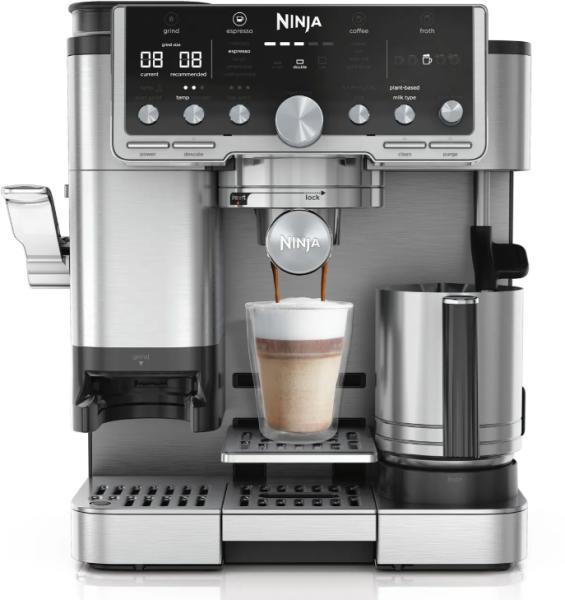 | |
| Check the best price on Amazon | Check the best price on Amazon | |
| Machine Type | Semi-automatic espresso machine with automation features | All-in-one espresso and specialty coffee machine |
| Target User | Espresso enthusiasts and advanced home users | Casual users and convenience-focused households |
| Build Material | Primarily stainless steel and metal construction | Combination of plastic and metal finishes |
| Footprint | Large, café-style countertop presence | More compact and kitchen-friendly |
| Boiler System | Dual boiler system | Thermoblock / single-heating style system |
| Heat-Up Time | Fast for a dual boiler machine | Very quick |
| Grinder Type | Integrated conical burr grinder | Integrated burr grinder |
| Grind Adjustment | Fine incremental adjustments | Simplified adjustment system |
| Automatic Tamping | Yes | No |
| User Interface | Full-color touchscreen display | Simplified digital interface |
| Drink Customization | Extensive | Moderate |
| Espresso Quality | Specialty café-level potential | Consistently good home espresso |
| Best For | Straight espresso and specialty coffee | Milk-based drinks and convenience |
| Milk Frothing | Automatic and manual steam wand options | Assisted milk frothing system |
| Microfoam Quality | Excellent café-style microfoam | Good consumer-level foam texture |
| Latte Art Capability | Very strong | Limited compared to Breville |
| Simultaneous Brew & Steam | Yes | No |
| Water Reservoir | Large removable tank | Removable tank |
| Bean Hopper Capacity | Large capacity hopper | Medium capacity hopper |
| Cleaning Complexity | Moderate to high | Low to moderate |
| Guided Maintenance | Yes | Yes |
| Noise Level | Moderate | Slightly quieter |
| Energy Usage | Higher due to dual boilers | More energy efficient |
| Workflow Style | Enthusiast-focused and interactive | Fast and beginner-friendly |
| Learning Curve | Moderate | Easy |
| Best Drink Types | Espresso, flat whites, cappuccinos | Lattes, cappuccinos, flavored drinks |
| Price Category | Premium / luxury | Mid-range premium |
| Overall Strength | Performance and customization | Convenience and accessibility |
| My individual reviews | Breville Oracle Jet review | Ninja Luxe Café Pro review |
Design & Build Quality
The design and construction of an espresso machine matter far more than most people initially realize. Before you even taste the coffee, the physical experience of using the machine shapes your opinion every single morning. How solid the portafilter feels when locking into place, how stable the machine remains during grinding, how intuitive the layout is, and even how much counter space it occupies all contribute to long-term satisfaction.
This is especially true when comparing the Breville Oracle Jet and the Ninja Luxe Café Pro because these machines approach design from two very different philosophies.
The Breville Oracle Jet feels like it was designed by people obsessed with recreating the café experience at home. The Ninja Luxe Café Pro feels like it was designed by people focused on making specialty coffee approachable for busy households. Neither approach is inherently better, but they create very different ownership experiences.
Breville Oracle Jet Design Philosophy
The first thing you notice about the Oracle Jet is its sheer presence. This machine looks serious. It has the visual weight and confidence of a premium kitchen appliance that expects to become the centerpiece of your coffee setup.
Breville leaned heavily into brushed stainless steel construction, and it gives the machine an upscale appearance that immediately separates it from entry-level espresso machines. The metal surfaces reflect light beautifully without looking overly flashy. It feels modern without becoming sterile or cold.
The proportions are substantial. The Oracle Jet is both tall and wide, with enough physical mass that it resembles compact commercial café equipment more than a typical home appliance. When you place it on a counter, it commands attention.
That size has advantages and disadvantages.
On the positive side, the larger chassis contributes to stability. During grinding and brewing, the machine barely moves. There’s no rattling or shifting when inserting the portafilter. Everything feels anchored and deliberate. The extra internal space also allows Breville to incorporate dual boilers and advanced internal systems without making the machine feel cramped.
On the negative side, the Oracle Jet requires genuine kitchen commitment. This is not a machine you casually tuck into a corner after use. You need dedicated counter space, overhead clearance for the bean hopper, and enough surrounding room to comfortably access the water tank and steam wand.
For people with large kitchens, this may not matter at all. In smaller apartments, however, the Oracle Jet can dominate the workspace.
Still, there’s something undeniably satisfying about the machine’s physical construction. The drip tray slides smoothly. The portafilter has reassuring heft. The steam wand moves with resistance that feels intentional rather than stiff. Even small interactions feel engineered rather than assembled.
One area where Breville deserves praise is balance between luxury and usability. Some premium espresso machines look beautiful but feel awkward in practice. The Oracle Jet generally avoids this problem. Controls are logically positioned, maintenance access is straightforward, and workflow feels carefully considered.
The touchscreen deserves specific mention because it plays such a major role in the machine’s overall design identity. Unlike older espresso machines covered in buttons and switches, the Oracle Jet embraces a cleaner, more modern interface. The display is responsive, bright, and integrated naturally into the front panel instead of looking like an afterthought.
Importantly, the screen doesn’t cheapen the machine. On some appliances, touchscreens can feel gimmicky or overly consumer-focused. Here, it actually complements the machine’s premium aesthetic.
Oracle Jet Materials and Build Precision
Beyond appearance, the Oracle Jet genuinely feels expensive in day-to-day handling.
The seams between panels are tight and consistent. The machine has very little flex anywhere in the body. Knobs and handles feel dense and deliberate. These details matter because espresso preparation is tactile by nature.
When spending this much money on a machine, owners expect a certain physical confidence, and the Oracle Jet largely delivers it.
The bean hopper seals securely and removes easily for cleaning. The tamper system integrates cleanly into the machine without feeling bulky or awkward. The hot water dispenser and steam wand both feel durable enough for years of regular use.
Even the sound profile contributes to perceived quality. Mechanical operations feel muted and controlled rather than hollow or plasticky. The machine sounds refined during operation, which subconsciously reinforces the premium experience.
That said, there’s an unavoidable reality with highly advanced espresso machines: complexity.
The Oracle Jet contains numerous internal systems working together simultaneously. Automated tamping, integrated grinding, touchscreen controls, sensors, heating systems, and milk texturing automation all add sophistication, but they also increase potential maintenance concerns over the long term.
From a build perspective, the machine feels extremely well assembled. But because it’s so technologically dense, some buyers may wonder how it will age after years of heavy use.
Ninja Luxe Café Pro Design Philosophy
The Ninja Luxe Café Pro takes an almost opposite approach.
Where the Oracle Jet tries to replicate a professional café environment, the Ninja focuses on simplicity, accessibility, and practical daily use.
Its footprint is noticeably smaller, making it easier to integrate into normal kitchens. This alone will matter enormously for many buyers. Counter space is valuable, and the Ninja feels designed with realistic home environments in mind.
The visual design is cleaner and less intimidating than the Breville. Instead of looking like café equipment, it resembles a polished consumer appliance with coffee-focused functionality.
There’s less stainless steel and more high-quality plastic throughout the construction. Normally, that might sound like a criticism, but Ninja actually uses materials intelligently here. The machine doesn’t feel cheap. Instead, it feels efficient and thoughtfully cost-controlled.
Panels fit together well, and the overall construction is sturdier than many machines in its category. The lighter weight also makes the machine easier to reposition or clean around, which becomes surprisingly important during everyday ownership.
One thing the Ninja does particularly well is reducing visual clutter. The controls are straightforward, the layout feels approachable, and nothing about the machine screams “complicated.” That matters because many people find traditional espresso machines intimidating before they even start brewing.
The Ninja feels inviting in a way that the Oracle Jet sometimes does not.
Ninja Build Quality in Daily Use
Although the Luxe Café Pro lacks the heavy metal construction of the Oracle Jet, it still performs well in daily handling.
The drip tray is easy to remove and clean. Water reservoir access is simple. The grinder integration feels practical rather than overly ambitious. Everything about the machine prioritizes convenience.
The buttons and controls don’t have the same premium tactile feel as the Breville, but they’re responsive and functional. More importantly, the machine feels durable enough for consistent household use.
The lighter construction does create a slightly less stable feeling during grinding and brewing compared to the Oracle Jet. There’s a bit more vibration and movement overall. However, it never crosses into feeling flimsy.
In many ways, the Ninja’s greatest design strength is restraint. It doesn’t try to imitate commercial espresso equipment unnecessarily. It understands its audience and focuses on making the coffee experience approachable instead of performative.
That makes the machine feel less intimidating for beginners and more manageable for casual daily use.
Which Machine Feels Better Built?
Purely from a materials and engineering standpoint, the Breville Oracle Jet is the more impressive machine.
It feels more luxurious, more substantial, and closer to professional espresso equipment. The stainless steel construction, integrated systems, and refined tactile experience justify its premium positioning.
But build quality is not only about luxury. It’s also about how naturally a machine fits into your daily life.
The Ninja Luxe Café Pro succeeds because it prioritizes practicality. It’s easier to place, easier to move, less visually overwhelming, and more approachable overall.
The Oracle Jet feels like a machine for people passionate about coffee as a hobby.
The Ninja feels like a machine for people who simply want excellent coffee without redesigning their kitchen around it.
Both approaches work. The better choice depends entirely on what kind of ownership experience you want every morning.
User Interface & Ease of Use
An espresso machine can make incredible coffee and still become frustrating to live with if the user experience feels complicated, inconsistent, or overly demanding. This is one of the biggest differences between machines designed for coffee enthusiasts and machines designed for everyday households.
The Breville Oracle Jet and the Ninja Luxe Café Pro approach usability from completely different angles, and honestly, this category may matter more than espresso quality for many buyers.
Because here’s the truth most people discover after buying a high-end coffee machine: convenience affects how often you actually use it.
A machine can theoretically produce world-class espresso, but if the process feels exhausting at 6:30 in the morning before work, the experience starts to lose its appeal surprisingly fast.
That’s why interface design matters so much. It shapes whether the machine feels empowering or intimidating. Fun or tedious. Relaxing or stressful.
And in this comparison, the Oracle Jet and Luxe Café Pro create two very different daily routines.
Breville Oracle Jet User Experience
The Oracle Jet sits in an interesting middle ground between traditional semi-automatic espresso machines and fully automated coffee systems.
Breville clearly designed it for users who want involvement in the espresso-making process without needing professional barista training. The machine automates several difficult steps while still preserving enough manual interaction to make the experience feel authentic.
That balance is one of the Oracle Jet’s greatest strengths.
At the center of the experience is the touchscreen interface. Breville has improved dramatically in this area over the years, and the Oracle Jet’s display feels modern, polished, and genuinely useful rather than decorative.
The screen is bright, responsive, and logically organized. Menus are intuitive enough that most people can navigate basic drink settings quickly without needing to constantly reference the manual.
Drink customization is extensive. Users can adjust:
- Shot volume
- Brew temperature
- Milk temperature
- Milk texture
- Grind settings
- Extraction timing
- Drink presets
- Brewing profiles
For coffee enthusiasts, this level of control feels fantastic. The machine encourages experimentation without becoming overwhelming immediately.
One thing Breville does particularly well is guided interaction. Instead of expecting users to already understand espresso terminology and workflow, the Oracle Jet provides prompts and visual assistance throughout the process.
For example, maintenance reminders are clear and easy to follow. Cleaning cycles are explained step-by-step. Setup instructions feel approachable rather than technical.
This reduces one of the biggest frustrations many people experience with premium espresso machines: the feeling that you need a part-time engineering degree to operate them properly.
Still, despite Breville’s efforts to simplify the process, the Oracle Jet absolutely has a learning curve.
The Learning Curve of the Oracle Jet
The Oracle Jet is not difficult in the traditional sense, but it does require engagement.
This is not a machine where you press one button and completely disconnect from the process. You still need to understand basic espresso concepts if you want consistently excellent results.
You’ll eventually learn how grind size affects extraction. You’ll notice how different beans behave differently. You’ll probably experiment with shot timing and milk texture. Over time, you become more involved because the machine invites curiosity.
For some people, that’s exactly the appeal.
Using the Oracle Jet feels rewarding because it creates a sense of participation. The machine automates tedious inconsistencies, like tamping pressure, while still letting you feel connected to the brewing process itself.
Locking in the portafilter still feels satisfying. Adjusting settings still feels meaningful. Watching espresso flow into the cup still carries some ceremony.
That emotional side of usability matters more than people often admit.
However, not everyone wants coffee preparation to become a hobby.
Some users may eventually feel that the Oracle Jet asks for too much attention. The number of settings, variables, and options can become mentally exhausting for people who simply want reliable coffee before work.
Even though the interface itself is well designed, the machine still encourages a level of engagement that casual coffee drinkers may not fully enjoy.
Workflow and Speed on the Oracle Jet
In terms of actual workflow, the Oracle Jet performs impressively well for a machine with this level of capability.
The integrated grinder and automatic tamping system streamline preparation dramatically compared to traditional semi-automatic setups.
Without those features, users would need to:
- Grind coffee separately
- Measure doses manually
- Distribute grounds evenly
- Tamp consistently
- Manage puck preparation carefully
The Oracle Jet simplifies much of that process while still preserving the feel of authentic espresso preparation.
Dual boiler performance also improves workflow significantly. Being able to steam milk and pull espresso simultaneously makes the machine feel efficient and café-like during busy mornings.
This becomes especially noticeable when preparing multiple drinks back-to-back.
Still, the Oracle Jet works best when users slow down slightly and engage with the process. It rewards attention more than speed.
Ninja Luxe Café Pro User Experience
The Ninja Luxe Café Pro takes the opposite approach in many ways.
Where the Oracle Jet tries to preserve the craft of espresso-making, the Ninja focuses on reducing friction as much as possible.
From the moment you power it on, the machine feels approachable.
The controls are simpler. The menus are easier to understand. The machine guides users toward successful drinks without requiring deep coffee knowledge.
This is where Ninja deserves real credit.
Many espresso machines unintentionally create anxiety for beginners. There’s pressure to learn terminology, understand extraction theory, and master preparation techniques. For new users, that can feel intimidating almost immediately.
The Luxe Café Pro removes much of that pressure.
The machine’s interface is designed around clarity and reassurance. Instead of overwhelming users with endless variables, it simplifies choices into manageable steps.
This makes the learning process dramatically easier.
You can hand the Ninja to someone who has never used an espresso machine before, and there’s a good chance they’ll produce a decent drink on their first attempt.
That accessibility is genuinely impressive.
Guided Brewing and Everyday Convenience
One of the Ninja’s biggest strengths is how naturally it fits into busy routines.
The workflow feels fast, clean, and predictable.
You don’t need to think very hard to get consistent results. The machine minimizes decision fatigue by simplifying the brewing process.
For many households, this matters more than advanced customization.
Coffee routines happen early in the morning when people are tired, distracted, and often rushing. Machines that demand excessive focus can eventually feel burdensome no matter how good the coffee tastes.
The Ninja avoids that problem extremely well.
Its guided brewing system helps users avoid common mistakes automatically. Grind adjustments feel less intimidating. Drink preparation feels less technical.
There’s also less emotional pressure to “perfect” every shot.
With enthusiast-focused machines like the Oracle Jet, users sometimes become obsessed with optimizing extraction variables constantly. While that can be fun for hobbyists, it can also make coffee preparation feel unnecessarily serious.
The Ninja feels more relaxed.
You make coffee, enjoy it, and move on with your day.
Simplicity vs Customization
The biggest philosophical difference between these machines comes down to control.
The Oracle Jet offers deeper customization and greater precision. Users who enjoy experimentation will appreciate that flexibility enormously.
The Ninja intentionally limits complexity in favor of convenience.
Neither approach is objectively right or wrong.
The Oracle Jet appeals to people who enjoy refining their process over time. It creates room for skill development and deeper engagement with coffee itself.
The Ninja appeals to people who value consistency and simplicity more than technical exploration.
Interestingly, both machines succeed extremely well within their intended goals.
The Oracle Jet never feels dumbed down despite its automation. It still feels sophisticated and capable.
The Ninja never feels confusing despite offering specialty coffee functionality. It remains approachable throughout the ownership experience.
Which Machine Is Easier to Live With?
For pure ease of use, the Ninja Luxe Café Pro wins fairly comfortably.
It’s simpler, faster to learn, less intimidating, and easier to integrate into normal daily routines.
For many people, that will matter more than enthusiast-level customization.
However, “easy” does not always mean “better.”
The Oracle Jet creates a more immersive and rewarding experience for users who genuinely enjoy coffee preparation as part of their morning ritual.
It feels more interactive, more customizable, and more emotionally satisfying for espresso enthusiasts.
The Ninja feels more practical.
The Oracle Jet feels more passionate.
And honestly, that’s the best way to describe the difference between them overall.
Coffee Quality & Brewing Performance
At the end of the day, espresso machines live or die by the coffee they produce. Design matters. Features matter. Touchscreens, grinders, and milk systems all matter. But if the espresso tastes flat, sour, bitter, weak, or inconsistent, none of the extra technology really means much.
This is where the comparison between the Breville Oracle Jet and the Ninja Luxe Café Pro becomes especially interesting because these machines target very different expectations around coffee quality.
The Oracle Jet aims for specialty café performance at home. It wants to produce espresso that enthusiasts can obsess over and fine-tune. The Ninja Luxe Café Pro aims for consistently enjoyable coffee with far less effort and technical involvement.
Both approaches work, but they create very different drinking experiences.
Understanding the Difference Between “Good” and “Great” Espresso
Before comparing the machines directly, it’s important to acknowledge something many reviews ignore: most people do not actually need perfect espresso to enjoy their coffee.
There’s a huge gap between café-quality specialty espresso and bad espresso. Machines don’t have to produce competition-level shots to satisfy everyday users.
For many people, a balanced latte with smooth flavor and decent crema is more than enough.
But once you start paying attention to espresso details, you begin noticing differences in:
- Flavor separation
- Acidity balance
- Sweetness
- Mouthfeel
- Crema texture
- Extraction consistency
- Aftertaste
- Temperature stability
That’s where higher-end machines begin separating themselves from convenience-focused systems.
And in straight espresso performance, the Oracle Jet clearly operates at a higher level overall.
Breville Oracle Jet Brewing Performance
The Oracle Jet feels engineered specifically for people who care deeply about espresso extraction.
One of the biggest reasons for this is temperature stability.
Espresso is extremely sensitive to heat consistency. Small fluctuations can dramatically affect flavor. If water temperature swings too much during extraction, shots can become sour, harsh, or uneven.
The Oracle Jet’s dual boiler system helps maintain stable brewing temperatures extremely well. This creates a more controlled extraction environment, especially during consecutive drinks.
The result is espresso that tastes cleaner, more layered, and more refined.
When using freshly roasted beans, the Oracle Jet can produce genuinely impressive shots with strong clarity and balance. Flavor notes become easier to identify. Fruity coffees taste brighter without becoming acidic. Chocolate-heavy blends maintain richness without excessive bitterness.
The machine also excels at texture.
Espresso from the Oracle Jet tends to have fuller body and smoother mouthfeel compared to lower-end systems. Crema develops with more density and persistence, especially when beans are dialed in properly.
One thing that stands out quickly is consistency.
Once settings are calibrated correctly, the Oracle Jet reproduces shots remarkably well. This matters because inconsistency is one of the biggest frustrations in home espresso. A machine might produce one incredible shot followed by two disappointing ones if extraction variables fluctuate too much.
The Oracle Jet minimizes those fluctuations effectively.
The Impact of the Automatic Tamping System
One of the Oracle Jet’s most underrated features is its automatic tamping system.
Tamping is one of the most difficult variables for beginners to master consistently. Uneven tamp pressure can create channeling, where water flows unevenly through the coffee puck, leading to weak or unbalanced extraction.
The Oracle Jet automates this process with surprising effectiveness.
This creates more uniform extractions while still preserving the workflow feel of traditional espresso preparation.
The result is better consistency without requiring advanced barista technique.
For experienced users, this can feel slightly less hands-on compared to fully manual machines. But for most people, the consistency benefits outweigh the loss of manual control.
Performance Across Different Roast Levels
The Oracle Jet performs especially well with medium and medium-dark roasts, which makes sense because these roast styles dominate specialty coffee culture currently.
Espresso shots from balanced medium roasts often display excellent sweetness and clarity. The machine preserves subtle tasting notes surprisingly well for an integrated home system.
Light roasts can also perform beautifully, though they require more dialing in. This is true of nearly all espresso machines because lighter beans are denser and harder to extract properly.
The Oracle Jet’s adjustable settings help significantly here. Users willing to experiment with grind size and shot timing can achieve impressive results even with challenging beans.
Dark roasts are handled smoothly too. The machine maintains body and richness without making shots excessively bitter, assuming proper settings are used.
Overall, the Oracle Jet rewards experimentation and bean exploration.
Ninja Luxe Café Pro Brewing Performance
The Ninja Luxe Café Pro takes a more simplified approach to brewing, but that does not mean the coffee quality is poor.
In fact, the machine performs surprisingly well considering its convenience-oriented design.
Espresso shots from the Ninja are smooth, approachable, and enjoyable. Crema production is solid, body is respectable, and milk-based drinks taste consistently satisfying.
For many households, the difference between the Ninja and far more expensive machines will feel smaller than expected.
This is especially true in drinks like:
- Lattes
- Cappuccinos
- Flat whites
- Mochas
- Flavored espresso beverages
Once milk and syrups enter the equation, subtle espresso nuances become less noticeable.
The Ninja’s greatest strength is reliability without complexity.
Users can produce balanced drinks quickly without deep espresso knowledge. The machine minimizes the chances of major brewing mistakes, which is extremely valuable for beginners.
That said, side-by-side tasting comparisons reveal limitations.
Where the Ninja Falls Behind
Compared directly with the Oracle Jet, the Ninja’s espresso lacks some refinement and precision.
The first noticeable difference is flavor clarity.
Shots from the Ninja tend to blend flavors together more. Complex tasting notes become less distinct. Coffees that should display layered acidity or subtle sweetness sometimes taste flatter overall.
Temperature stability also appears less precise during repeated brewing sessions. This does not ruin the coffee, but experienced espresso drinkers may notice slight inconsistencies from shot to shot.
Extraction depth is another area where the Oracle Jet pulls ahead.
The Breville often produces espresso with greater richness and complexity, especially when using higher-quality beans. The Ninja produces enjoyable espresso, but it generally prioritizes accessibility over maximizing every flavor nuance.
In fairness, this is intentional.
The Ninja was clearly designed around simplicity and consistency rather than specialty-level espresso experimentation.
Workflow and Brewing Speed
The brewing experience itself also differs between the machines.
The Oracle Jet feels more immersive. Users become part of the extraction process through adjustments, workflow engagement, and active customization.
The Ninja feels streamlined and efficient.
Coffee preparation is faster mentally because there are fewer variables to think about. You spend less time analyzing extraction and more time simply drinking coffee.
This distinction becomes important over long-term ownership.
Some people genuinely enjoy tweaking settings and chasing better espresso. Others eventually find that process exhausting.
The Oracle Jet encourages curiosity.
The Ninja encourages convenience.
Brewing Multiple Drinks
When preparing multiple drinks back-to-back, the Oracle Jet gains a major advantage due to its dual boiler system.
It handles consecutive brewing and steaming with minimal waiting. Temperature recovery remains strong, and workflow stays smooth even during heavier use.
This makes the machine feel more premium during entertaining or busy mornings.
The Ninja handles multiple drinks reasonably well, but it doesn’t maintain the same level of effortless flow under heavier workloads.
Again, this difference matters more for enthusiasts and larger households than casual single-cup drinkers.
Straight Espresso vs Milk Drinks
One of the most important realities in this comparison is that the Oracle Jet’s superiority becomes most obvious in straight espresso.
If you regularly drink:
- Espresso shots
- Americanos
- Cortados
- Traditional macchiatos
You’ll likely appreciate the Breville’s superior extraction quality and flavor refinement.
However, if your daily drinks are primarily milk-heavy beverages like flavored lattes, the gap narrows considerably.
The Ninja produces milk-based drinks that most people would genuinely enjoy every day.
That’s why choosing between these machines depends heavily on your coffee habits.
Which Machine Makes Better Coffee?
Purely from a brewing and espresso quality standpoint, the Breville Oracle Jet wins.
It produces more refined espresso, better temperature stability, stronger flavor separation, richer body, and more consistent specialty-level results.
It also offers greater room for growth if you become more serious about coffee over time.
But the Ninja Luxe Café Pro deserves significant credit because it accomplishes something difficult: making genuinely enjoyable espresso accessible without overwhelming the user.
For casual coffee drinkers, the Ninja may already exceed expectations.
For espresso enthusiasts, the Oracle Jet clearly offers the more rewarding brewing experience.
Neither machine makes bad coffee.
The difference is that the Oracle Jet chases excellence, while the Ninja focuses on making great coffee easy.
Grinder Features & Performance
A lot of people underestimate how important the grinder is in an espresso setup. In reality, the grinder often matters just as much as the espresso machine itself, sometimes even more.
You can have excellent brewing hardware, stable temperatures, and powerful steam pressure, but if the coffee grounds are inconsistent, espresso quality suffers immediately. Uneven particle sizes create uneven extraction, which leads to shots that taste sour, bitter, weak, muddy, or simply unbalanced.
That’s why integrated grinders are such an important part of the experience when comparing the Breville Oracle Jet and the Ninja Luxe Café Pro.
Both machines include built-in grinders designed to simplify workflow and reduce the need for separate equipment, but they target different levels of precision and user involvement.
The Oracle Jet’s grinder feels enthusiast-focused and performance-driven. The Ninja Luxe Café Pro’s grinder feels convenience-focused and beginner-friendly.
That difference shapes nearly every aspect of the coffee experience.
Why Espresso Grinding Is So Difficult
Espresso is far less forgiving than regular drip coffee when it comes to grind consistency.
With drip coffee, slight grind inconsistencies may only slightly affect flavor. Espresso is brewed under high pressure in a very short amount of time, usually around 25 to 35 seconds. That means tiny changes in grind size dramatically affect extraction.
If the grind is too coarse:
- Water flows too quickly
- Espresso tastes weak or sour
- Crema becomes thin
- Body feels watery
If the grind is too fine:
- Water struggles to pass through
- Espresso becomes bitter or harsh
- Shots may choke the machine
- Flavor turns muddy
The ideal espresso grinder must produce:
- Consistent particle sizes
- Fine adjustment control
- Reliable dosing
- Minimal clumping
- Stable performance over time
This is where the Oracle Jet and Ninja begin separating themselves.
Breville Oracle Jet Grinder Performance
The Oracle Jet includes one of the better integrated grinders available in a home espresso system.
Right away, the grinder feels designed for people who actually care about dialing in espresso properly. Adjustment options are extensive enough to work with a wide variety of beans and roast profiles.
The grind consistency is impressive for an integrated system. Grounds come out relatively uniform, which contributes significantly to the machine’s strong espresso performance overall.
One thing that becomes noticeable quickly is how well the grinder integrates into the entire workflow.
The Oracle Jet’s automatic dosing and tamping system streamlines puck preparation dramatically. Instead of manually grinding into the portafilter, distributing grounds, and tamping by hand, the machine handles much of the process automatically.
This creates two major benefits:
- Faster workflow
- Better consistency
For many home users, tamp consistency is one of the weakest parts of espresso preparation. Uneven tamp pressure can cause channeling, where water cuts through weak spots in the puck and extracts unevenly.
The Oracle Jet reduces that problem significantly.
Grind Adjustment and Precision
The grinder offers enough adjustment flexibility to satisfy most home espresso enthusiasts.
Fine-tuning extraction feels responsive and meaningful. Small grind changes noticeably affect shot timing and flavor balance, which is exactly what you want from a capable espresso grinder.
This becomes especially important when switching between different beans.
Fresh specialty coffees behave differently depending on:
- Roast level
- Bean density
- Origin
- Age after roasting
- Humidity conditions
The Oracle Jet gives users enough precision to adapt to these changes without feeling restricted.
Medium roasts are particularly easy to dial in. The grinder consistently produces balanced extractions with strong sweetness and crema development.
Lighter roasts are more challenging but still manageable. Because lighter beans are denser, they typically require finer grinding and more precise extraction control. The Oracle Jet handles this better than most integrated grinders, though truly obsessive espresso enthusiasts may still prefer a dedicated standalone grinder for ultra-light specialty coffees.
Dark roasts are generally very forgiving on the machine. The grinder produces enough consistency to avoid excessive bitterness or over-extraction in most cases.
Retention and Freshness
Coffee retention refers to how much ground coffee remains trapped inside the grinder after use.
Lower retention is generally better because stale grounds can negatively affect flavor consistency.
The Oracle Jet performs reasonably well here, though not perfectly.
There’s still some retention internally, especially during multiple consecutive shots, but it remains manageable for most home users.
Serious coffee enthusiasts who single-dose beans daily may notice minor inconsistencies caused by retained grounds, but casual users likely won’t find this problematic.
The bean hopper itself feels well designed. It seals securely and preserves freshness reasonably well for an integrated system.
Still, like most grinders, performance improves dramatically when using fresh beans rather than supermarket coffee that has been sitting on shelves for months.
Grinder Noise and Feel
Integrated grinders are rarely quiet, and the Oracle Jet is no exception.
However, the sound profile feels smoother and more refined than many cheaper espresso machines. Grinding noise is noticeable but not painfully sharp or high-pitched.
The overall operation feels controlled and premium.
Importantly, the machine itself remains stable during grinding. The heavier chassis helps minimize rattling and vibration, which contributes to the sense of quality.
The grinder workflow also feels satisfying mechanically. Grounds dispense cleanly, and the automatic tamping system gives the process a polished, café-inspired feel.
Ninja Luxe Café Pro Grinder Performance
The Ninja Luxe Café Pro approaches grinding from a very different perspective.
Where the Oracle Jet emphasizes precision and enthusiast-level adjustment, the Ninja focuses on simplicity and consistency for average users.
And honestly, it succeeds surprisingly well at that goal.
The grinder is straightforward, approachable, and easy to understand. Adjustment settings are simplified enough that beginners can achieve decent espresso without becoming overwhelmed.
This is one of the machine’s greatest strengths.
Many new espresso users struggle with dialing in grinders because the process feels technical and confusing. Tiny grind adjustments can dramatically change extraction, and inexperienced users often become frustrated quickly.
The Ninja reduces that frustration considerably.
Its guided brewing system helps users arrive at workable grind settings faster, which creates a more forgiving learning curve.
Grind Quality and Consistency
In terms of raw performance, the Ninja’s grinder is good but not exceptional.
Ground consistency is solid enough for enjoyable espresso, especially in milk-based drinks. Shots remain balanced and drinkable without requiring obsessive calibration.
However, side-by-side comparisons with the Oracle Jet reveal differences fairly quickly.
The Ninja produces slightly less uniform particle distribution overall. This can create extra extraction variability, particularly when using lighter specialty coffees or trying to optimize straight espresso shots.
The grinder also offers less fine-tuning precision compared to the Oracle Jet.
For casual users, this probably won’t matter much.
For espresso enthusiasts chasing perfect extraction timing and flavor clarity, it absolutely will.
Simplicity as a Strength
One thing the Ninja does extremely well is reducing decision fatigue.
Espresso grinders can become mentally exhausting for beginners because every variable feels important. The Ninja intentionally simplifies the process so users can focus more on enjoying coffee rather than constantly adjusting settings.
That design philosophy makes the machine feel approachable instead of intimidating.
The workflow is clean and efficient. Grinding feels fast, uncomplicated, and reliable.
For many households, that practicality matters far more than achieving ultimate extraction precision.
Performance With Different Coffee Types
The Ninja performs best with medium and darker roasts, which aligns with how most casual coffee drinkers consume espresso beverages.
Traditional espresso blends, chocolate-heavy coffees, and milk-friendly roast profiles generally work very well.
Lighter specialty roasts expose the grinder’s limitations more clearly. The machine can still produce enjoyable coffee, but extraction becomes less precise and flavor separation feels less refined compared to the Oracle Jet.
Again, this mainly affects users drinking straight espresso or highly nuanced specialty coffees.
For flavored lattes and cappuccinos, the differences shrink considerably.
Integrated Grinder Convenience
One thing both machines do well is eliminating the need for separate grinder purchases.
Standalone espresso grinders can become extremely expensive very quickly. High-end grinders often cost hundreds of dollars on their own, sometimes rivaling the price of the espresso machine itself.
Integrated systems simplify:
- Counter space
- Workflow
- Setup complexity
- Maintenance
- Overall ownership experience
The Oracle Jet’s grinder feels closer to enthusiast-grade performance.
The Ninja’s grinder feels optimized for convenience and accessibility.
Which Grinder Is Better?
Purely from a performance standpoint, the Breville Oracle Jet has the stronger grinder.
It offers:
- Better grind consistency
- More precise adjustments
- Improved extraction control
- Stronger specialty coffee performance
- Better integration into advanced espresso workflows
For espresso enthusiasts, the difference is noticeable and meaningful.
However, the Ninja Luxe Café Pro deserves credit because it accomplishes something many machines fail to do: making espresso grinding approachable.
Its grinder is easier to understand, less intimidating, and more forgiving for beginners.
The Oracle Jet encourages experimentation and refinement.
The Ninja encourages simplicity and reliability.
And depending on your personality, either one could easily feel like the better experience.
Milk Frothing & Specialty Drinks
For a lot of people, espresso is only part of the story. What they really care about is the final drink sitting in the cup: the cappuccino before work, the iced latte in the afternoon, the flat white on weekends, or the occasional caramel latte that replaces a café trip.
That’s why milk performance matters so much in home espresso machines.
A machine can produce technically impressive espresso, but if the milk texture is weak, bubbly, inconsistent, or difficult to control, the overall drink quality drops quickly. Milk changes everything about the coffee experience. It affects sweetness, texture, balance, mouthfeel, and even temperature perception.
When comparing the Breville Oracle Jet and the Ninja Luxe Café Pro, the differences in milk handling reveal a lot about who each machine is really designed for.
The Oracle Jet tries to deliver café-level milk texturing with professional-style control and automation. The Ninja Luxe Café Pro focuses on convenience, consistency, and making milk drinks easy for beginners.
Both approaches work well, but they create very different experiences depending on how seriously you take milk-based coffee.
Why Milk Frothing Matters More Than Most People Think
Milk steaming isn’t just about heating milk. Proper milk texturing transforms the structure of the drink itself.
Well-textured milk should feel:
- Smooth
- Silky
- Velvety
- Sweet
- Integrated with the espresso
Poorly textured milk feels:
- Foamy
- Dry
- Airy
- Separated
- Overheated
The difference becomes obvious immediately in drinks like:
- Cappuccinos
- Flat whites
- Cortados
- Lattes
- Macchiatos
Good microfoam creates a seamless blend between espresso and milk. Instead of sitting in separate layers, the drink feels unified and creamy.
This is one of the hardest parts of café-quality coffee to replicate at home because milk steaming is extremely technique-sensitive on traditional espresso machines.
That’s why automation matters so much here.
Breville Oracle Jet Milk Frothing Performance
The Oracle Jet is clearly built for people who care deeply about milk quality.
Its automatic steam wand is one of the machine’s standout features and honestly one of the most impressive automated milk systems currently available in the home espresso category.
The first thing you notice is consistency.
The machine produces silky microfoam repeatedly without requiring advanced steaming skills. Milk texture feels refined and café-like rather than simply “foamy.”
This matters because true microfoam is difficult to create manually. Traditional steam wands require careful control of:
- Steam positioning
- Air incorporation
- Temperature timing
- Pitcher angle
- Whirlpool motion
The Oracle Jet automates much of this process while still allowing manual control for users who want it.
That flexibility is important.
Automatic vs Manual Milk Steaming
One of the smartest design choices Breville made was allowing the Oracle Jet to satisfy both beginners and enthusiasts.
If you want simplicity, the automatic steaming system performs extremely well. You place the pitcher, choose settings, and the machine textures milk consistently with minimal effort.
For busy mornings, this feels incredibly convenient.
But if you enjoy the hands-on process of steaming manually, the Oracle Jet also allows full control. Enthusiasts can texture milk traditionally and practice latte art techniques without feeling restricted by automation.
This hybrid approach gives the machine much broader appeal.
Many fully automated systems remove too much involvement from the coffee-making experience, making drinks feel mechanical or impersonal. The Oracle Jet avoids that problem by preserving flexibility.
Milk Texture and Drink Quality
The milk texture from the Oracle Jet is genuinely impressive.
Flat whites come out smooth and glossy. Cappuccinos maintain airy structure without becoming dry or stiff. Lattes feel creamy and balanced.
The machine creates foam fine enough for latte art, which immediately separates it from many lower-end systems.
This is where you begin noticing the machine’s café-inspired engineering.
Milk integrates beautifully with espresso instead of sitting awkwardly on top. The overall texture feels cohesive and professional.
Temperature control is also excellent.
Overheated milk is one of the most common problems in home coffee preparation. Once milk becomes too hot, sweetness disappears and the drink develops a cooked flavor.
The Oracle Jet avoids this well. Milk temperatures remain controlled and customizable, allowing users to adjust drinks based on preference.
Some people prefer hotter cappuccinos. Others prioritize sweetness and slightly lower temperatures. The machine accommodates both easily.
Specialty Drink Performance on the Oracle Jet
The Oracle Jet excels in milk-heavy café drinks.
It performs particularly well with:
- Flat whites
- Traditional cappuccinos
- Café lattes
- Cortados
- Mocha drinks
- Iced espresso beverages
The dual boiler system makes a huge difference here.
Because the machine can brew espresso and steam milk simultaneously, workflow feels fast and smooth even when making multiple drinks back-to-back.
This becomes especially valuable in households where several people drink coffee every morning.
The Oracle Jet handles entertaining surprisingly well for a home machine. It feels capable rather than overwhelmed during heavier use.
Latte Art Capability
For coffee enthusiasts, latte art may sound superficial, but it actually reveals a lot about milk quality.
Good latte art requires:
- Proper microfoam texture
- Correct milk density
- Consistent steaming
- Smooth pouring integration
The Oracle Jet produces milk suitable for genuine latte art consistently.
Even users without professional barista skills can eventually create simple hearts and tulips because the milk texture is stable and predictable.
This may not matter to everyone, but it contributes to the overall café-style experience that Breville is clearly targeting.
Ninja Luxe Café Pro Milk Frothing Performance
The Ninja Luxe Café Pro takes a more convenience-focused approach to milk drinks.
Its milk system is designed to simplify specialty beverage preparation for users who may have little or no steaming experience.
And honestly, it works very well within that goal.
The machine produces consistent foam with minimal effort. Drinks come out smooth, enjoyable, and approachable.
For most casual coffee drinkers, the results will feel more than satisfying.
This is especially true for flavored drinks and everyday milk beverages where extreme milk precision matters less.
Ease of Use as the Main Priority
The biggest strength of the Ninja’s milk system is accessibility.
Traditional steam wands intimidate many people because milk steaming feels technical and easy to mess up. Beginners often create:
- Large bubbles
- Thin milk
- Burned milk
- Weak foam
- Messy splattering
The Ninja removes much of that anxiety.
Its system feels approachable immediately. Specialty drinks become easier to make consistently, even for first-time espresso users.
This dramatically lowers the learning curve.
For many households, especially families sharing the machine, this convenience becomes extremely valuable.
Not everyone wants to spend weeks learning proper milk steaming technique just to enjoy a morning latte.
Milk Texture Differences Compared to the Oracle Jet
While the Ninja performs well overall, side-by-side comparisons reveal limitations compared to the Oracle Jet.
The foam texture is slightly less refined and silky. Drinks still taste good, but the milk lacks some of the dense microfoam quality that gives café beverages their luxurious texture.
The difference becomes most noticeable in:
- Flat whites
- Cortados
- Latte art pours
- Traditional cappuccinos
The Ninja tends to create foam that feels more consumer-friendly than café-authentic.
Again, this is not necessarily bad.
Many people actually prefer slightly fluffier milk textures in home drinks because they feel familiar and comforting.
But espresso enthusiasts will likely notice the Oracle Jet’s superior milk integration and texture precision immediately.
Specialty Drink Versatility
The Ninja handles a wide range of drinks effectively.
It performs particularly well for:
- Flavored lattes
- Iced milk drinks
- Casual cappuccinos
- Sweetened espresso beverages
- Everyday coffeehouse-style drinks
The machine’s simpler workflow encourages experimentation because the process feels less intimidating.
Users are more likely to try different drink styles when preparation feels easy and low-pressure.
This is one of the Ninja’s most underrated strengths.
Workflow and Daily Use
One area where the Ninja performs especially well is speed and convenience.
Milk drinks feel quick and approachable. There’s less setup, less technical adjustment, and less mental effort overall.
For busy mornings, that simplicity matters enormously.
The Oracle Jet may produce better milk technically, but the Ninja often feels easier to live with for casual users.
This is especially true in households where:
- Multiple people use the machine
- Coffee preferences vary
- Convenience matters more than perfection
- Time is limited in the morning
Which Machine Makes Better Milk Drinks?
The answer depends entirely on what you value.
If you care about:
- Café-level milk texture
- Latte art
- Microfoam precision
- Specialty coffee authenticity
- Advanced steaming performance
The Breville Oracle Jet is clearly superior.
Its milk system is more refined, more flexible, and capable of genuinely impressive café-quality results.
But if you care more about:
- Convenience
- Simplicity
- Fast preparation
- Consistency
- Casual everyday milk drinks
The Ninja Luxe Café Pro performs extremely well.
Most people drinking flavored lattes or everyday cappuccinos will probably be happy with the Ninja’s results.
The Oracle Jet feels like a machine for people who admire the craft of café drinks.
The Ninja feels like a machine for people who simply want delicious milk-based coffee without overthinking the process.
And honestly, both machines succeed remarkably well at those goals.
Maintenance & Cleaning
Maintenance is the part of espresso ownership that almost nobody gets excited about when buying a machine, yet it often determines long-term satisfaction more than any flashy feature.
A machine can make incredible coffee during the first month, but if cleaning becomes frustrating, time-consuming, or overly complicated, the ownership experience changes quickly. Espresso machines deal with coffee oils, milk residue, mineral buildup, moisture, and heat every single day. Without regular maintenance, performance declines fast.
That’s especially true for premium all-in-one systems like the Breville Oracle Jet and the Ninja Luxe Café Pro because integrated grinders, milk systems, and automated brewing components create more areas that require attention.
This is one category where the philosophical differences between these machines become extremely obvious.
The Oracle Jet behaves like high-end café equipment adapted for home use. It offers advanced performance, but it expects a certain level of care and involvement from the owner.
The Ninja Luxe Café Pro is designed around convenience and simplicity. It minimizes maintenance complexity as much as possible so users can focus more on drinking coffee and less on machine upkeep.
Neither approach is wrong, but they create very different long-term ownership experiences.
Why Espresso Machines Require So Much Maintenance
Espresso machines work under high pressure and high heat, which naturally creates buildup over time.
Coffee oils accumulate inside brewing components. Fine grounds collect in hidden areas. Steam systems gather milk residue. Water minerals slowly form scale inside boilers and heating elements.
Even a small amount of neglect can eventually affect:
- Espresso flavor
- Shot consistency
- Water flow
- Steam pressure
- Temperature stability
- Machine lifespan
Milk systems are especially sensitive. If steam wands aren’t cleaned properly after use, milk residue hardens quickly and can clog internal passages.
This is why serious espresso machines almost always require:
- Daily cleaning
- Weekly maintenance
- Occasional descaling
- Grinder care
- Steam wand cleaning
- Drip tray management
The key difference between machines is how manageable those tasks feel during everyday life.
Breville Oracle Jet Maintenance Experience
The Oracle Jet is a sophisticated machine, and sophisticated machines naturally require more attention.
This is not necessarily a flaw. It’s simply part of owning higher-end espresso equipment.
The good news is that Breville clearly understands this and has made significant efforts to reduce maintenance frustration through automation and guided cleaning systems.
The touchscreen interface plays a huge role here.
Instead of leaving users confused about maintenance schedules, the machine actively provides reminders and step-by-step instructions for cleaning procedures.
This helps enormously because one of the biggest problems with espresso ownership is uncertainty. Many people simply don’t know:
- When to descale
- How often to backflush
- When to clean the grinder
- How to maintain steam systems properly
The Oracle Jet removes much of that confusion.
Daily Cleaning on the Oracle Jet
Daily maintenance on the Oracle Jet is fairly manageable, though it does require consistency.
After making milk drinks, the steam wand needs immediate cleaning. Fortunately, the machine helps automate part of this process through steam purging and cleaning cycles.
Still, users should wipe the wand manually after each use to prevent milk residue buildup.
This becomes habit quickly, but it does add another step to the workflow.
The drip tray also requires regular emptying because the machine performs automatic rinsing cycles frequently. The tray fills faster than some users initially expect.
The portafilter and basket should be rinsed after use as well. Coffee oils build up surprisingly quickly and can affect flavor if neglected.
The grinder area also benefits from occasional brushing and cleaning to prevent stale coffee accumulation.
None of these tasks are especially difficult individually, but together they create a routine that demands a certain level of engagement.
For coffee enthusiasts, this often feels acceptable or even enjoyable because maintenance becomes part of the ritual.
For casual users, it may eventually feel like extra work.
Backflushing and Deep Cleaning
One area where the Oracle Jet feels more prosumer-oriented is backflushing.
Backflushing is the process of cleaning the internal brewing system by forcing water through the group head using a blind filter basket and cleaning solution.
This removes coffee oils and residue from internal pathways.
Traditional espresso enthusiasts are usually familiar with this process, but beginners sometimes find it intimidating initially.
Fortunately, the Oracle Jet guides users through cleaning cycles clearly. The touchscreen instructions make the process feel less technical than on many traditional espresso machines.
Still, it remains more involved than the maintenance requirements of simpler coffee systems.
Descaling the Oracle Jet
Descaling is another important aspect of ownership.
Water minerals naturally accumulate inside espresso machines over time, especially in areas with hard water. If ignored, scale buildup can reduce heating efficiency and eventually damage internal components.
The Oracle Jet monitors usage and prompts users when descaling is needed.
The process itself is straightforward, but it takes time. Because the machine contains dual boilers and advanced internal systems, descaling feels more substantial compared to simpler appliances.
Using filtered water helps reduce scaling significantly, and honestly, anyone spending this much on an espresso machine should absolutely consider filtered water part of the ownership experience.
Long-Term Maintenance Considerations
The Oracle Jet’s biggest maintenance challenge is complexity.
It contains:
- Dual boilers
- Integrated grinder systems
- Automated tamping hardware
- Sensors
- Steam automation
- Touchscreen electronics
All of this contributes to the machine’s impressive performance, but it also means there are simply more components that require long-term care.
The machine feels very well engineered, but it’s still a sophisticated appliance with many moving parts.
Owners who neglect maintenance will likely encounter issues eventually.
This is one reason the Oracle Jet appeals most strongly to users who genuinely enjoy the espresso process itself, including the care and upkeep that comes with it.
Ninja Luxe Café Pro Maintenance Experience
The Ninja Luxe Café Pro takes a much more straightforward approach to maintenance.
This is one of its biggest strengths.
The machine feels designed specifically for people who want excellent coffee without turning espresso ownership into a part-time hobby.
Cleaning routines are simpler, faster, and generally less intimidating overall.
That accessibility matters more than many enthusiasts realize.
A machine that feels easy to maintain is often used more consistently over the long term because owners don’t subconsciously dread cleanup afterward.
Everyday Cleaning on the Ninja
Daily cleaning on the Ninja is refreshingly simple.
The removable components are easy to access and rinse. The drip tray is straightforward to empty. The milk system feels less demanding overall compared to the Oracle Jet.
The grinder area also requires less attention because the system itself is less complex.
Importantly, the machine feels forgiving.
With enthusiast-level espresso systems, users sometimes feel constant pressure to maintain perfect cleaning habits. The Ninja creates a lower-stress ownership experience.
That doesn’t mean maintenance should be ignored, but the consequences of slight inconsistency feel less severe.
Milk System Maintenance
Milk systems are often the most annoying part of coffee machine ownership because milk residue becomes stubborn very quickly.
The Ninja handles this well through simplified workflows and accessible components.
Cleaning feels quick rather than technical.
This becomes especially important in households making multiple milk drinks daily. If milk cleanup feels tedious, users often start avoiding specialty drinks altogether.
The Ninja reduces that friction effectively.
Descaling and Internal Cleaning
The Ninja still requires descaling like any espresso machine, but the process feels simpler overall.
Because the internal system is less complex than the Oracle Jet’s dual boiler setup, maintenance routines are generally shorter and easier to complete.
The machine also communicates maintenance needs clearly without overwhelming users with technical detail.
This simplicity makes ownership feel approachable for beginners.
Long-Term Ownership Differences
The biggest difference between these machines comes down to emotional maintenance burden.
The Oracle Jet feels like equipment that demands respect and regular care. In return, it offers higher-end espresso performance and café-style capability.
The Ninja feels more appliance-like in the best possible way. It integrates into normal life more naturally and asks less from the owner.
For busy households, this can become a huge advantage over time.
People often underestimate how much daily friction affects long-term satisfaction.
Which Machine Is Easier to Maintain?
The Ninja Luxe Café Pro wins this category fairly clearly.
It’s simpler to clean, easier to maintain consistently, and less demanding overall.
For casual users, that simplicity may significantly improve long-term enjoyment.
However, the Oracle Jet deserves credit because, despite its complexity, Breville has done an excellent job making advanced maintenance feel approachable.
The touchscreen guidance, automated cleaning prompts, and thoughtful workflow design reduce much of the intimidation traditionally associated with high-end espresso machines.
Still, the reality remains:
- The Oracle Jet requires commitment
- The Ninja prioritizes convenience
The Oracle Jet treats espresso ownership like a craft.
The Ninja treats coffee preparation like part of a normal morning routine.
And depending on your personality, one of those experiences will probably feel much more appealing than the other over time.
Conclusion
Choosing between the Breville Oracle Jet and the Ninja Luxe Café Pro ultimately comes down to the kind of coffee experience you want to have every day.
The Oracle Jet is clearly the more ambitious machine. It offers stronger espresso performance, better milk texturing, greater customization, and a more premium overall build. It feels designed for people who genuinely enjoy the process of making coffee, not just drinking it. From dialing in grind settings to experimenting with extraction and milk texture, the machine encourages involvement and rewards curiosity. For espresso enthusiasts, that experience can be incredibly satisfying.
At the same time, the Oracle Jet demands more from the owner. It takes up more space, requires more maintenance, and comes with a significantly higher price tag. It’s a machine that asks for commitment in exchange for higher-end performance.
The Ninja Luxe Café Pro takes a very different approach, and honestly, that’s what makes it so appealing. Instead of trying to replicate a specialty café at home, it focuses on making quality coffee approachable, convenient, and consistent. The machine is easier to learn, easier to maintain, and easier to integrate into a busy routine. For many households, that practicality will matter far more than chasing perfect espresso extraction.
What makes the Ninja impressive is that it still delivers genuinely enjoyable drinks despite its simpler workflow. Most casual coffee drinkers will likely be very happy with the results, especially for milk-based beverages like lattes and cappuccinos.
Neither machine is objectively better for everyone.
If coffee is becoming a hobby and you want café-style control at home, the Breville Oracle Jet is the stronger choice.
If you want excellent coffee with less effort, lower cost, and a friendlier daily experience, the Ninja Luxe Café Pro may actually fit your life better.