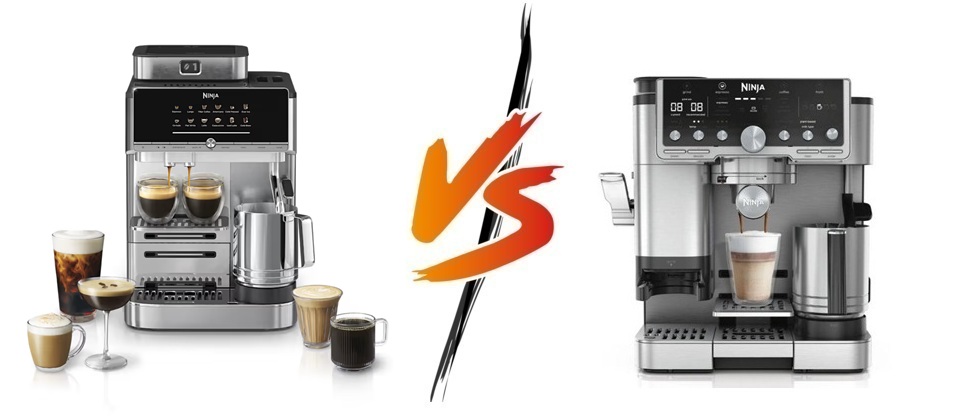
If you’ve been shopping for a home espresso machine lately, you’ve probably noticed that Ninja has become much more serious about coffee than it used to be. For years, the brand was known primarily for blenders and versatile drip coffee makers. Now it’s competing directly with established espresso manufacturers by offering machines that promise café-quality coffee without the intimidating learning curve.
The two machines that attract the most attention are the Ninja AutoBarista and the Ninja Luxe Café Pro. At first glance, they seem to target the same audience. Both feature integrated grinders, automatic brewing assistance, milk frothing capabilities, and a design that’s meant to make specialty coffee accessible to beginners while still giving enthusiasts room to experiment.
After spending time comparing both machines, it becomes clear that they aren’t simply different versions of the same product. They have noticeably different strengths, different priorities, and different types of users in mind.
This review takes an in-depth look at every major aspect of both machines, from their construction and brewing performance to grinder quality, milk systems, maintenance requirements, and overall value. Rather than focusing only on specifications, the goal is to answer the question that matters most: which machine actually makes more sense for your kitchen and your coffee habits?
Ninja AutoBarista vs Nijna Luxe Café Pro Comparison Chart
If you click the links below, under the product images, you will be redirected to Amazon.com. In case you then decide to buy anything, Amazon.com will pay me a commission. This doesn’t affect the honesty of this review in any way though.
| Specification | Ninja AutoBarista | Ninja Luxe Café Pro |
|---|---|---|
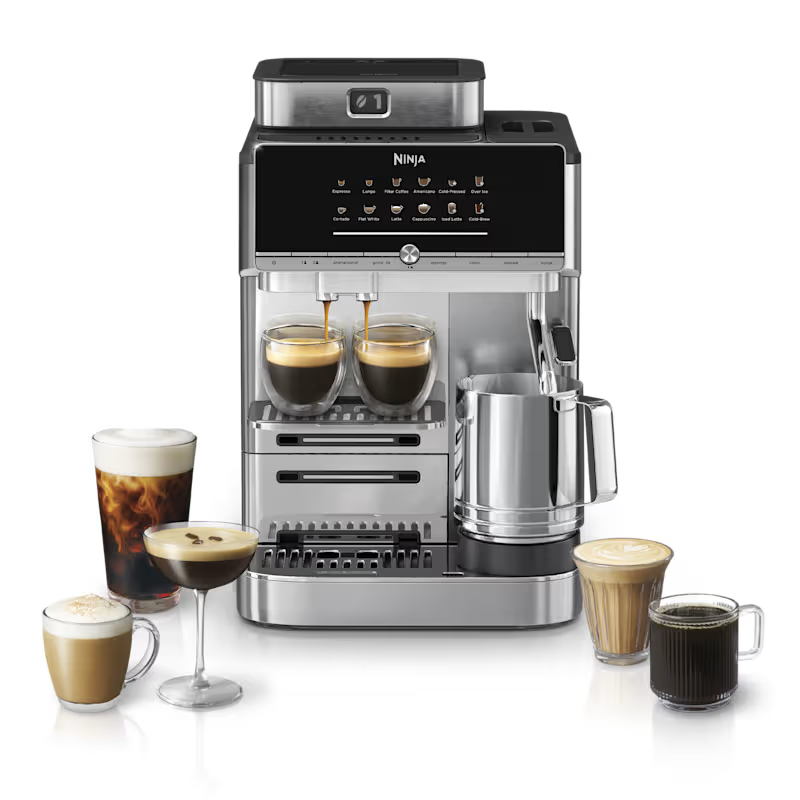 | 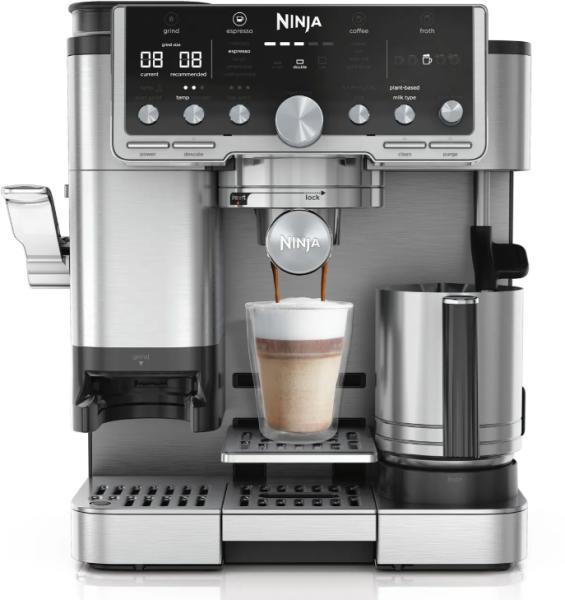 | |
| Check the best price on Amazon | Check the best price on Amazon | |
| Machine Type | Automatic espresso machine with integrated grinder | Premium automatic espresso machine with integrated grinder |
| Integrated Grinder | Yes | Yes |
| Grinder Type | Conical burr grinder | Premium conical burr grinder |
| Grind Settings | Multiple adjustable settings | More grind settings with finer adjustment increments |
| Bean Hopper | Integrated bean hopper | Larger integrated bean hopper |
| Water Reservoir | Removable water tank | Removable water tank |
| Pump Pressure | 15-bar pump | 15-bar pump |
| Heating System | Rapid heating system | Rapid heating system with improved temperature stability |
| Espresso Options | Single and double espresso | Single and double espresso |
| Coffee Drinks | Espresso, Americano, Latte, Cappuccino, Flat White and more | Espresso, Americano, Latte, Cappuccino, Flat White and additional customizable specialty drinks |
| Milk Frothing | Automatic milk frothing system | Enhanced automatic and manual milk frothing system |
| Steam Wand | Yes | Yes (more powerful steam performance) |
| Milk Texture Control | Automatic presets | Automatic presets with greater customization |
| Latte Art Capability | Good | Excellent |
| User Interface | Guided digital interface | Premium digital interface with expanded controls |
| Custom Drink Profiles | Limited | More extensive customization |
| Automatic Brewing Guidance | Yes | Yes |
| Brewing Temperature | Stable | Improved temperature consistency |
| Cup Warmer | Yes | Larger cup warming tray |
| Cup Clearance | Suitable for most cups and mugs | Greater clearance for larger cups and mugs |
| Portafilter | Standard weighted portafilter | Premium weighted portafilter |
| Construction | Stainless steel accents with high-quality plastic | Greater use of stainless steel with premium construction |
| Footprint | More compact | Larger footprint |
| Weight | Lighter | Heavier and more stable |
| Cleaning Alerts | Yes | Yes |
| Automatic Cleaning Programs | Yes | Yes |
| Descaling Reminder | Yes | Yes |
| Removable Drip Tray | Yes | Yes |
| Automatic Shut-Off | Yes | Yes |
| Best For | Beginners, convenience-focused users, everyday coffee drinkers | Coffee enthusiasts, experienced users, and those wanting greater customization |
| Overall Strengths | Easy to use, compact, consistent espresso, excellent value | Premium build quality, finer grinder control, better milk performance, greater customization |
| Potential Drawbacks | Fewer customization options | Higher price and larger footprint |
| My individual reviews | Ninja AutoBarista review | Ninja Luxe Café Pro review |
Design & Build Quality
When you’re investing in an espresso machine, design is about much more than appearance. A machine can look stunning in a showroom or online product photo, but if it’s awkward to use every morning, difficult to clean, or feels flimsy after a few months of regular use, the visual appeal quickly loses its charm. Build quality is equally important because espresso machines are exposed to heat, moisture, vibration from the grinder, and constant daily interaction. Every button press, every turn of the portafilter, and every refill of the water tank puts wear on the machine, so solid construction matters.
The Ninja AutoBarista and the Ninja Luxe Café Pro both leave a positive first impression. They share a modern design language that feels clean, contemporary, and well suited to today’s kitchens. Neither machine tries to imitate the polished chrome styling of traditional Italian espresso machines, nor do they resemble basic drip coffee makers. Instead, Ninja has found a middle ground, combining premium-looking materials with practical layouts that prioritize ease of use.
Although the two machines share many design cues, spending time with both reveals that they’re aimed at slightly different buyers. The AutoBarista focuses on compact practicality, while the Luxe Café Pro leans more heavily into a premium, professional-inspired aesthetic.
Ninja AutoBarista Design
The AutoBarista is the more approachable-looking machine of the two. Its proportions are relatively compact, making it a good choice for kitchens where countertop space is at a premium. This is something many buyers underestimate until they actually bring an espresso machine home. Between the grinder, water tank, milk pitcher, tamper, and accessories, even moderately sized machines can dominate a countertop.
The AutoBarista avoids this issue by making efficient use of its footprint. It fits comfortably beneath standard kitchen cabinets while still leaving enough clearance to remove the bean hopper lid and refill the water reservoir without having to pull the entire machine forward. This seemingly minor detail makes everyday ownership much more pleasant.
Visually, the machine strikes a nice balance between modern and understated. Matte finishes help reduce fingerprints, while stainless steel accents around key areas provide enough contrast to keep the machine from looking overly utilitarian. The overall styling feels contemporary without chasing trends that may look dated in a few years.
Its rounded edges also soften the appearance. Rather than looking industrial or intimidating, the AutoBarista feels inviting, which aligns well with its beginner-friendly philosophy.
Ninja Luxe Café Pro Design
The Luxe Café Pro immediately projects a more premium presence.
It’s larger, heavier, and has a noticeably more substantial appearance on the countertop. The increased size isn’t simply for visual effect. It allows more generous spacing between components, giving the machine a less crowded feel during operation.
The stainless steel exterior panels cover a greater portion of the body than on the AutoBarista, creating an impression of durability and quality. The brushed metal finish catches light nicely without becoming overly reflective, giving the machine a professional appearance that wouldn’t look out of place in a high-end kitchen.
The larger dimensions also allow for a more spacious cup area beneath the group head. Taller mugs fit more comfortably, and there is greater flexibility when positioning espresso cups, cappuccino mugs, or travel mugs depending on the beverage being prepared.
While the machine occupies more countertop space, it never feels unnecessarily oversized. Instead, it gives the impression of a machine designed for people who make multiple coffee drinks every day and appreciate having extra room to work.
Materials and Construction
Neither machine is built entirely from stainless steel, and that’s worth mentioning because many buyers assume that a metal finish automatically means an all-metal construction.
Both machines use a combination of metal and high-quality plastics, which is common in this price range. The important point is that the plastic components never feel cheap or poorly finished.
On both machines, panels fit together cleanly, seams are consistent, and there are very few areas where flex or creaking becomes noticeable during normal use. This contributes significantly to the perception of quality.
The Luxe Café Pro uses a greater amount of metal on the exterior, giving it a slightly more premium feel. Its additional weight also helps reduce vibration during grinding, making the machine feel more planted on the countertop.
The AutoBarista, meanwhile, feels lighter but still reassuringly solid. Lifting or moving it during cleaning doesn’t reveal any concerning looseness or rattling, which speaks well of its overall construction.
Portafilter and Brewing Components
The portafilter is one of the parts of an espresso machine you’ll interact with the most, so its quality has a noticeable impact on the overall experience.
On both machines, the portafilters have a satisfying weight and lock securely into the group head. The locking action feels smooth rather than stiff, requiring enough resistance to inspire confidence without becoming difficult to use.
The handles are comfortable to grip, even when slightly damp, and the overall finish feels durable enough to withstand years of regular use.
The brew head itself is well positioned, leaving enough room beneath it to comfortably insert and remove the portafilter without awkward angles or excessive force.
These ergonomic details may seem minor, but they contribute significantly to the daily workflow.
Water Tank and Bean Hopper
The removable water reservoirs on both machines are thoughtfully designed.
They slide out easily without catching or requiring awkward movements, making refilling straightforward even when the machine is positioned beneath overhead cabinets.
The transparent construction allows water levels to be checked at a glance, reducing the chance of unexpectedly running out during brewing.
The bean hoppers are similarly well executed.
Both seal securely to help maintain bean freshness, while their wide openings make filling relatively mess-free. Removing the hopper for cleaning is uncomplicated, which is particularly useful for users who switch between different coffee beans.
The Luxe Café Pro’s hopper feels slightly sturdier, with a more premium lid and smoother adjustment mechanism, though the difference is relatively subtle in everyday use.
Workspace and Ergonomics
One of the strongest aspects of both machines is their thoughtful layout.
Every major component is positioned logically, allowing the brewing process to flow naturally from grinding to extraction to milk preparation.
The cup clearance beneath the spout accommodates most standard espresso and cappuccino cups without difficulty, while the drip trays provide enough working space to avoid feeling cramped.
Controls are located within easy reach, and accessories such as the tamper and milk pitcher have clearly designated storage locations. This helps keep the countertop organized and reduces the feeling of clutter that often accompanies home espresso setups.
The steam wand placement also deserves praise.
It’s positioned far enough away from the group head that milk frothing doesn’t interfere with brewing, making it easier to prepare milk while another drink is finishing.
On the Luxe Café Pro, the slightly larger body provides even more working room around the steam wand, which makes texturing milk feel a little less confined.
Fit and Finish
Examining the machines closely reveals Ninja’s attention to detail.
Buttons have a consistent tactile feel and respond cleanly without excessive travel.
Adjustment dials turn smoothly with well-defined clicks, providing reassuring feedback during operation.
The drip trays slide in and out without sticking, and their fit remains secure once installed.
Edges are cleanly finished, logos are tastefully applied, and the overall presentation feels polished from top to bottom.
The Luxe Café Pro enjoys a slight advantage here thanks to its greater use of metal and tighter overall construction, but the AutoBarista is far from feeling inexpensive.
In fact, compared with many competing machines in the same price bracket, both models demonstrate an impressive level of refinement.
Everyday Practicality
Perhaps the most important aspect of design isn’t how the machine looks on day one, but how it feels after several months of daily use.
Both machines excel in this regard.
Refilling water is easy.
Adding beans is simple.
Removing the drip tray takes only seconds.
Cleaning accessible components doesn’t require awkward disassembly.
The machines also remain visually appealing even during everyday use. Their finishes resist fingerprints reasonably well, and the clean lines make wiping down exterior surfaces quick and effortless.
The AutoBarista particularly shines for households where multiple people use the machine. Its simpler layout makes it immediately approachable, even for someone who has never operated an espresso machine before.
The Luxe Café Pro, meanwhile, feels like a machine that owners can grow into. Its larger size and more premium construction make each interaction feel slightly more refined, especially for users who enjoy spending time perfecting their coffee routine.
Design & Build Quality Verdict
Both the Ninja AutoBarista and the Ninja Luxe Café Pro are thoughtfully designed espresso machines that successfully combine modern styling with practical usability. Neither feels like a budget appliance trying to imitate a premium machine. Instead, each has its own distinct identity and serves its intended audience well.
The AutoBarista impresses with its compact footprint, efficient layout, and beginner-friendly design. It makes excellent use of available space and feels sturdy enough for years of regular use without overwhelming smaller kitchens.
The Luxe Café Pro, however, ultimately takes the lead in this category. Its heavier construction, greater use of stainless steel, more spacious working area, and overall premium finish create an experience that feels closer to higher-end espresso machines. While the improvements are evolutionary rather than revolutionary, they are noticeable every time you interact with the machine, making it the stronger choice for buyers who place a high value on craftsmanship and long-term durability.
User Interface & Ease of Use
One of the biggest barriers to making great espresso at home has never been the coffee itself. It’s the learning curve. Traditional espresso machines often expect users to understand concepts like grind size, extraction time, dose weight, tamping pressure, milk texturing, and brewing temperature before they can consistently produce a good cup. For experienced coffee enthusiasts, that level of control is part of the appeal. For everyone else, it can make the entire process feel intimidating.
This is where both the Ninja AutoBarista and the Ninja Luxe Café Pro distinguish themselves from many competitors. Rather than assuming every owner is an aspiring barista, Ninja has designed both machines to be approachable from the very first use. They guide users through the brewing process without making them feel like they’re operating complicated commercial equipment.
Although the two machines share the same overall philosophy, they approach user interaction in slightly different ways. The AutoBarista prioritizes simplicity and speed, while the Luxe Café Pro balances accessibility with greater opportunities for customization.
First-Time Setup
The user experience begins before the first espresso is even brewed.
Setting up either machine is refreshingly straightforward. The included instructions are clearly written and easy to follow, avoiding the overly technical language that sometimes accompanies espresso equipment. Filling the water tank, installing the bean hopper, rinsing the system, and preparing the machine for its first use all feel logical and well organized.
Neither machine requires extensive calibration before brewing. Instead, they guide users through the initial preparation process step by step, making the experience far less intimidating than many traditional espresso machines.
For someone purchasing their very first espresso machine, this creates a strong first impression. Rather than feeling overwhelmed by unfamiliar terminology, new users are encouraged to start making coffee almost immediately.
Both machines feature clean, modern interfaces that prioritize readability.
The displays are bright enough to remain visible in different lighting conditions without becoming distracting. Text and icons are easy to understand, and menus are organized in a way that feels intuitive even without consulting the instruction manual.
One of the most noticeable strengths of both machines is the absence of unnecessary complexity. Instead of forcing users through multiple menu layers, commonly used functions are easy to access, reducing the number of button presses required for everyday brewing.
The AutoBarista keeps things especially simple. Drink selections are clearly labeled, and navigation follows a straightforward sequence that quickly becomes second nature. Within a few days of ownership, most users will likely operate the machine almost entirely from memory.
The Luxe Café Pro introduces additional menu options but manages to avoid becoming confusing. While there are more settings to explore, they’re grouped logically, making it easy to find brewing preferences, grinder adjustments, and milk options without endless scrolling.
This careful organization prevents the interface from feeling cluttered despite the machine’s expanded feature set.
Guided Brewing Experience
Perhaps the biggest advantage of both machines is their guided brewing system.
Instead of expecting users to remember every step of the espresso-making process, the machines provide prompts throughout preparation. These reminders help ensure that tasks are completed in the correct order while reducing the likelihood of mistakes.
For example, users receive guidance when it’s time to grind coffee, prepare the portafilter, begin brewing, or complete maintenance tasks. These prompts feel helpful rather than intrusive and gradually teach the workflow as users become more familiar with the machine.
This educational approach is particularly valuable for beginners. Rather than relying entirely on trial and error, users gain confidence through repetition with consistent guidance.
Over time, the prompts become less about instruction and more about reassurance that everything is proceeding correctly.
Everyday Workflow
A machine’s interface is only one part of usability. Equally important is how smoothly the entire brewing process flows from start to finish.
Both machines perform exceptionally well in this regard.
Preparing a drink follows a logical sequence that minimizes unnecessary movement. Beans are loaded into the grinder, the portafilter is positioned for grinding, the selected beverage is chosen, and brewing begins with minimal interruption.
The controls respond quickly, reducing any sense of delay between selecting an option and seeing the machine react. Buttons provide satisfying tactile feedback, while adjustment dials turn smoothly and precisely.
The result is a brewing routine that feels natural rather than mechanical.
Even when preparing several drinks back-to-back, the process remains organized and efficient.
Automatic Features
Automation plays a major role in the appeal of both machines.
The AutoBarista leans heavily into this philosophy by handling many decisions on behalf of the user. Automatic guidance simplifies the brewing process and helps eliminate much of the guesswork that often frustrates first-time espresso owners.
Instead of wondering whether the grind is correct or whether the brewing process is progressing as expected, users can rely on the machine to provide recommendations and feedback throughout preparation.
This level of assistance makes the AutoBarista particularly appealing for busy mornings when convenience matters more than experimentation.
The Luxe Café Pro includes many of the same automated features but gives users more freedom to override them when desired.
This flexibility creates a machine that can adapt as a person’s confidence grows. Beginners can start by relying almost entirely on automatic settings, then gradually explore more manual adjustments as they gain experience.
In many ways, it feels like owning two machines in one: an approachable automatic espresso maker and a more customizable brewing platform.
Customization Options
Customization is where the differences between the two machines become more apparent.
The AutoBarista intentionally limits the number of adjustable settings to prevent users from becoming overwhelmed. Most people simply choose their preferred drink, allow the machine to guide the brewing process, and enjoy consistently good coffee.
For many households, this is exactly the right approach. Not everyone wants to spend several minutes adjusting extraction variables before making a morning latte.
The Luxe Café Pro, however, caters to users who enjoy fine-tuning their coffee.
Additional brewing parameters allow for greater experimentation with different beans and roast levels. Grinder adjustments are more refined, drink recipes can be personalized, and milk settings offer more flexibility.
Importantly, these extra controls never interfere with the machine’s ease of use.
Users who prefer simplicity can continue using the automatic features, while enthusiasts have the option to dive deeper into customization whenever they choose.
This makes the Luxe Café Pro a machine that can continue to satisfy users long after the novelty of automatic brewing wears off.
Learning Curve
One of the most impressive achievements of both machines is how effectively they shorten the learning curve without removing the enjoyment of making espresso.
Traditional machines often require weeks of experimentation before consistently good results become possible. New users frequently struggle with incorrect grind sizes, uneven tamping, or poor extraction, leading to frustration and wasted coffee.
The AutoBarista dramatically reduces these issues.
Its guided interface and automated assistance allow beginners to achieve satisfying results almost immediately. Instead of worrying about technical details, users can focus on developing confidence and enjoying the process.
The Luxe Café Pro introduces more advanced options but does so gradually. Rather than overwhelming new users with every possible adjustment from day one, it allows them to explore additional features at their own pace.
This progressive learning experience is one of the machine’s greatest strengths.
As confidence grows, so does the ability to take advantage of its more advanced capabilities.
Error Messages and User Guidance
Even experienced coffee drinkers occasionally make mistakes.
Running low on water, forgetting to insert the portafilter properly, or skipping routine maintenance are all common occurrences.
Both machines handle these situations well.
Instead of displaying vague warning symbols or confusing error codes, they provide clear messages that explain the issue and suggest the appropriate solution.
This reduces frustration and eliminates much of the guesswork associated with troubleshooting.
Maintenance reminders are equally helpful.
Rather than requiring owners to remember cleaning schedules, the machines notify users when it’s time to descale, empty waste components, or perform routine maintenance.
These reminders help maintain consistent brewing performance while extending the machine’s lifespan.
Accessibility for Different Users
One aspect that deserves recognition is how accessible both machines are for households with multiple users.
In many homes, not everyone is equally interested in coffee preparation. One person may enjoy experimenting with brewing variables, while another simply wants a quick cappuccino before work.
The AutoBarista accommodates this scenario particularly well. Its straightforward interface means that virtually anyone can prepare a drink with minimal instruction.
The Luxe Café Pro also performs admirably, although its additional features mean that first-time users may spend a little longer exploring the menus. Fortunately, the logical interface design ensures that this learning period remains relatively short.
Once familiar with the layout, operating either machine becomes almost effortless.
User Interface & Ease of Use Verdict
Both the Ninja AutoBarista and the Ninja Luxe Café Pro succeed in making home espresso significantly more approachable than many competing machines. Their interfaces are thoughtfully designed, visually clear, and supported by helpful guidance that reduces the intimidation often associated with espresso preparation.
The AutoBarista excels through simplicity. It removes unnecessary complexity, streamlines the brewing process, and allows beginners to produce consistently enjoyable coffee with very little effort. Its guided workflow and intuitive controls make it one of the most accessible espresso machines in its class.
The Luxe Café Pro, meanwhile, builds on this foundation by introducing more advanced customization without sacrificing usability. It offers greater control for enthusiasts while remaining welcoming to newcomers, creating an experience that evolves alongside the user’s growing confidence and skills.
Choosing a winner ultimately depends on what you expect from your espresso machine. If your priority is maximum convenience and a virtually effortless learning experience, the AutoBarista has a slight advantage. If you value a machine that can grow with you and continue offering new opportunities for experimentation as your coffee knowledge develops, the Luxe Café Pro provides the more rewarding long-term experience. Both are excellent examples of user-centered design, proving that advanced espresso machines no longer need to feel intimidating to deliver impressive results.
Coffee Quality & Brewing Performance
No matter how attractive an espresso machine looks or how many features it offers, everything ultimately comes down to one question: does it make great coffee? Design, automation, and convenience all add value, but they’re secondary if the espresso itself falls short. Fortunately, this is an area where both the Ninja AutoBarista and the Ninja Luxe Café Pro perform surprisingly well. While neither machine is intended to replace commercial café equipment costing several thousand dollars, both are capable of producing coffee that is genuinely satisfying and, in many cases, far better than what many people expect from an all-in-one home espresso machine.
What makes this comparison particularly interesting is that the differences between the two machines aren’t immediately obvious after the first cup. Both consistently produce enjoyable espresso, rich milk-based drinks, and well-balanced Americanos. It’s only after preparing a wide variety of beverages with different coffee beans that the strengths of each machine begin to emerge.
Espresso Extraction
Espresso is the foundation of nearly every specialty coffee drink. Whether you’re making a straight shot, a latte, a cappuccino, or a flat white, the quality of the espresso determines the final result.
The Ninja AutoBarista performs exceptionally well in this regard. It consistently produces espresso with an attractive layer of crema, a pleasant aroma, and balanced flavor. The extraction process feels controlled from start to finish, with a steady flow that indicates good pressure management throughout brewing.
Using freshly roasted beans, the espresso develops noticeable sweetness alongside the expected bitterness, creating a shot that is enjoyable on its own rather than simply acting as the base for milk drinks. Medium-roasted coffees work especially well, producing chocolate, caramel, and nutty flavors that come through clearly without requiring extensive adjustments.
The Ninja Luxe Café Pro starts from the same strong foundation but offers slightly greater refinement. The espresso tends to display better flavor separation, allowing individual tasting notes to become more noticeable. Fruity coffees retain more of their natural brightness, while darker roasts maintain impressive body without becoming excessively bitter.
The difference isn’t dramatic enough that a casual coffee drinker would immediately notice it, but anyone who enjoys tasting espresso on its own will likely appreciate the added clarity.
Temperature Stability
Consistent brewing temperature plays a major role in espresso quality.
If water is too cool, extraction becomes underdeveloped, resulting in sour, thin coffee. If it’s too hot, bitterness quickly dominates the cup. Maintaining stable temperatures throughout the brewing process is therefore essential.
Both Ninja machines perform impressively well in this area.
Once properly heated, they maintain stable brewing temperatures across multiple consecutive drinks. This consistency is particularly noticeable when making coffee for several people in succession. Instead of experiencing large fluctuations between shots, both machines continue producing espresso with similar flavor characteristics.
The Luxe Café Pro enjoys a slight advantage during longer brewing sessions. Its more premium internal design appears to recover slightly faster between drinks, allowing users to prepare multiple beverages without noticeable delays or changes in extraction quality.
For households that regularly make several coffees each morning, this improved consistency can become a meaningful advantage.
Consistency Between Shots
One excellent espresso isn’t enough. A quality machine should be able to reproduce that same result repeatedly.
This is where both machines exceed expectations.
Using the same coffee beans and maintaining similar grinder settings, the AutoBarista delivers remarkably repeatable results. The extraction time remains fairly consistent, and flavor varies very little from one shot to the next.
This predictability makes the machine particularly beginner-friendly.
Instead of constantly chasing the perfect extraction through endless adjustments, users can expect similar results every time they prepare a drink.
The Luxe Café Pro raises consistency another step further.
Its additional grinder precision and expanded brewing controls make it easier to fine-tune extraction when switching between different beans. Once dialed in, it repeatedly produces shots with impressive accuracy.
Coffee enthusiasts who enjoy experimenting with specialty beans will appreciate this additional level of control, especially when working with lighter roasts that require more precise extraction.
Brewing Speed
Speed may not seem like a major factor in coffee quality, but it significantly affects the overall user experience.
No one wants to wait ten or fifteen minutes for an espresso before work each morning.
Both machines heat quickly after being powered on, reducing the delay between deciding to make coffee and actually enjoying it.
The AutoBarista feels particularly efficient. Its streamlined workflow allows users to grind, brew, and begin preparing milk within a short period of time. The machine never feels sluggish or unnecessarily complicated.
The Luxe Café Pro performs similarly, though users who choose to customize brewing parameters may naturally spend a little more time preparing each drink.
Importantly, this extra time results from user choice rather than machine limitations.
Recovery time between consecutive drinks is also excellent on both models. Preparing several cappuccinos or lattes in succession never feels frustrating, making both machines suitable for families or entertaining guests.
Performance with Different Coffee Beans
Not every espresso machine responds equally well to different roast levels.
Some excel only with dark commercial blends, while others struggle to extract lighter specialty coffees properly.
The AutoBarista performs best with medium and medium-dark roasts.
These coffees produce balanced espresso with rich body, pleasant sweetness, and very approachable flavor. Dark roasts also perform well, delivering bold chocolate notes and low acidity that many traditional espresso drinkers enjoy.
Lighter roasts are certainly usable, but they often require more careful grinder adjustments to achieve their full potential.
The Luxe Café Pro demonstrates greater flexibility.
Thanks to its more precise grinder and expanded brewing control, it handles a wider range of coffee styles with greater confidence. Medium roasts remain excellent, but lighter coffees display improved clarity and sweetness compared to the AutoBarista.
For users who frequently purchase freshly roasted specialty coffee from local roasters, this extra versatility becomes one of the Pro’s strongest advantages.
Flavor Profile
Describing flavor is always somewhat subjective because personal preference varies considerably.
However, several consistent characteristics become apparent after extended use.
The AutoBarista produces espresso that emphasizes balance.
Sweetness, bitterness, acidity, and body remain well integrated, creating drinks that appeal to a broad range of coffee drinkers. Even when small adjustments aren’t perfectly optimized, the machine generally produces enjoyable results.
This forgiving nature makes it particularly suitable for households where convenience takes priority over chasing absolute perfection.
The Luxe Café Pro, meanwhile, allows flavors to become slightly more expressive.
Individual tasting notes stand out more clearly, particularly when using high-quality beans. Fruit, floral, or citrus characteristics in lighter coffees become easier to identify, while darker blends retain excellent richness without overwhelming bitterness.
Coffee enthusiasts who enjoy exploring different origins and roast profiles will likely notice and appreciate these subtle improvements.
Milk-Based Drinks
Although espresso forms the foundation of specialty coffee, many people primarily drink milk-based beverages.
Fortunately, both machines maintain strong brewing performance even when preparing larger drinks.
Because the espresso remains concentrated and well extracted, it continues to provide enough flavor to cut through steamed milk effectively. Lattes taste rich rather than diluted, cappuccinos retain noticeable coffee character, and flat whites achieve an excellent balance between espresso and milk sweetness.
The AutoBarista produces consistently satisfying milk drinks with minimal effort.
The Luxe Café Pro achieves slightly greater complexity, particularly when paired with carefully textured milk, resulting in beverages that more closely resemble those served by experienced café baristas.
Americano and Longer Coffee Drinks
Not every coffee drinker prefers concentrated espresso.
Many people enjoy Americanos or other longer coffee drinks that preserve espresso flavor while increasing volume.
Both Ninja machines perform very well here.
Adding hot water to freshly brewed espresso creates smooth, flavorful Americanos with noticeably more character than standard drip coffee.
The AutoBarista produces balanced results that are approachable and easy to enjoy throughout the day.
The Luxe Café Pro again offers a touch more complexity, particularly when brewing specialty beans, allowing more subtle flavor notes to remain present even after dilution.
Overall Brewing Experience
Perhaps the greatest compliment that can be given to both machines is that they make brewing enjoyable.
The process feels smooth and predictable.
The espresso consistently looks appealing as it pours into the cup.
The aroma fills the kitchen, and the finished drinks regularly exceed expectations for machines in this category.
Rather than feeling like automated appliances that simply dispense coffee, both machines encourage users to appreciate the brewing process itself.
The AutoBarista achieves this by removing unnecessary frustration, while the Luxe Café Pro adds opportunities for experimentation without making the process overly complicated.
Coffee Quality & Brewing Performance Verdict
Both the Ninja AutoBarista and the Ninja Luxe Café Pro demonstrate that modern home espresso machines can produce genuinely impressive coffee without requiring years of barista experience. They consistently deliver balanced espresso, excellent milk-based drinks, and reliable performance across a variety of brewing situations.
The AutoBarista stands out for its consistency and forgiving nature. It produces delicious espresso with minimal effort and makes it remarkably easy for beginners to achieve café-style results from the very first cup. For many households, its performance will be more than sufficient to satisfy daily coffee needs.
The Luxe Café Pro, however, earns a slight edge by offering greater precision and extracting a little more character from high-quality coffee beans. Its improved consistency with lighter roasts, enhanced flavor separation, and greater adaptability make it the stronger choice for coffee enthusiasts who enjoy experimenting with different beans and refining their brewing technique.
The difference between the two machines is not night and day, and casual coffee drinkers may find both equally satisfying. However, for those who view espresso as something to be explored rather than simply consumed, the Ninja Luxe Café Pro provides the more rewarding brewing experience while maintaining the accessibility that makes Ninja’s espresso machines so appealing in the first place.
Grinder Features & Performance
If there’s one component that has the biggest influence on espresso quality after the brewing system itself, it’s the grinder. Even an excellent espresso machine will struggle to produce balanced shots if the coffee grounds are inconsistent. Uneven particle sizes can lead to channeling, under-extraction, over-extraction, and unpredictable flavor from one cup to the next. That’s why many experienced coffee enthusiasts often recommend spending as much on a grinder as on the espresso machine itself.
For home users, however, integrated grinders offer an enormous advantage. They save countertop space, simplify the brewing process, and eliminate the need to purchase separate equipment. The challenge is that integrated grinders have traditionally been one of the weakest aspects of many all-in-one espresso machines. They’re often noisy, inconsistent, and offer limited adjustment, making it difficult to get the best from different coffee beans.
The Ninja AutoBarista and Ninja Luxe Café Pro both challenge that expectation. Neither machine includes a grinder that can compete with dedicated premium standalone models costing several hundred dollars on their own, but both perform significantly better than many integrated grinders found in similarly priced espresso machines. More importantly, they contribute to a workflow that feels fast, consistent, and enjoyable.
While the two grinders share several characteristics, the Luxe Café Pro offers additional refinement that gives experienced users a little more flexibility.
Grinder Design
The integrated grinders on both machines are thoughtfully incorporated into the overall design.
Rather than feeling like an afterthought attached to the side of the machine, they are fully integrated into the brewing workflow. Beans move directly from the hopper through the grinder and into the portafilter, minimizing unnecessary handling and reducing the chance of making a mess.
This streamlined design also makes preparing coffee much quicker than using a separate grinder. There is no need to transfer grounds between containers or reposition equipment on the countertop. Everything happens within a single, organized workspace.
The grinders are positioned conveniently, allowing users to insert the portafilter easily without awkward angles or excessive movement. This contributes to a brewing experience that feels efficient from beginning to end.
Burr Grinder Performance
Both the AutoBarista and the Luxe Café Pro use burr grinders rather than blade grinders, and this is one of the biggest reasons they are capable of producing respectable espresso.
Unlike blade grinders, which chop beans into randomly sized pieces, burr grinders crush beans between precisely machined surfaces to produce a much more uniform grind. This consistency is essential for espresso, where even small variations in particle size can noticeably affect extraction.
The AutoBarista’s grinder delivers surprisingly even results for an integrated system. Grounds are well suited for espresso, with relatively few oversized particles or excessive fines. This allows water to pass through the coffee puck more evenly, helping produce balanced shots with consistent flavor.
The Luxe Café Pro builds upon this foundation with slightly greater grinding precision. The distribution of particle sizes appears marginally more uniform, contributing to improved extraction consistency and better flavor clarity, particularly when brewing lighter or more complex coffees.
The difference isn’t dramatic enough to transform the espresso entirely, but coffee enthusiasts will appreciate the additional refinement.
Grind Size Adjustment
Different coffee beans require different grind settings.
Freshly roasted beans behave differently from older beans. Light roasts often require finer grinding than dark roasts, while humidity and environmental conditions can also influence extraction.
Both machines provide enough adjustment to accommodate these variables.
The AutoBarista offers a practical range of grind settings that covers the needs of most users. Switching between different coffees is straightforward, and small adjustments allow extraction times to be fine-tuned without becoming overly technical.
For beginners, this limited range is actually beneficial. Too many adjustment options can make dialing in espresso unnecessarily confusing. The AutoBarista simplifies the process while still providing enough flexibility to optimize brewing for most commercially available beans.
The Luxe Café Pro expands this range with finer adjustment increments.
Rather than making relatively broad changes, users can make smaller refinements that allow for greater precision. This becomes particularly valuable when working with specialty coffee, where slight changes in grind size can dramatically affect sweetness, acidity, and body.
For experienced users who enjoy experimenting with different origins and roast levels, these additional adjustment steps provide noticeably greater control.
Grinding Consistency
Consistency is arguably the most important measure of grinder quality.
A grinder that produces nearly identical grounds every time allows the espresso machine to perform at its best.
The AutoBarista performs admirably in everyday use.
Grinding the same coffee on consecutive mornings generally produces very similar results. Extraction times remain stable, and flavor differences are minimal when beans and settings remain unchanged.
This reliability contributes significantly to the machine’s beginner-friendly nature. Once users find an appropriate grind setting, they rarely need to make constant adjustments.
The Luxe Café Pro demonstrates slightly better repeatability.
Its grinder appears to maintain consistency more effectively across larger numbers of consecutive shots, making it especially appealing for households that prepare multiple drinks throughout the day.
Although the difference is subtle, it becomes increasingly noticeable during extended use.
Dosing Accuracy
An integrated grinder should not only grind consistently but also deliver an appropriate amount of coffee to the portafilter.
Both machines perform well in this regard.
Automatic dosing reduces much of the guesswork associated with espresso preparation. Rather than manually weighing coffee for every shot, users can rely on the grinder to provide consistent portions that work well with the selected beverage.
The AutoBarista’s dosing system proves dependable during everyday use, helping maintain repeatable brewing results without requiring additional measuring equipment.
The Luxe Café Pro offers similarly reliable performance while benefiting from its finer grinder adjustments. This combination allows experienced users to make more precise changes when optimizing extraction.
For most households, the convenience of automatic dosing significantly improves the overall brewing experience.
Bean Hopper Design
The bean hopper is often overlooked when evaluating espresso machines, but its design influences both convenience and coffee freshness.
Both Ninja machines feature generously sized hoppers that hold enough beans for several days of regular use.
The lids fit securely, helping reduce unnecessary exposure to air while also preventing beans from spilling during everyday handling.
Refilling is simple thanks to the wide opening, and the transparent design allows users to monitor bean levels without removing the lid.
Cleaning is equally straightforward.
The hoppers can be emptied without excessive difficulty, making it practical to switch between different coffee beans whenever desired.
The Luxe Café Pro’s hopper feels slightly more premium, with a smoother adjustment mechanism and sturdier construction, but both are well designed for everyday home use.
Retention and Freshness
Coffee retention refers to the small amount of ground coffee that remains inside the grinder after each use.
High retention can lead to stale grounds mixing with freshly ground coffee, reducing flavor quality.
Fortunately, both machines perform reasonably well in this area.
The AutoBarista leaves very little coffee trapped inside the grinding system, allowing each new shot to consist primarily of freshly ground beans.
The Luxe Café Pro performs even better.
Its internal design appears to minimize retention slightly more effectively, reducing waste while helping maintain greater consistency between consecutive shots.
Although the difference is relatively minor, lower retention is always a welcome improvement for espresso preparation.
Noise and Vibration
Integrated grinders are rarely silent, but some are certainly more pleasant to use than others.
The AutoBarista produces the familiar sound expected from a quality burr grinder.
It’s noticeable, especially in a quiet kitchen early in the morning, but it never reaches an unpleasant level. The grinding process is relatively quick, so the noise is brief rather than prolonged.
The Luxe Café Pro benefits from its heavier construction.
The additional weight helps dampen vibration, resulting in a slightly smoother and more refined sound during operation.
Neither grinder could be described as quiet, but both compare favorably with many competing machines in the same price category.
Everyday Workflow
One of the strongest aspects of both grinders is how naturally they integrate into the overall brewing routine.
Users simply insert the portafilter into the designated grinding position, begin the grinding process, and continue directly to brewing.
This seamless workflow encourages the use of freshly ground coffee for every drink, which has a far greater impact on flavor than many casual coffee drinkers realize.
Fresh grinding preserves aromatic compounds that begin disappearing within minutes of grinding, resulting in noticeably richer and more vibrant espresso.
The convenience of having the grinder built into the machine also makes it more likely that owners will actually use fresh whole beans rather than relying on pre-ground coffee.
This alone can significantly improve the quality of everyday coffee.
Suitability for Different Users
The AutoBarista’s grinder is ideally suited to beginners and casual coffee drinkers.
Its adjustment range is broad enough to accommodate most beans without overwhelming users with excessive technical detail. Once properly set, it delivers dependable results that require very little ongoing attention.
The Luxe Café Pro appeals more strongly to enthusiasts.
Its finer grind adjustments, improved consistency, and lower retention provide greater opportunities for experimentation. Users who frequently purchase specialty beans from local roasters will appreciate having more control over the extraction process.
Importantly, neither grinder feels intimidating.
Even the Pro model remains approachable enough for newcomers while offering room to develop more advanced brewing skills over time.
Grinder Features & Performance Verdict
Both the Ninja AutoBarista and the Ninja Luxe Café Pro demonstrate that integrated grinders have come a long way. Rather than being weak points that compromise espresso quality, they serve as capable brewing partners that make preparing fresh coffee quick, convenient, and consistent.
The AutoBarista delivers everything most home users need. Its burr grinder produces even grounds, offers a practical adjustment range, and integrates smoothly into a workflow that prioritizes simplicity and repeatability. For households focused on convenience, it performs exceptionally well and removes much of the complexity traditionally associated with espresso preparation.
The Luxe Café Pro, however, takes the lead by offering greater precision in almost every area. Its finer grind adjustments, slightly improved particle consistency, lower retention, and more refined overall operation give coffee enthusiasts additional tools to optimize extraction and explore different coffee beans more fully.
While the improvements are evolutionary rather than revolutionary, they become increasingly valuable as a user’s coffee knowledge grows. For beginners, either grinder will produce excellent results, but for those who enjoy experimenting with specialty coffee and fine-tuning every shot, the Ninja Luxe Café Pro provides the stronger and more rewarding grinding experience.
Milk Frothing & Specialty Drinks
For many people, buying an espresso machine isn’t just about making espresso. While coffee enthusiasts often judge a machine by the quality of its straight shots, the reality is that milk-based beverages dominate home coffee routines. Lattes, cappuccinos, flat whites, macchiatos, and other specialty drinks have become everyday favorites, and a machine’s ability to prepare silky, well-textured milk is just as important as its ability to brew quality espresso.
This is an area where both the Ninja AutoBarista and the Ninja Luxe Café Pro perform impressively well. Ninja has clearly recognized that many buyers want café-style drinks without spending months learning traditional steaming techniques. As a result, both machines incorporate features designed to simplify milk preparation while still allowing more experienced users to develop their skills.
Although the two machines share a similar philosophy, the Luxe Café Pro offers greater flexibility and refinement, making it the stronger option for users who enjoy experimenting with different milk textures and specialty drinks.
Milk Frothing System
The milk systems on both machines are designed with convenience in mind.
Traditional espresso machines often require users to manually steam milk using a commercial-style steam wand. While this approach offers complete control, it also requires practice. Beginners frequently produce milk that is either too foamy, too thin, or overheated, resulting in drinks that fall well short of café quality.
The AutoBarista removes much of this uncertainty.
Its milk frothing system provides guided assistance that helps users achieve consistently smooth milk without requiring extensive experience. Rather than worrying about wand positioning, steaming time, or milk temperature, users can focus on assembling their favorite drinks.
The Luxe Café Pro builds on this concept while introducing more opportunities for manual control. Users who enjoy refining their technique can experiment with different milk textures while still benefiting from automatic assistance whenever they prefer a simpler approach.
This combination of accessibility and flexibility is one of the Pro’s greatest strengths.
Milk Texture
Good milk texture is about much more than producing foam.
Properly steamed milk should develop a smooth, velvety consistency known as microfoam. Unlike large, airy bubbles, microfoam consists of tiny, evenly distributed bubbles that create a creamy mouthfeel and blend seamlessly with espresso.
The AutoBarista produces surprisingly impressive microfoam.
Milk develops a silky consistency that works beautifully for everyday cappuccinos and lattes. The foam integrates well with the espresso rather than sitting awkwardly on top, creating drinks that feel balanced and satisfying.
For users upgrading from capsule machines or automatic coffee makers, the improvement is immediately noticeable.
The Luxe Café Pro takes milk quality another step further.
Its steam performance allows for even finer microfoam, producing milk with a smoother texture and more polished appearance. The resulting drinks more closely resemble those prepared by experienced baristas in specialty coffee shops.
The improvement isn’t dramatic enough to transform every cup, but it does become noticeable, particularly when preparing flat whites or attempting latte art.
Steam Performance
Steam power has a direct impact on both milk quality and preparation time.
A weak steam system often struggles to introduce enough air into the milk before it overheats, leading to thin or bubbly foam. Strong, consistent steam allows milk to be textured quickly while maintaining a smooth, creamy consistency.
The AutoBarista delivers dependable steam performance that comfortably meets the needs of most households.
Milk reaches serving temperature quickly, and the steaming process feels controlled rather than rushed. Even users with limited experience can produce enjoyable results after only a few attempts.
The Luxe Café Pro offers slightly stronger steam performance.
The additional power shortens steaming time while providing greater control over milk texture. Experienced users will appreciate the increased responsiveness, particularly when preparing multiple drinks in succession.
The stronger steam also makes it easier to create the glossy, paint-like consistency associated with professional latte art.
Automatic Milk Programs
One of the biggest advantages of both machines is the inclusion of automatic milk programs.
Instead of manually guessing steaming times, users can select beverage-specific settings that automatically produce milk suited to different drinks.
For example, cappuccinos benefit from thicker foam, while lattes require smoother, less aerated milk. Flat whites typically demand particularly fine microfoam that blends seamlessly with the espresso.
The AutoBarista handles these differences exceptionally well.
Its automatic programs consistently produce milk that complements the selected drink, reducing the need for manual adjustments and helping beginners achieve café-style beverages almost immediately.
The Luxe Café Pro offers similar convenience while allowing users to fine-tune foam density and milk texture to better match personal preferences.
This additional customization gives the Pro greater long-term versatility without sacrificing ease of use.
Latte Art Potential
Latte art has become one of the most recognizable signs of well-prepared milk.
While decorative hearts, tulips, and rosettas aren’t essential to enjoying coffee, they do indicate that the milk has been textured correctly.
The AutoBarista is certainly capable of producing milk suitable for basic latte art.
With practice, users should be able to pour simple heart patterns and other beginner-friendly designs. The limiting factor is rarely the machine itself. Instead, success depends on developing proper pouring technique and learning how to position the milk pitcher correctly.
The Luxe Café Pro provides a slight advantage.
Its finer microfoam and greater steam control make it easier to achieve the glossy milk consistency needed for more advanced latte art. Skilled users will likely find it easier to produce cleaner, more detailed patterns.
That said, neither machine automatically creates latte art. Practice remains essential regardless of the equipment being used.
Performance with Alternative Milks
Today’s coffee drinkers often use alternatives to traditional dairy milk, making compatibility with plant-based options increasingly important.
Fortunately, both machines perform well across a variety of milk types.
Oat milk produces particularly impressive results.
Its naturally creamy texture creates smooth, stable foam that closely resembles dairy milk, making it an excellent choice for lattes and cappuccinos.
Soy milk also performs well, producing consistent foam with relatively little effort.
Almond milk is naturally more challenging due to its lower protein content, but both machines still manage to produce acceptable texture for everyday drinks.
Users who regularly prepare beverages with plant-based milk will likely be satisfied with either machine, though the Luxe Café Pro’s stronger steam performance provides a slight advantage when working with more difficult milk alternatives.
Specialty Drink Variety
Modern espresso machines are expected to prepare far more than simple espresso.
Both Ninja models support a wide range of specialty beverages that cover the preferences of most households.
These include espresso, double espresso, cappuccinos, lattes, flat whites, macchiatos, and Americanos, among others.
The AutoBarista focuses on making these drinks as simple and approachable as possible.
Its guided programs reduce decision-making and help users produce consistently enjoyable beverages with minimal effort.
The Luxe Café Pro expands these capabilities by offering additional customization and recipe flexibility.
Users can experiment with milk ratios, foam density, and brewing parameters to create drinks that better reflect their personal tastes.
This increased flexibility is particularly appealing for coffee enthusiasts who enjoy recreating café recipes at home.
Preparing Multiple Milk Drinks
An often-overlooked aspect of milk performance is how well a machine handles consecutive drinks.
Many households prepare more than one coffee every morning, and some machines begin to struggle after repeated steaming.
The AutoBarista performs admirably during back-to-back drink preparation.
Its steam system recovers quickly enough that making several lattes or cappuccinos doesn’t become frustrating.
The Luxe Café Pro performs even better.
Its stronger steam system and faster recovery time make preparing drinks for family members or guests feel more efficient.
The additional power also helps maintain consistent milk quality throughout longer brewing sessions.
Everyday Convenience
One of the most appealing aspects of both milk systems is how approachable they are.
Traditional steam wands often intimidate first-time users because proper milk texturing requires careful timing and technique.
The AutoBarista dramatically lowers this barrier.
Its guided approach allows beginners to produce enjoyable milk drinks almost immediately, building confidence with every use.
The Luxe Café Pro follows the same philosophy while providing enough manual flexibility to keep experienced users engaged.
This makes both machines suitable for households with varying levels of coffee experience.
Someone new to espresso can rely on the automatic features, while another family member can explore more advanced milk preparation techniques without feeling restricted.
Overall Drink Quality
Ultimately, the success of a milk system is measured by the finished beverage.
Both machines consistently produce drinks that look appealing, taste balanced, and closely resemble what many people expect from a quality neighborhood café.
The AutoBarista excels at delivering reliable results with minimal effort.
Its milk integrates smoothly with espresso, creating rich, creamy drinks that satisfy everyday coffee cravings without demanding much from the user.
The Luxe Café Pro refines the experience by offering greater control and producing slightly smoother, more polished milk.
The difference isn’t dramatic enough that every casual coffee drinker will notice it immediately, but regular coffee enthusiasts are likely to appreciate the improved texture and versatility over time.
Milk Frothing & Specialty Drinks Verdict
Both the Ninja AutoBarista and the Ninja Luxe Café Pro perform exceptionally well when it comes to preparing milk-based coffee drinks. They demonstrate that home espresso machines no longer require professional barista skills to produce creamy cappuccinos, smooth lattes, and satisfying flat whites.
The AutoBarista stands out for its simplicity. Its guided milk frothing system removes much of the uncertainty associated with steaming milk, allowing beginners to prepare café-style beverages with impressive consistency from their very first attempts. For households focused on convenience and reliability, it delivers everything most users are likely to need.
The Luxe Café Pro, however, earns the advantage through refinement rather than reinvention. Stronger steam performance, finer microfoam, greater customization, and improved flexibility make it better suited to users who enjoy experimenting with milk texture, latte art, and specialty coffee recipes. It remains approachable enough for beginners while providing enough control to satisfy more experienced home baristas.
For most people, either machine will produce delicious milk-based drinks every day. However, if milk quality and drink customization are among your highest priorities, the Ninja Luxe Café Pro offers the more capable and rewarding experience, making it the stronger long-term choice for coffee lovers who want to recreate the feel of a favorite café in their own kitchen.
Maintenance & Cleaning
No matter how impressive an espresso machine is on day one, the ownership experience depends heavily on how easy it is to maintain. Espresso machines work under high pressure, use finely ground coffee, and produce steam on a daily basis. Without regular cleaning, coffee oils begin to build up, milk residue can become unhygienic, mineral deposits from hard water affect performance, and the overall quality of your coffee gradually declines.
This is why maintenance should never be treated as an afterthought when comparing espresso machines. A machine that produces outstanding coffee but requires lengthy cleaning after every drink can quickly become frustrating to own. Likewise, a machine that makes routine maintenance simple is much more likely to stay in peak condition because owners are more inclined to perform the recommended care.
Fortunately, both the Ninja AutoBarista and the Ninja Luxe Café Pro are designed with everyday practicality in mind. Ninja has clearly focused on reducing the amount of effort required to keep the machines clean while also providing reminders that help owners stay on top of routine maintenance. Neither machine is completely maintenance-free, as no espresso machine is, but both are considerably less demanding than many traditional semi-automatic machines.
While the two models are very similar in this area, there are a few subtle differences worth noting.
Daily Cleaning Routine
Daily cleaning is the most important part of espresso machine ownership.
Fortunately, both machines make this process quick and uncomplicated.
After preparing coffee, the portafilter can simply be removed, emptied, and rinsed under warm water. Coffee grounds release easily, and there are very few awkward corners where residue tends to accumulate.
The group head also benefits from a brief rinse after brewing. Running a small amount of water through the brewing system helps remove loose coffee particles before they dry and harden.
The steam wand should always be wiped immediately after frothing milk.
This is true of every espresso machine, regardless of manufacturer. Milk dries surprisingly quickly, and once it hardens, it becomes much more difficult to remove. Both Ninja machines make this task straightforward, with steam wands that are easily accessible and simple to wipe clean.
In practice, the entire daily cleaning routine takes only a few minutes.
Rather than feeling like an inconvenience, it becomes a natural part of making coffee.
Cleaning the Portafilter
The portafilter is one of the most frequently handled components, and thankfully both machines make it easy to keep clean.
After knocking out the used coffee puck, a quick rinse removes most remaining residue. The basket can also be removed periodically for a more thorough cleaning if desired.
The metal finish resists staining well, even after regular use with darker roasted coffees that naturally produce more oils.
Because the portafilters feel well made, they also withstand repeated washing without showing signs of premature wear.
This level of durability is reassuring, particularly for households that prepare several drinks every day.
Drip Tray Maintenance
Every espresso machine collects excess water during brewing and rinsing cycles, making the drip tray one of the components that requires the most frequent attention.
On both the AutoBarista and the Luxe Café Pro, the drip tray slides out smoothly without requiring excessive force.
Its generous capacity means it doesn’t need emptying after every drink, although regular maintenance is still recommended to prevent stagnant water from sitting for extended periods.
Cleaning the tray is simple.
A quick rinse with warm water is usually sufficient, while occasional washing with mild dish soap keeps it looking fresh.
The tray’s design avoids unnecessary ridges or hidden recesses where coffee residue could become trapped, making it easier to clean thoroughly.
The Luxe Café Pro’s drip tray feels slightly more substantial thanks to its heavier construction, but the practical cleaning experience is nearly identical on both machines.
Water Reservoir
The removable water tanks contribute significantly to the overall ease of maintenance.
Both reservoirs lift out easily for refilling or cleaning, allowing owners to wash them periodically without needing to move the entire machine.
The transparent construction also makes it easy to monitor water levels and identify any mineral buildup before it becomes problematic.
Because fresh water plays such an important role in coffee quality, regularly rinsing the reservoir is a simple habit that helps maintain both flavor and hygiene.
The reservoirs are wide enough to allow easy access for cleaning, which is an advantage over some narrower designs that are difficult to reach with a sponge or cloth.
Steam Wand Cleaning
Milk residue presents one of the biggest maintenance challenges on any espresso machine.
If left uncleaned, milk proteins can harden inside the steam wand, reducing performance and potentially creating hygiene issues.
Fortunately, both Ninja machines simplify this process.
The steam wand is positioned conveniently, making it easy to wipe immediately after each use.
Running a brief burst of steam after frothing also helps clear any remaining milk from the wand, reducing the likelihood of internal buildup.
The AutoBarista’s guided prompts serve as helpful reminders for newer users who may not yet have developed good cleaning habits.
The Luxe Café Pro offers the same convenience while providing slightly easier access around the steam wand thanks to its more spacious layout.
In either case, cleaning the steam system quickly after each use requires very little effort and helps maintain consistently strong milk performance.
Grinder Maintenance
Integrated grinders inevitably produce small amounts of coffee dust during regular operation.
Fortunately, both machines are designed so that routine grinder maintenance is relatively straightforward.
The bean hopper can be emptied and removed without difficulty, making it possible to brush away loose coffee particles or switch between different coffee beans.
Occasionally cleaning the grinder helps prevent the buildup of old coffee oils that could eventually affect flavor.
Neither grinder requires constant attention, but periodic maintenance helps preserve grinding consistency over the long term.
Users who frequently alternate between different roast levels will especially benefit from cleaning the grinder every few weeks.
Automatic Cleaning Reminders
One of the strongest maintenance features shared by both machines is the inclusion of automatic maintenance reminders.
Many espresso machine owners simply forget when routine cleaning or descaling should be performed.
Rather than relying on memory, both Ninja machines monitor usage and notify users when attention is required.
These reminders remove much of the uncertainty surrounding machine maintenance.
Instead of wondering whether it’s time to descale or perform routine cleaning, owners receive timely prompts that help keep the machine operating at peak performance.
This feature is particularly valuable for beginners who may be unfamiliar with long-term espresso machine care.
Descaling
Hard water gradually leaves mineral deposits inside any espresso machine.
Over time, these deposits reduce heating efficiency, restrict water flow, and may eventually affect brewing performance.
Regular descaling is therefore essential regardless of which machine you purchase.
Both the AutoBarista and the Luxe Café Pro guide users through the descaling process with clear instructions.
The procedure is straightforward and requires very little technical knowledge.
Once the appropriate descaling solution has been added, the machines guide users through the necessary cleaning cycle, minimizing confusion.
The automated process is considerably less intimidating than manually flushing older espresso machines.
How often descaling is required depends largely on local water hardness.
Households using filtered water will generally need to descale less frequently than those supplied with hard tap water.
Exterior Cleaning
Keeping the exterior looking presentable is surprisingly easy on both machines.
The matte finishes used throughout much of the exterior resist fingerprints better than highly polished surfaces, reducing the need for constant wiping.
A soft damp cloth is generally all that’s needed to remove coffee splashes or milk droplets after brewing.
The stainless steel accents on the Luxe Café Pro benefit from occasional polishing to maintain their premium appearance, but this requires very little effort.
Both machines continue looking attractive even after months of regular use, provided they’re wiped down routinely.
Long-Term Reliability
Good maintenance habits contribute directly to long-term reliability.
While no espresso machine is completely immune to wear, both Ninja models appear well engineered for years of regular household use.
The removable components feel durable, cleaning tasks are simple enough that owners are likely to perform them consistently, and the automated maintenance reminders reduce the chance of important care being overlooked.
This combination significantly improves the overall ownership experience.
Rather than feeling like delicate appliances that require constant attention, both machines encourage practical, sustainable maintenance habits.
That ultimately benefits not only the machine itself but also the quality of the coffee it produces.
Ease of Ownership
Perhaps the biggest compliment that can be paid to both machines is that maintenance rarely interrupts the enjoyment of making coffee.
Cleaning tasks are short.
Instructions are clear.
Components are easy to access.
Nothing about the maintenance routine feels unnecessarily complicated.
For busy households, this matters just as much as brewing performance.
Owners are far more likely to continue using an espresso machine regularly if cleaning feels manageable rather than burdensome.
Both the AutoBarista and the Luxe Café Pro strike an excellent balance between thorough maintenance requirements and everyday convenience.
Maintenance & Cleaning Verdict
The Ninja AutoBarista and the Ninja Luxe Café Pro both perform exceptionally well when it comes to maintenance and cleaning. Their thoughtful designs, removable components, guided maintenance programs, and user-friendly cleaning routines make ownership far less demanding than many traditional espresso machines.
The AutoBarista excels by simplifying every aspect of routine care. Its guided prompts help beginners establish good maintenance habits, while accessible components ensure that daily cleaning never becomes a chore. It’s an excellent choice for users who want great coffee without committing to lengthy upkeep.
The Luxe Café Pro delivers a nearly identical experience while adding slightly more refined construction and improved accessibility around certain components, particularly the steam wand and working area. These improvements enhance convenience but do not fundamentally change the maintenance process.
Ultimately, there is very little separating the two machines in this category. Both are thoughtfully designed, easy to clean, and encourage consistent maintenance through well-implemented reminders and automated cleaning cycles. For most buyers, maintenance is unlikely to influence the purchasing decision because both machines set a high standard for ease of ownership. Whether you choose the AutoBarista or the Luxe Café Pro, you’ll spend far more time enjoying excellent coffee than cleaning the machine that makes it.
Conclusion
Choosing between the Ninja AutoBarista and the Ninja Luxe Café Pro isn’t as straightforward as picking a clear winner because both machines are built on the same core philosophy. They aim to make high-quality espresso approachable, reduce the intimidation that often comes with home espresso machines, and provide a streamlined experience that fits comfortably into everyday life. In that respect, both models succeed remarkably well.
The Ninja AutoBarista is the machine that will make the most sense for the majority of buyers. It’s compact, easy to learn, consistently produces excellent coffee, and simplifies nearly every part of the brewing process. From its intuitive interface and capable integrated grinder to its reliable milk frothing system and straightforward maintenance, it delivers an impressive balance of convenience and performance. For anyone upgrading from a pod machine, a drip coffee maker, or a basic bean-to-cup machine, the AutoBarista represents a significant step forward without introducing unnecessary complexity.
The Ninja Luxe Café Pro, on the other hand, is designed for users who want to take their coffee journey a little further. It builds on everything the AutoBarista does well by adding a more premium construction, finer grinder adjustments, greater brewing customization, stronger steam performance, and an overall more refined user experience. While the improvements may seem subtle individually, together they create a machine that feels more polished and offers greater long-term satisfaction for coffee enthusiasts who enjoy experimenting with different beans, recipes, and brewing techniques.
Ultimately, neither machine is likely to disappoint. Both produce café-quality beverages that far exceed what many people expect from an all-in-one home espresso machine, and both demonstrate Ninja’s impressive progress in the espresso market. If your priority is simplicity, consistency, and excellent value, the Ninja AutoBarista is an outstanding choice that will satisfy most households. If you’re willing to invest a little more for enhanced precision, premium build quality, and greater room to grow as a home barista, the Ninja Luxe Café Pro is the more capable machine. Whichever you choose, you’ll be getting an espresso maker that makes enjoying great coffee at home easier, more rewarding, and far more enjoyable every single day.