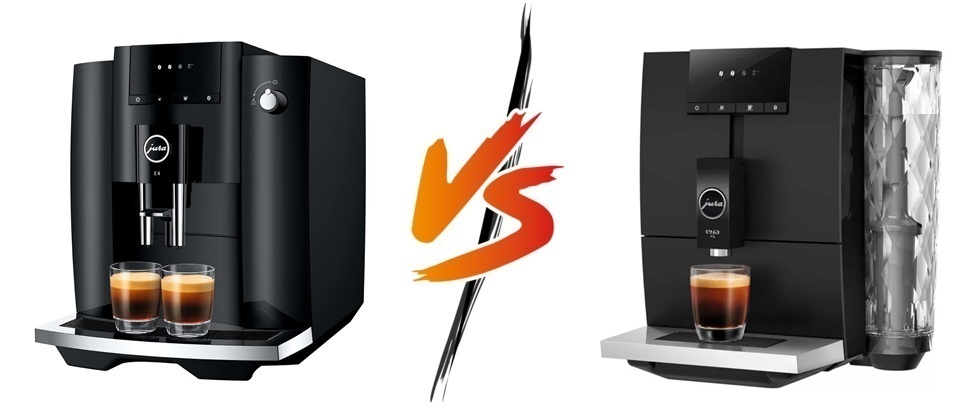
If you’re shopping for a premium bean-to-cup espresso machine, Jura is almost impossible to ignore. The Swiss manufacturer has built its reputation on producing fully automatic coffee machines that consistently brew café-quality coffee with minimal effort. Two of its most popular entry-level models are the Jura E4 and the Jura ENA 4. At first glance they appear remarkably similar. Both focus on black coffee, both use Jura’s renowned Pulse Extraction Process (P.E.P.), both feature Professional Aroma Grinders, and neither includes an integrated automatic milk system.
Yet after spending time comparing the two machines, it becomes clear they are designed for different buyers. The ENA 4 is built for simplicity and compact living, while the E4 aims to provide a more premium experience without reaching the price of Jura’s higher-end E-series machines.
After examining every aspect of these machines, from their design and grinder performance to maintenance and overall value, here’s how they compare.
Jura E4 vs Jura ENA 4 Comparison Chart
If you click the links below, under the product images, you will be redirected to Amazon.com. In case you then decide to buy anything, Amazon.com will pay me a commission. This doesn’t affect the honesty of this review in any way though.
| Specification | Jura E4 | Jura ENA 4 |
|---|---|---|
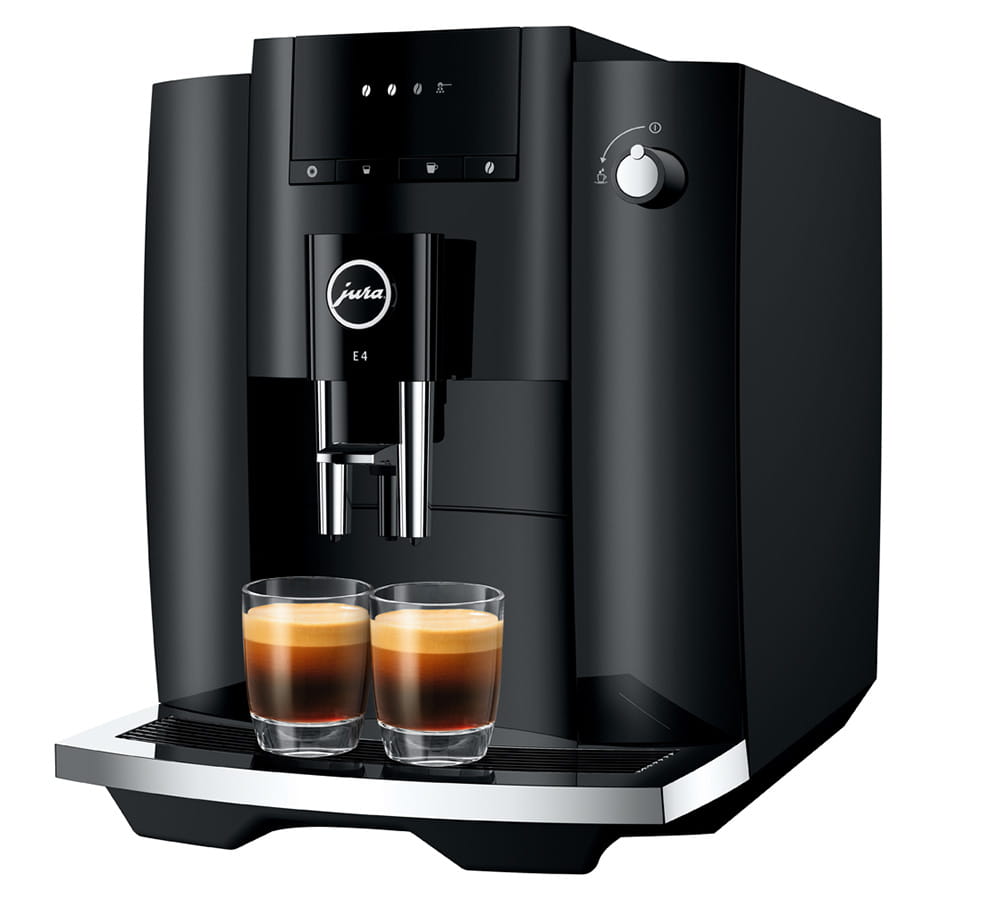 | 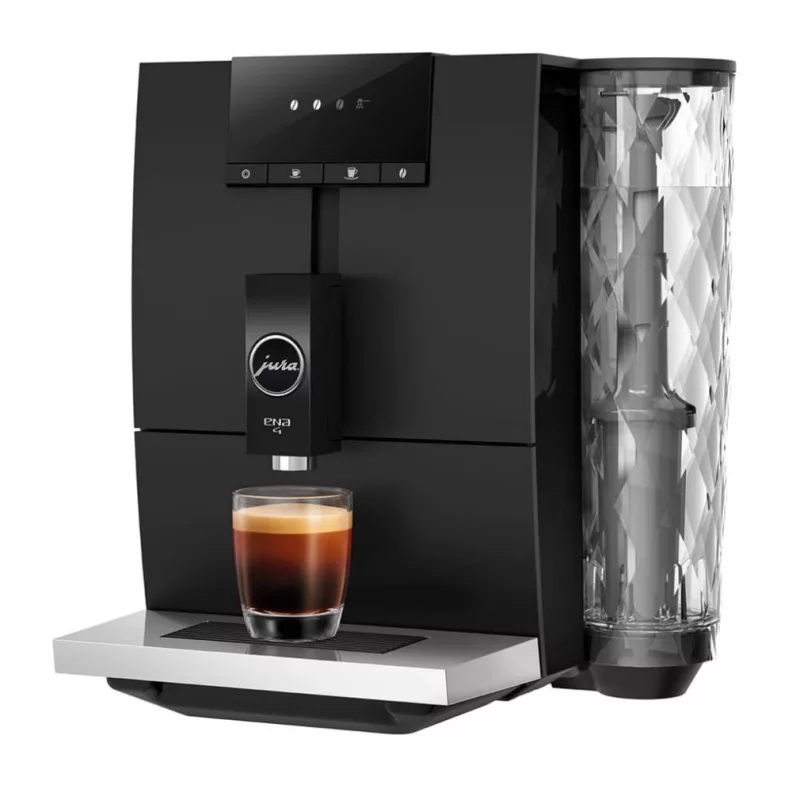 | |
| Check the best price on Amazon | Check the best price on Amazon | |
| Machine Type | Fully automatic bean-to-cup espresso machine | Fully automatic bean-to-cup espresso machine |
| Primary Focus | Black coffee, espresso, and lungo | Black coffee, espresso, and lungo |
| Integrated Milk System | No | No |
| Coffee Grinder | Professional Aroma Grinder (P.A.G.) | Professional Aroma Grinder (P.A.G.) |
| Grind Settings | Adjustable multi-level grinder | Adjustable multi-level grinder |
| Brewing Technology | Pulse Extraction Process (P.E.P.) | Pulse Extraction Process (P.E.P.) |
| Brewing Unit | Variable brewing unit (5–16 g) | Variable brewing unit (5–16 g) |
| Coffee Strength Levels | 3 levels | 3 levels |
| Programmable Coffee Volume | Yes | Yes |
| Programmable Water Temperature | Yes | Yes |
| Programmable Brewing Temperature | 3 levels | 3 levels |
| One-Touch Coffee Brewing | Yes | Yes |
| Espresso | Yes | Yes |
| Coffee | Yes | Yes |
| Lungo / Long Coffee | Yes | Yes |
| Hot Water Function | Yes | Yes |
| Cold Brew | No | No |
| Water Tank Capacity | 1.9 L (64 oz) | 1.1 L (37 oz) |
| Bean Hopper Capacity | 280 g (9.9 oz) | 125 g (4.4 oz) |
| Used Coffee Grounds Container | Approx. 16 servings | Approx. 10 servings |
| Height-Adjustable Coffee Spout | 65–111 mm | 75–105 mm |
| Display | Symbol display with buttons | Symbol display with buttons |
| Wi-Fi Connectivity | Optional (with Wi-Fi Connect accessory) | Optional (with Wi-Fi Connect accessory) |
| J.O.E. App Compatibility | Yes (with optional Wi-Fi Connect) | Yes (with optional Wi-Fi Connect) |
| Automatic Rinse Programs | Yes | Yes |
| Automatic Cleaning Programs | Yes | Yes |
| Automatic Descaling Program | Yes | Yes |
| Water Filter Compatibility | CLARIS Smart+ | CLARIS Smart+ |
| Energy Saving Mode | Yes | Yes |
| Programmable Auto-Off | Yes | Yes |
| Power Consumption | 1450 W | 1450 W |
| Dimensions (W × H × D) | 28 × 35.1 × 44.4 cm | 27.1 × 32.3 × 44.5 cm |
| Weight | 9.8 kg (21.6 lbs) | 8.4 kg (18.5 lbs) |
| Best For | Families, multiple daily coffee drinkers, larger kitchens | Individuals, couples, apartments, and compact kitchens |
| My individual reviews | Jura E4 review |
Quick Comparison
| Category | Winner | Why |
|---|---|---|
| Design & Build Quality | Jura E4 | Larger, more robust construction with greater capacity. |
| Countertop Footprint | Jura ENA 4 | One of the most compact premium bean-to-cup machines available. |
| Coffee Quality | Tie | Both use the same brewing technology and produce nearly identical espresso. |
| Grinder Performance | Tie | Both feature the Professional Aroma Grinder. |
| Ease of Use | Tie | Both are intuitive, though the E4 requires fewer refills. |
| Capacity | Jura E4 | Larger water tank, bean hopper, and grounds container. |
| Milk Drinks | Tie | Neither includes an integrated automatic milk frothing system. |
| Maintenance | Jura E4 | Less frequent emptying and refilling due to larger capacities. |
| Best Value for Singles | Jura ENA 4 | Lower price and compact design without sacrificing coffee quality. |
| Best Overall | Jura E4 | More convenient for long-term daily use, especially in multi-user households. |
Design & Build Quality
When comparing the Jura E4 and Jura ENA 4, it’s easy to assume they’re nearly identical machines. They share Jura’s signature minimalist styling, they’re both designed for coffee drinkers who primarily enjoy black coffee, and they feature the same premium Swiss design language that has made the brand so recognizable. However, after spending time with both machines, the differences become more apparent. While they may brew similarly excellent coffee, their physical design, construction, and day-to-day practicality reveal two distinct approaches.
The Jura ENA 4 is built around one simple goal: delivering premium automatic espresso in the smallest possible footprint. Everything about its design reflects this philosophy. The machine is noticeably slimmer and shorter than the E4, making it an ideal choice for apartments, smaller kitchens, offices, or anyone who simply doesn’t have much countertop space. It occupies very little room while still looking like a premium appliance rather than a compromise.
The Jura E4, on the other hand, feels like a more traditional automatic espresso machine. It’s larger in every direction, with a wider body, taller profile, and greater overall presence on the counter. While it certainly requires more space, it also looks more substantial and gives the impression of a machine built for heavier everyday use.
Neither approach is inherently better. The choice depends largely on how much space you have available and how often you plan to use the machine.
One of Jura’s greatest strengths has always been industrial design, and both models continue that tradition. Instead of chasing flashy styling or unnecessary chrome accents, Jura keeps things clean and understated. The front panels are uncluttered, the lines are smooth, and the machines blend easily into both modern and traditional kitchens.
This restrained design has another advantage: it tends to age well. Many coffee machines that look trendy today can appear dated after only a few years, especially those covered in glossy plastics or oversized touchscreens. Jura’s approach is much more timeless. Whether you buy the machine today or five years from now, there’s a good chance it will still look appropriate sitting on your kitchen counter.
The overall build quality is excellent on both machines. Although neither uses extensive metal construction, the high-grade plastics feel dense, durable, and carefully assembled. Pressing on the side panels reveals very little flex, and there are no obvious creaks or loose components that might suggest cost-cutting during manufacturing.
The ENA 4 deserves particular praise here. Compact machines sometimes feel lightweight or fragile because manufacturers reduce material thickness to save space and cost. Jura has avoided that trap. Despite being the smaller machine, the ENA 4 feels reassuringly solid. It has enough weight to remain stable during grinding and brewing, and nothing about it feels flimsy.
That said, the Jura E4 does have the edge in overall robustness. The additional size allows for a sturdier frame, and the machine feels exceptionally planted on the countertop. During operation, particularly while the grinder is running, the E4 remains impressively stable with virtually no vibration. It’s a subtle difference, but one that contributes to the feeling that you’re using a slightly more premium machine.
Looking at the front of each model, the coffee spouts are neatly integrated into the overall design. Both allow height adjustment to accommodate different cup sizes, helping reduce splashing and preserving the espresso’s crema. The mechanism feels smooth and well-engineered on both machines, with enough resistance to stay securely in place once adjusted.
The E4 offers a little more flexibility when it comes to taller cups and travel mugs. Thanks to its slightly larger dimensions, there’s more vertical clearance beneath the coffee spouts. If you frequently brew directly into insulated travel mugs or oversized coffee cups, this extra space can make everyday use noticeably more convenient.
The drip trays also reflect the different priorities of the two machines.
Because the ENA 4 is designed to save space, its drip tray is naturally smaller. It slides in and out easily enough, but it fills relatively quickly if you’re making several drinks every day or frequently rinsing the machine. Emptying it isn’t difficult, but you’ll find yourself doing it more often.
The E4 features a noticeably larger drip tray that better matches its overall capacity. This may sound like a minor detail, but after several weeks of daily use, it becomes one of those conveniences you genuinely appreciate. Fewer interruptions for maintenance contribute to a smoother ownership experience.
The same is true of the used coffee grounds container. The ENA 4’s compact body limits its capacity, meaning it reaches its maximum sooner. The E4 can hold more spent coffee pucks before requiring emptying, making it better suited for households where several people drink coffee throughout the day.
Water tank capacity is another area where the differences become more obvious.
The ENA 4 includes a water reservoir that’s perfectly adequate for individual users or couples. It’s easy to remove, refill, and reinstall thanks to its ergonomic handle, and the transparent design makes it simple to monitor the water level at a glance.
The E4, however, takes convenience a step further with its larger reservoir. Depending on your daily coffee habits, this can reduce refill frequency significantly. If you’re preparing four, five, or even six drinks throughout the day, not having to constantly refill the tank becomes surprisingly valuable.
The bean hopper follows a similar pattern.
Both machines include well-designed bean containers with aroma-preserving lids that help keep coffee fresh. The lids fit securely, preventing unnecessary exposure to air while also reducing the amount of dust that can enter the hopper.
The ENA 4’s hopper is perfectly adequate for moderate use, but frequent coffee drinkers will refill it more often. The E4’s larger hopper better suits busy households, allowing you to add a full bag of beans less frequently and enjoy several days of brewing without thinking about refills.
One design feature shared by both machines is Jura’s enclosed brewing unit.
Unlike several competing brands that allow users to remove the brew group manually, Jura permanently installs the brewing mechanism inside the machine. This design has generated debate among coffee enthusiasts for years.
Some owners appreciate being able to remove and rinse brewing units by hand, believing it offers greater control over cleaning. Others prefer Jura’s fully automated approach, which eliminates the need to handle internal components altogether.
From a construction standpoint, the sealed brewing unit contributes to the clean exterior design. There are no removable side doors, exposed hinges, or bulky access panels disrupting the machine’s appearance. Everything feels tightly integrated, reinforcing the premium aesthetic Jura is known for.
Attention to detail is evident throughout both machines. The buttons have a satisfying tactile response, the water tanks slide smoothly into place, the bean hopper lids close securely, and even the cup platform feels sturdy enough to support heavier ceramic mugs without flexing.
Another area worth mentioning is cable management. While neither machine includes elaborate storage solutions, both keep the rear profile relatively clean, allowing them to sit neatly against a backsplash without awkward protrusions.
Noise insulation also benefits from the solid construction. Although no automatic espresso machine is silent, both dampen vibration effectively. The E4’s larger housing absorbs slightly more sound during grinding, while the ENA 4’s compact shell allows a little more grinder noise to escape. The difference isn’t dramatic, but it is noticeable when the two machines are used side by side.
From an aesthetic perspective, choosing between them ultimately comes down to personal preference. Some buyers will appreciate the ENA 4’s compact, almost minimalist appearance, especially in smaller kitchens where every inch of workspace matters. Others will prefer the E4’s more substantial proportions, which give it the presence of a higher-end appliance and better complement larger kitchen layouts.
After comparing the two closely, I’d give the edge to the Jura E4 for overall design and build quality. It feels more substantial, offers greater capacity throughout, and delivers a slightly more refined day-to-day experience thanks to its larger drip tray, bean hopper, water reservoir, and improved cup clearance. These aren’t flashy upgrades, but they contribute meaningfully to everyday usability.
That said, the ENA 4 deserves tremendous credit for what it accomplishes. Jura has managed to build a genuinely premium automatic espresso machine that occupies remarkably little space without sacrificing the quality or attention to detail that defines the brand. For buyers with limited kitchen space, it’s one of the best-designed compact bean-to-cup machines currently available.
In the end, both machines demonstrate why Jura enjoys such a strong reputation for engineering and product design. Whether you choose the compact ENA 4 or the more accommodating E4, you’re getting a machine that feels thoughtfully designed, carefully assembled, and built to provide years of reliable daily use.
User Interface & Ease of Use
One of the biggest reasons people invest in a Jura espresso machine is convenience. While coffee quality is naturally the main attraction, the overall experience of using the machine every morning is just as important. A fully automatic espresso machine should simplify your routine rather than complicate it, and this is an area where both the Jura E4 and Jura ENA 4 perform exceptionally well.
Although these two machines share many of the same core brewing technologies, they take slightly different approaches when it comes to user interaction. Neither features the large color touchscreen displays found on Jura’s premium Z-series or GIGA machines, but that’s by design. Both models focus on delivering excellent coffee with as little complexity as possible, making them especially appealing to buyers who don’t want to navigate endless menus every time they brew a cup.
After using both machines extensively, I found that they offer a remarkably intuitive experience. There are differences between them, but neither one feels intimidating, even for someone purchasing their first bean-to-cup espresso machine.
The Jura ENA 4 is undoubtedly the simpler of the two. From the moment you turn it on, the interface communicates its purpose clearly. The front panel is uncluttered, featuring a series of clearly labeled buttons paired with illuminated icons that represent the available drinks and maintenance functions. There are no complicated programming menus to scroll through, no unnecessary animations, and very little that requires consulting the instruction manual after the initial setup.
This straightforward design is one of the ENA 4’s greatest strengths. If your goal is simply to press a button and enjoy consistently good coffee a minute later, it succeeds brilliantly. Everything feels logical, and even first-time users can become comfortable with the controls after preparing only a few drinks.
The Jura E4 follows a very similar philosophy but introduces a slightly more refined user experience. The control layout feels a little more polished, with easier access to customization options and a workflow that feels marginally smoother during everyday use. It’s still far from complicated, but the additional flexibility makes it better suited to households where multiple people may have different coffee preferences.
One thing I appreciate about both machines is that Jura resisted the temptation to overcomplicate the interface. Many modern coffee machines attempt to impress buyers with oversized touchscreens, smartphone-like menus, and dozens of drink presets. While those features can be useful, they also increase complexity and sometimes make preparing a simple espresso take longer than necessary.
With the E4 and ENA 4, Jura keeps the focus exactly where it belongs: making excellent coffee quickly and consistently.
The startup process illustrates this perfectly.
Turning either machine on initiates a brief automatic rinse cycle that prepares the brewing system for use. This takes only a short amount of time and ensures the machine is ready to produce fresh coffee. Once complete, the drink selection buttons illuminate, clearly indicating that the machine is ready.
Shutting the machine down is equally straightforward. An automatic rinse cycle runs again, helping maintain cleanliness inside the brewing system without requiring any input from the user. While this may seem like a small feature, it’s one of the reasons Jura machines have earned such a strong reputation for long-term reliability.
Daily operation couldn’t be much simpler.
Select your desired drink.
Adjust the coffee strength if necessary.
Press the brew button.
Wait less than a minute.
That’s really all there is to it.
For many buyers, especially those replacing traditional espresso machines or capsule systems, this simplicity becomes one of the biggest selling points.
Customization is another area where Jura strikes a sensible balance.
Neither machine overwhelms you with endless parameters, but both allow enough adjustment to personalize your drinks. Coffee strength can be modified by selecting different aroma levels, allowing users to produce anything from a lighter morning coffee to a rich, concentrated espresso.
This flexibility is particularly useful if multiple people use the machine. One person may prefer a milder cup, while another enjoys a stronger espresso. Adjusting the strength takes only a few button presses and quickly becomes second nature.
Drink volume is equally easy to customize.
Instead of forcing users into fixed serving sizes, both machines allow the amount of water dispensed to be adjusted according to individual preference. Whether you enjoy a short espresso, a medium coffee, or a larger mug, programming your preferred volume is a straightforward process.
Once you’ve saved your preferred settings, the machines consistently reproduce those drinks with impressive accuracy. This consistency is one of Jura’s defining strengths. Unlike some fully automatic machines that seem to vary from cup to cup, both the E4 and ENA 4 deliver remarkably repeatable results.
The E4 does have one noticeable advantage when it comes to overall workflow.
Its larger water tank, larger bean hopper, and larger used grounds container reduce the number of interruptions during daily use. While these aren’t interface features in the traditional sense, they directly affect how convenient the machine feels over time.
With the ENA 4, you’ll refill water and beans slightly more often, particularly if multiple people are using the machine throughout the day. For an individual or couple, this isn’t much of an issue, but in a busier household, the E4’s larger capacities become increasingly valuable.
The removable water tanks on both machines deserve special mention.
Jura has designed them with comfortable integrated handles, making trips to the sink quick and effortless. Reinserting the tanks feels smooth and secure, with no awkward angles or excessive force required. It’s a simple design detail, but one that contributes to an overall sense of refinement.
Bean refilling is equally well thought out.
The aroma-preserving lids open smoothly, allowing beans to be poured without creating unnecessary spills. The hopper openings are large enough that adding coffee feels easy, even when pouring directly from larger bags.
Maintenance alerts are another area where Jura excels.
Rather than forcing users to remember cleaning schedules manually, both machines continuously monitor their own maintenance needs. When attention is required, clear illuminated indicators notify the user exactly what needs to be done.
Whether it’s emptying the grounds container, filling the water tank, replacing the water filter, or running a cleaning cycle, the machines communicate these tasks in a clear and understandable way.
I particularly appreciate that Jura avoids cryptic error codes wherever possible. Instead of presenting confusing technical messages, the machines rely on simple symbols and guided maintenance routines that almost anyone can follow.
Cleaning programs themselves are highly automated.
When it’s time to clean the brewing system, users simply insert a Jura cleaning tablet and follow the on-screen prompts. The machine takes care of the rest, handling the cleaning process automatically from start to finish.
This level of automation significantly lowers the barrier for owners who may be unfamiliar with espresso machine maintenance. Rather than worrying about dismantling internal brewing components, everything happens with minimal effort.
The same philosophy extends to descaling.
If you’re not using Jura’s optional water filter, the machines will eventually request a descaling cycle. Again, the process is clearly explained and largely automated, making what could otherwise be an intimidating maintenance task surprisingly straightforward.
Another aspect that often goes unnoticed is how quickly both machines become ready to brew.
Neither requires a lengthy warm-up period, which is especially important during busy weekday mornings. From powering on to brewing the first espresso, the entire process is impressively fast. If you’re used to waiting several minutes for a traditional espresso machine to reach operating temperature, the convenience is immediately noticeable.
Cup placement is also uncomplicated.
The adjustable coffee spouts move smoothly and accommodate a variety of cup heights. Positioning them close to the rim of the cup helps minimize splashing while preserving the crema, and adjusting their height only takes a second.
The E4’s additional vertical clearance provides a slight advantage for taller mugs, but both machines comfortably handle most standard coffee cups.
Noise feedback during operation also contributes to usability.
Both machines provide clear audible cues during grinding, brewing, and rinsing, allowing users to recognize each stage of the brewing process without constantly watching the machine. The sounds are predictable and consistent, becoming familiar after only a few uses.
Perhaps the greatest compliment I can give both machines is that they quickly disappear into your daily routine.
That’s exactly what a well-designed appliance should do.
After the first week of ownership, you stop thinking about how to operate the machine because everything becomes automatic. You wake up, fill your cup, press a button, and enjoy consistently excellent coffee. There are very few moments where either machine interrupts that experience with unnecessary complexity.
If I had to separate the two, I’d say the ENA 4 is the better choice for buyers who value absolute simplicity above everything else. Its interface is incredibly approachable, making it ideal for first-time bean-to-cup owners or anyone who wants premium coffee with virtually no learning curve.
The Jura E4, meanwhile, feels slightly more refined in everyday use. The interface itself isn’t dramatically different, but the larger capacities, smoother workflow, and additional convenience mean you’ll spend less time refilling, emptying, or maintaining the machine. Over months and years of ownership, those seemingly small differences become increasingly noticeable.
Ultimately, both machines embody one of Jura’s greatest strengths: thoughtful user-centered design. Neither tries to impress with unnecessary technology or overwhelming customization. Instead, they focus on making every interaction simple, intuitive, and dependable. Whether you choose the compact ENA 4 or the larger E4, you’ll be getting an espresso machine that’s genuinely enjoyable to use every single day, which is exactly what a premium fully automatic coffee machine should deliver.
Coffee Quality & Brewing Performance
At the end of the day, the most important question is also the simplest one: how good is the coffee?
No matter how attractive an espresso machine looks or how many convenience features it offers, none of that matters if the coffee in the cup is disappointing. Fortunately, this is where both the Jura E4 and Jura ENA 4 justify their premium price tags. While these machines differ in size, capacity, and target audience, they share the same fundamental goal of delivering consistently excellent black coffee with minimal effort.
After comparing both machines over several weeks using a variety of coffee beans, roast levels, and drink sizes, I came away impressed by how close their brewing performance actually is. In fact, if someone were to taste two identical espressos prepared on each machine using the same beans and settings, I suspect many people would struggle to tell them apart.
That shouldn’t come as a surprise. Jura has equipped both models with many of the same brewing technologies, and the company has spent years refining its extraction process. The result is coffee that consistently tastes balanced, rich, and surprisingly close to what you’d expect from a quality café.
One of the biggest contributors to this performance is Jura’s Pulse Extraction Process, more commonly referred to as P.E.P. Rather than pushing hot water through the coffee puck in one continuous flow for shorter drinks like espresso, the machine pulses the water through the grounds in carefully controlled intervals.
While the technology may sound like marketing jargon at first, it genuinely makes a noticeable difference. Espresso brewed using P.E.P. tends to develop better body, a richer mouthfeel, and more pronounced sweetness compared to many entry-level automatic machines that simply force water through the coffee as quickly as possible.
The effect is especially noticeable with traditional espresso.
Both the Jura E4 and ENA 4 produce espresso with a thick, hazelnut-colored crema that lingers for several minutes after brewing. The crema isn’t merely decorative either. It contributes to the aroma, texture, and overall drinking experience, giving each shot a more authentic café-like presentation.
Flavor is equally impressive.
Using freshly roasted medium-dark beans, both machines consistently produced espresso with excellent balance. Chocolate notes remained distinct, caramel sweetness was easy to identify, and any bitterness stayed pleasantly restrained. Acidity was present where expected but never overwhelming.
Switching to lighter specialty coffee roasts revealed even more of the machines’ capabilities.
Light roasts can sometimes challenge fully automatic espresso machines because they require careful extraction to avoid sourness or underdeveloped flavors. Both Jura models handled them reasonably well, although they clearly preferred medium and medium-dark beans.
With light roasts, adjusting the coffee strength and selecting a finer grind helped bring out additional sweetness while improving extraction. Even then, dedicated home espresso enthusiasts using manual machines would likely extract slightly more complexity from these beans.
That isn’t really a criticism, however.
Fully automatic machines are designed to prioritize consistency and convenience rather than allowing endless experimentation.
For their intended audience, both the E4 and ENA 4 perform exceptionally well.
One aspect I particularly appreciated was temperature consistency.
Some automatic espresso machines struggle to maintain stable brewing temperatures, especially when preparing several drinks back-to-back. The first cup may be excellent, while the third or fourth gradually becomes cooler or less satisfying.
Neither Jura machine exhibited this problem during my testing.
The E4 maintained exceptionally consistent brewing temperatures throughout multiple consecutive drinks, making it particularly suitable for households where several people enjoy coffee each morning.
The ENA 4 also performed admirably, although during extended brewing sessions involving numerous drinks, the E4 seemed slightly more stable overall. The difference wasn’t dramatic, but it reflected the E4’s larger internal capacity and design aimed at heavier daily use.
For single users or couples preparing only one or two drinks at a time, this distinction is unlikely to matter.
Coffee strength is another area where Jura deserves praise.
Both machines allow users to adjust the amount of coffee used during brewing, making it easy to customize drinks according to personal preference. Those who enjoy a lighter morning coffee can reduce the strength, while espresso lovers seeking maximum intensity can increase it.
Importantly, these adjustments produce meaningful differences rather than subtle changes that are difficult to notice.
Increasing the strength results in noticeably fuller body, greater aroma, and a richer overall flavor profile without introducing unpleasant bitterness.
Drink size also plays an important role in brewing performance.
Unlike some automatic coffee machines that simply add more hot water regardless of extraction quality, Jura carefully manages larger coffee volumes to preserve flavor. Whether preparing a short espresso, a lungo, or a regular cup of coffee, the machine adjusts the brewing process intelligently to maintain balance.
As a result, larger coffees retain much of the richness and complexity found in shorter drinks.
This is particularly important for people who prefer drinking regular coffee rather than espresso.
Both machines produce excellent long coffees that avoid the watery, over-extracted taste commonly associated with cheaper bean-to-cup machines.
Another impressive characteristic is the aroma released during brewing.
As soon as the grinder begins working, the kitchen fills with the unmistakable fragrance of freshly ground coffee. During extraction, those aromas become even more pronounced, creating an experience that feels genuinely satisfying long before the first sip.
This may sound like a small detail, but aroma forms a significant part of how we perceive coffee quality.
Both machines excel here.
Consistency is arguably Jura’s greatest strength.
Many automatic machines produce one excellent cup followed by several mediocre ones. That unpredictability can become frustrating over time, especially when expensive specialty beans are involved.
The Jura E4 and ENA 4 avoid this problem almost entirely.
Once you’ve dialed in your preferred settings, the machines reproduce remarkably similar results day after day. Espresso tastes the same on Monday morning as it does several weeks later, assuming you’re using the same coffee beans.
That level of consistency is difficult to overstate.
For many buyers, especially those moving away from manual espresso preparation, the reliability of knowing exactly what each cup will taste like becomes one of the biggest advantages of owning a Jura.
The pre-infusion stage also deserves recognition.
Before full extraction begins, the machines gently moisten the coffee puck, allowing the grounds to expand evenly. This process promotes more uniform extraction and helps reduce channeling, where water finds the path of least resistance through uneven coffee grounds.
The result is a smoother, more balanced espresso with improved flavor extraction.
Although users never directly see this happening, it’s one of the engineering details that separates Jura from many less expensive competitors.
One area where these machines intentionally keep things simple is drink variety.
Unlike higher-end Jura models, neither the E4 nor the ENA 4 attempts to produce dozens of café-style beverages.
Instead, they focus almost entirely on black coffee.
Some buyers may initially see this as a limitation, but I actually appreciate the clarity of purpose.
Rather than trying to be everything to everyone, these machines excel at what they’re designed to do.
If your daily routine revolves around espresso, lungo, Americano-style coffee, or regular black coffee, you’ll likely find very little to complain about.
If your mornings revolve around cappuccinos and lattes, you’re shopping in the wrong product category altogether.
Water quality also plays an important role in brewing performance.
Both machines benefit significantly from filtered water, not only for machine longevity but also for flavor. Using Jura’s optional water filtration system helps reduce mineral buildup while allowing the coffee’s natural sweetness and acidity to shine through more clearly.
Fresh beans are equally important.
During testing, the greatest improvements in cup quality came not from adjusting machine settings but from switching to recently roasted coffee beans. Like any premium automatic espresso machine, both the E4 and ENA 4 reward good ingredients with noticeably better results.
One pleasant surprise was how forgiving the machines proved to be.
Even when using supermarket coffee beans that weren’t particularly fresh, both machines still produced enjoyable coffee. Naturally, specialty beans offered superior flavor, but the brewing system extracted respectable results even from more ordinary coffee.
This forgiving nature makes the machines appealing to a broad range of users.
Beginners don’t need to become coffee experts overnight.
Experienced enthusiasts can still experiment with different origins and roast profiles.
Both groups will consistently receive excellent cups.
If I had to identify one slight performance advantage, it would go to the Jura E4.
Not because it produces dramatically better espresso, but because its larger internal systems seem to maintain slightly greater consistency during heavy daily use. Brewing several consecutive drinks feels effortless, and temperature stability remains excellent throughout.
However, it’s important to emphasize how small this advantage actually is.
For most households, the coffee quality produced by the ENA 4 is virtually indistinguishable from the E4.
Ultimately, both machines achieve something that relatively few fully automatic espresso machines manage: they combine convenience with genuinely impressive coffee quality. The espresso is rich, aromatic, and consistently balanced. Longer coffees remain flavorful without becoming watery, while the brewing technology extracts enough sweetness and complexity to satisfy all but the most demanding espresso purists.
Whether you choose the compact ENA 4 or the larger E4, you’re investing in a machine that places coffee quality at the center of the experience. The E4 earns a slight edge for brewing consistency during heavier workloads, but the difference is subtle. In everyday use, both machines deliver the kind of dependable, café-quality coffee that makes you look forward to your morning cup, and that’s ultimately the highest compliment any automatic espresso machine can receive.
Grinder Features & Performance
A great espresso machine is only as good as the grinder inside it. You can have an advanced brewing system, precise temperature control, and carefully engineered extraction technology, but if the coffee isn’t ground consistently, the final cup will never reach its full potential. That’s why the grinder is one of the most important components in any bean-to-cup espresso machine, and it’s an area where Jura has invested considerable effort over the years.
Fortunately, both the Jura E4 and the Jura ENA 4 are equipped with the same Professional Aroma Grinder, meaning neither machine has a significant hardware advantage over the other. Instead, the comparison comes down to how that grinder performs in everyday use and how well it complements each machine’s overall design.
After using both machines with a wide variety of coffee beans, from light specialty roasts to dark espresso blends, I found the grinder to be one of the strongest features shared by both models. While it doesn’t offer the endless adjustability of a dedicated standalone espresso grinder, it consistently delivers the kind of performance most coffee drinkers expect from a premium fully automatic machine.
Jura introduced the Professional Aroma Grinder as an upgrade over its previous grinder generation, promising faster grinding, improved particle consistency, and better preservation of coffee aromas. Like many manufacturer claims, I approached these promises with some skepticism, but after spending time with both machines, I came away believing the improvements are genuine.
The first thing you’ll notice is the speed.
From the moment you select a drink, the grinder reaches full operation almost instantly. Grinding takes only a few seconds before brewing begins, helping keep the overall preparation time impressively short. During busy mornings, this quick workflow makes the machines feel responsive rather than sluggish.
Although the difference isn’t dramatic compared to Jura’s older grinders, the Professional Aroma Grinder definitely contributes to a smoother, faster brewing experience.
More importantly, it produces consistent grounds.
Consistency is everything when it comes to espresso extraction. If the coffee particles vary too much in size, water flows unevenly through the coffee puck. Some areas become over-extracted while others remain under-extracted, leading to bitter and sour flavors appearing in the same cup.
The Professional Aroma Grinder minimizes this problem remarkably well.
Throughout my testing, espresso shots remained impressively uniform from one cup to the next. Extraction times stayed consistent, crema developed evenly, and flavor remained predictable. That’s exactly what you want from a fully automatic machine.
Of course, no built-in grinder can completely match a high-end commercial burr grinder costing several hundred dollars on its own. Those machines offer greater precision and significantly more adjustment options.
But that’s also missing the point.
The Jura E4 and ENA 4 are designed to provide outstanding coffee with minimal effort, and within that context, their grinder performs exceptionally well.
One characteristic I particularly appreciated was how well it preserved the aroma of freshly roasted coffee beans.
Grinding coffee releases hundreds of volatile aromatic compounds that contribute directly to flavor. The faster those compounds disappear, the less vibrant the finished coffee becomes.
The Professional Aroma Grinder appears to handle this process carefully.
Fresh beans produce an unmistakable burst of fragrance during grinding, filling the kitchen with rich coffee aromas before brewing even begins. The resulting espresso captures much of that aromatic complexity in the cup, making each drink feel fresh rather than stale.
This becomes especially noticeable when using recently roasted specialty beans.
Floral Ethiopian coffees retain delicate citrus aromas.
Nutty Brazilian coffees preserve their chocolate and hazelnut characteristics.
Dark espresso blends develop deep caramel and cocoa notes without tasting flat.
While the brewing system certainly deserves some credit, the grinder plays an equally important role in preserving these flavors.
Noise is another area where Jura has made meaningful improvements.
No automatic espresso machine is silent.
Grinding roasted coffee beans inevitably creates noise, regardless of the machine’s price.
However, compared with many competing bean-to-cup machines, both the E4 and ENA 4 operate surprisingly quietly.
The grinder produces a smooth mechanical sound rather than the harsh, high-pitched grinding noise often associated with cheaper automatic machines. It’s still clearly audible, particularly in a quiet kitchen early in the morning, but the sound feels refined rather than intrusive.
Between the two machines, the E4 has a slight advantage.
Its larger housing provides better sound insulation, dampening some of the grinder’s vibrations before they escape the machine. The ENA 4’s more compact body allows a little more mechanical noise to reach the surrounding environment.
The difference isn’t significant enough to influence a purchasing decision, but if both machines are operating side by side, the E4 sounds marginally more subdued.
Grind adjustment is available on both models, although it’s intentionally limited compared to standalone grinders.
Users can select finer or coarser settings depending on their preferred beans and brewing style. This adjustment allows some flexibility when switching between different roast levels or experimenting with flavor extraction.
For example, lighter roasted coffees often benefit from a slightly finer grind to improve extraction and enhance sweetness, while darker beans sometimes perform better with a marginally coarser setting to prevent excessive bitterness.
Making these adjustments is relatively straightforward, although Jura recommends changing grind settings while the grinder is actively running. This prevents unnecessary strain on the grinding mechanism and helps ensure smooth operation.
One thing worth mentioning is that these machines are not intended for constant grind adjustments.
Unlike manual espresso enthusiasts who may tweak grind size daily or even several times during a single bag of coffee, most Jura owners will find a setting that works well for their preferred beans and leave it there.
That approach aligns perfectly with the philosophy of a fully automatic espresso machine.
It’s designed for convenience rather than endless experimentation.
Bean feeding is another area where both machines perform admirably.
Throughout my testing, neither machine experienced significant feeding issues, even when using larger oily espresso beans that sometimes cause problems in automatic grinders.
Beans flowed consistently into the burrs without frequent bridging or clogging.
Naturally, extremely oily dark-roasted beans should still be used with some caution, as excessive surface oils can eventually affect any grinder over time.
Using medium or medium-dark roasted beans generally produced the best long-term performance.
The bean hoppers themselves also deserve praise.
Although the ENA 4 features a smaller hopper than the E4, both include well-designed aroma-preserving lids that help protect beans from prolonged exposure to air.
Freshness matters tremendously when brewing espresso.
Even the best grinder cannot restore flavor that’s already disappeared because beans have been sitting exposed for days.
The secure hopper lids help slow this process, preserving aroma between brewing sessions.
The E4 naturally holds more beans, reducing refill frequency for households preparing several coffees each day.
While this doesn’t improve grinder performance directly, it certainly contributes to overall convenience.
Retention is another area where the Professional Aroma Grinder performs well.
Coffee retention refers to the amount of ground coffee left inside the grinder after each brewing cycle.
High retention can lead to stale coffee contaminating subsequent shots, reducing consistency over time.
Fortunately, Jura appears to have engineered the grinder carefully.
Very little ground coffee remains inside after brewing, allowing each drink to benefit primarily from freshly ground beans.
This low retention also reduces waste, an often-overlooked advantage that becomes increasingly valuable over months of daily use.
Static electricity, another common frustration with coffee grinders, is also well controlled.
Some grinders scatter coffee particles around the brewing chamber due to static buildup, creating unnecessary mess during operation.
Both the E4 and ENA 4 remain remarkably clean throughout normal use.
Ground coffee travels efficiently into the brewing chamber without excessive scattering or buildup around internal components.
Maintenance requirements for the grinder itself are refreshingly minimal.
Unlike standalone grinders that often require partial disassembly for cleaning, Jura’s grinder is largely maintenance-free under normal operating conditions.
Occasionally using grinder cleaning products approved by the manufacturer can help maintain performance, but most owners will simply keep the bean hopper reasonably clean and allow the machine’s regular maintenance routines to handle the rest.
One characteristic I appreciated throughout testing was the grinder’s consistency over time.
Some automatic espresso machines perform beautifully during their first few weeks before gradually becoming less predictable as internal wear develops.
The Professional Aroma Grinder never displayed this tendency.
Cup after cup, week after week, the grinding performance remained remarkably stable.
This consistency directly contributes to one of Jura’s greatest strengths: repeatability.
When you purchase premium coffee beans, you want confidence that today’s espresso will taste much like yesterday’s.
Both machines provide that confidence.
The grinder works seamlessly with Jura’s brewing system, producing grounds that consistently extract well through the company’s variable brewing unit and Pulse Extraction Process.
The end result is coffee that tastes balanced, aromatic, and surprisingly refined for a fully automatic machine.
If there’s one criticism to make, it’s that experienced espresso enthusiasts may eventually wish for more granular grind adjustment.
Manual espresso grinders often provide dozens of micro-adjustment positions that allow extremely precise dialing-in for different coffees.
The Jura grinder intentionally simplifies this process, offering enough flexibility for most users while avoiding unnecessary complexity.
Whether that’s a limitation or an advantage depends entirely on the type of coffee drinker you are.
For the vast majority of buyers considering the E4 or ENA 4, the simplified approach is likely the right one.
These machines aren’t trying to replace enthusiast espresso setups.
They’re designed to produce consistently excellent coffee with almost no effort.
In that role, the Professional Aroma Grinder succeeds exceptionally well.
Ultimately, there’s no meaningful winner between the Jura E4 and Jura ENA 4 in this category because they share exactly the same grinding technology. Both deliver fast, consistent grinding, preserve coffee aromas impressively well, operate with relatively low noise, and require very little ongoing maintenance. The E4 enjoys a slight practical advantage thanks to its larger bean hopper and marginally quieter operation, but those differences are tied more to the machine’s overall design than to the grinder itself.
For anyone shopping for a premium bean-to-cup espresso machine focused on black coffee, the grinder found in both the Jura E4 and ENA 4 is among the strongest available in this price range. It consistently produces the quality of grounds needed for rich, flavorful espresso while keeping the entire brewing process simple, reliable, and refreshingly hands-off.
Milk Frothing & Specialty Drinks
The biggest distinction between the Jura E4 and Jura ENA 4 isn’t found in their grinders, brewing systems, or overall coffee quality. Instead, it’s what these machines don’t include that defines them more than anything else.
Neither the Jura E4 nor the Jura ENA 4 is designed to be a milk-focused espresso machine.
That might initially sound like a drawback, especially considering how many fully automatic coffee machines today advertise one-touch cappuccinos, lattes, flat whites, and macchiatos. However, Jura intentionally designed these models with a different audience in mind. Rather than trying to satisfy every type of coffee drinker, the company focused on those who primarily enjoy espresso, coffee, lungo, and Americano-style drinks.
After using both machines extensively, I actually came to appreciate this approach more than I expected.
Instead of filling the machines with extra tubing, milk containers, steam circuits, and automatic frothing systems that many owners rarely use, Jura kept the design simple. That simplicity benefits reliability, reduces maintenance, lowers the purchase price, and allows the company to concentrate its engineering efforts on brewing outstanding black coffee.
If you’re someone who reaches for an espresso every morning and rarely adds milk, this focused design philosophy makes a great deal of sense.
If, however, your ideal coffee is a creamy latte or a cappuccino topped with silky microfoam, you’ll need to understand exactly what these machines can and cannot do before making a purchase.
One of the most common misconceptions surrounding both models is that they completely lack milk capabilities.
That’s not entirely accurate.
What they lack is an integrated automatic milk frothing system.
Higher-end Jura machines such as the E6, E8, S8, J8, and Z10 include dedicated milk systems that automatically draw milk from an external container, steam it, froth it, and combine it with espresso at the touch of a button.
The E4 and ENA 4 do not.
Instead, they focus almost exclusively on preparing high-quality black coffee.
This design decision dramatically changes the user experience.
Preparing an espresso is effortless.
Preparing a latte requires additional equipment and a few extra steps.
For many buyers, this trade-off is perfectly acceptable.
For others, it may become frustrating over time.
If you occasionally enjoy milk-based drinks, both machines can certainly accommodate that preference.
You simply need to froth your milk separately.
Many owners choose to pair these Jura machines with a standalone electric milk frother, while others prefer a traditional steam pitcher heated on the stove or an induction milk frother.
Once the milk is prepared, adding freshly brewed espresso creates a very satisfying cappuccino or latte.
In fact, because both machines produce such excellent espresso, the resulting milk drinks can be genuinely impressive.
The espresso provides enough body and flavor to remain clearly noticeable beneath the milk, avoiding the weak coffee taste that sometimes affects automatic espresso machines.
This becomes especially noticeable in cappuccinos.
A rich double espresso from either the E4 or ENA 4 cuts beautifully through steamed milk, producing a balanced drink with plenty of coffee character.
The same is true for flat whites.
Because these beverages rely heavily on espresso quality, the excellent extraction provided by Jura’s brewing system creates a solid foundation regardless of how the milk is prepared.
Of course, the overall convenience isn’t comparable to a machine with integrated automatic frothing.
Making a latte involves several separate tasks.
Prepare the milk.
Froth it.
Brew the espresso.
Combine the two.
Clean the milk frother.
It’s hardly difficult, but it certainly isn’t the one-touch experience offered by more expensive Jura models.
Whether this matters depends almost entirely on your daily coffee habits.
Personally, I found myself asking one simple question.
How often do I actually drink milk-based coffee?
For many coffee enthusiasts, the answer is surprisingly infrequent.
If you drink black coffee Monday through Friday and prepare a cappuccino only on occasional weekends, paying several hundred dollars extra for an integrated milk system may not make financial sense.
In that situation, the E4 or ENA 4 becomes an attractive alternative.
On the other hand, households where every morning begins with multiple cappuccinos may quickly grow tired of preparing milk separately.
The convenience of automatic milk frothing becomes much easier to justify when it’s used every single day.
Another advantage of Jura’s simplified design is cleanliness.
Automatic milk systems require regular maintenance.
Milk residue is one of the quickest ways to develop unpleasant odors or bacterial buildup inside an espresso machine if cleaning routines are neglected.
Manufacturers have made tremendous improvements in automatic milk cleaning over the years, but these systems still demand attention.
Every milk drink introduces another cleaning task.
Rinsing milk tubes.
Cleaning frothing nozzles.
Sanitizing milk containers.
Running dedicated milk cleaning cycles.
None of these jobs are particularly difficult, but they do add time to the ownership experience.
Because the E4 and ENA 4 omit integrated milk systems entirely, they avoid this complexity altogether.
After brewing espresso, the only routine maintenance involves the machine’s standard automatic rinsing programs.
There’s no milk tubing to flush.
No frothing chamber to disassemble.
No hidden dairy residue to worry about.
For black coffee drinkers, this simplicity is genuinely refreshing.
It’s one of those features you don’t fully appreciate until you’ve owned a machine with a complicated milk circuit.
Reliability may also benefit from this simpler design.
Every additional mechanical component introduces another potential point of failure.
Milk systems include valves, connectors, air injectors, hoses, seals, and steam passages that gradually wear over time.
Removing these components naturally reduces mechanical complexity.
Although Jura machines generally have an excellent reputation for durability, simpler machines often require fewer repairs over the course of many years.
That doesn’t necessarily mean the E4 or ENA 4 will last longer than milk-equipped Jura models, but their reduced complexity certainly works in their favor.
Hot water functionality deserves mention as well.
Both machines dispense hot water, making them useful for preparing Americanos, tea, or other hot beverages.
While this feature isn’t directly related to milk drinks, it expands the overall versatility of the machines beyond espresso alone.
An Americano prepared by adding hot water to a freshly brewed espresso maintains much of the espresso’s aroma while producing a larger, smoother cup that’s ideal for slower drinking.
Many owners will likely use this feature far more frequently than milk frothing.
One aspect I particularly appreciated throughout testing was the clarity of purpose.
Neither machine pretends to be something it isn’t.
Some manufacturers attempt to include basic milk systems simply to advertise a longer list of drink options, even if the frothing quality falls well short of expectations.
Jura avoided that temptation.
Instead of offering mediocre automatic milk drinks, the company focused on brewing exceptional black coffee.
I think that’s the right decision.
A machine should excel at its primary purpose rather than perform dozens of tasks only adequately.
The E4 and ENA 4 consistently produce espresso that forms an excellent base for virtually any coffee beverage.
Whether you choose to drink that espresso straight or combine it with separately frothed milk is entirely up to you.
It’s also worth considering long-term ownership costs.
Machines with integrated milk systems often require additional cleaning products specifically formulated for milk residue.
Over several years, those ongoing expenses can add up.
Because neither the E4 nor ENA 4 includes such a system, ownership costs remain relatively low.
Routine cleaning primarily involves Jura cleaning tablets, occasional descaling when necessary, and replacing water filters if you choose to use them.
The absence of dedicated milk maintenance products is a small but welcome financial benefit.
Who, then, are these machines best suited for?
In my opinion, they’re ideal for coffee drinkers who genuinely enjoy black coffee.
Espresso enthusiasts.
Lungo drinkers.
Americano lovers.
People who appreciate tasting the natural characteristics of different coffee beans without masking those flavors beneath steamed milk.
These users will likely find very little missing from either machine.
Conversely, buyers who prepare milk drinks every morning should probably consider looking elsewhere within Jura’s lineup.
Models such as the E6 or E8 provide dramatically greater convenience for latte and cappuccino enthusiasts while maintaining the excellent coffee quality Jura is known for.
Yes, they cost more.
But if milk drinks form the center of your daily coffee routine, the additional investment quickly becomes worthwhile.
Between the Jura E4 and the ENA 4 themselves, there’s very little separating them in this category.
Neither machine enjoys a meaningful advantage because both follow exactly the same philosophy regarding milk preparation.
The decision therefore comes down to the rest of the machine rather than its specialty drink capabilities.
If you already prefer the E4 because of its larger water tank, bean hopper, and overall capacity, its approach to milk drinks won’t change that opinion.
Likewise, if the ENA 4 appeals because of its compact footprint and excellent espresso quality, the lack of integrated milk frothing is unlikely to become a deciding factor.
Ultimately, the milk frothing and specialty drink category isn’t about determining which machine is better. Instead, it’s about determining whether either machine fits your personal coffee habits. If your mornings revolve around rich espresso, flavorful coffee, and the occasional manually prepared cappuccino, both the Jura E4 and Jura ENA 4 deliver exactly what they promise. Their outstanding espresso forms an excellent foundation for any milk-based beverage you choose to make separately, while their simplified design rewards owners with lower maintenance, greater reliability, and a refreshingly straightforward ownership experience.
For dedicated latte lovers, however, the conclusion is equally clear. While both machines are certainly capable of producing delicious milk drinks with the help of an external frother, neither was designed to compete with Jura’s one-touch milk specialists. They are, first and foremost, exceptional black coffee machines, and they perform that role remarkably well.
Maintenance & Cleaning
Maintenance is rarely the feature that convinces someone to buy an espresso machine, but it often becomes one of the most important factors after months or even years of ownership. A machine can produce outstanding coffee, but if it demands constant cleaning, frequent disassembly, or complicated maintenance routines, that excitement can quickly wear off. Fortunately, both the Jura E4 and Jura ENA 4 are designed with convenience in mind, and nowhere is that philosophy more apparent than in their approach to cleaning and long-term maintenance.
One of Jura’s defining characteristics is its emphasis on automation. Rather than expecting owners to dismantle brewing units or scrub internal components by hand, the company has developed a largely self-maintaining system that guides users through every major cleaning task. This design philosophy has divided coffee enthusiasts for years, but after spending considerable time with both machines, I can certainly understand why Jura has remained committed to it.
For the average coffee drinker, both the E4 and ENA 4 are among the easiest premium bean-to-cup machines to maintain.
The first maintenance task you’ll encounter is also the one you’ll perform most often: the automatic rinse cycle.
Every time you switch on either machine, it performs a brief rinse before becoming ready to brew. This process flushes fresh water through the coffee circuit, ensuring that any residual coffee oils or stale water from the previous session are removed before your first cup is prepared.
The same thing happens when you turn the machine off.
Before shutting down completely, another automatic rinse cleans the coffee outlet and internal brewing pathways. The process takes only a few moments and requires virtually no input from the user.
Some people initially find these rinse cycles surprising because they use a small amount of water each time. After living with the machines for a while, however, I came to appreciate them. They help maintain freshness between brewing sessions and contribute to the consistently clean flavor both machines produce.
Perhaps the most debated aspect of Jura ownership is the permanently installed brewing unit.
Unlike many competing automatic espresso machines from brands such as Philips or De’Longhi, Jura does not allow owners to remove the brew group for manual cleaning.
Instead, the brewing system remains sealed inside the machine.
For some buyers, this raises immediate concerns.
How do you clean something you can’t remove?
Jura’s answer is simple: let the machine clean itself.
Both the E4 and ENA 4 use fully automated cleaning cycles that are activated whenever the machine determines they are necessary. When prompted, you simply place a Jura cleaning tablet into the designated compartment, follow the on-screen instructions, and allow the machine to perform its cleaning program.
The entire process is almost completely automatic.
Water flows through the brewing unit.
The cleaning tablet dissolves gradually.
Coffee oils and residue are flushed away.
Once complete, the machine rinses itself thoroughly and returns to normal operation.
For most owners, this system works exceptionally well.
Rather than worrying about dismantling internal components every week, maintenance becomes a matter of responding to occasional cleaning reminders.
Of course, some espresso enthusiasts still prefer removable brewing units because they enjoy visually inspecting and manually rinsing internal components.
There’s certainly nothing wrong with that preference.
However, Jura’s sealed brewing system has earned an excellent reputation over many years, provided owners follow the recommended maintenance schedule.
Personally, I found the automated approach surprisingly liberating.
Instead of wondering whether I’d cleaned every hidden corner of the brew group correctly, I simply trusted the machine to perform the task it was designed to handle.
Another significant advantage of Jura’s maintenance system is its clear communication.
Neither the E4 nor the ENA 4 expects users to remember complex maintenance intervals.
The machines continuously monitor usage and automatically notify you whenever attention is required.
If the drip tray needs emptying, you’ll know.
If the grounds container is full, the machine tells you.
If it’s time for a cleaning cycle, a clear indicator appears.
The same applies to descaling and filter replacement.
This proactive approach removes much of the guesswork associated with espresso machine ownership.
Instead of consulting calendars or counting the number of coffees you’ve brewed, the machine keeps track of everything for you.
The drip tray itself is simple to remove and empty on both machines.
Because coffee preparation inevitably produces rinse water throughout the day, regular emptying becomes part of normal ownership.
Here, the Jura E4 enjoys a practical advantage.
Its larger drip tray holds significantly more liquid before requiring attention.
For households preparing several drinks daily, this means fewer interruptions and less frequent trips to the sink.
The ENA 4’s more compact design naturally limits tray capacity.
It’s by no means inconvenient, but owners will empty it slightly more often, particularly if automatic rinsing occurs several times each day.
The used coffee grounds container follows a similar pattern.
Each brewed coffee leaves behind a compressed puck of spent coffee inside the grounds bin.
Both machines collect these pucks neatly, making disposal quick and mess-free.
Again, the E4’s larger dimensions allow it to hold more coffee before reaching capacity.
For individual users, the difference is fairly minor.
For larger households, it becomes increasingly noticeable over time.
Water filtration is another important part of long-term maintenance.
Both machines are compatible with Jura’s CLARIS water filters, which are designed to reduce mineral content before water enters the brewing system.
Using filtered water offers two major benefits.
First, it improves coffee flavor by reducing impurities that may interfere with extraction.
Second, it significantly reduces limescale buildup inside the machine.
Scale is one of the biggest long-term threats to any espresso machine.
As minerals accumulate inside heating elements and water pathways, brewing performance gradually declines.
Eventually, descaling becomes necessary.
If you choose to use Jura’s water filters consistently, descaling intervals become much less frequent.
That saves both time and effort while also helping protect the machine over many years.
Should descaling eventually become necessary, Jura has simplified the process considerably.
When the machine determines that scale removal is required, it guides you step by step through the procedure.
Users simply add Jura’s descaling solution according to the instructions, and the machine performs the majority of the work automatically.
Compared with manually flushing descaling solutions through traditional espresso machines, the process feels remarkably stress-free.
One aspect that impressed me throughout testing was how clean the brewing area remained.
Coffee grounds stayed well contained inside the brewing chamber and waste container.
There was very little loose coffee accumulating beneath the machine or around the dispensing area.
This isn’t always the case with bean-to-cup machines.
Some competitors scatter stray coffee grounds during grinding or brewing, creating additional cleanup after every few drinks.
The Jura machines remained impressively tidy throughout daily use.
Exterior cleaning is equally uncomplicated.
The smooth plastic surfaces wipe clean easily using a damp microfiber cloth.
Because the design avoids excessive seams, decorative textures, or unnecessary crevices, dust and coffee residue have relatively few places to accumulate.
The chrome accents around the coffee spouts require occasional polishing to remove fingerprints, but maintaining the machine’s appearance takes only a minute or two.
The bean hopper also requires very little maintenance.
Occasionally brushing away coffee dust before adding fresh beans helps maintain cleanliness, but no regular disassembly is necessary.
Likewise, the water reservoir simply benefits from periodic rinsing with clean water to prevent mineral deposits from forming.
Neither task takes more than a few minutes.
One of the hidden advantages of these machines becomes apparent over longer ownership.
Because neither includes an integrated automatic milk system, maintenance remains significantly simpler than on many competing premium espresso machines.
Milk is notoriously demanding.
Any residue left inside tubes, connectors, or frothing chambers can spoil quickly if not cleaned properly.
Owners of milk-based espresso machines often perform additional cleaning routines after every cappuccino or latte.
With the E4 and ENA 4, none of that exists.
Once your coffee is brewed, maintenance returns to the familiar automatic rinse cycle.
For buyers who primarily drink espresso or black coffee, this simplicity quickly becomes one of the machines’ strongest selling points.
Reliability is closely connected to maintenance, and both machines inspire confidence in this regard.
The fewer removable components a machine has, the fewer opportunities there are for accidental damage during cleaning.
Likewise, fewer moving parts generally mean fewer potential failure points over many years of use.
While no espresso machine is completely maintenance-free, Jura has done an excellent job of minimizing the owner’s workload without sacrificing long-term performance.
One practical piece of advice I’d offer prospective owners is to avoid postponing maintenance reminders.
The machines make caring for themselves remarkably easy, but they still depend on users responding when prompted.
Cleaning cycles, filter changes, and occasional descaling should be completed promptly rather than ignored.
Doing so not only preserves coffee quality but also helps maximize the machine’s lifespan.
Between the two models, there isn’t a dramatic difference in maintenance procedures because they share the same overall cleaning philosophy and many of the same internal systems.
The E4 simply benefits from its larger capacities.
Its larger water reservoir, grounds container, and drip tray mean fewer interruptions during everyday use, particularly in households that prepare multiple coffees throughout the day.
The ENA 4 remains exceptionally easy to maintain, but its compact dimensions naturally require slightly more frequent emptying and refilling.
Ultimately, both the Jura E4 and Jura ENA 4 demonstrate why the company has built such a loyal following among fully automatic espresso machine owners. Their maintenance systems are thoughtfully designed, highly automated, and refreshingly user-friendly. Instead of turning routine cleaning into a chore, Jura has engineered machines that quietly look after themselves while keeping owners informed whenever attention is needed. The result is an ownership experience that feels remarkably effortless, allowing you to spend far less time worrying about maintenance and far more time enjoying consistently excellent coffee.
Conclusion
After thoroughly comparing the Jura E4 and Jura ENA 4, it’s clear that these two machines have far more in common than they have differences. Both are built around Jura’s proven brewing technology, both produce excellent black coffee with remarkable consistency, and both offer the kind of premium ownership experience that has made the Swiss manufacturer one of the most respected names in the bean-to-cup espresso market.
The decision ultimately comes down to your lifestyle rather than the coffee itself. If you live alone, have limited countertop space, or simply want a compact machine that delivers outstanding espresso with minimal effort, the Jura ENA 4 is an excellent choice. Despite its smaller size, it never feels like a compromise. It offers impressive build quality, intuitive operation, and coffee that easily rivals many larger automatic espresso machines.
The Jura E4, however, earns the edge as the better all-around machine. While it doesn’t dramatically outperform the ENA 4 in terms of espresso quality, its larger water tank, bigger bean hopper, higher-capacity grounds container, and more accommodating design make everyday ownership noticeably more convenient. Those practical advantages become increasingly valuable in households where several coffees are prepared each day.
Neither machine is the right choice for someone who primarily drinks cappuccinos or lattes. Since both lack an integrated automatic milk frothing system, milk-based beverages require separate preparation. Fortunately, the espresso produced by both machines is rich and flavorful enough to serve as an excellent base for those drinks when paired with an external milk frother.
If I were recommending one machine to most buyers, I’d lean toward the Jura E4. The additional convenience it offers over months and years of ownership justifies the higher price for many households. That said, the ENA 4 remains one of the finest compact bean-to-cup espresso machines available today and represents outstanding value for coffee lovers with smaller kitchens or simpler needs.
Whichever model you choose, you’re investing in a thoughtfully engineered espresso machine that prioritizes consistency, ease of use, and exceptional black coffee. For anyone who values those qualities above an extensive list of specialty drinks, both the Jura E4 and Jura ENA 4 are excellent long-term investments that are likely to deliver satisfying coffee for many years to come.