Choosing a fully automatic espresso machine is about more than finding something that can grind beans and produce a decent cup of coffee. That right machine should slot into your daily routine. It should make consistently good coffee, be straightforward to operate, offer enough flexibility for different drinks, and not turn cleaning and maintenance into another household chore.
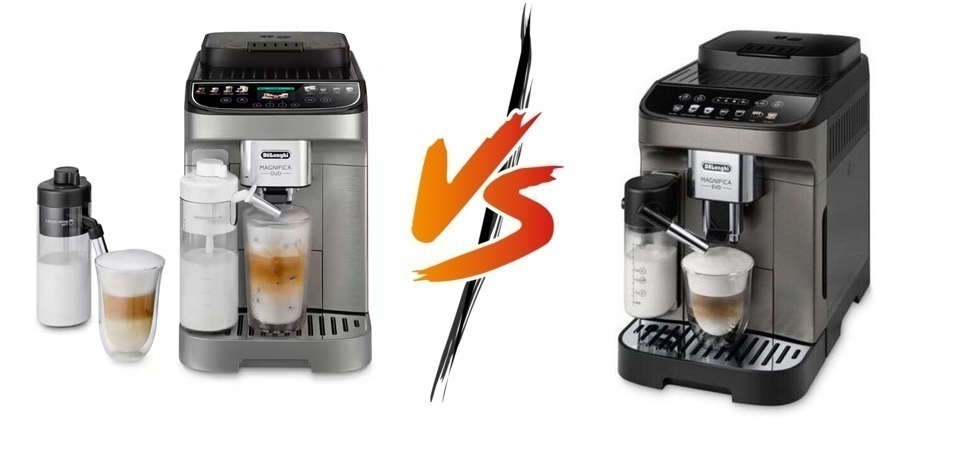
De’Longhi has a solid name in this space, especially with its Magnifica range. Two machines worth a close look are the De’Longhi Magnifica Duo and the De’Longhi Magnifica Evo. Both bring bean-to-cup coffee into the home, with an integrated grinder, automatic brewing and easy drink prep. But they go about it in quite different ways.
The Magnifica Evo is the more established and simpler option. It focuses on everyday favourites, with a fairly simple interface and a choice of milk systems depending on the version. The Magnifica Duo goes further, with a more advanced interface, a wider drink selection, extra personalisation and dedicated cold-drink prep.
At first glance, the Duo might seem like the obvious winner. More features, more drinks, more flexibility. But more functions don’t automatically make a machine the better buy. Some people just want a reliable espresso or cappuccino each morning, without extra menus or paying for features they’ll rarely touch.
The Magnifica Evo makes a strong case of its own. It has much of the essential bean-to-cup tech from the pricier Duo, including a conical burr grinder, adjustable grind settings, automatic brewing and, on selected versions, De’Longhi’s LatteCrema milk system.
So how much do the differences matter day to day? Does the Magnifica Duo actually make better coffee, or is its real edge the bigger drink menu? Is the Magnifica Evo still the smarter buy for someone who wants simplicity? And how do they stack up on cleaning, noise, energy use and long-term value?
In this comparison I’ll look at both machines across eight key categories: design and build quality, interface and ease of use, coffee quality and brewing, grinder performance, milk frothing and specialty drinks, maintenance and cleaning, energy use and noise, and overall value for money.
A note about model variations: The Magnifica Evo is available in several configurations. Some have a manual steam wand, others an automatic LatteCrema milk carafe. Those differences matter, especially for milk drinks and cleaning. This review uses the Magnifica Evo ECAM290-series as its reference, with the ECAM29084SB automatic-milk version and the ECAM29043SB manual-wand version as examples. The Magnifica Duo side focuses on the ECAM33080SXB. Specifications and drink selections can vary between countries, so always check the exact model number before purchasing.
De’Longhi Magnifica Duo vs De’Longhi Magnifica Evo Comparison Chart
If you click the links below, under the product images, you will be redirected to Amazon.com. In case you then decide to buy anything, Amazon.com will pay me a commission. This doesn’t affect the honesty of this review in any way though.
| Specification | De’Longhi Magnifica Duo | De’Longhi Magnifica Evo |
|---|---|---|
 |  | |
| Check the best price on Amazon | Check the best price on Amazon | |
| Machine type | Fully automatic bean-to-cup | Fully automatic bean-to-cup |
| Control panel | Colour display | Touch-icon control panel |
| Pump pressure | 15 bar | 15 bar |
| Grinder | Integrated conical burr grinder | Integrated conical burr grinder |
| Grind settings | 13 | 13 |
| Bean hopper capacity | Approx. 250 g | Approx. 250 g |
| Water tank capacity | Approx. 1.8 L | Approx. 1.8 L |
| Coffee strength adjustment | Yes | Yes |
| Coffee volume adjustment | Yes | Yes |
| User profiles | Up to 3 on supported models | Not typically available |
| Number of drink options | Up to 20 on supported models | Varies by model, generally fewer |
| Espresso | Yes | Yes |
| Coffee / Long Coffee | Yes, depending on recipe selection | Yes, depending on model |
| Cappuccino | Yes | Yes on supported milk models |
| Latte Macchiato | Yes | Yes on supported milk models |
| Milk frothing system | LatteCrema automatic system | Automatic LatteCrema or manual steam wand |
| Cold coffee options | Yes, including cold recipes on supported models | Over Ice on selected models |
| Cold milk frothing | Supported on suitable configurations | More limited |
| Pre-ground coffee option | Yes | Yes |
| Automatic rinsing | Yes | Yes |
| Removable brewing unit | Yes | Yes |
| Automatic descaling programme | Yes | Yes |
| Removable water tank | Yes | Yes |
| Removable drip tray | Yes | Yes |
| Coffee grounds container | Yes | Yes |
| Approximate dimensions (W × D × H) | 24 × 44 × 36 cm | 24 × 44 × 36 cm |
| Rated power (US versions) | Approx. 1,450 W | Approx. 1,250 W |
| Energy-saving mode | Yes | Yes |
| Intended user | Coffee drinkers wanting variety and customisation | Users wanting convenient everyday coffee |
| Typical price positioning | Higher-priced | More affordable |
| My individual reviews | De’Longhi Magnifica Duo review |
Key Differences at a Glance
| Category | Better choice | Why? |
|---|---|---|
| Design and display | Magnifica Duo | More modern colour display |
| Ease of use | Magnifica Evo | Simpler, more direct controls |
| Drink variety | Magnifica Duo | Broader selection of hot and cold recipes |
| Coffee quality | Very similar | Both use comparable automatic brewing technology |
| Grinder performance | Very similar | Similar grinder design and adjustment options |
| Milk frothing | Magnifica Duo | Automatic milk preparation and broader drink options |
| Cold beverages | Magnifica Duo | More extensive cold-drink capabilities |
| Cleaning | Magnifica Evo (manual-wand version) | Fewer milk-system components to clean |
| Personalisation | Magnifica Duo | More extensive settings and user profiles |
| Value for money | Magnifica Evo | Lower entry price for everyday coffee |
Which One Should You Buy?
- Choose the Magnifica Duo if you want a more advanced display, a wider range of coffee recipes, cold beverages, automatic milk frothing and greater personalisation.
- Choose the Magnifica Evo if you want freshly ground coffee, straightforward controls and good everyday performance at a generally lower price.
Overall recommendation: The Magnifica Duo is the more feature-rich machine, while the Magnifica Evo is the sensible choice for buyers who prioritise value and simplicity.
Note: Exact specifications can differ between ECAM33080SXB, ECAM29043SB, ECAM29084SB and other regional variants. Check the manufacturer’s specification sheet for the exact model before purchasing.
Design & Build Quality
Design and build quality matter for reasons beyond picking whichever automatic espresso machine looks best on the counter. These are fairly substantial appliances, and most people keep them in one spot for years. So appearance, dimensions, materials, and construction all deserve a close look. A good machine should look attractive, feel reasonably solid, make its components easy to reach, and hold up to daily use.
The De’Longhi Magnifica Duo and De’Longhi Magnifica Evo handle these needs a bit differently. Both stick to the familiar Magnifica playbook from De’Longhi, with a built-in bean hopper, a removable water reservoir, automatic brewing and a dispenser up front. Where they part ways is looks: the Duo comes off more modern and refined, and the Evo keeps things simpler and more traditional.
The machines look pretty similar from far away. Get closer, though, and the control panels, finishes, milk systems and practical design details start to stand out.
De’Longhi Magnifica Duo: Modern styling with a more sophisticated appearance
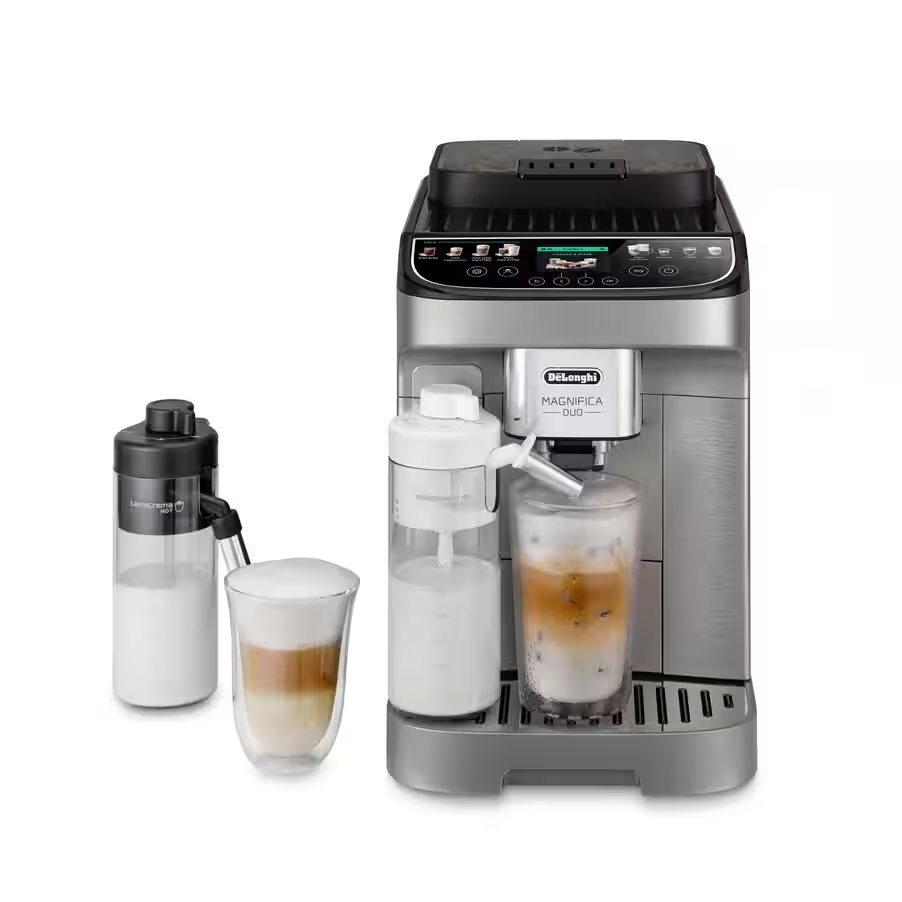
The Magnifica Duo immediately comes across as the more advanced machine. Its design is fairly contemporary, with a clean front panel, carefully arranged controls and a colour display that sets it apart from many of the simpler bean-to-cup machines in the same product family.
The front-facing interface is one of the first things you’ll notice. Instead of relying entirely on small illuminated drink icons, the Duo has a colour screen that gives the machine a more premium look. The display sits in the front panel. And gives you one central place to access drinks, personalisation options and machine settings.
I particularly like how this design makes the machine feel more like a modern kitchen appliance than a traditional coffee maker. It looks relatively uncluttered even though it offers considerably more functionality than the standard Magnifica Evo.
The overall body combines smooth surfaces with gently curved edges. De’Longhi hasn’t tried to make the machine look overly industrial or complicated. Instead, it’s gone for a practical design that should fit comfortably into most contemporary kitchens.
The coffee dispensing area sits at the front, so you can place your cups directly underneath the outlets. The adjustable dispenser is another useful detail, because it accommodates different cup sizes. That matters when you switch between small espresso cups, standard coffee mugs and taller glasses for iced drinks.
An adjustable coffee outlet also helps cut down on splashing. When you prepare espresso, you can lower the dispenser so the coffee falls a shorter distance into the cup. For larger drinks, you can raise it to accommodate the extra height.
The Duo’s bean hopper sits on top of the machine, following the conventional layout used by most automatic espresso machines. It holds about 250 g, which is enough for a reasonable quantity of coffee beans without constant refilling.
The lid helps protect the beans from dust and other kitchen contaminants. It doesn’t offer the same protection as storing beans in an airtight container, but it’s perfectly adequate for normal daily use.
The water reservoir is another important part of the design. Positioned for convenient removal, it lets you refill the machine without moving the entire appliance. This is particularly useful when the machine is positioned underneath kitchen cabinets, where access to the top may be restricted.
That approximate dimensions of the Magnifica Duo are 24 x 44 x 36 cm. That makes it relatively compact given the number of features included. Its depth is worth considering before buying, though. You’ll need enough room behind and around the machine to remove the water tank, access the bean compartment and carry out routine maintenance.
One design consideration is the Duo’s more extensive milk preparation arrangement. Its LatteCrema technology supports automatic hot and cold milk preparation, which gives the machine considerably more flexibility than a conventional automatic coffee maker. The more milk components do mean you’ll need somewhere to store the carafes when they aren’t attached to the machine, though.
For people with plenty of counter space, this probably won’t be a big inconvenience. In smaller kitchens, though, the extra accessories can make the overall setup feel slightly less streamlined.
Materials and construction of the Magnifica Duo
On materials, the Magnifica Duo uses a combination of plastic exterior components and more substantial internal mechanical parts. This is fairly typical of fully automatic espresso machines in its price category.
The exterior doesn’t have the luxurious feel of a machine built primarily from stainless steel, but that isn’t necessarily a major disadvantage. Plastic helps keep the overall weight manageable, reduces manufacturing costs and makes the exterior relatively easy to clean.
What matters is whether the machine feels solid enough during normal operation.
The Duo is designed to handle the vibrations that come with grinding coffee beans, pumping water and running the automatic brewing mechanism. Its removable components are meant to be handled regularly, so they need to fit securely and stay practical to access.
This drip tray, water reservoir and brewing components matter most here. You’ll interact with these parts frequently, and poorly designed removable components can quickly become frustrating.
Overall, the Duo gives a reasonably reassuring impression of quality. Its main appeal is the mix of modern styling and functional construction rather than the use of particularly expensive exterior materials.
De’Longhi Magnifica Evo: Practical design with a more traditional appearance
The Magnifica Evo goes a different route. De’Longhi didn’t chase a fancy look here. Instead, the company focused on making the machine seem simple, practical, and easy to walk up to.
At first glance the Evo looks like a standard automatic espresso machine. Its body is fairly compact, there’s a built-in bean hopper, a water reservoir you can pull out. And the coffee dispenser sits in the middle.
What stands out first is the control panel.
Instead of a color screen, the Evo uses a lit touch-icon panel. Each icon stands for one drink or function. So you pick your coffee without digging through menus.
This machine ends up looking simpler and less complicated too.
Honestly, this approach works well. The Evo keeps things clean up front. And its panel is pretty easy to read. If you’ve never used a fully automatic espresso machine before, you can still figure out the main controls without digging through the manual.
Body shape-wise, it’s close to the Duo: smooth outside, rounded edges. Looks fairly plain, which works in kitchens where a big appliance shouldn’t draw too much attention.
You get different colour combos and finishes on the Evo, depending on which ECAM290 model you pick. Black and silver turn up the most, and either one is neutral enough to sit well with the rest of your kitchen appliances.
What I like about the Evo is its focus on accessibility. You can pull out the water reservoir to refill it, the drip tray slides out for cleaning, and getting to the coffee grounds container is pretty simple.
These might seem like minor details, but they’ve a noticeable effect on everyday convenience.
Roughly 24 x 44 x 36 cm. That puts the Evo at about the same counter footprint as the Duo. Fewer features, but it’s not much smaller.
Keep this in mind if limited kitchen space is the main reason you’re looking at the Evo. The simpler interface makes it seem a bit less bulky, though it takes up about the same room.
The bean hopper sits on top and holds around 250 g of beans. That’s plenty for regular home use, and the water tank comes off, so refilling is easy.
Another practical touch is the adjustable dispenser. It lets you fit different cup sizes, and you can move smaller espresso cups up close to the spouts.
The drip tray has a cup-support surface and catches excess water from automatic rinsing. You can pull it out to clean it, which keeps coffee residue and water deposits from building up around the dispensing area.
Differences between the Evo’s milk-system designs
One thing that matters when you look at the Evo’s design: not every version uses the same milk preparation system.
One example: the ECAM29084SB ships with an automatic LatteCrema milk carafe. Because that milk container clips onto the machine whenever cappuccinos or other milk drinks are being made, the front of the unit ends up a bit bulkier.
This carafe comes out, so you can keep leftover milk in the fridge instead of leaving it in the machine.
This is particularly useful for people who prepare milk drinks regularly. However, it does introduce another component that needs to be cleaned and stored.
The ECAM29043SB is an example of the manual steam-wand version, which looks simpler. Milk frothing here happens with a traditional steam wand, not an automatic milk container.
The front design gets simpler, and there’s less gear to keep track of.
The catch is that milk drinks take more work to make. You’ll need a separate milk jug, plus practice, to get the texture right.
Design-wise, I’d call the Evo with the manual wand the simpler pick. This automatic LatteCrema version is the one to get if convenience matters more.
Build quality and what holds up day to day
Plastic is what you get on the outside of both machines, so don’t expect either to feel like a stainless-steel espresso machine. Inside, though, both are built for the wear and tear of regular home use.
A big reason the brewing unit comes out is that it lets users get at one of the most important parts for regular cleaning.
The water reservoir, grounds container and drip tray come out and go back in without any fuss.
These components are likely to receive considerably more handling than the machine’s exterior, so their fit and ease of use matter.
The Duo feels a bit more sophisticated, mainly because its display and overall presentation are more advanced. The Evo comes across as simpler and more practical.
I wouldn’t say one of these machines lasts way longer than the other. They’re part of the same product family, and they’re built along similar lines.
Durability over the long haul on any automatic espresso machine comes down mostly to upkeep. Keep the brewing unit clean, empty the drip tray, look after the milk system, descale when it needs it. Do that and the machine keeps running the way it should.
So which one is designed better?
Honestly, that depends on what you prefer and how you plan to use it.
The Magnifica Duo looks like the fancier pick. A colour display, a modern front panel and a bigger milk system make it seem more advanced. It also comes across as a machine built for anyone who wants more than just basic espresso and coffee.
The Magnifica Evo looks simpler and more traditional. Controls light up and are easy to follow, the removable parts are within reach, and the whole thing is built around practical daily use.
Neither machine has a major advantage for physical dimensions or fundamental construction quality. Both occupy a similar amount of counter space, use predominantly plastic exterior materials and include the essential removable components needed for routine maintenance.
Duo takes this one for me. It looks modern and the interface feels more refined, so the whole thing comes across as the pricier appliance. The Evo, though, is the quieter, more practical pick, especially if you want a machine that sits in your kitchen without drawing much notice.
Design & Build Quality Verdict: The De’Longhi Magnifica Duo wins on looks, thanks to its modern styling, colour display and overall sharper presentation. The Magnifica Evo is still a solid pick, particularly if you’d rather have a simple design and controls that don’t take much figuring out. When it comes to build and how well each holds up day to day, there isn’t much between them.
User Interface & Ease of Use
The user interface plays a big part in how much you enjoy owning a fully automatic coffee machine. Even a machine capable of making excellent espresso can become frustrating if choosing a drink involves too many steps, adjusting settings is confusing, or everyday cleaning routines are difficult to understand. And that’s where the De’Longhi Magnifica Duo and Magnifica Evo go their separate ways.
Both machines aim to make bean-to-cup coffee easy. They grind fresh beans, prep drinks at the touch of a button. And take care of most of the brewing on their own. However, the Magnifica Duo is aimed at people who want a wider selection of drinks and more control over their coffee routine, while the Magnifica Evo keeps day-to-day use simple.
You notice the gap most in the control panels, how you pick drinks, and how much you can personalise. Neither machine is hard to learn, but the Duo packs in more features, whereas the Evo is generally easier to understand at first glance.
The Magnifica Duo: A More Advanced Control Experience
The Magnifica Duo has a more modern interface, built around a colour display and clearly presented drink options. Instead of leaning only on simple lit icons, it gives you a more visual way to move through the machine’s functions.
That matters when you’re exploring the drinks on offer. With a broader menu that can include hot coffee, milk-based beverages and cold drinks, a display helps the selection process feel more organised. You can see which drink you’re picking instead of memorising a bunch of symbols or button combos.
For anyone who likes experimenting with different coffee styles, that’s a real advantage. You might want a straightforward espresso in the morning, a cappuccino later on, and an iced coffee when it’s warmer. With the Duo’s interface, switching between them feels more intuitive.
That display also makes the machine’s extra features easier to find. A larger menu can sometimes make an appliance feel complicated, but a well-organised screen reduces the need to remember which button performs a particular function. It gives the Duo a more contemporary feel and makes it easier to access its broader range of capabilities.
Personalisation options are another plus. Depending on the exact configuration, the Duo supports user profiles so different people in the house can save their preferred drink settings. This is particularly useful in homes where people have different tastes.
One person might prefer a shorter, stronger espresso, while another may enjoy a larger coffee with a milder flavour. Instead of adjusting the settings every time, users can select their profile and return to their preferred setup. It’s a small convenience, but one that becomes increasingly valuable when several people use the machine regularly.
The Duo also gives you more flexibility when choosing drinks and adjusting how they’re prepared. This doesn’t mean every possible setting is available for every beverage, but it gives users more opportunities to tailor their coffee routine than they generally get with the simpler Evo interface.
The Magnifica Evo: Simplicity at the Touch of a Button
The Magnifica Evo takes a simpler path. Its control panel uses lit touch icons for the available drinks and functions. The design is clean and fairly uncluttered, so you can spot the main options without working through a fancier display.
That simplicity is one of the Evo’s best traits. If you want a coffee before work, you don’t necessarily need a big screen, multiple menus, or lots of customisation options. You want to press a button and get a consistent drink.
The Evo is well suited to that kind of routine. Once the machine has been filled with beans and water, preparing a coffee is generally a simple process. Select the desired drink, make any necessary adjustments and allow the machine to handle grinding and brewing.
The lit icons are especially helpful if you prefer visual controls over traditional buttons. They make the options easy to recognise, and the fairly limited selection means less to learn.
There’s also something appealing about the Evo’s less complicated layout. It doesn’t try to turn coffee prep into a detailed menu-driven experience. Instead, it keeps the most frequently used functions close at hand.
The trade-off is fewer chances to explore different settings and drinks, depending on the model. The Evo range includes several configurations, so the exact selection of drinks and controls can vary. Some models give you an automatic milk carafe, others a manual steam wand. This affects the way milk-based drinks are prepared and how much interaction is required.
If you mostly drink espresso, black coffee, or a limited set of milk-based drinks, the Evo’s interface may be plenty. But if you like trying different recipes or share a machine with several coffee drinkers, its simpler controls may feel restrictive over time.
One of the clearest differences between the two machines is the way they handle drink selection.
The Magnifica Duo is built around a broader menu, and it supports a much wider variety of hot and cold drinks. Its colour display helps keep this larger selection manageable. You can explore the available recipes and pick what you want without leaning entirely on memory.
That helps in households where coffee preferences shift through the day. One machine might have to serve espresso drinkers, cappuccino fans and people who prefer iced beverages. The Duo’s wider selection makes it more adaptable to those different needs.
The Evo focuses more on the drinks most people make regularly. Its touch-icon panel keeps those choices visible, so there’s less navigation involved. For everyday use, that can actually be a plus. You spend less time looking through options and more time enjoying the coffee.
The key distinction is that more choices don’t automatically make a machine easier to use. The Duo offers greater flexibility, but the Evo can feel more immediate since its interface is simpler.
Adjusting Coffee Strength and Size
Ease of use isn’t only about picking a drink. It’s also about tweaking things a little to match what each person likes.
Both machines let you control key parts of the brewing process, like drink size and coffee strength. The exact adjustments and controls differ from model to model. That matters, since hardly anyone agrees on what makes the perfect cup.
Some people want a short, strong espresso. Others go for a bigger cup that isn’t so concentrated. If you can change how much coffee goes in or dial the strength up or down, an automatic machine works for a lot more people.
The Magnifica Duo’s interface feels more put together, so these options work together better. Working through what’s available is easier on its display, and you can see which settings you’re changing. That pretty helps if you like to tinker until you land on a recipe you like.
The Evo is a simpler machine. Controls are easier to figure out, though it doesn’t push customisation as hard. You can still make adjustments that matter. Just don’t expect the range of options the Duo gives you.
For people just starting out, that’s not necessarily a bad thing. Fewer settings mean the machine feels less intimidating. If you’ve been drinking coffee for years, though, you might like the extra flexibility the Duo gives you.
Milk-Based Drinks and the Learning Curve
This milk system also plays a big role in how simple each machine is to use.
The LatteCrema system on the Magnifica Duo handles milk prep for you. Pick a milk drink on a supported version and the machine takes over frothing and pouring. So cappuccinos and lattes are a lot easier to make at home.
Cold milk support adds flexibility to the Duo as well. If you like iced milk drinks, you get options that basic automatic machines typically don’t offer.
Which Evo you buy changes the experience a lot. Automatic LatteCrema carafe models make milk drinks just as easy. Pick a recipe and the machine handles the milk on its own.
Other Evo models come with a manual steam wand. You have to be more hands-on here, since you’re the one holding the milk jug, turning on the steam, and building the texture you want. Getting consistent microfoam takes practice, especially if you’ve never touched a steam wand before.
Still, doing it by hand has its perks. You get more control over the texture of the milk, and you pick up some basic barista skills along the way. If you actually like the process of making coffee instead of just hitting a button, that’s a plus.
For ease of use, the Duo wins on consistency since its automatic milk system sits at the heart of the machine. Add an automatic carafe to the Evo and it’s just as convenient, though the manual-wand versions take more work and practice.
Daily Cleaning and Maintenance Controls
Routine upkeep should be easy to figure out too. Both models have automatic rinsing and parts you can pull out, so cleaning doesn’t turn into a chore.
The Magnifica Duo’s screen makes it easier to show what the machine is doing and walk users through the features. That honestly helps with cleaning routines and checking status. A fancier interface still doesn’t mean you can skip regular maintenance.
The Evo keeps things pretty simple. Indicators and controls let you know when to pay attention, though what the messages and warnings actually say varies by model.
You still have to empty the grounds container on both machines, refill the water tank, clean the drip tray, and run the descaling routine they recommend. On models with an automatic milk carafe, milk-system cleaning matters a lot. The carafe and its parts need regular care so milk residue doesn’t build up.
Manual-wand Evo skips some of the extra cleaning that comes with an automatic milk carafe. You still have to wipe and purge the wand after each use, though. That’s a different kind of upkeep, not a lack of it.
Which Machine Is Easier to Use?
It comes down to what convenience means for you.
For anyone who just wants a straightforward bean-to-cup machine, the Magnifica Evo is probably the better pick. Nothing much to learn here. The touch-icon interface makes sense right away and the main drinks are easy to find, which suits people who make the same few cups every day.
The Magnifica Duo fits anyone who wants more choice and more ways to make it their own. A colour display makes the bigger drink menu simpler to get around, and extra settings plus user profiles give households with mixed tastes more room to adjust. You’ll have a bit more to pick up, though the interface keeps those extras within reach.
Both machines are easy to run. Evo keeps things simple, and Duo gives you more options and control. Want a coffee maker that nails the basics without much fuss? The Evo makes a strong case. If you like trying different recipes and want something more tailored, the Duo does more.
Coffee Quality & Brewing Performance
Coffee quality is arguably the most important consideration when comparing the De’Longhi Magnifica Duo and Magnifica Evo. A machine can look great, offer a long drink menu. And pack plenty of handy features, but none of it counts for much if the coffee tastes bad.
Good news: both machines make enjoyable everyday coffee. They take a similar bean-to-cup approach, grinding right before brewing and preparing drinks automatically. Both aim to make espresso drinks easy, so you don’t need professional barista skills.
The overall experience differs, though. The Magnifica Duo gives you more drinks and more ways to tweak recipes, while the Magnifica Evo sticks to familiar coffee styles with little effort. The Duo’s extra features make it more versatile, but that doesn’t mean it pulls dramatically better espresso.
Espresso Quality: A Strong Foundation on Both Machines
Espresso is the base of most bean-to-cup machines, and both the Magnifica Duo and Magnifica Evo make a fairly balanced, concentrated shot at the push of a button.
The process starts when the built-in grinder prepares the beans. Then the machine doses the grounds into its brewing unit, where hot water runs through the coffee under pressure. The espresso comes straight into the cup.
Both use De’Longhi’s automatic brewing tech, which takes most of the guesswork out of making espresso by hand. You don’t have to weigh grounds, run a separate grinder or time the extraction yourself. The machine handles all that for you.
Espresso quality still depends on a few things: the beans, the grind setting, coffee strength and drink volume. Freshly roasted beans generally produce a more aromatic result, while stale or poorly stored beans can taste flat regardless of which machine is used.
The Magnifica Duo has a more developed interface for exploring drink settings, so it’s easier to adjust the brew to your taste. The Evo is simpler, but it still offers the basic adjustments for a satisfying cup.
In practical terms, neither machine should be viewed as a replacement for a high-end manual espresso setup. Both are designed around convenience and consistency rather than giving users complete control over every stage of extraction. For everyday espresso, though, they’re a handy solution.
Flavour, Aroma and Consistency
A good cup of coffee should have more than just strength. It should have a pleasant aroma, balanced flavour and enough body to stay enjoyable from first sip to last.
Both grind beans right before brewing, which keeps more of their natural aroma than pre-ground coffee that’s been open for days. The built-in grinder also makes it easy to switch beans, as long as you empty or manage the hopper when you change varieties.
The flavour depends a lot on the coffee you pick. Medium-roast beans are often a good starting point for automatic machines because they can produce a balanced cup without becoming excessively bitter. Darker roasts can create a stronger, more traditional espresso character, while lighter roasts may produce brighter and more delicate flavours.
The Magnifica Duo’s wider drink selection gives you more ways to enjoy those flavour differences. A concentrated espresso can highlight the beans’ character, while a longer coffee is less intense to drink. Milk-based recipes soften strong flavours and add sweetness and creaminess.
The Evo makes enjoyable coffee too, especially if your preferences stay fairly consistent. Its focused approach means fewer choices, but that doesn’t necessarily hurt the quality of the drinks it makes.
Consistency honestly matters too. Automatic machines are appealing because they can reproduce a similar drink repeatedly without requiring the user to develop barista skills. Both models offer that convenience, though small differences in bean freshness, grinder adjustment, machine temperature and cleaning can affect the final result.
Temperature Control and Brewing Performance
Temperature matters a lot when you’re extracting coffee. Water that’s too cool can give you a weak, sour cup. Too much heat, though, and you’ll pull out bitterness you don’t want.
The Magnifica Duo and Magnifica Evo both handle water temperature on their own while brewing. That’s what makes them simpler to run than manual machines, which ask you to watch the temperature and the extraction more closely.
These machines make it pretty easy to go from turning them on to making a drink. Automatic rinsing gets the internal coffee circuit ready, then the brewing system takes over once you’ve picked your drink.
It’s handy for daily use. No warming the portafilter, no checking a separate thermometer, no fiddling with the water flow by hand.
But the cup itself can change the temperature too. A cold ceramic mug will cool freshly brewed coffee fast. If you warm the cup first, the drink stays hotter longer.
Don’t judge either machine on advertised pump pressure alone. A 15-bar pump shows up on both spec sheets, but that number is the pump’s rating, not a promise that extraction happens at 15 bars. Grind size, dose, water temperature, how the shot actually extracts, the whole system decides what ends up in the cup.
Long Coffee and Larger Drinks
Not everyone is after a small espresso. Plenty of people want a longer coffee they can sip slowly, especially first thing in the morning or on a break.
Both machines scratch that itch, though the drink names and recipes you get depend on the model. The Magnifica Duo serves up more coffee styles, so you’ve got more room to move between strong shots and longer drinks.
The Evo has what you’d expect from a home bean-to-cup machine. If you mostly stick to espresso and standard coffee rather than experimenting with more specialised recipes, it’s a good fit.
Here’s a thing worth knowing: a longer drink isn’t always better just because you poured more water over the espresso. Push more water through that same coffee puck and the flavor shifts, and you tend to pick up more bitterness along the way.
The best result depends on the machine’s chosen recipe and how it manages the brewing process. Users who prefer a larger cup should experiment with the available drink settings rather than assuming that the biggest possible volume will produce the best flavour.
Anyone who likes a classic long coffee will probably be fine with the Evo. For a bigger range of recipes and more flexibility, the Duo wins out over the Evo.
Cold drinks are where the Magnifica Duo pulls ahead on versatility, which is one of the clearest differences between the two machines.
Some Duo setups can make cold coffee drinks and cold milk-based ones too. That takes the machine past the usual hot espresso and cappuccino you get on most automatic coffee makers.
If you drink iced coffee often, this is worth a look. Rather than brewing hot coffee and letting ice do all the cooling, the machine has dedicated cold-drink options built around a different way of making it.
The Duo’s cold extraction makes sense if you like to switch up your coffee routine as the seasons change. When it’s cold out, espresso, cappuccino and other hot drinks do the job. Once things warm up, you can go with cold coffee or iced milk-based recipes instead.
Cold options on the Magnifica Evo are tighter. Certain models do have an Over Ice-style recipe, though it comes down to which version you pick. So check the drink list for that exact model. Don’t assume every Evo handles cold coffee the same way.
Also distinguishes a dedicated cold coffee recipe from traditional cold brew. Authentic cold brew typically means steeping grounds in cool or room-temperature water for hours. A machine’s cold extraction programme might work differently, so don’t assume it’s the same as overnight cold brewing.
If you almost never drink iced coffee, that gap likely won’t sway what you buy. People who drink it regularly, though, might consider the Duo’s wider cold-drink range worth the higher price.
Milk-Based Drinks and Overall Taste
Milk drinks add another dimension to coffee quality. A cappuccino or latte, or something along those lines, needs the right balance of espresso, milk and foam.
Either machine handles milk drinks, though what that looks like in practice comes down to the milk system on the model you pick. On the configurations that include it, the Magnifica Duo has an automatic LatteCrema system, so milk foam takes almost no effort.
The Magnifica Evo comes in a few different milk setups. Some models have an automatic LatteCrema carafe; on others you get a manual steam wand. Go with the automatic one if convenience matters most. That manual wand is for people who want more control over how the milk gets prepped.
Flavour-wise, the milk system shapes how good the final drink tastes. When milk is textured right, it brings out sweetness and a smooth mouthfeel. Foam that’s badly prepared, on the other hand, can leave a cappuccino tasting dry or too airy.
The Duo handles milk drinks automatically, so you can get repeatable results without much practice. Get an automatic carafe for the Evo and you get similar convenience. The manual version takes more work.
Neither machine’s milk system affects how good the espresso itself turns out. What really sets them apart is convenience, texture, and how much control you get while you’re making it.
How Much Difference Does Personalisation Make?
Personalisation can change the coffee you drink every day in a real way. Small tweaks to strength and volume are enough to shift how a drink balances out.
The Magnifica Duo suits anyone who likes to fine-tune their drinks. You get more flexibility from the advanced interface and extra recipes. User profiles are supported too, so each person in the house can save what they like.
The Evo takes a more straightforward approach. It offers useful adjustments without making the experience feel unnecessarily complicated. For users who have already found a coffee style they enjoy, this may be all they need.
Extra settings don’t automatically make better coffee. They just give you more ways to get the result you want. If you drink the same espresso every morning, you’ll probably never touch most of the Duo’s extra options.
Final Verdict: Which Machine Makes Better Coffee?
The De’Longhi Magnifica Duo and Magnifica Evo both pull enjoyable bean-to-cup coffee, and the gap in basic espresso quality likely matters less than the gap in features and overall versatility.
Want a wider range of hot and cold drinks, more ways to tweak them, and more flexibility overall? The Magnifica Duo wins on that. And because it covers more recipes, it tends to appeal to households where everyone likes their coffee a little differently.
The Magnifica Evo remains a strong choice for people who mainly drink conventional espresso, black coffee and familiar milk-based beverages. It offers a simpler experience without requiring users to pay for features they may rarely use.
Ultimately, the beans you choose, the grinder settings and the way you adjust each recipe will have a major influence on the coffee in your cup. The Duo provides more opportunities to experiment, but the Evo can deliver equally satisfying everyday drinks when configured properly.
If variety honestly matters most to you and you want to try different coffee styles, go with the Magnifica Duo. But if you just want dependable coffee at home without a fussy interface, the Magnifica Evo probably gives you more for your money.
Grinder Features & Performance
The grinder is one of the most important components in any bean-to-cup coffee machine. It shapes flavour, aroma, consistency. And how good the coffee ends up. If the beans aren’t ground properly, even a strong brewing system can struggle to pull a good espresso.
Both the De’Longhi Magnifica Duo. And the Magnifica Evo have built-in grinders. So they grind whole beans right before brewing. This is one of the main advantages of choosing either machine over a traditional coffee maker that relies on pre-ground coffee. Freshly ground beans generally retain more of their natural aroma, helping produce a fuller and more enjoyable cup.
At first glance, the two machines appear fairly similar in this department. Both are designed around De’Longhi’s automatic grinding and brewing system, with about 13 grind settings on the relevant models. For most everyday coffee drinkers that’s enough adjustment, though neither is meant to match the precision of a separate premium espresso grinder.
The main difference isn’t really the grinding hardware, it’s how the grinder fits into each machine’s overall experience. The Magnifica Duo gives you a richer interface and a wider range of drinks, while the Magnifica Evo keeps things fairly simple. For most buyers, the choice comes down more to the coffee styles they prefer and how much control they want than to any big difference in grinder performance.
Built-In Grinder Design and Convenience
Both machines use an integrated grinder that sits above the brewing system. Whole beans are placed in the hopper, where they’re fed into the grinding mechanism as required. Once you pick a drink, the machine grinds the right amount of coffee and moves the grounds into the brewing unit.
This setup makes the process a lot more convenient than using separate equipment. You don’t need to measure beans manually, grind them in another appliance or transfer the grounds into a portafilter. That machine handles the entire process automatically.
If you drink coffee every morning, this convenience becomes part of the appeal fast. You can leave the beans in the hopper, keep the water tank filled, and make a drink whenever you need one.
Fresh grinding also helps preserve coffee aroma. Ground coffee loses freshness faster than whole beans because more surface area is exposed to air. Grinding right before brewing cuts the time between preparation and extraction.
The Magnifica Duo and Evo both benefit from this, so they suit people who want freshly ground coffee without buying a separate grinder.
Grind Settings and Adjustability
One of the most useful grinder features on both machines is being able to adjust the grind size. The relevant Magnifica Duo and Evo models offer about 13 settings, giving users a reasonable amount of flexibility when working with different beans.
Grind size matters because it affects how fast water passes through the coffee during extraction. A finer grind generally creates greater resistance, while a coarser grind allows water to flow more easily.
If the coffee tastes weak, watery, or lacks body, moving the grinder to a finer setting may help. If the espresso tastes excessively bitter or the machine struggles to extract properly, a slightly coarser setting may be worth trying.
That said, you should adjust the grinder gradually. Moving several settings at once makes it difficult to identify which change improved or worsened the result.
The Magnifica Duo’s colour display and broader interface make it a bit more approachable if you enjoy experimenting with different coffee settings. Its design leans more toward personalisation, which pairs well with the grinder’s adjustability.
The Evo offers a similar practical level of grind adjustment, but its interface is simpler. You can still change the grind setting, though the overall experience is less about exploring lots of recipes and preferences.
One thing applies to both machines: you should normally change the grind adjustment while the grinder is running, per the manufacturer’s instructions. It’s also best to make small adjustments and allow several drinks to pass through before judging the results. This is because some previously ground coffee may remain in the internal system after a change.
Grinding Consistency and Coffee Flavour
A decent grinder gives you grounds that are fairly uniform. When particle size varies a lot, water can move through some spots faster than others, which can throw off the extraction.
Magnifica models both grind consistently, which is what you need for automatic espresso. Each one has a built-in grinder that works together with the brewing system. That means you don’t have to figure out the grind size or the dose yourself.
Day to day, that makes them pretty forgiving. Pick a drink, let it grind the beans, and you get a cup, no need to fuss over the technical side of pulling espresso.
Automatic grinders do have limits, though. Precision is where they fall short next to a dedicated high-end grinder, especially with speciality beans that need very specific grind adjustments.
Most home users probably won’t run into a real issue here. The Magnifica Duo and Evo are built for easy daily coffee, not for the kind of tinkering a pro would do. Their grinders handle espresso, longer drinks. And milk-based options fine, no special know-how needed.
Bean quality still matters a lot. A decent medium roast from a roaster you trust beats cheap beans that have been sitting around for months. A grinder kind of helps keep fresh beans in good shape, though it won’t fix bad coffee.
Bean Hopper Capacity and Everyday Use
Both machines hold roughly 250 grams in the hopper, but check the specs for your regional model.
For home use, this size works well. You can keep a decent amount of coffee in it, so you’re not constantly refilling the hopper. If you make two or three drinks a day, a full hopper usually lasts several days. How long depends on how strong you like it and how big the drinks are.
Refilling is pretty easy thanks to where the hopper sits. Open the lid, drop in whole beans, close it up.
A clean hopper that’s properly closed matters. Air, heat and direct sunlight all slowly wear down coffee beans, so buy only what you’ll actually use while they’re fresh instead of loading the hopper with more than you’ll get through.
Bean choice matters too. Dark roasts are oily, and that surface residue can build up around the grinding mechanism in an automatic grinder. That’s not a reason to swear off dark roasts, but beans roasted to a medium level, with a fairly dry surface, tend to be the safer pick.
For the Duo and the Evo, you’ll get the best results with whole coffee beans. Skip the flavored ones that come coated in oils or other stuff.
Can you use coffee that’s already ground?
The built-in grinder is a big part of both machines, but sometimes people still want to brew with pre-ground coffee.
Both Magnifica lines include a pre-ground bypass, though only on certain models. It helps when you want decaf now and then without clearing out the main hopper.
Say you usually use regular espresso beans but want decaf at night. No need to swap the beans in the grinder. Just use the pre-ground coffee compartment, pick the right setting, and make a separate drink.
It’s a handy feature, especially in homes where everyone wants different amounts of caffeine.
That said, there are trade-offs. With pre-ground coffee, you lose the freshness you’d get from grinding whole beans right before you brew. You’ve also got to measure it correctly and follow what the machine’s instructions say.
The bypass works better as a now-and-then option, not as the primary way you’d run either machine.
Noise Levels During Grinding
Grinder noise is just part of owning an automatic coffee machine. Whole beans make a noticeable mechanical sound when they’re ground, and the Magnifica Duo and the Magnifica Evo both make their share of it.
Grinding doesn’t take long, so the noise stops quickly. In a quiet kitchen it’s still noticeable though, especially early in the morning while everyone else is asleep.
How loud it gets also depends on what beans you’re using, how dark they’re roasted, and the shape the machine is in. Harder beans tend to sound a bit different than softer ones, and built-up coffee residue can change how smoothly the grinder runs.
Neither machine should be purchased on the assumption that it offers a dramatically quieter grinding experience than the other. Their overall grinder designs are broadly similar, and there’s no strong reason to expect a major noise advantage from choosing the Duo over the Evo.
Noise matters, so think about when and where you’ll run the machine. Setting it on a stable, level surface cuts down on vibration, and keeping it away from loose objects stops extra rattling.
Cleaning and Grinder Maintenance
Even automatic grinders need a bit of attention now and then.
Coffee beans have oils in them naturally, and over time small bits of ground coffee build up around the grinder and inside the coffee passages. Let that residue pile up and it can hurt performance and add stale flavours.
Both machines need regular cleaning, following De’Longhi’s instructions. Rinse the removable brewing unit often, and keep the bean hopper and the areas you can reach clear of loose grounds.
Don’t pour water straight into the grinder, and skip any cleaning method the manufacturer hasn’t approved. Automatic grinders have mechanical and electrical parts that have to stay dry.
Manufacturer-recommended grinder-cleaning products can work, but before you put anything in the bean hopper, check the instructions for your exact model.
The Duo’s fancier interface still needs the same upkeep, and a simpler control panel on the Evo doesn’t automatically make it harder to maintain. Day to day, both machines ask for roughly the same grinder care.
Which Grinder Performs Better?
Put the Magnifica Duo and Magnifica Evo side by side and the grinder alone gives you no strong reason to pick one over the other.
Both machines grind right in the unit, and on the versions that have it you get around 13 settings to adjust. There’s also a useful bean hopper, plus the convenience of going straight from whole beans to coffee. The goal here’s simple daily brewing, not the fine-tuned control you’d get from a standalone speciality grinder.
The Magnifica Duo works well for anyone who likes trying different drinks and tweaking their coffee. With its wider interface and the grinder’s adjustment options, you get a machine that’s more flexible overall.
The Magnifica Evo works well for anyone who wants dependable grinding without paying for extras they won’t touch. It handles familiar coffee styles fine, and because it’s simpler to operate, it slots into a daily routine without fuss.
Final Verdict: Similar Grinding Performance, Different Overall Experience
On grinder functionality, the De’Longhi Magnifica Duo and Magnifica Evo are pretty close. Each gives you freshly ground coffee, useful grind-size adjustments, and enough capacity for regular household use.
Neither gives you the precision a dedicated premium espresso grinder does. Pair either one with good beans and sensible settings, though, and you’ll get satisfying results.
If you want a machine that does more, with extra drink options and personalisation, go with the Duo. The Evo is the one to pick when you just want fresh ground coffee and don’t need the extra complexity.
The grinder probably won’t be what decides it between these two models. What matters way more is the drinks you like, what you want to spend, and whether you care about extra features.
Milk Frothing & Specialty Drinks
Milk-based coffee drinks are a big part of what makes a modern bean-to-cup machine appealing. A good espresso is the foundation of many coffee recipes. But the milk foam quality, the balance between coffee and milk. And how easy it is to prepare can matter just as much to the finished drink.
The De’Longhi Magnifica Duo and Magnifica Evo both suit people who want more than plain black coffee. They can make a range of milk-based drinks, but what you get depends on the model and milk system. The Magnifica Duo puts greater emphasis on automatic milk preparation and a broader selection of specialty drinks, while the Magnifica Evo offers different configurations to suit users who prefer either convenience or more hands-on control.
If you regularly drink cappuccinos, lattes or iced milk-based coffee, these differences are worth thinking about before you buy.
The Magnifica Duo’s LatteCrema Milk System
A main draw of the Magnifica Duo is its LatteCrema milk system. Designed to automate milk frothing, it allows users to prepare milk-based drinks without having to operate a traditional steam wand manually.
The process is relatively straightforward. You put milk in the dedicated carafe, which attaches to the machine. When a suitable drink is selected, the system draws in the milk, froths it and dispenses it into the cup as part of the preparation process.
This is particularly convenient for people who want café-style drinks at home but don’t want to learn how to steam milk themselves. Instead of filling a jug, positioning a steam wand and adjusting the texture manually, users can select a recipe and let the machine handle most of the work.
The LatteCrema system is built to give a smooth, creamy texture for drinks like cappuccinos and lattes. Foam amount and consistency shift with the recipe you pick, so the drinking experience changes with the beverage.
In busy households, that automation can be a real advantage. Making a cappuccino becomes fairly simple, which makes milk-based coffee easier to enjoy on a busy morning.
The Duo also supports cold milk-based preparations on suitable configurations. That adds flexibility for people who like iced coffee drinks and don’t want to rely only on hot milk recipes.
The Magnifica Evo: Automatic and Manual Milk Options
The Magnifica Evo range comes in different setups, and that’s a key distinction when you compare it with the Duo.
Some Evo models come with an automatic LatteCrema milk carafe. Those versions make milk-based drinks easy, since the machine handles frothing and dispensing.
Other configurations use a traditional manual steam wand. With that setup, users heat and froth milk themselves in a separate jug. It takes more involvement, but it also gives you more direct control over the milk texture.
That automatic version is generally the better choice for people who want convenience. It gives an experience closer to the Duo, especially for households that regularly make cappuccinos and lattes.
The manual-wand version appeals more to users who enjoy the process of making coffee. With practice, you can adjust how much air gets into the milk and create different textures. That can help people who want to experiment with their drinks or build basic barista skills.
However, there’s a learning curve. Beginners may initially produce foam that’s too bubbly, too thin or too stiff. Getting a smooth texture takes practice, and you need to clean the steam wand after every use.
So the best Evo setup depends on how you like to prepare coffee. If you want the machine to do most of the work, go with an automatic milk model. If you’d rather have a more hands-on experience, the manual wand may suit you better.
Cappuccinos: Creamy Foam and Balanced Coffee
Cappuccino is one of the most popular milk-based coffee drinks, and both machines are built to make it easy.
A traditional cappuccino combines espresso, steamed milk and a generous layer of foam. That balance between these elements is important. Too much milk can overwhelm the coffee, while foam that is too dry or airy can make the drink feel less smooth.
The Magnifica Duo’s automatic milk system aims for a consistent result with no manual work. Once the appropriate recipe is selected, the machine coordinates the coffee and milk preparation to create the finished beverage.
The automatic LatteCrema-equipped Evo models give you a similar advantage. They suit users who want a cappuccino without steaming milk separately.
The manual-wand Evo takes a bit more work, but it lets users control the milk themselves. Someone who enjoys adjusting foam texture may prefer this route, though getting consistent results takes practice.
For everyday convenience, the Duo wins on a more integrated milk-based drink experience. However, the difference is less significant when comparing it with an Evo model that also includes an automatic LatteCrema carafe.
Lattes and Other Milk-Based Drinks
Lattes suit people who like a milder coffee flavour. And more milk. Compared with a cappuccino, a latte generally contains more steamed milk and a thinner layer of foam.
The Duo and selected Evo models can both handle this style of drink, though the recipes you get vary by configuration.
The Duo’s wider drink selection is a plus for people who enjoy trying different milk-based drinks. Instead of being stuck with a few familiar recipes, users can explore a broader menu and switch drinks based on what they feel like.
The Evo focuses more on the popular everyday options. That makes sense for people who mostly drink cappuccinos and standard lattes. There’s little benefit in paying for a wider menu if you rarely use it.
The quality of the finished drink also comes down to the milk itself. Whole milk often gives a rich, creamy texture, while lower-fat milk may give a lighter result. Plant-based alternatives can behave differently depending on how they’re made.
Barista-style oat, soy and other plant-based drinks are often made to foam better than standard versions, though results still vary. Users should check the milk system’s compatibility guidance and try different products to find one that kind of works well.
Cold Milk Frothing and Iced Specialty Drinks
Cold coffee has become a more popular alternative to traditional hot drinks, especially in warmer months. This is where the Magnifica Duo stands out.
Selected Duo configurations support cold drink recipes and cold milk-based preparations, which gives users more flexibility than a machine built only for conventional hot coffee.
This is useful for preparing iced-style beverages without relying entirely on manually cooling a hot drink. Cold milk can also go into suitable recipes to make a refreshing alternative to a traditional cappuccino or latte.
The Duo’s broader menu makes it especially appealing to people who enjoy experimenting with coffee all year. A hot cappuccino might be ideal on a cold morning, while a cold milk-based drink may appeal more in the afternoon.
The Magnifica Evo’s cold-drink options are more limited and depend on the model. Some versions support an Over Ice-style recipe, but buyers should check the exact spec before assuming a particular Evo can make the same range of cold drinks as the Duo.
Also worth remembering: iced coffee and traditional cold brew aren’t necessarily the same thing. Cold brew usually basically means steeping coffee grounds in cool water for a long period. A machine’s cold coffee programme may use a different method, so the flavour and strength can differ.
For people who regularly drink iced coffee, the Duo’s extra cold-drink capabilities may justify the higher price. For those who mainly enjoy hot drinks, they’re unlikely to be essential.
Milk Texture and Drink Quality
A milk system does more than add convenience. It shapes the texture. And character of the finished drink.
A good cappuccino needs a creamy consistency. And the foam should feel smooth, not overly dry. A latte generally needs a more fluid texture, allowing the milk to blend naturally with the espresso.
Automatic systems like LatteCrema are built to froth milk consistently. This is helpful for users who want similar results from one drink to the next without developing manual steaming skills.
This manual steam wand on some Evo models gives you a different experience. It lets users control how much air goes into the milk and adjust the texture to suit the drink they’re making.
Neither approach is better by default. Automatic frothing is more convenient, and manual steaming gives you more direct control. The best choice comes down to whether you value repeatability or enjoy a more active role in preparation.
Keep your expectations realistic too. These machines are made for home convenience, not professional latte art. You may create attractive milk-based drinks with practice, but neither should be bought mainly as a specialist latte-art machine.
Cleaning the Milk System
Milk systems need regular cleaning because milk residue can accumulate quickly. That matters most with automatic carafes, where milk passes through internal tubes and frothing parts.
The Magnifica Duo’s LatteCrema system requires users to follow the recommended cleaning steps after making milk-based drinks. Depending on the model, that may mean activating an automatic cleaning function and washing removable carafe parts now and then.
The automatic LatteCrema-equipped Evo models carry similar responsibilities. That machine handles much of the preparation, but users still need to clean the carafe and follow the manufacturer’s instructions.
That manual-wand Evo has a different maintenance routine. You should wipe the steam wand right after use and purge it to remove leftover milk. This is relatively quick, but it needs to become part of the normal coffee-making routine.
For some users, the manual wand is easier to maintain since it avoids a separate milk carafe. Others may prefer an automatic system because it cuts down on hands-on prep and cleaning during use.
Neither system is maintenance-free, so keep that in mind before you pick a model.
Which Machine Is Better for Specialty Drinks?
The Magnifica Duo is the stronger pick for people who want a wider selection of specialty drinks. Its automatic milk system, wider menu and cold beverage options make it especially versatile. It suits households where different people enjoy different coffee styles.
The Magnifica Evo is a more flexible range than it might initially appear because buyers can choose between automatic milk preparation and a manual steam wand. An automatic LatteCrema version offers convenient milk-based drinks, and the manual version gives you a more traditional experience.
The main difference is that the Duo combines convenience with a wider range of recipes, while the Evo lets buyers choose a simpler setup that better matches their habits.
Final Verdict: Convenience Versus Choice
For milk frothing and specialty drinks, the De’Longhi Magnifica Duo wins on overall versatility. Its LatteCrema system makes milk-based drinks convenient, and its broader hot and cold beverage selection gives users more ways to enjoy coffee at home.
The Magnifica Evo remains a strong alternative, especially in its automatic LatteCrema configuration. It can deliver a similarly convenient experience for familiar milk-based drinks, often at a lower price. The manual-wand version is also worth a look for people who enjoy learning to steam milk themselves.
If you regularly drink cappuccinos, lattes and iced milk-based beverages, the Duo is likely to be the more appealing option. If you mainly make a few traditional drinks, an appropriately equipped Evo should easily meet your needs.
Maintenance & Cleaning
If you want a bean-to-cup coffee machine to keep making good coffee over the long term, regular maintenance matters. Coffee oils, milk residue and limescale build up inside the components. And even a well-designed machine can develop problems because of it. Both the De’Longhi Magnifica Duo and Magnifica Evo, luckily, are built to make routine cleaning fairly straightforward.
Both machines come with automatic rinsing, removable brewing parts and waste containers you can get to easily. They still need regular attention from you, but keeping them in good condition doesn’t take specialist equipment or advanced technical knowledge.
Their features and milk systems are where the main difference lies. The Magnifica Duo offers a wider range of drinks and an automatic LatteCrema milk system, which adds more cleaning duties. The Magnifica Evo can be easier to maintain, especially if you pick a version with a manual steam wand instead of an automatic milk carafe.
If you plan to use your coffee machine every day, knowing these requirements matters just as much as comparing drink quality and grinder performance.
Automatic Rinsing and Everyday Cleaning
Automatic rinsing routines on both machines help keep the internal coffee circuit clean. When the machine is switched on or off, it may release a small amount of hot water through the coffee outlets.
That clears out some of the coffee residue left after brewing and gets the internal system ready to use. It also makes it less likely that old coffee deposits will affect the flavour of later drinks.
The process is mostly automatic, so you don’t have to run a manual cleaning cycle every time you make a coffee. But the rinsing water gathers in the drip tray, so you need to empty it regularly.
The Magnifica Duo’s more advanced interface makes its various functions easier to navigate, but its automatic rinsing system does the same basic job as the Evo’s. Neither machine should be treated as completely self-cleaning.
For everyday upkeep, check the drip tray, grounds container and water tank often. How much attention they need depends on how many drinks you make. A household making several coffees a day will need to empty the waste containers more often than someone using the machine once or twice daily.
A quick daily check can prevent small maintenance jobs from becoming unpleasant cleaning tasks later.
Removable Brewing Unit
This removable brewing unit is one of the most useful maintenance features on both machines.
During extraction, the brewing unit handles the ground coffee. Over time, coffee residue can build up around its moving parts and internal surfaces. If this residue isn’t removed, it can affect hygiene and potentially interfere with the machine’s operation.
On both the Magnifica Duo and Magnifica Evo, you reach the brewing unit through a service compartment. Once you take it out, you can rinse it under running water following De’Longhi’s instructions.
This is a significant advantage over machines with permanently enclosed brewing systems, where users have less direct access to the internal coffee preparation components.
Cleaning the brewing unit is generally straightforward. Remove it as instructed, rinse away loose coffee grounds and allow it to dry as recommended before reinstalling it. Don’t use washing-up liquid or put the unit in a dishwasher unless the manufacturer specifically allows it.
Also, don’t force the brewing unit into or out of position. If it doesn’t move easily, check that the machine is in the right state for removal and follow the manual.
The procedure is much the same on both models, so neither has a big advantage here. Both give you practical access to one of the most important components that needs regular attention.
Drip Tray and Coffee Grounds Container
Two parts need frequent cleaning: the drip tray. And the used coffee grounds container.
Each drink the machine makes produces a bit of waste. Rinsing water, splashes. And the odd coffee drip collect in the tray; the spent grounds go into a separate container.
Both machines use removable parts. So users can empty and rinse them easily.
The drip tray should be checked regularly rather than waiting until it becomes completely full. Some models have a water-level indicator to show when it needs attention. The grounds container needs emptying at regular intervals too, depending on how many drinks you’ve made.
It’s worth washing these components with warm water and a suitable mild cleaning method, following the manufacturer’s guidance. Coffee residue can turn unpleasant if left sitting for several days, especially in a warm kitchen.
Here the Magnifica Duo and Evo are closely matched. Their basic waste-management setups are similar, and neither needs a complicated cleaning procedure.
Cleaning the Milk System
Milk-system maintenance is where the two machines can differ more noticeably.
On supported configurations, the Magnifica Duo uses an automatic LatteCrema milk system. That makes cappuccinos and lattes convenient, but milk residue needs regular removal.
After a milk-based drink, users should follow the recommended cleaning procedure. Depending on the model, this may mean activating a dedicated cleaning function that flushes the milk circuit.
The milk carafe and its removable parts need periodic washing too. Milk has proteins and fats that can build up if the system isn’t cleaned properly. Over time this can affect hygiene, milk flow and foam quality.
The automatic cleaning function is helpful, but it shouldn’t be mistaken for a complete substitute for washing the carafe. Users should check the manual for instructions on removing and cleaning the relevant parts.
The Magnifica Evo offers different milk-system setups. Models with LatteCrema need similar attention to the Duo, while versions with a manual steam wand have a simpler but more hands-on cleaning routine.
After using the steam wand, wipe away milk residue right away and purge the wand as instructed. That helps prevent milk from drying around the nozzle and blocking the steam outlet.
The manual approach avoids cleaning a separate automatic milk carafe, but users have to remember to clean the wand after every use.
For households making several milk-based drinks a day, the Duo’s automatic cleaning functions may make the process more convenient. However, users shouldn’t assume that an automatic milk system requires less overall cleaning than a manual one.
Descaling and Limescale Prevention
Limescale is one of the biggest long-term maintenance concerns for any coffee machine that heats water regularly.
It forms when minerals in the water build up inside the machine’s heating and water-carrying parts. Over time, too much limescale can affect water flow, heating performance and brewing consistency.
Both the Magnifica Duo and Magnifica Evo include descaling programmes that help remove these mineral deposits.
The machines may indicate when descaling is needed, depending on their settings and usage. How often will vary with water hardness and the amount of coffee prepared.
Using filtered water or a suitable water filter can help reduce mineral build-up, though it doesn’t eliminate the need for descaling entirely. Water hardness settings should also be set correctly where the model offers that option.
When a descaling cycle is needed, follow the manufacturer’s instructions and use a suitable De’Longhi-approved descaling product. The process generally involves adding the descaling solution to the water tank, starting the dedicated programme and allowing the machine to flush its internal circuits.
It can take some time, but it is an important part of keeping the machine operating reliably.
Neither model has a significant advantage here. Both require regular descaling, and the actual frequency depends more on water conditions and usage than on which machine you pick.
Water Tank and Water Filters
That water tank should be cleaned periodically too. Even with filtered water, it’s sensible to rinse the tank and remove any deposits or residue that may develop.
Both machines have removable water tanks, making refilling and cleaning fairly convenient. This is particularly useful in kitchens where the coffee machine is positioned beneath cabinets or in a location where accessing a fixed reservoir would be awkward.
Depending on the configuration and regional package, compatible water filters may be available. These can help cut limescale formation and improve water quality.
A filter should be replaced according to the manufacturer’s recommended schedule. Leaving an exhausted filter in place too long can reduce its effectiveness.
Water quality can also influence coffee flavour. Fresh, clean water honestly helps the beans express their intended characteristics, while water with strong odours or unpleasant tastes can affect the finished drink.
Grinder and Bean Hopper Maintenance
Both machines have built-in grinders that need attention now. And then.
Coffee beans contain natural oils and small amounts of ground coffee can accumulate around the grinding mechanism and hopper. This is normal, but excessive residue can eventually affect performance or contribute to stale flavours.
The bean hopper should be kept clean and dry. You can remove loose grounds with a suitable dry cleaning method, following the manufacturer’s instructions.
Avoid pouring water into the hopper or attempting to wash the grinder directly. Moisture can damage internal components or cause coffee grounds to stick together.
It also makes sense to avoid beans that are very oily or coated in flavourings. These can leave additional residue around the grinder and may create problems over time.
Both machines need much the same grinder care, so the Duo’s fancier interface gives no real edge here.
Daily, Weekly and Occasional Maintenance
A simple cleaning routine is the easiest way to keep either machine in good shape.
Daily tasks should include checking the drip tray, emptying the coffee grounds container when necessary and rinsing components that have come into contact with milk. That water tank should also be checked and refilled as needed.
Weekly upkeep can include cleaning the removable brewing unit, washing accessible parts and checking the bean hopper for loose grounds or residue. The exact frequency should follow the manufacturer’s recommendations and may need to increase with heavier use.
Less often, you’ll descale, replace water filters and do a more thorough clean of the milk system. The machine’s maintenance indicators and user manual should be used as the main guide.
A consistent routine is usually easier than allowing residue to build up and then attempting to clean everything at once.
Which Machine Is Easier to Maintain?
The Magnifica Evo is a bit simpler, especially if you pick the manual steam-wand version. With no automatic milk carafe, there are fewer milk-system parts to remove and wash.
But the automatic LatteCrema version of the Evo has cleaning duties similar to the Duo. In that comparison, the difference between the machines is relatively small.
The Magnifica Duo gives you more automation and a wider choice of milk drinks, but that also means extra parts needing regular attention. Its automatic rinsing and cleaning functions keep maintenance manageable, though you’ll still need to clean manually.
Both machines have removable brewing units, accessible water tanks and simple waste containers. So their core maintenance needs are much the same.
Final Verdict: Which Machine Is Easier to Keep Clean?
The De’Longhi Magnifica Duo and Magnifica Evo are both fairly practical to maintain. Neither is fully maintenance-free, but both offer the removable parts and automatic cleaning functions you need for everyday home use.
The Evo is the better choice if you want the simplest possible maintenance routine, especially in its manual steam-wand configuration. There’s no separate milk carafe to clean, although the wand still needs attention after each use.
The Duo appeals more if you value automatic milk prep and a wider range of specialty drinks. Its extra milk-system features mean more cleaning, but the automated rinsing functions keep the routine manageable.
Overall, maintenance shouldn’t be the deciding factor for most buyers. Both machines need regular cleaning, descaling and sensible care to run reliably. If you’re willing to spend a few minutes on upkeep, either model should be pretty easy to live with over time.
Conclusion
The De’Longhi Magnifica Duo and Magnifica Evo are both solid bean-to-cup coffee machines, but they’re built for slightly different coffee drinkers. The Magnifica Duo is the more advanced, more versatile pick. It gives you a colour display, more hot and cold drinks, extra personalisation and an automatic LatteCrema milk system. That makes it a good fit for households where people like different coffee styles and want plenty of options close at hand.
The Magnifica Evo keeps things simpler. Touch-icon controls make daily use easy, and it serves the familiar espresso and milk drinks most people want without piling on complexity. You can pick from different milk-system setups, so buyers choose between automatic convenience and a manual steam wand.
On basic coffee quality, grinder performance and everyday brewing, the differences are smaller. Both grind fresh beans, give you useful adjustments, and make satisfying coffee when you use good beans. So the Duo’s higher price mostly buys you the extra features, not noticeably better espresso.
The Magnifica Duo is the better choice if you value variety, cold coffee options and more personalisation. The Magnifica Evo likely gives better value if you mostly drink standard hot coffee and want a reliable, easy-to-use machine.
Before you buy, check the exact model number, milk system, drink menu and current price. Features can differ between regional versions, especially within the Magnifica Evo range. Whichever you pick, both machines give you a convenient way to enjoy freshly ground coffee at home without the learning curve of a traditional manual espresso setup.