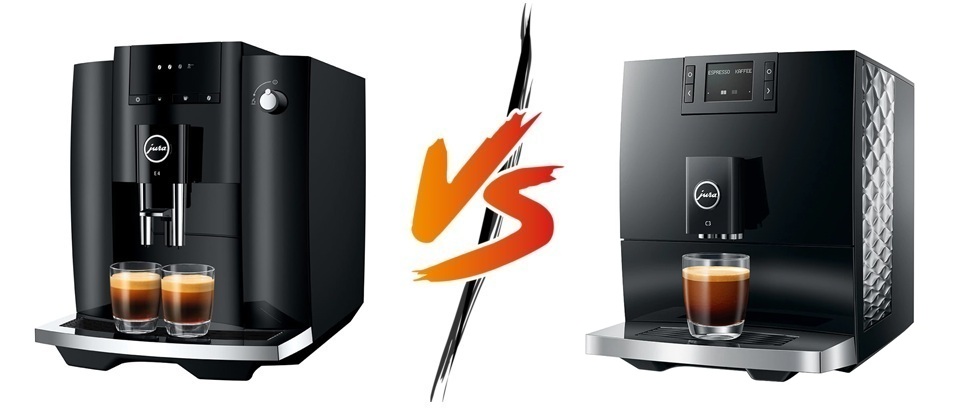
If you’ve narrowed down your search to the JURA E4 and JURA C3, then you have already made a significant decision. You’re after a machine that takes coffee very seriously, but you don’t necessarily want a machine that is cluttered with a lot of features like touch screens, milk tubes, and numerous drink options. Interestingly, both of these machines are not trying to be everything to everyone.
They are essentially focused on just making great black coffee. Both use JURA’s automatic coffee-making technology and their Professional Aroma Grinder. They’re essentially saying that a good cup of coffee or espresso can be easily made with a minimal amount of effort. However, they take different approaches to this idea. The JURA E4 is the more established and larger of the two. It is essentially a simple, full-size machine with a bigger water tank and a larger bean container. It also has a straightforward, icon-based control panel and a separate hot water spout. What’s more, it has some serious coffee-making components, including JURA’s 3D brewing method and a variable brew unit that can handle between 5 and 16 grams of ground coffee. JURA claims that their new grinder produces a consistently high level of grind quality and extracts 12.2% more aroma than the old one.
On the other hand, the JURA C3 is a more recent and more compact model. It takes the “less is more” idea even further, it has a sleek, wave-like design, a four-button Easy Control Panel and the same basic idea: leave out the frothy milk drinks and concentrate on making a great shot of espresso or a plain cup of coffee. It has a 1.6-liter water tank and 200-gram bean container, in comparison with the E4’s 1.9-liter and 280-gram capacities. So, which one should you choose? After considering each of their features, I believe that the C3 is a better option if you prefer a small, no-nonsense machine and don’t need the extra hot water feature.
On the other hand, the E4 would be a better match for a heavy coffee drinker who likes its larger size and more solid construction. It is also worth noting that neither of these machines are the right pick if your dream automatic coffee maker is one that can make cappuccinos and lattes. They do not come with a built-in milk system. Instead, they are best suited for those who enjoy plain, strong coffee, Americanos, and similar types of drinks.
Here’s a summary of how these two models compare.
Jura E4 vs Jura C3 Comparison Chart
If you click the links below, under the product images, you will be redirected to Amazon.com. In case you then decide to buy anything, Amazon.com will pay me a commission. This doesn’t affect the honesty of this review in any way though.
| Specification | JURA E4 | JURA C3 |
|---|---|---|
 |  | |
| Check the best price on Amazon | Check the best price on Amazon | |
| Machine type | Automatic bean-to-cup espresso machine | Automatic bean-to-cup espresso machine |
| Primary focus | Espresso and black coffee | Espresso and black coffee |
| Grinder | Professional Aroma Grinder | Professional Aroma Grinder |
| Brewing unit | Variable brewing unit, 5–16 g | Variable brewing unit, 5–16 g |
| Extraction technology | Pulse Extraction Process (P.E.P.) | Pulse Extraction Process (P.E.P.) |
| Brewing technology | 3D brewing process | 3D brewing process |
| Brewing temperature | Optimized automatic control | 3 temperature levels |
| Coffee strength settings | 3 levels | 3 levels |
| Coffee volume | Programmable | Programmable |
| Number of coffee preparations | Multiple black-coffee options | Espresso and coffee preparations |
| Two-cup preparation | Yes | Yes |
| Milk system | No integrated milk system | No integrated milk system |
| Hot-water function | Yes | Yes, depending on configuration |
| Bean hopper capacity | 280 g | 200 g |
| Water tank capacity | 1.9 L | 1.6 L |
| Coffee grounds container | Yes | Yes |
| Water filtration | Compatible with JURA CLEARYL filter system | Compatible with JURA CLEARYL filter system |
| Cleaning system | Automatic cleaning programs | Automatic cleaning programs |
| Descaling | Guided/automatic maintenance program | Guided/automatic maintenance program |
| Control system | Button/symbol-based controls with display | JURA Easy Control Panel |
| Smartphone connectivity | No | No |
| Recommended use | Higher-volume households and black-coffee drinkers | Compact everyday use and black-coffee drinkers |
| Integrated milk drinks | No | No |
| Main advantage | Larger capacity and greater versatility | Compact design and simple operation |
| Main drawback | Larger footprint; no automatic milk drinks | Smaller capacities; no automatic milk drinks |
| My individual reviews | Jura E4 review |
Design & Build Quality
At first glance, the Jura E4 and the Jura C3 appear to be two similar machines from the same family. And they are. Both of them follow the straightforward and understated approach that is typical of Jura’s style: they have clean and simple lines, a minimalist aesthetic and a surface that is very free from clutter. You won’t find any big, flashy touchscreens or lots of shiny chrome on these machines. Instead, the focus is on a high-end, almost appliance-like look which should fit in easily with most modern kitchens. However, there is a noticeable difference between the two.
The E4 seems to be the more solid and substantial of the two, while the C3 is more of a compact version. This difference is not just immediately obvious when you place them side by side, but it also depends on how much space you have on your countertop, how often you will be using the machine and how large a presence you want it to make in your kitchen.
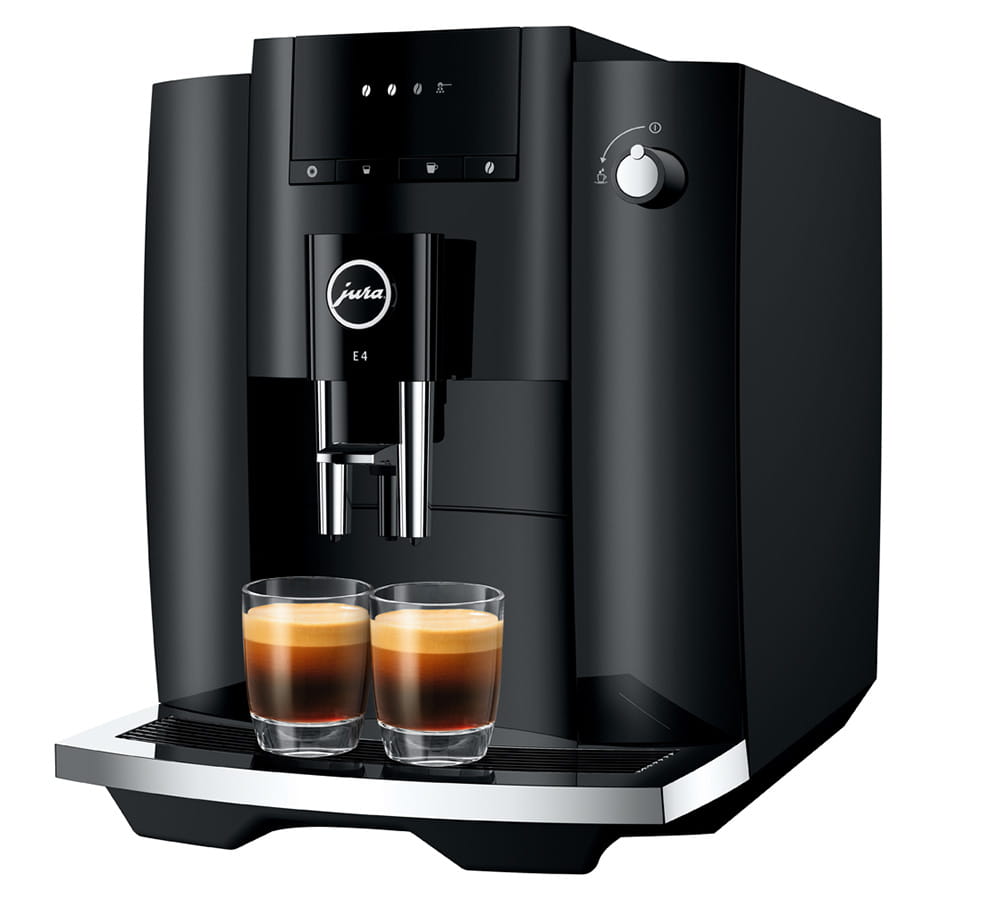
The Jura E4: a classic look and feel The E4 has the more traditional Jura design. Its body is pretty wide and tall, with a plain front and a small control panel. It looks like a high-end product without being at all showy, and Jura has been very good at this. There’s a sense that the E4 is a serious, long-term appliance and not something that you would replace after a couple of years. When you press the buttons, open the water tank or move any of the controls, the E4 doesn’t feel like it’s going to move around because of its weight. It comes in at about 9.8 kg. That makes it feel like it’s where it should be on the worktop. Its dimensions are around 28 cm wide, 34.6 cm high and 44.4 cm deep. While these are not massive measurements for a machine that grinds and makes the coffee, the E4 is not a small machine either.
In particular, the back to front measurement is quite long because the inside of the machine has to be able to accommodate the brewing system, the water tank and the bean container. If you’ve got plenty of room in your kitchen, then this won’t cause any problems. But if you’re working with a narrow worktop, the E4 might take up too much space. To me, its size actually adds to its good looks.
The E4 doesn’t look like it’s been squeezed or crammed together, the way it is made looks like a serious, considered design. It looks like a machine that has been made to make a lot of coffee every day rather than a small, neat gadget that just happens to have a built-in grinder. Jura has also kept the outside of the E4 fairly plain. There’s no big display on the front and the place where you get your coffee from doesn’t make the machine look too complicated. The controls are part of the overall design and not a separate feature. I think this is especially a good thing if you’re not a fan of all the big, touch-screen type of display on many modern kitchen appliances. The E4 just says: this is a coffee machine and making the coffee is the main thing.
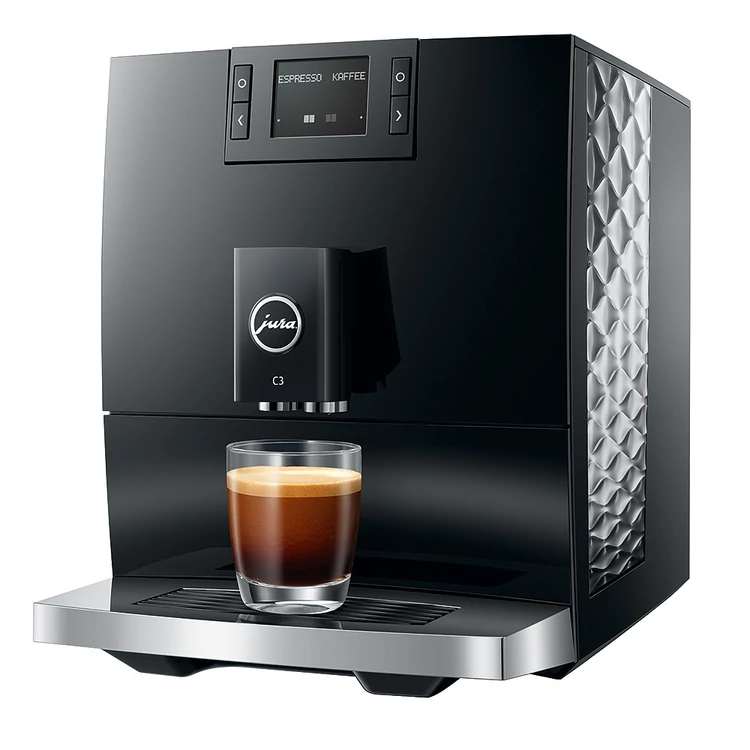
Jura’s C3 is a different take on their coffee makers. It has a more modern and compact look. Jura calls it a “wave-inspired” design, which is essentially a fancy way of saying that it has curves. If you compare it to the E4, the C3 appears more rounded and less angular. This makes it look like it was made to be small and not just a bigger machine shrunk down. Being 26 cm wide and 32.5 cm high and 43.7 cm deep and weighing around 8.8 kg, it’s also a couple of centimeters narrower and shorter than the E4.
Of course, the measurements might not mean much when you look at the numbers, but in reality, it does make a difference. If you have a very small kitchen with many appliances, this could be a big plus. It’s even more so if your countertops are already taken up with a toaster, a kettle, or another coffee maker. Also, if you have high cabinets above your worktop, a smaller machine is always a good idea. So, the main benefit of the C3 is its smaller size. It won’t make your kitchen look too cluttered or feel too crowded, even though it’s not a tiny machine. If you’re the only one who drinks coffee, then I think 1.6 liters (the C3’s maximum water tank) is plenty. You might find you’re fine with the 200-gram bean container too.
However, if you live with others and everyone has their morning coffee, then the E4 with its 1.9-liter tank might be a better option. It’s also worth thinking about which one you’d rather look at every day. If you have a big kitchen with lots of space around your appliances, the E4 is the better choice. It’s got a more powerful, more serious feel to it. If you have a smaller kitchen or prefer not to have huge appliances, you’ll like the C3. It has a more laid-back, approachable vibe. It’s still Jura, but not as in-your-face. Rubbish as it may sound, the actual design of a coffee machine matters.
Although it may be in contact with water, steam, and all the yucky coffee oils, it should be easy to clean. That’s one of the advantages of the C3. It’s not made of metal like some of the cheaper machines out there. Instead, it’s got a nice, long-lasting, and low-maintenance outer case. And since the important parts are inside, this actually makes sense. Any coffee machine is going to get splashed and stained, and a non-metal exterior is a blessing. However, this isn’t the end of the story. How the machine itself feels in your hands is also important. You want to be able to tell if it’s well-made. Let’s face it, we all see our coffee maker every morning. If it doesn’t seem up to the job, then it won’t give you the best start to the day. So, which one is built better?
Well, if I was just going on what I feel when I touch it, I’d say the E4. It’s more solid. It has that “built to last” feel. Yet, I don’t think the C3 is in any way bad. It is essentially the smaller, more compact version of the E4. I guess Jura set out to make a smaller, more streamlined version of their normal design. They did a great job. They managed to fit all the essential parts inside, the same high-end grinder and all.
So, while the E4 has more of that “substantial” feeling, I think the C3 is a winner in terms of smart design. In the end, the two Jura options are essentially about the same, but they’re for different people. If you want a larger, more impressive machine with a bigger tank and more room for beans, go for the E4. If you have limited space and don’t mind a slightly smaller capacity, then the C3 might be a better fit.
Ultimately, if I just looked at their looks, I’d pick the C3. Its unique, smooth lines and general more modern style win for me. If I went by how good it feels when you hold it and use it, I’d go with the E4. But, if we think about the essentials, I don’t really see one as being any worse than the other. What it comes down to is which one suits your needs. Do you and yours drink a lot of coffee and can fit a larger machine in your kitchen? Then the E4 is the one. If not, then the C3 is the way to go.
User Interface & Ease of Use
The JURA E4 and JURA C3 are two of the most appealing automatic coffee machines out there because they don’t make getting a good cup of coffee more complicated than it has to be. Most other bean-to-cup machines have big, color touch screens, can connect to your phone, and offer all sorts of special drink options and menu choices. While these features are nice and can be helpful if you make a variety of coffee and milky drinks like lattes and cappuccinos, they can also turn a simple morning cup of coffee into a pretty involved process.
Not the E4 and C3. They do things the simple way: pick the type of coffee you want, make any adjustments if you need to, and then let the machine take care of the rest. This is especially fitting because both of these machines are not trying to make a big range of fancy milk-based coffee drinks. So, there was no need to have a fancy touch screen in the first place.
Though the E4 and C3 are similar in their approach to keeping things simple, they each do this in a slightly different way. The E4 uses JURA’s classic symbol-based control system, whereas the C3 has the newer, more streamlined Easy Control Panel with just four buttons. Both are easy to figure out after a few minutes with them, but the C3 has a slight edge when it comes to being really easy to use. Simplicity in action: the JURA E4 The E4 has a control panel that looks and feels a bit old-fashioned compared to some other coffee machines. There’s no large touch screen, no long list of drink names to choose from, and no menu to navigate through. Instead, the E4 uses buttons and symbols to give you direct access to its various functions.
If you’ve ever used a standard, non-automatic coffee maker before, then this will seem very familiar and even a bit comforting. You don’t have to wonder where to find a particular feature, the important ones are right there in front of you. You can easily pick the type of coffee you want, adjust its strength, and set how much water to use. Once the E4 is set up to your liking, using it on a daily basis is a breeze. And that’s essentially what the E4 is all about. It may not be the most exciting or high-tech machine available, but it should be one of the most hassle-free ones to live with.
Why having actual buttons on a coffee machine is a good thing Having physical buttons on your coffee machine is a big plus. For one thing, they’re easy to use. You can reach over, press the right one, and move on with your day. You’re not at the mercy of a possibly slow or unresponsive touch screen that might be smeared with fingerprints. Also, a control panel made up of actual buttons won’t go out of style like a touch screen might. Its look and feel won’t change because new software or the underlying tech starts to show its age.
Because there aren’t that many functions to remember, the E4’s controls will soon become second nature if you use the machine every day. And that’s exactly what counts, the best interface is the one that gets out of your way and lets you get on with your day. Changing how strong your coffee is The E4 lets you choose from three different levels of coffee strength. That should cover most people. If you prefer a mild, easy-drinking coffee in the morning, or a stronger, more full-bodied one, you can have either. Because the machine can use different amounts of ground coffee, it’s not just a matter of adding more water or picking a random setting. Instead, it will actually change the way it makes the coffee to give you a weaker or stronger one. That makes this feature really useful.
In practice, you’ll probably end up using the same setting most of the time, but it’s good to have the option, especially in a shared house where family members and others may each want their coffee made a little differently. Setting how much coffee goes in your cup Another feature that may not sound like a big deal until you try it is the ability to program in a specific amount of water for each type of coffee. Maybe you like a small, strong shot in the morning and a bigger cup in the afternoon. Instead of having to stop the machine and start it over every time, you can tell it to always give you the amount you prefer. Once you’ve done this, the machine is very consistent. Press the button, pop your cup under the spout, and wait. This is one of the main reasons why people choose an automatic machine over a manual one.
The JURA C3 takes the same overall idea as the E4 and makes its control panel even more compact. It comes with the Easy Control Panel which has four buttons to access its main features. At first, having only four buttons might seem like a limitation. However, that’s not the case. Since the C3 doesn’t offer a large number of distinct drinks, it doesn’t need a long list of almost identical options.
As a result, you’ll never be faced with a long list of similar choices. This in itself makes the C3 very accessible for anyone who doesn’t enjoy reading the instruction manual. Both machines have a very short learning curve. Of course, there is an initial setup process. You’ll have to fill the water reservoir, add some coffee beans, set up the machine and go through its initial settings. But after that, using the machine on a daily basis is very simple. The C3 might have a slight edge for someone who is new to the JURA brand, since its control panel is so minimal. The E4 is also easy to use, but it takes a little more time to figure out which button does what. That’s not a major complaint. It’s just a difference between something being immediately clear and taking a couple of minutes to get used to.
One of the more interesting things that sets the C3 apart from the E4 is its temperature control. The C3 offers three different settings. This gives you another factor to play with when fine-tuning your coffee. The temperature of the water used for making the coffee can affect the way the coffee tastes. Darker and lighter roasts react differently to the brewing process and some people simply prefer their coffee to be a bit hotter or cooler. The C3 gives you this extra level of control. The E4 does not. It’s not that the E4 makes bad-tasting coffee, it has a good system for making the coffee, but if you buy different types of coffee beans and like to try them out, the C3 is more flexible.
Both the C3 and the E4 can make two cups of coffee at once. This is a great feature for two people because it means you don’t have to make one and then right away start on another. The E4 is more suitable for this because of its bigger size and its brewing system can handle a larger amount of coffee and it can make two decent-sized portions. The C3 can also make two cups, and its system is okay, but it doesn’t do it as well as the E4. When you want something other than just a plain old coffee or an espresso, you’re out of luck. The C3 and the E4 can’t make lattes, cappuccinos or a flat white because they don’t have a built-in milk frothing system. For some people, this is a significant disadvantage. Others won’t care. If making these sorts of milk-based drinks is not what you do most of the time, then not having the option in the machine isn’t a problem. It’s even part of what makes the interface on both the C3 and E4 so easy to use. There’s no need for the machine to show you all the various options it can’t actually do.
The E4 has one feature that the C3 doesn’t: a separate button for hot water. This makes it a bit more useful if you want to have a cup of hot water or tea. It’s also more obvious and not hidden in a menu like on some other machines. This is another example of how the E4’s interface focuses on the basic things you do, rather than trying to show off its technology. If you mostly just want to make a plain coffee or an espresso, you might not ever need this, but if you do, it’s a useful addition. Of course, a good automatic machine also tells you when it needs some attention. Both the C3 and the E4 will guide you through the basics like cleaning and replacing the filter.
This is important because if you don’t know how often you should be cleaning and descaling the machine, you could forget. And then there’s a bigger issue. They each have their own way of doing this. The E4 uses a symbol-based system, while the C3 uses its own simple buttons and lights. Neither will give you as much information as you would see on a more complex machine, but that is a fair trade. They both prefer to avoid too much information. Using a smartphone to control the machine is not part of the design for either the E4 or the C3. Some people might see this as a negative. Not me. I don’t see the point of getting my phone out and starting the machine when it’s right in front of me. Smart home technology is more appealing when the machine has lots of different options. The E4 and C3 have a short list of possible drinks and this makes a phone app not really necessary.
Actually, the lack of a connection fits well with what these machines are. They are essentially standard, non-smart kitchen appliances. Just turn up, use and enjoy. In the long run, this is where both machines perform really well. Think about a normal day. You walk into the kitchen, place your mug under the spout and press a button. The machine grinds the beans, measures them out, makes the coffee and pours. Then you take the cup and go. There is no pesky portafilter to remove, no mess of coffee grounds and no measuring out the beans. It’s an automatic process and you can do it in your sleep. And that’s the ultimate test of a good coffee machine. A machine can have a nice display and many features but if you have to think about what you’re doing every morning, it hasn’t really succeeded. Both the E4 and the C3 pass the test easily. Between them, I would say the C3 has a slight edge. Its four-button control panel is very clean and there are not many ways you can go wrong.
The E4 is also very easy to use but you have to spend a bit more time to figure out which button does what. Once you know the E4, though, the difference is not so big. Also, the E4’s controls might be more intuitive in the long run. They’re directly related to what the function is and don’t have to be found by going through several levels. If you use the machine just for making a plain coffee or an espresso, you may never need this. But if you do, it’s a bonus. In terms of how much control you have, I think the C3 has the upper hand. It has three temperature settings. This can be useful if you like to try out different types of coffee. The E4 offers some basic adjustments to the strength and the amount of the coffee, but the C3 gives you another factor. Don’t get me wrong, they are not on a par with what you’d get from a traditional, manual, and separate grinder. They are not supposed to be. Their aim is for consistency. And on that, they do a good job. Overall, if you value simplicity, then both machines are very good. The E4 is essentially a machine that doesn’t require a manual every morning. It’s got a straightforward interface, simple symbols and a few pre-programmable options.
The C3 takes this idea and goes further. Its four-button Easy Control Panel is probably the best choice for someone who just wants the fewest possible number of controls. Additionally, it has the three temperature settings which are a nice to have. I’d give the C3 a 9 out of 10 for its user interface and the E4 an 8.5. This doesn’t mean the E4 is hard to use. It’s not. The difference is, mainly, that the C3 has a slightly more modern and streamlined approach, and the E4 is a bit more like a classic. Ultimately, which one to choose will depend on what else you want in the machine. If you want a bigger coffee and water tank and a larger bean container and a special hot water function, the E4 is still very easy to use. If you prefer a compact machine that gets out of the way and lets you directly use the functions you will actually use, then the C3 is attractive. What I like most about both is that they don’t confuse having lots of features with being complicated. Under the surface, though, are good, and that should be the case. The customer should only have to press the one button.
Coffee Quality & Brewing Performance
When it comes to the JURA E4 and JURA C3, the thing that really counts is how good the coffee they make. Sure, a machine might have a great design and an easy-to-use interface, and some amazing features, but if the coffee isn’t any good, then all those other things don’t matter. Luckily, neither of these two machines have that problem. They both follow JURA’s Pure Coffee idea, which is about making a small range of speciality coffee and just a few other types of black coffee. By doing this, JURA can focus on the parts of the machine that actually make the difference in the taste of the coffee: the grinder, the way the coffee is made, how the water is heated and how consistent it all is.
As a result, you get two machines that can make a nice cup of coffee with very little work. The main difference between the E4 and the C3 is not as big as their names might suggest. The E4 and C3 have basically the same basic way of making coffee. They are essentially the same in the way they make the coffee. One of the most interesting things about comparing the two is just how similar they are in how they do their main job. Brewing with the E4 The E4 uses some of JURA’s existing methods of making coffee. It has JURA’s Professional Aroma Grinder, a special type of brewing unit, and its Pulse Extraction Process. It also has 3D brewing, which is new.
The E4 can make between 5 and 16 grams of coffee at a time, which is a good size range for an automatic coffee machine. This 5-16 gram range is important because it allows the E4 to make both smaller and larger cups of coffee. JURA says its new grinder does a better job and gets more of the best parts of the coffee bean out. It claims this is by up to 12.2% more than its old grinder. However, you have to take claims like this with a grain of salt. “More aroma” is not a standard way to measure how good the coffee is, and the end result will still depend on what type of coffee bean, how it was roasted and the water and the machine’s settings.
Good coffee starts with a good grind. If the grinder doesn’t give you a mix of large and small pieces of coffee, then it’s hard to get the right amount of the coffee out. All the pieces will either get too much or too little liquid pulled out. A good, consistent burr grinder gives the machine a much better start. So, this is why the E4 can make a better cup of coffee than many people think you can from an automatic machine. Pulse Extraction Process JURA’s Pulse Extraction Process (or PEP) is mainly used to help with making short, strong espressos. Rather than letting the water just flow through the ground coffee in one go, it comes in short bursts. This helps it get out of the coffee more effectively.
Espresso is a strong drink and even small changes in how the water and the coffee interact can change its taste, how rich it is and how strong it is. In practice, the E4 makes a decent cup of espresso. It’s not the same as what you’d get from a high-end, manual machine, because you can’t control each and every thing. But for a machine that makes the coffee for you, the result is pretty good. The espresso has enough body so it doesn’t feel like it’s just water, and the stronger setting can give a nice, strong taste. 3D brewing and making it even The E4 also has 3D brewing.
Essentially, it just means the water meets the coffee in as even a way as possible. If the water isn’t spread out properly, it can go through some parts of the coffee and not others, and that can make the coffee not get enough or too much water. JURA’s 3D method is designed to make sure this doesn’t happen. Brewing tech isn’t about having a list of features to be proud of. It’s about making the coffee taste and come out more consistently. The E4 does this.
Overall, with the right type of coffee, the E4 makes a very good cup of espresso. I’d say it’s a bit on the stronger side, and has a nice, rich taste, especially if you use a medium or dark roasting. It does particularly well with more traditional types of coffee. Those who have a strong, sweet and nutty or toasty flavor work well with this type of automatic extraction because it naturally makes a more rounded style of coffee.
That doesn’t mean you can’t use lighter, more special type of coffee. You can. However, they can be a bit more tricky to get right and might benefit from more control over the temperature, how fine or large the grind is and how long the coffee is in the machine. If you usually make a light, single-origin coffee by hand, you might find the E4 not as flexible. This isn’t a problem with the E4, it’s just what happens when you choose to have a machine do the work. Its main points are that it’s consistent and very easy to use.
The Jura C3 is especially interesting because its compact size does not come at the cost of a less capable brewing system. In fact, like the Jura E4, it uses a Professional Aroma Grinder and a full-size brewing unit that can handle a wide range of coffee grounds, from 5 to 16 grams. It also features Jura’s Pulse Extraction Process, which is an important feature because it means that the C3 is not just smaller than the E4, it is not a cheaper, more basic version of the same machine. Essentially, Jura took its Pure Coffee concept and made it even more compact. And it works.
The C3 produces a shot of espresso with a good amount of body and a relatively smooth flavor. When you taste the coffee, you won’t get the feeling that you’re getting a second-rate machine. If you compare the C3 and E4 side by side and use the same type of coffee beans, there might not be a huge difference in the taste of the espresso. The C3 is not far behind the E4 in terms of its ability to make a great shot of espresso.
The E4 may have a slight edge when it comes to the overall smoothness and consistency of the coffee, but the difference is not big enough to make a difference. The C3 is too good at making coffee to ignore. Espresso vs. Coffee: What’s the Difference? It’s also worth noting that a machine can make a great shot of espresso but struggle when it comes to longer coffee drinks. This is because pulling an espresso shot for a longer period of time is not the best way to make a larger cup of coffee. More water flowing through the same amount of coffee can end up making the coffee taste bitter and dry.
Both the E4 and C3 deal with this issue by including special functions for making longer coffee drinks. The E4 is especially versatile because it can make both coffee and double coffee, in addition to espresso. As a result, the longer drink doesn’t just taste like a weakened version of the espresso. For people who like a big cup of plain coffee rather than a small shot of espresso, this is an important consideration.
One of the unique features of the C3 is its three different brewing-temperature settings. Temperature is a key part of how well the flavors are extracted from the coffee. If the temperature is too low, then some of the good stuff in the coffee might not come out. On the other hand, if the temperature is too high, it can bring out some of the less pleasant flavors in the coffee, especially if the beans are a darker roast. The C3’s three settings let you fine-tune the machine to the type of beans you’re using. If you buy a new batch of beans, you might need to adjust the temperature. Medium and lighter roasts, for example, might each require a slightly different setting.
In contrast, the E4 doesn’t have this level of direct control over the temperature. Its brewing system is designed to work within the best settings Jura has found, which is okay for most people, but the C3 gives those who enjoy experimenting with different roasts and brewing methods a bit more freedom. Adjusting the grinder and getting the right grind on the beans is also possible with both machines.
However, this doesn’t mean you should try to adjust things like a pro, who constantly adjusts the grinder for each new bag of coffee. You can, though, which allows you to change how quickly the water hits the coffee grounds. If the espresso tastes too watery and lacking in body, a finer grind might help. If the coffee is too bitter or takes too long to seep, a coarser setting might be the answer. Just make sure to make any changes one at a time and taste the result before changing anything else.
Of course, the quality of the beans used in the machine has a much bigger impact on the final taste of the coffee than the difference between the two Jura models. You can buy a good automatic machine and then use subpar beans from the grocery store and the result won’t be anywhere near what you’d get at a specialty coffee shop. It’s a good idea to get fresh beans in relatively small quantities, keep them away from heat and light, and not leave them in the machine for longer than necessary.
Both the E4 and C3 are sensitive enough to show the differences between various types of beans. Trying a new, medium-roasted specialty blend will have a more noticeable effect than the difference between these two machines. Some of the best coffees don’t even produce a thick, creamy head of foam on top, which can be a misleading way to judge the quality of the coffee. What really matters is the balance of the flavors, the level of acidity, the sweetness, and the amount of bitterness, and the body. In a way, the biggest advantage of both the E4 and C3 is that they make it possible to get a great cup of coffee with minimal fuss. Unlike a manual machine, where an experienced person can get a great shot but a novice might end up with a bad one, these Juras take away many of the variables. They use a built-in grinder, prepare the grounds, and follow a set process. This means that if you find a combination of beans, strength, and temperature that you like, you’ll be able to get a very similar cup of coffee the next day. For most people, this is more important than the potential for a slightly better cup from a manual machine.
So, which one makes the better cup of coffee? While the E4 is a better all-around machine with more features and a larger size, I wouldn’t say it makes a significantly better cup of coffee than the C3. The C3 is very competitive. Both come with good grinders and use Jura’s extraction method. They both produce a shot of espresso with a decent amount of body and a good, plain cup of coffee with a lot of flavor. The C3 has an edge when it comes to temperature control, which will appeal to those who like to experiment with different roasts.
Ultimately, whether you want the E4 or the C3 will depend on your specific needs. If you like a more traditional style of coffee or espresso, either one is a good choice. If you prefer a medium-roasted coffee, both will do a great job. If you usually drink a very light, specialty roast, the C3 has a slight advantage, mostly due to its extra temperature options. However, if you drink a lot of long, black coffee, the E4 is the better choice, since it has more options for making longer drinks and a separate setting for just using hot water.
On the other hand, if you only have a short shot of espresso, the difference between the two is harder to justify. Rating the two on a scale of 1 to 10, for me, they both get a 9.5 for their coffee and brewing abilities. The E4 is a great option if you want a simple and effective way to get a rich and flavorful shot of espresso and a good cup of black coffee. It has a solid foundation in its Professional Aroma Grinder, 5-to-16-gram brewing unit, and Pulse Extraction Process. The C3, in turn, is more impressive given its compact size. It has all the main parts of the E4, but also has three temperature settings, which gives the user a bit more control. Most importantly, neither of these Juras makes you feel like you’re settling for a lower-quality cup of coffee just because you’re after convenience. They’re not trying to replace a professional barista who can adjust every aspect of the shot. Instead, they aim to give an average coffee lover a good cup without requiring a bunch of specialized equipment or years of practice. And they do.
If you’re after the very best possible shot of espresso and enjoy the process of adjusting every single thing, a traditional, manual machine and a good grinder are the way to go. But if you want a great cup with the least amount of work, the E4 and C3 are hard to criticize. Ultimately, the decision comes down to more than just the taste. If you drink a lot of coffee and value the larger size and the included hot-water feature, the E4 is the better choice. If you want the same basic Jura experience in a smaller package and can appreciate having more control over the brewing temperature, then the C3 is the better fit. For the actual difference in the taste of the two, though, it’s essentially a tie. And that’s good news if you’re considering the C3, because you aren’t choosing the smaller machine because you’re willing to accept a lower-quality cup. You’re picking it because you want the same Jura idea in a more compact form.
Grinder Features & Performance
The grinder is one of the most critical components of any bean-to-cup espresso machine, and it is also a part that people often overlook when looking at different models. Most of the time, when we compare various machines, our focus is on the brewing process, the variety of drinks that can be made, and the overall appearance of the machine. However, the quality of the end product is largely determined by the initial step of preparing the right type of ground coffee for it. If the grinder doesn’t produce a consistent and even grind, then the machine has to compensate for this during the extraction process. In reality, the JURA E4 and the JURA C3, which have relatively simple and uncomplicated interfaces, are actually more advanced in this department than they initially appear. Both of these machines use JURA’s Professional Aroma Grinder.
Essentially, this is based on the idea that the grinder should produce a precise and consistent grind that requires as little from the user in terms of thought and effort as possible. This is exactly what most people who buy the E4 and C3 are after, they don’t want to have to spend their mornings standing at the counter, carefully measuring out 18 grams of coffee and making small adjustments to the grinder. They just want the machine to handle all of this for them. So the main question is, does the grinder in the E4 and the C3 produce high-quality coffee every time? The answer to this is a yes.
However, there is a difference in the level of control each of these machines offers and how this affects the actual use of the machine. JURA’s Professional Aroma Grinder Both the E4 and the C3 come equipped with JURA’s Professional Aroma Grinder. Essentially, this is an upgraded version of JURA’s earlier grinders. Its main purpose is to produce a more accurate and consistent grind while at the same time preserving more of the coffee’s natural aroma. According to JURA, the Professional Aroma Grinder can deliver up to 12.2% more of the coffee’s aroma than its predecessor.
While this figure is essentially a manufacturer’s claim, and we should not take it as a guarantee of how your final cup is going to taste, the underlying principle behind the Professional Aroma Grinder is more significant. What it essentially does is that it grinds the coffee very efficiently, while also providing a consistent particle size. This is precisely what is needed from a machine that automatically makes espresso. It’s also relatively fast, so you do not have to wait a long time for each grind cycle, which in turn means that you can make your coffee without any delay. Why a consistent grind is important If you have used a hand-powered espresso grinder, then you probably already know how big of an effect the coarseness or fineness of the grind has on the taste. Particles that are too fine will get extracted too quickly, while those that are larger will release their flavors at a slower pace.
When there are a lot of big and small particles mixed together, the water will pass through the coffee unevenly and some of the coffee will be over and under-extracted. This ends up in a taste that is at the same time too bitter and too watery. Clearly, this is not what is desired. A good grinder gives a more even spread of the different-sized particles, which in turn allows the entire brewing process to happen at an even and consistent rate. The Professional Aroma Grinder is not competing with the best, and most expensive, of the dedicated espresso grinders.
However, it is more than capable of performing what the E4 and C3 require of it. And that’s the key point. These two machines are not really about giving you the option to manually set every last thing. Rather, they are designed to give you good, and more importantly, consistent results, over and over again. Adjusting the grinder on the E4 You can adjust the grind setting on the E4. This can be used to get the best from your beans, by finding the perfect balance, which depends on the specific type of coffee you are using. In general, a finer grind will slow down the way that the water moves through the coffee, while a coarser grind will let it move more quickly.
Nonetheless, when making an automatic machine, like the E4, it’s essential to be careful when making any changes. You should not try to make large changes and expect an instant perfect result. You should make small adjustments instead. If the shot is coming out too weak, or it lacks the proper body, then moving towards a finer grind could be the solution.
On the other hand, if it’s too strong, or even too bitter, or perhaps too intense, then you may want to try a slightly coarser setting. The important thing is to only change one thing at a time, so you know which change is having the effect. Adjusting the grinder on the C3 Like the E4, the C3 also has a grind adjustment feature, which is especially helpful since its overall design is relatively streamlined. By having the option to change the grind, you’re not locked in to the preset setting that comes from the factory.
All the same, as with the E4, this is still an automatic machine, so you don’t want to use the adjustment like one on a stand-alone, hand-operated, espresso machine. Instead, you should aim for a basic, general setting, and then stick with that. The C3, for example, will likely be working with a variety of different beans. There are the pre-packaged blends, and the dark and light roasts, not to mention the fact that the freshness and age of the beans also changes the results. With the C3, you can make a single, one-time change to the grind, and then forget about it.
When comparing the E4 and C3 grinders, there’s one area where they’re very closely matched. Essentially, they both use the same type of grinder technology, can both produce a consistent grind that’s right for JURA’s brewing system, and both let you adjust the coarseness of the grind. Therefore, there’s no real reason to choose the E4 over the C3 just because you think its grinder is better. Actually, the C3 is somewhat of a strong point because of its compact size. It’s a bit smaller than the E4, but it can still make a similar type of grind. For an infrequent coffee drinker, someone who only makes one or two cups a day, for instance, this difference in size won’t make much of an impact.
However, if you live with others who all use the machine regularly, the larger 280-gram hopper on the E4 will be more practical. You’ll need to fill it less often, which will save you from having to stop and refill it as often. It’s worth noting, though, that a bigger hopper may not necessarily produce a better-tasting cup of coffee. In fact, there’s an argument for the smaller 200-gram C3 hopper if you care about the freshness of your coffee. Coffee starts to lose its aroma after it’s been roasted, and being exposed to air makes this happen even faster.
So, if you have a large supply of beans in the E4 and it takes you a long time to use them up, you might end up with a loss of flavor. The C3’s smaller hopper encourages you to add just the right amount of beans for a few days’ worth of coffee, which is a more sensible way to go. Of course, this ultimately comes down to how much coffee you drink. If you make six or eight cups a day, the E4’s larger capacity is probably a plus. If you make only two or three, the C3’s smaller hopper won’t be a problem.
As for what type of beans work best in the E4 and C3, the built-in grinder is best at handling those that are made for use in automatic espresso makers. Medium and medium-dark roasts, in particular, are easy to deal with. They produce a good balance of body, sweetness and a little bitterness and go well with the kind of extraction that happens in these types of machines. Darker roasts, like the ones used in traditional Italian-style espressos, can also work, but light roasts are a different story.
While they’re not impossible to use, they do require a more precise control than these machines have, and they’re often denser which may call for a special grind and a bit higher temperature and a longer pull on the shot. Although the C3 has an edge here because of its adjustable temperature setting, if you want really special coffee from light roasts, I’d recommend a separate, high-end grinder. Naturally, any built-in grinder will make some noise. You can’t avoid that. But the Professional Aroma Grinder from JURA is on the faster side, so you don’t have to listen to it for a long time. It goes “whir” and then is part of the machine’s other sounds. In a typical home, I don’t think this will be a big issue.
You might not want to make a cup of coffee at 5 in the morning if you have someone in the room next to the kitchen, but that’s true of most of these types of machines. Both the E4 and C3 are not quiet, but they’re not too loud considering what they do. One of the good things about both the E4 and C3 is that they only grind the beans right before you make a pot. This keeps the coffee from going stale more than it would if you had ground all of it at once and left it. When you use a whole bean, there’s more of its surface is exposed, so it loses its scent and taste more quickly. Grinding just before you use it helps save some of the coffee’s volatile compounds.
Bean-to-cup machines like this, which don’t use pre-ground coffee, do this for you. It’s a benefit of this style of machine. Over time, a good grinder needs to be taken care of. There are the coffee and tiny pieces that get inside and build up. If you forget about your machine’s maintenance for a while, the results won’t be as good as they were when it was new. Just following the manufacturer’s guidelines for how to clean and adjust the grinder and only using good, dry beans will help. It’s also a good idea to stay away from using very oily or very darkly roasted beans because the extra oil in them can eventually clog up the machine. You should pay attention to what the beans look like.
A dark-roasted coffee that looks matte and not shiny is less of a problem than one that’s obviously oily. Because these are automatic, you can’t get to the inside as easily as you could with a free-standing grinder. You don’t want to cause more trouble than is necessary. Both the E4 and C3 can handle pre-ground coffee. They have a special setup for this. If you want to have decaf now and then without emptying the bean hopper, this is a nice option. You might normally use a regular coffee but then want a decaf after dinner instead of changing out all of the beans.
Using pre-ground decaf is a small thing, but it can be useful in a place where folks have different tastes. It’s not really possible to look at the grinder on its own, but that’s not how the E4 and C3 work. Their grinder and their brewing unit are part of the same system. The grinder makes the grounds, then those go into the doser and the brewer, and the brewer forces the water through them and makes the coffee. Each part of the machine needs to match the others for the whole thing to work right. JURA’s Professional Aroma Grinder was made to go along with the rest of the machine. That’s why these two models make such consistent coffee without you needing to know all the details. For most buyers, that’s just what you want, good, no-nonsense results from a built-in grinder.
Milk Frothing & Specialty Drinks
The main difference between the JURA E4 and JURA C3 and other bean-to-cup coffee machines has to do with the fact that neither one of them has a built-in milk system. As a result, you can’t just press a single button and instantly get a cappuccino with the milk all frothed up. This may rule out the E4 and C3 for people who start their day with a cappuccino or finish off an evening with a latte or macchiato.
However, if you mostly drink plain espresso, an Americano, straight-up coffee, or a long black coffee, not having a built-in milk system is a lot less of an issue. In fact, one could argue that this is actually one of the key reasons why the E4 and C3 are so easy to use. JURA didn’t try to turn these machines into all-encompassing drink centers. They were made to do only what a good automatic coffee maker should do.
So, essentially, this comes down to deciding whether one of these two machines is right for the kinds of drinks you like. It’s not about finding out which one has the best automatic milk system. The E4 and C3 both do not have a built-in frothing and steaming system for milk. What this means is you won’t be able to make a cappuccino or any other type of coffee that involves automatically steamed and frothed milk. If this is a total deal-breaker for you, then that’s it, no JURA E4 or C3.
On the other hand, if you don’t see this as a big problem, then it’s because you likely don’t drink many (or any) of those types of milk-based drinks. There is a common idea that when it comes to making coffee at home, “more features” automatically makes for a “better” machine. I don’t agree. An automatic frothing and steaming system does indeed offer a bit of a convenience, but at the same time, it also makes the machine more complicated. You need to clean out the milk tubes and the container holding the milk.
More things inside the machine will come into contact with the milk, and, therefore, will need cleaning. All of this extra stuff that’s part of the machine will eventually require some sort of regular maintenance. The E4 and C3 avoid all of that. They focus on making just the basic types of coffee and similar drinks. What can you make with the E4? The main purpose of the E4 is to make a good, strong shot of espresso and some other types of black coffee. It also has a special setting for making a double shot of either of these. Plus, there is a setting for a double serving. There is also a setting for making just hot water. This essentially gives the E4 a little more use than you might initially think.
For example, if you like to make an Americano, you can either make an espresso or a cup of coffee and then just add in some hot water. Similarly, if you on occasion have a cup of tea, then the separate spout for the hot water is a real plus. Essentially, this feature is more useful than it initially seems. Really, what it boils down to is that if you want a simple coffee and a way to make your tea, you may not need to have two different appliances. Now, what about the C3? It’s even more concentrated around the “Pure Coffee” idea. So basically, you can get an espresso, coffee, and also make 2 servings of each.
At first, this might sound like not as many options as a machine with 15 or 20 different programs. But I would say this is more of a case of being focused rather than limited. If your go-to order is a shot of espresso, a double shot, a long, or a plain old cup of black coffee, then you are getting the one thing you really want without overpaying for a bunch of other things you might not ever end up using. It’s especially good for someone who doesn’t have a taste for anything with milk in it. Why, after all, would you want an automatic frothing and steaming system if you are not going to use it? But what if you really do want a cappuccino or latte? In this case, you will have to do an extra step. You can use a separate, outside milk frother. It might sound like a trade-off, and is one. It is more of a hassle than being able to make a cappuccino in one easy step.
On the other hand, the upside is that you have a lot more control over the type and amount of the milk you want, and the way it’s frothed. You can also clean the frother by itself and not worry about it getting all gunked up in the machine. If you like to experiment with different ways of making your coffee, this is not really a negative at all. Using a separate frother can actually work out to be a good thing. Many people assume that when it comes to making your own coffee at home, “automatic” must mean “better”. I’m not so sure.
Milk and coffee are two different things, and getting the right consistency of the milk is a matter of the right amount of heat and air in the mix. If you have a good independent milk frother, then you can easily come up with a nice cappuccino or latte. All you’re essentially doing is breaking the process into two parts. The machine takes care of the coffee and the frother takes care of the milk. And this is a good situation for people who live with one person who likes their coffee black and one who wants their coffee with a lot of milk.
One person uses the machine as usual and the other can froth and heat their own milk. The E4 offers a bit of an edge within the world of just plain, non-milk based coffee. It gives you more of a chance to fiddle with the ratio of the amount of coffee and the water. For instance, you could create an Americano by taking a shot of espresso or a single-serve of coffee and then adding in a little or a lot of hot water.
So in effect, the E4 ends up offering a rather wide range of non-milk based drinks, and that’s without any of the expense and added parts of a built in frothing system. For someone who is in the habit of having a small cup of espresso in the a.m., and then a larger cup in the p.m., or vice versa, this is a real plus. You do not have to have one specific type of coffee every time.
The main difference between the C3 and other coffee machines is that it doesn’t try to make up for the lack of a milk function by including many other features. Instead, it stays focused on what it does best. This is actually one of the things I like about it: there are fewer options to choose from. To use the C3, you select your type of coffee, adjust its strength and temperature if necessary, and then press the button. Once you’ve done that, the machine will do the rest. If you don’t take cappuccinos or lattes, then the absence of a milk function on the C3 is effectively irrelevant. In some ways, not having it might even be an advantage since you’re not paying for a feature you’ll never use. If you’re a fan of non-dairy milk and are planning to use a separate frother, then both of these machines work just fine with either type of liquid.
One of the benefits of a stand-alone frother is that it gives you the freedom to try out various frothing techniques and to use different types of non-dairy milk. Some of these, for example, oat milk, make a slightly different type of froth and may require a special way of frothing them. Using a separate frother lets you develop your own preferences. You can also buy a type of non-dairy milk that is specifically designed for steaming or making barista-style drinks. Because neither the E4 nor the C3 comes with a built-in milk system, you have the option of which one you want to use, this is especially useful if you switch between several types of milk on a regular basis.
If you want to make a cappuccino with either of the two machines, then the process is less automated than it would be with a dedicated one-touch cappuccino machine. First, you make your espresso, then you froth the milk, and finally you put the two together. It takes a bit longer, but with a bit of practice, the end result can be just as good as one made by a fully automatic machine. Both the E4 and the C3 produce a strong and intense shot of espresso that won’t get lost under the milk. A weak shot of espresso can give a cappuccino a flavor of just-warm milk, which isn’t what you want. The E4 and the C3 both manage to avoid this problem when they’re set up correctly. Lattes work in a similar way. They require more milk than cappuccinos, which means the strength of the espresso is less important.
Both of the machines can make a decent base for a latte, but the quality of the final drink will really depend on how well you froth the milk. This isn’t a failing of either the E4 or the C3, it’s just a result of not having a built-in milk system. If you enjoy making your own coffee, you might actually appreciate the extra control that this gives you. Making a flat white is a bit of a special case. For a good one, you need a strong, concentrated shot of espresso and very fine, smooth milk. The E4 might have an advantage here because of its wider range of coffee settings. You can use the stronger ones to make a more concentrated shot. The C3 can also do a good one if you use the stronger settings.
However, again, it will all come down to the type of milk and how well you froth it. If you have a good milk frother or a decent steam wand, you can still make a very good flat white. For those who like plain, black coffee, then both the E4 and the C3 are great choices. They can each make a great cup of black coffee on their own. The C3 has a smaller footprint and a simpler interface, which suits its more limited range of drinks. If you’re a heavy user of black coffee, then the E4 is a better choice because of its higher capacity and extra features, like the ability to serve hot water. Someone who has an espresso in the morning, a longer coffee at lunchtime and perhaps a cup of tea in the evening will find the E4 is the more practical option. On the other hand, if you have 2-3 espressos a day and hardly ever use milk, the C3 is hard to criticize.
One of the benefits of not having a built-in milk system is that it makes the machine easier to maintain. Milk can go off and leave a mess behind, and cleaning out the paths where the milk goes through the machine is a chore. By keeping the milk and the coffee parts of the machine separate, both the E4 and the C3 avoid all of this hassle. All you have to do is clean the parts that just deal with the water and the coffee. When you last used the separate frother, you’ll need to clean that as well. Neither machine will have to put up with the other one’s mess.
So, the question of which one is better for making specialty drinks is essentially a matter of who you are. If you want a machine that can make a variety of milk-based drinks, then these two are not the right choice. They don’t have a built-in milk system and they don’t pretend to. But, if you mostly drink black coffee, then this is actually one of their greatest advantages. The E4 has a slight edge because it has more features related to black coffee and is also bigger, so it’s a better fit for a home where several people each drink different amounts of coffee at different times.
The C3 is the more stripped-back option, it just gives you the basics and doesn’t include any of the extra features for the less common specialty drinks. It may take a bit of extra effort on your part to froth the milk, but you have the option to use any type of milk you like, and you also avoid the risk of it going off and making a mess inside the machine. However, if you and all your family are big fans of cappuccinos, lattes and the like, then it would be better to look at a JURA model that comes with a built-in milk system.
As for choosing the C3 or the E4 for a home where everyone mostly drinks black coffee, the decision comes down to a few things. On the one hand, the C3 is very simple and compact and matches its limited list of drinks. On the other, the E4 is more versatile and has a larger capacity. If you have a routine that includes an early espresso, a later longer coffee and, perhaps, an after-dinner tea, then the E4 is the better choice. If you have 2-3 espressos a day and only occasionally have a milk-based drink, then the C3 is hard to better.
Maintenance & Cleaning
Owning an automatic espresso machine is pretty low-maintenance when you’re first thinking about buying one, but once it’s on your kitchen counter, it becomes a lot more important to keep it in good working order. Inside an automatic coffee machine, a lot happens. The beans get ground, the coffee gets made, and the water is heated and used over and over. And that means coffee oils and other gunk will eventually start to build up. If your machine also has a milk frothing system, there are even more parts to clean.
One plus of the JURA E4 and C3 is that neither one comes with a built-in milk system. So, one of the more involved upkeep tasks associated with other automatic machines isn’t a problem. However, it doesn’t mean they never need any maintenance done. Both the E4 and the C3 still need to be cleaned, descaled when necessary, and have their water and grinding and coffee grounds containers checked on a regular basis. A good thing is that the process is mostly taken care of by the machine itself, so you won’t have to take it apart and reassemble it after every few cups. Why is maintenance on an automatic machine a big deal? It might seem like since the machine does most of the cleaning, you shouldn’t have to do anything.
But that’s not how it works. While the machine’s self-cleaning feature does most of the job, it will ask you to add the special cleaning or descaling solution at the right time, and you’ll still have to empty the drip tray and the coffee grounds container. You’ll also need to refill the water tank and every now and then, wash any parts that you can take out.
Like all automatic machines, the E4 and C3 do this; it’s just that they tell you when something needs doing instead of you having to try to figure it out for yourself. This makes a big difference in real life. Instead of you having to remember when the last time you cleaned the machine was, you just follow the prompts and do the maintenance. Daily upkeep is not very time-consuming.
You essentially just have to get rid of the used coffee grounds and empty the drip tray. Eventually, it gets full, and it holds all the water from the cleaning cycles and any excess. All you do is take out the right container, empty it, and put it back. The E4 has an advantage if you drink a lot of coffee since its larger size allows you to go a bit longer before you have to do any of these things. However, this might not be a lot of difference if you only make a couple of cups a day. The C3 has a 1.6-liter water tank, which is smaller than the E4’s 1.9-liter one. This makes a difference in a couple of ways. For one, you’ll have to top off the water in the tank more often.
But also, a bigger tank gives you a bit more leeway between refills, which is useful if you make a lot of lattes and cappuccinos. If you’re only making a single cup a day, there’s no point in filling the thing all the way and leaving the same water in there for a week. It’s better to just put in enough for what you’re going to use and then top it off as needed. Water quality, though, is a different story. Hard water, with its higher levels of dissolved minerals, can cause problems in your machine if you live in an area with it. Using a water filter, like JURA’s CLEARYL Smart+ system, can help with this. A filter can cut down on the buildup of mineral deposits inside the machine and make the water taste the same each and every time.
Scale is not just about looks; it’s also a performance and operational issue. It can make the machine run more slowly and affect the way it moves water around. Replacing the filter is not a one-time thing. As with many other parts, you’ll have to do it again eventually. Exactly when you’ll need a new one depends on where you live, how much you use the machine, and the machine’s settings.
Fortunately, the E4 and C3 can tell you when it’s time for a new one. This is a lot easier than keeping track of when it’s due on your own. Just remember: if the machine says the filter needs to be changed, change it. Not following the recommendation defeats the whole purpose of getting a filter in the first place. Both machines have a built-in cleaning program. When they need a cleaning, the machine will walk you through the process. You’ll usually add the special JURA cleaning solution and let the machine do the rest. It runs a special cleaning cycle, which includes flushing out the inside of the machine and removing any old coffee oils and other gunk.
Leaving this stuff in there too long can cause the machine to produce off-tasting or unflavorful coffee. Regular cleaning is essentially a way to keep your coffee from tasting bad and also help extend the life of the machine. To do the cleaning, you’ll have to buy JURA’s cleaning tablets. There is a cost involved, so you’ll have to factor this in when you’re thinking about the total cost of the machine over its lifetime. Some people might look at the initial purchase price and see that one machine is cheaper, but if the other one requires more expensive cleaning supplies, then it may actually end up being the more expensive one in the long run. Fortunately, the E4 and C3 are not a lot to ask in terms of everyday care and maintenance.
Maintaining Your JURA Coffee Machine Besides using and replacing a water filter and having it replaced when necessary, your JURA coffee machine may also require descaling. This is especially true if you live in an area with hard water or use your machine a lot. The machine itself has a built-in system to deal with this. However, when it is time to descale, you will need to purchase a JURA-approved descaling solution and follow the instructions that come with it.
It is not a good idea to try and use household acids or other non-approved products to descale your machine. They may damage some of the internal parts. In the long run, it is cheaper to use the proper descaling solution than it would be to fix your machine if something goes wrong. Just like the rest of the machine, the grinder inside also needs to be looked after. It doesn’t need to be cleaned after every use, but it will get clogged up with old coffee and oils from the coffee beans. If you use a lot of dark or very oily beans, this will happen even faster.
You should follow the instructions from JURA on how to clean and maintain your grinder, and only use the special cleaner that they recommend. If you don’t take care of your grinder, it could eventually affect the way it grinds the coffee and this in turn will affect the taste of your coffee. The part of the machine where the coffee is made is also relatively low-maintenance. Unlike some other automatic coffee makers, the JURA does not have a removable part that you have to take out and wash by hand. Instead, all of the cleaning is done from inside the machine.
Some people who are serious about their coffee may prefer to have a machine where they can see and clean the internal parts. But for the average person, this might be a benefit. It is less likely that you will forget to do something or put a part back in incorrectly. Cleaning the outside of the machine is a bit easier. The E4 and C3 models both have simple designs, so you just need to wipe down the outside with a soft, damp cloth. You should avoid using any strong cleaning products unless the manufacturer says it is okay to do so. You just want to keep the machine clean and dry. Of the parts of the machine that you will use the most, the drip tray and the container for the used coffee grounds are probably the ones that need the most attention. The tray can collect a mix of water and old coffee, so you should empty and rinse it from time to time.
The used coffee grounds will also hold on to some moisture, which isn’t a healthy situation. If you are going to be away from your machine for a few days, it is a good idea to empty the grounds container and do some cleaning before you go. Taking care of these parts is one of the small things you can do to make a big difference. Not having a built-in milk system is actually one of the reasons why the E4 and C3 are so much easier to maintain. Milk can cause problems in the pipes, connectors, and the frothing parts if it is not cleaned properly. It can ultimately affect the taste of your coffee.
Since these two machines do not have a milk system, you won’t have to worry about this. For someone who wants a low-maintenance machine, this is a big plus. In terms of how often you will need to clean the E4 and C3, it really comes down to how much you use the machine. They both work in the same way when it comes to cleaning. The main difference is that the E4 has a larger water tank and a bigger bean hopper. This means you will not have to fill and empty it as often. The C3 is more compact, but its smaller tank and hopper may require you to do this more frequently.
If you are only making a couple of cups of coffee each day, then the difference is not that great. If you are making a lot of coffee, then the E4 will be more convenient. It is not necessarily that the E4 is easier to clean, but it needs less from you. If you take good care of your machine and do the regular cleaning and descaling when it is needed, then it will last longer. It has many moving parts, including a pump, a heater, and a grinder, as well as other bits and pieces. If you don’t look after the machine and let it get clogged up or filled with old coffee and minerals, then you will shorten its lifespan. Both the E4 and C3 are not “no-fuss” machines, but they make it fairly easy to do what you should be doing.
I would give the E4 a 9 out of 10 and the C3 a 9 out of 10 when it comes to how easy they are to look after. Neither one is perfect, but that is not the point. What is more important is that they both allow you to make great coffee without having to do a lot of work. If you want a machine that can make a good cup of black coffee and does not have a long list of things you have to do to keep it in working order, then either one of these is a good choice. Just do not assume that because it has an “auto-clean” feature, there is no cleaning involved. Use fresh water, change the filters and cleaning solutions when they need to be changed, and follow the machine’s instructions. If you do this, then the E4 and C3 will not become just another appliance in your kitchen that you are dreading to take care of.
Conclsusion
After researching the JURA E4 and JURA C3, the main thing that comes across is that they basically have the same basic idea behind them. Both of these machines are for people who want freshly made, automatically ground coffee without making your whole kitchen into a small coffee shop. The E4 is essentially a more substantial option. With its bigger water reservoir and larger container for the coffee beans, plus the ability to make a wider range of types of black coffee and the option to make hot water, it’s especially well-suited to homes where the machine gets used a lot. It also seems like the way to go if you want a bit more flexibility without having to get a much more complex machine.
On the other hand, the C3 makes a good case for just keeping things simple. It is more compact, has a more direct way of being controlled and still makes really good espressos and other types of coffee from a machine that doesn’t take up much space. It also gives those who are serious about their coffee three different temperatures to play with when it comes to how it’s brewed. Neither of these machines is perfect for someone who mostly drinks cappuccinos, lattes or other types of coffee that are based on milk. Not having a built-in milk frothing system is a real drawback if you expect to be making a lot of special one-touch drinks. But for people who mostly drink plain old black coffee, this actually ends up being a plus, it makes the machine cheaper and there’s less to clean.
All in all, I would choose the E4 for when you plan on using it a lot and want some extra options, while the C3 is my top pick for when you need something small, easy to use and which always makes a great cup of everyday coffee. If you’re going to be drinking mostly just espressos and other non-milk based coffees, then either one of these is a very safe bet.