
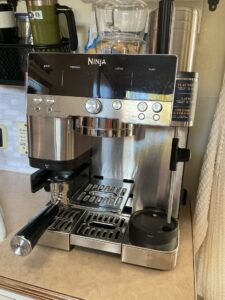
’ve spent a lot of time with home espresso machines over the years, from simple pod systems to semi-automatic setups that demand patience and practice. The Ninja Luxe Café Pro sits somewhere in the middle of that spectrum. It promises café-style drinks without requiring you to become a trained barista, and it bundles together features that usually live in separate machines: a built-in grinder, weight-based dosing, espresso brewing, drip coffee, cold brew, milk frothing, and even a hot water dispenser.
On paper, that’s ambitious. In real life, it means this machine is trying to be the one appliance that replaces half your coffee setup. The question is whether it actually delivers on that promise. After using it daily for espresso shots, lattes, and even the occasional full carafe of drip coffee, I’ve found that it does many things very well, a few things imperfectly, and overall offers a surprisingly compelling package for serious home coffee drinkers.
If you click the button above you will be redirected to Amazon.com. In case you then decide to buy anything, Amazon.com will pay me a commission. This doesn’t affect the honesty of this review in any way though.
Table of Contents
Design & Build Quality
When you first take the Ninja Luxe Café Pro out of the box, the immediate impression is that this is not a lightweight, entry-level coffee maker. It has real presence. It’s wide enough to signal that it’s doing more than just pulling espresso shots, and tall enough to accommodate the integrated grinder and bean hopper without looking awkward or top-heavy. On the counter, it feels like a serious appliance rather than a temporary gadget.
The overall design language is clean and modern. The front is dominated by brushed stainless steel, framed by matte black plastic along the sides and top. The stainless panels don’t feel paper-thin. They have enough rigidity that pressing buttons or locking in the portafilter doesn’t cause the front panel to flex. That matters more than you might think. On cheaper machines, that flex can make the entire unit feel fragile. Here, the structure feels stable.
The footprint is something to consider. This is not a compact espresso machine. If you’re upgrading from a small pod system or a slim single-boiler machine, the Ninja Luxe Café Pro will take up more horizontal space. But that added width serves a purpose. You’re getting a built-in grinder, a larger drip tray, a milk system, and space for different brew sizes. Nothing feels crammed in. The layout feels intentional.
The water reservoir sits at the back and is removable. It’s made of thick, clear plastic that feels durable and not overly brittle. The handle is sturdy, and it slides in and out smoothly without scraping or catching. The lid closes securely, and the seal feels tight enough to prevent accidental spills if you move the tank to refill it at the sink. In daily use, the reservoir design feels practical. It’s easy to see the water level at a glance, which sounds like a small detail but saves you from dry brewing mishaps.
Up top, the bean hopper is large enough for a reasonable amount of whole beans without being oversized. The lid snaps on firmly and doesn’t feel flimsy. The hopper walls are thick, and the grind adjustment mechanism feels deliberate rather than loose. Turning the grind selector has a defined click between settings. It doesn’t wobble or drift. That tactile feedback makes the machine feel more precise, even before you brew anything.
The portafilter is solid and has some heft to it. It’s not as heavy as commercial café equipment, but it’s noticeably better than the lightweight, hollow-feeling portafilters that come with many budget machines. The handle has a comfortable grip, and locking it into the group head requires a firm but smooth twist. There’s resistance, but it’s the kind that reassures you everything is sealed correctly. Once locked in, it feels secure.
The drip tray is wide and thoughtfully designed. It includes a removable metal grate that feels sturdy and doesn’t bend when you place a heavier mug on it. Underneath, the drip tray compartment is deep enough to catch overflow from rinse cycles and purges without filling up immediately. There’s also a visible indicator that pops up when the tray is nearing full, which is one of those practical touches that shows someone thought about daily use.
One of my favorite design choices is the adjustable cup platform. You can raise or lower it depending on whether you’re pulling a shot into a small espresso cup or brewing into a taller mug or travel cup. It feels stable in both positions. There’s no wobbling or sense that it might collapse under the weight of a ceramic mug. That adjustability helps reduce splashing and preserves crema when pulling shorter shots.
The milk system components also deserve attention. The milk jug feels well made and is slightly larger than what you get with many home espresso machines. The handle is comfortable, and the spout is shaped in a way that actually allows you to attempt basic latte art if you’re inclined. The steam wand assembly is solidly attached and swivels smoothly. It doesn’t feel loose at the joint, and it holds its position without drifting.
Now, not everything is metal and heavy-duty. Some of the side panels and internal components are plastic. That’s not surprising at this price point, and most manufacturers make similar compromises. The key question is whether the plastic feels cheap. In this case, it doesn’t. It’s dense and well-finished, with no sharp edges or mismatched seams. The panels align properly, and there are no visible gaps that suggest rushed assembly.
Fit and finish overall are impressive. Seams are tight. Buttons sit flush with the surface. Nothing rattles when the grinder runs or when the pump engages. Even during louder operations like grinding or steaming, the machine doesn’t vibrate excessively across the counter. It feels planted.
The control panel layout also reflects thoughtful design. Buttons are spaced well apart, and the display is easy to read without leaning in. The text and icons are clear. While it’s not a flashy touchscreen, the physical buttons give a reassuring tactile click. That mechanical feedback makes the machine feel durable and less likely to suffer from screen-related failures over time.
Ventilation and heat management seem well handled. After pulling multiple drinks back to back, the exterior doesn’t become uncomfortably hot to the touch. The top surface warms slightly, as you’d expect, but it never feels dangerous. The internal components appear well insulated from the outer casing.
Cable management is basic but functional. The power cord exits from the back cleanly and is thick enough to feel robust. It’s not overly stiff, which makes positioning the machine on the counter easier. There’s nothing especially innovative here, but it does the job.
In terms of aesthetics, the Ninja Luxe Café Pro walks a careful line. It looks modern without being overly flashy. It doesn’t scream “commercial café,” but it also doesn’t look like a generic kitchen appliance. It blends well into both minimalist and more traditional kitchens. The stainless steel front helps it match other appliances like ovens or refrigerators.
Durability over time will always depend on maintenance and usage, but based on materials and construction, the machine feels built to last through regular daily use. The grinder mechanism feels solid. The portafilter connection feels durable. The milk wand joint doesn’t feel fragile. These are the parts that usually wear out first, and they seem well reinforced.
If I compare it to similarly priced machines, the Ninja Luxe Café Pro holds its own. It doesn’t quite reach the all-metal construction of some higher-end semi-automatic espresso machines, but it also offers more integrated functionality. Given everything packed into the chassis, the build quality feels like a strong balance between cost control and real-world durability.
In day-to-day use, that balance shows. You don’t feel like you’re babying it. You can lock in the portafilter firmly. You can adjust grind settings without worrying about stripping plastic gears. You can remove and reattach the water tank without feeling like it might crack. It feels like it’s meant to be used every morning, not just admired.
Overall, the design and build quality of the Ninja Luxe Café Pro inspire confidence. It looks good, feels sturdy, and handles the physical demands of grinding, brewing, and steaming without wobble or weakness. It may not be a commercial-grade metal tank, but for a feature-packed home espresso system, it strikes an impressive balance between form, function, and durability.
User Interface & Ease of Use
One of the biggest selling points of the Ninja Luxe Café Pro is that it promises café-style drinks without requiring café-level skill. That promise lives or dies by the user interface. A machine can have great hardware, but if the controls are confusing or overly technical, most people won’t get the best out of it. After spending a good amount of time with this machine, I can say that Ninja clearly designed it with approachability in mind.
The first thing you notice when you power it on is that it doesn’t overwhelm you. There’s a clear display, physical buttons, and a logical layout. It’s not a flashy touchscreen like you’ll find on some high-end models, but I actually think that works in its favor. Physical buttons give you tactile feedback. You press something, you feel it click, and you know the command registered. There’s something reassuring about that, especially early in the morning before coffee.
The display is bright and readable without being harsh. The text is large enough to read from a normal standing position. You’re not squinting or leaning in. Icons are simple and self-explanatory. Espresso, drip coffee, cold brew, and hot water are clearly labeled. You don’t need to open a manual to figure out the basics.
Initial setup is straightforward. The machine walks you through priming, rinsing, and basic calibration. It doesn’t assume you already know espresso terminology. Instead, it explains what it’s doing in plain language. That matters for people upgrading from pod systems or basic drip machines. There’s no sense of being dropped into a professional barista interface.
One of the defining features here is the guided brewing system, sometimes referred to as Barista Assist. This is where the machine starts to feel different from traditional semi-automatic espresso machines. Instead of leaving you to figure out grind size, dose, and extraction time on your own, it offers suggestions. It might prompt you to adjust the grind finer or coarser based on previous results. For beginners, that’s incredibly helpful. It lowers the intimidation factor.
The workflow for making espresso is clean and logical. You select your drink. The machine tells you when to grind. It measures the dose by weight as it grinds into the portafilter. Once you lock the portafilter in, it’s clear when you’re ready to brew. There’s no guesswork about timing or whether you’ve ground enough coffee. Compared to traditional setups where you manually time grinding and measure doses separately, this feels streamlined.
For someone new to espresso, this system reduces friction. You’re less likely to waste beans. You’re less likely to pull wildly under-extracted or over-extracted shots right out of the gate. The machine acts like a quiet coach.
That said, the assist system isn’t perfect. If you’re someone who enjoys fine-tuning every variable, you might find the suggestions a bit intrusive. There are moments when the machine recommends grind adjustments that don’t quite align with your taste preferences. The good news is that you can override these suggestions. Once you find a grind setting and dose that you like, you can stick with it and largely ignore the prompts.
Switching between drink types is easy. The machine transitions smoothly from espresso to drip coffee to cold brew. You’re not diving into complicated submenus. Everything is laid out clearly on the front panel. For households where multiple people drink different types of coffee, this simplicity is a real advantage. One person can make a latte. The next can brew a full carafe. No reprogramming headaches.
Customization options are there, but they’re not buried. You can adjust strength, volume, and certain brewing parameters without navigating through layers of menus. It strikes a balance between automation and control. You’re not locked into rigid presets, but you’re also not overwhelmed by granular data like water temperature in exact degrees.
The grinder interface deserves specific mention. Adjusting grind size is done via a clearly marked dial. The steps feel defined. When the machine suggests a change, it’s easy to implement. You’re not fiddling with tiny internal screws or obscure controls. The weight-based dosing happens automatically, and that removes one of the most common pain points in home espresso.
The milk frothing workflow is equally approachable. You choose your froth type. You fill the jug to the marked line. The machine handles the rest. There’s no need to manually judge milk temperature or angle the steam wand precisely to create microfoam. For people who have struggled with steam wands in the past, this feels liberating. It turns what used to be a skill barrier into a push-button step.
One thing I appreciate is that the machine communicates clearly when it needs attention. If the drip tray is full, you’ll know. If it needs descaling, it tells you. If the hopper is empty, it doesn’t quietly fail. These alerts are clear but not annoying. They don’t flash aggressively or interrupt brewing mid-cycle unless something truly needs fixing.
From a learning curve perspective, most people will feel comfortable within a few days. The first couple of uses might involve checking the manual briefly, especially to understand the assisted grinding suggestions. But after that, the routine becomes second nature. Grind. Lock. Brew. Froth. It flows.
Cleaning prompts are also built into the interface. After milk steaming, you’re reminded to wipe the wand. The machine runs automatic purges when needed. Descaling instructions appear at appropriate intervals. This integration of maintenance reminders into the user interface makes ownership easier. You don’t have to track cleaning schedules manually.
Now, is it as customizable as a high-end semi-automatic machine paired with a standalone grinder? No. You don’t get deep pressure profiling or extremely granular temperature control. But that’s not the target here. The goal is consistent, high-quality drinks with minimal friction. On that front, the interface succeeds.
There’s also something to be said for how the machine feels during use. The buttons respond quickly. There’s no lag between input and action. The display updates smoothly. These small details create an impression of refinement. It feels stable and reliable rather than glitchy or rushed.
In a busy household, ease of use becomes even more important. If multiple people are using the machine, it needs to be intuitive enough that everyone can operate it without constant instruction. The Ninja Luxe Café Pro achieves that. You don’t need to memorize complex sequences. The steps are clear and repeatable.
Overall, the user interface is one of the machine’s strongest assets. It lowers the barrier to entry for espresso while still offering enough flexibility to satisfy curious users. It guides without over-controlling. It simplifies without dumbing down the experience. And after a few weeks of daily use, it feels natural, almost routine, which is exactly what you want from a machine that’s supposed to be part of your everyday morning.
Coffee Quality & Brewing Performance
At the end of the day, none of the features matter if the coffee isn’t good. You can have a solid build, an intuitive interface, and a smart grinder, but if the espresso tastes flat or the drip coffee lacks depth, the machine misses the point. So after living with the Ninja Luxe Café Pro for a while, I focused heavily on what really counts: how it performs in the cup.
Let’s start with espresso, since that’s where expectations are highest.
Out of the box, the machine produces surprisingly balanced shots with minimal effort. Thanks to the weight-based dosing and guided grind suggestions, you’re not flying blind. On my first few attempts with a medium-dark roast, I was getting thick crema, a steady extraction flow, and a 25–30 second shot time without much tweaking. That alone makes this machine more beginner-friendly than traditional semi-automatics that require manual dialing in.
The crema quality is solid. It’s not café-commercial level thick with tiger striping every time, but it’s consistent and stable. With fresher beans, you get a nice golden-brown layer that holds for a minute or two before dissipating. With older beans, as expected, the crema thins out. The machine can’t fix stale coffee, but it does a good job maximizing what your beans can offer.
Flavor-wise, espresso shots tend to lean toward smooth and rounded rather than razor-sharp and ultra-precise. With darker roasts, you get chocolatey, nutty notes with a clean finish. Bitterness is controlled. It doesn’t over-extract easily if you follow the recommended grind adjustments. With medium roasts, the machine brings out caramel and mild fruit tones reasonably well.
Where things get more nuanced is with lighter roasts. Lighter beans require tighter control over grind size, temperature, and pressure to fully develop their brighter acidity and complex flavors. The Ninja Luxe Café Pro does a respectable job here, but it’s not a precision instrument in the same way that a high-end semi-automatic with temperature control might be. You can get good results, but sometimes it takes a bit more experimentation. Shots may vary slightly from one pull to the next, especially if you’re chasing very subtle tasting notes.
That said, consistency overall is better than I expected for an all-in-one machine. The integrated scale plays a big role in this. By measuring the dose by weight rather than grind time, the machine eliminates a major variable. Once you’ve dialed in your preferred grind size for a specific bean, you can reliably reproduce similar results day after day.
Shot temperature is also worth discussing. The espresso comes out hot enough to drink immediately but not scalding. It holds heat well in pre-warmed cups. If you’re someone who likes extremely hot espresso, you might find it just slightly below that threshold, but for most people, it hits the sweet spot between drinkable and properly extracted.
Pressure performance feels steady. The flow from the portafilter is smooth and controlled, not sputtering or erratic. You don’t get dramatic channeling unless your puck prep is severely off. The machine seems to manage pressure in a way that favors consistency over experimentation. For everyday use, that’s a good thing.
Now let’s talk about drip coffee, which is often overlooked in espresso-focused machines.
The drip function on this machine is more than an afterthought. It produces a full-bodied cup that’s noticeably better than most basic drip machines. The flavor extraction is even, and the coffee doesn’t taste watered down or overly thin. Strength settings allow you to adjust intensity, which is helpful if you’re brewing a full carafe for multiple people with different preferences.
Compared to a dedicated high-end drip brewer, it might not reach absolute peak clarity and complexity, but it’s comfortably above average. If you’re switching between espresso drinks on weekdays and full pots of coffee on weekends, the performance here is genuinely useful rather than just a marketing add-on.
Cold brew is another interesting feature. Traditional cold brew takes 12 to 24 hours to steep. This machine uses a faster brewing method that mimics cold extraction in a shorter time. The result isn’t identical to slow-steeped cold brew, but it’s surprisingly smooth. The acidity is muted, and the flavor is mellow. It’s great for iced drinks or mixing with milk.
The versatility of brewing styles is where this machine starts to shine. You’re not locked into one format. You can pull a single espresso shot in the morning, brew a travel mug of drip coffee later, and make iced coffee in the afternoon without switching appliances. From a performance standpoint, that flexibility is impressive.
Another important factor is repeatability. After several weeks of daily use, I found that once I had my grind settings dialed in for a specific bean, the machine delivered consistent flavor profiles. Minor variations happen, as they do with most home machines, but nothing dramatic. I wasn’t getting wildly sour shots one day and bitter ones the next unless I changed beans or ignored grind adjustments.
Heat-up time is quick. You’re not waiting around for several minutes before pulling a shot. This encourages regular use because the machine doesn’t feel like a time commitment. Brewing performance remains stable even when making multiple drinks back to back. It recovers well between shots and doesn’t struggle under moderate demand.
One area where more advanced users might feel limited is in extraction control. You can’t manually tweak every variable the way you could with a high-end espresso setup. There’s a ceiling to how much you can experiment. But that ceiling is high enough for most home drinkers. The machine prioritizes drinkable consistency over technical mastery.
In milk-based drinks, espresso performance holds up nicely. The shots have enough body and strength to cut through steamed milk in lattes and cappuccinos. You don’t lose the coffee flavor entirely once milk is added, which is a common issue with weaker machines.
Overall, the coffee quality and brewing performance of the Ninja Luxe Café Pro are impressive for a machine that aims to do so much. It may not satisfy hardcore espresso purists who obsess over micro-adjustments and pressure curves, but for the vast majority of home users, it delivers rich, balanced, and reliable drinks across multiple brewing styles.
In practical terms, it makes coffee that you look forward to drinking every morning. And in the end, that’s the most important measure of performance.
Grinder Features & Performance
A built-in grinder can either be a convenience bonus or the weak link in an all-in-one espresso machine. In many combo systems, the grinder is where manufacturers cut corners. That’s why I paid close attention to this part of the Ninja Luxe Café Pro. After weeks of daily use, I can say the grinder is not an afterthought. It’s central to how this machine performs.
The Luxe Café Pro uses a conical burr grinder, which is exactly what you want in a machine at this level. Burr grinders crush beans between two abrasive surfaces rather than chopping them unevenly like blade grinders. That matters because grind consistency directly affects extraction. If the grind size varies too much, you’ll get uneven extraction, which translates into sourness, bitterness, or both in the same shot.
The grind adjustment system offers a wide range of settings. There are enough steps to meaningfully dial in espresso, while also covering coarser settings for drip coffee and cold brew. The adjustment dial feels solid and clicks into place with each change. It doesn’t feel loose or vague. When you move from one setting to the next, you know you’ve done it.
What makes this grinder stand out is the weight-based dosing system. Instead of grinding for a fixed amount of time, the machine measures how much coffee it’s dispensing into the portafilter. This is a big deal. Time-based grinding can vary depending on bean density, roast level, and humidity. Weight-based dosing reduces that variability. Once you set your desired dose, the machine works to hit that target consistently.
In practical terms, this means less guesswork. You don’t have to stand there with a scale and adjust grind time manually. The grinder stops when it reaches the correct amount. Over time, this improves shot consistency and saves beans. For people new to espresso, this feature alone removes one of the most confusing variables.
The grind quality itself is impressive for an integrated system. Espresso grounds come out fine enough to build proper pressure and produce crema. The texture feels even between your fingers. I didn’t notice excessive clumping, which can sometimes happen with compact grinders. The grounds distribute reasonably well into the basket, and a light tap and tamp are usually enough to prepare a solid puck.
For drip coffee, the grinder transitions smoothly to coarser settings. The grounds at these levels look appropriate for filter brewing. I didn’t see a ton of fine dust mixed in, which can lead to over-extraction in drip systems. The ability to move between brew styles without recalibrating a separate grinder is one of the machine’s strongest practical advantages.
Noise is what you’d expect from a burr grinder. It’s noticeable but not extreme. It doesn’t sound strained or overly high-pitched. The grinding process is fairly quick, so the noise doesn’t drag on. In a quiet kitchen early in the morning, you’ll hear it, but it’s not disruptive enough to feel aggressive.
Retention, which refers to how much coffee stays inside the grinder after grinding, appears minimal. When switching beans or adjusting settings, I didn’t notice large amounts of old grounds coming out later. That suggests the internal design is relatively efficient. Still, like any grinder, it benefits from occasional cleaning to prevent buildup.
Maintenance access is decent. The hopper can be removed, and you can access the burr area for cleaning with the included brush. It’s not as open or serviceable as a standalone premium grinder, but it’s good for a built-in unit. Regular brushing keeps the burrs clear and maintains consistent performance.
One interesting aspect of this grinder is how it interacts with the machine’s assist system. When the machine suggests grind adjustments, you can follow them easily via the dial. Sometimes the suggestions are helpful, especially when trying a new bag of beans. Other times, experienced users may prefer to rely on taste and visual shot feedback instead of automated prompts. The key is that you have control. You’re not locked into automatic-only adjustments.
Bean freshness plays a noticeable role in grinder performance. With freshly roasted beans, the grinder produces fluffy, aromatic grounds that lead to rich crema and balanced extraction. With older beans, even a good grinder can’t compensate for lost oils and CO2. The machine does its part, but your input matters.
The hopper capacity is generous enough for daily use without constant refilling. At the same time, it’s not so large that beans sit exposed to air for weeks. If you go through coffee regularly, the size feels practical. The lid fits snugly, helping limit air exposure, though like most hoppers, it isn’t completely airtight.
Switching between different beans requires a bit of planning. Because this is an integrated system, you can’t easily purge all beans instantly without running some through. If you frequently rotate specialty beans, you’ll need to grind out what’s left in the hopper before switching. That’s common for built-in grinders and not a flaw unique to this machine.
Static buildup is relatively controlled. Grounds don’t fly everywhere when dispensing into the portafilter. There’s minimal mess around the grinding area. Compared to some standalone grinders that scatter fines across the counter, this one stays tidy.
From a performance ceiling perspective, this grinder won’t match a high-end standalone burr grinder that costs several hundred dollars on its own. Dedicated grinders often offer stepless adjustment, ultra-tight particle distribution, and commercial-grade burr sets. But those setups also require more space and manual involvement. Within the context of an integrated system, the Ninja’s grinder performs well above average.
Consistency over time has been solid. After repeated daily use, grind output remains predictable. I haven’t noticed drift in grind size or inconsistent dosing. That reliability is important because it means you’re not constantly re-dialing in.
For beginners, the integrated grinder removes the biggest barrier to entry. You don’t have to research separate grinders, worry about compatibility, or learn advanced dosing techniques right away. For intermediate users, it offers enough control to experiment and refine your shots.
In daily life, the grinder becomes part of a smooth routine. Add beans. Select drink. Grind. Brew. There’s no extra step of transferring grounds from a separate device. That simplicity encourages more frequent use.
Overall, the grinder features and performance are a strong asset of the Ninja Luxe Café Pro. It combines convenience, consistency, and solid grind quality in a way that supports both espresso and other brew methods. While it may not replace a top-tier standalone grinder for hardcore enthusiasts, it delivers reliable, well-distributed grounds that make genuinely good coffee. And for most home users, that balance of performance and simplicity is exactly what they need.
Milk Frothing & Specialty Drinks
For many people, espresso is only half the story. The real daily ritual revolves around milk-based drinks: lattes, cappuccinos, flat whites, cortados, and the occasional iced latte in the afternoon. This is where the Ninja Luxe Café Pro really tries to separate itself from traditional semi-automatic machines. Instead of expecting you to master steam wand technique, it builds structure and guidance into the milk frothing process.
Let’s start with the steam system itself.
The machine features an assisted frothing setup that blends automation with hands-on control. You still use a proper steam wand and milk jug, which preserves the feel of real espresso preparation, but the machine manages temperature and froth style for you. That balance makes a big difference. It doesn’t feel like you’re using a fully automatic milk cartridge system, yet you’re not left guessing about timing and texture either.
The included milk jug is generously sized. It can comfortably handle enough milk for two drinks at once, which is surprisingly useful if you’re making back-to-back lattes for yourself and someone else. The stainless steel jug feels solid, with a well-shaped spout that actually allows for controlled pouring. If you want to try basic latte art, you can. It’s not just a foam dispenser.
The frothing presets are one of the most practical features. Instead of a single generic steam option, you can select different foam textures. For example, thinner milk for a latte, thicker foam for a cappuccino, and even cold foam options for iced drinks. This level of control makes the machine more versatile than many entry-level espresso systems.
When steaming dairy milk, the results are consistently good. Whole milk produces creamy, glossy microfoam with minimal effort. The texture is smooth enough for basic latte art hearts or rosettas if your pouring technique is steady. Importantly, the milk doesn’t come out overly bubbly or stiff unless you intentionally choose a thicker foam setting. The machine seems tuned to avoid the large, airy bubbles that make drinks feel dry.
Temperature control is another strong point. The milk reaches a hot but drinkable temperature. It’s warm enough to integrate well with espresso and maintain a comforting heat in the cup, but it doesn’t scorch. Scalded milk ruins sweetness and leaves an unpleasant cooked taste. Here, the milk retains its natural sweetness, especially with whole or 2 percent dairy.
Plant-based milks also perform better than I expected. Oat milk, which is popular for lattes, froths reliably and produces stable foam. Almond milk is a bit thinner, as usual, but still usable. Soy milk tends to froth well too, though results vary slightly depending on brand. The machine’s assisted frothing helps compensate for the lower protein content in non-dairy options, making specialty drinks more accessible for people who avoid dairy.
One of the most noticeable advantages of this system is consistency. Traditional manual steam wands require practice. You have to control the wand angle, submerge it at the right depth, listen for the right sound, and stop at the right temperature. It’s rewarding once you learn, but there’s a learning curve. The Ninja simplifies that curve. You select the style, position the wand, and the machine guides the process. After a few uses, you can produce repeatable milk texture without anxiety.
The workflow for making a latte is smooth. Pull your espresso shot. Fill the jug to the marked line. Select your foam style. Steam. Pour. The steps feel logical and efficient. There’s no sense of juggling complicated settings mid-process.
Cold foam deserves special mention. Not every espresso machine handles cold milk drinks well. Here, the cold foam option produces a light, stable foam that sits nicely on top of iced espresso drinks. It’s especially enjoyable for summer-style beverages. The foam doesn’t collapse immediately, which gives your drink a layered look and texture.
Specialty drink flexibility is where this machine shines in everyday life. You can make cappuccinos with thick foam in the morning, switch to flat whites with thinner microfoam, and then create an iced oat milk latte in the afternoon. The presets remove the intimidation factor from switching styles.
The steam wand itself feels sturdy. It swivels smoothly and holds its position. It doesn’t feel loose at the joint, and it doesn’t drip excessively after use. After steaming, the machine runs an automatic purge cycle to clear residual milk from the wand. That’s a small feature that makes a big difference for hygiene and longevity.
Cleaning is manageable. You still need to wipe the wand after each use, which is standard practice with any steam system. The automatic purge helps reduce buildup, but regular wiping is essential. The jug rinses easily, and milk residue doesn’t cling stubbornly to the interior if you clean it promptly.
Performance under back-to-back drink preparation is solid. If you’re making multiple milk drinks in a row, the machine recovers quickly. It doesn’t struggle to maintain steam pressure. That’s important in a household where more than one person drinks lattes.
In terms of limitations, very advanced users might miss the total manual freedom of a professional steam wand. With full manual systems, you can stretch milk exactly how you want and stop at a precise second. The Ninja’s assisted approach prioritizes consistency over experimentation. But for most home users, that trade-off is worth it.
Another thing I appreciate is that the espresso base holds up well under milk. The shots have enough body and intensity to cut through the milk sweetness. You’re not left with a bland, diluted drink. This balance between espresso strength and milk texture is key to satisfying specialty beverages.
If you compare this machine to fully automatic bean-to-cup systems that use internal milk containers, the Ninja feels more authentic. You’re still steaming in a separate jug. You’re still pouring the milk yourself. There’s room for personal technique. But you’re supported rather than left alone.
For people who primarily drink milk-based beverages, this machine offers real value. It removes the most intimidating aspect of espresso preparation without eliminating the hands-on experience entirely. You feel involved, but not stressed.
In everyday use, the milk frothing system becomes one of the most enjoyable parts of owning the machine. There’s something satisfying about watching smooth, glossy milk form with minimal effort and then pouring it over a freshly pulled shot. It turns a routine coffee into a small ritual.
Overall, the milk frothing and specialty drink performance of the Ninja Luxe Café Pro are among its strongest features. It delivers consistent, creamy, well-textured milk across dairy and plant-based options, supports multiple drink styles, and simplifies the process without stripping away the tactile experience. For many home users, this is the feature that will justify the investment and keep the machine in daily rotation.
Maintenance & Cleaning
No matter how good an espresso machine is on day one, long-term satisfaction depends heavily on maintenance. Coffee oils build up. Milk residue hardens. Mineral deposits from water accumulate inside the boiler and lines. If cleaning is complicated or easy to ignore, performance drops and frustration rises. After extended daily use, I found that the Ninja Luxe Café Pro handles maintenance in a way that feels practical rather than burdensome.
Let’s start with daily cleaning, because that’s where most people either stay consistent or fall off.
After pulling espresso shots, the portafilter and basket need to be emptied and rinsed. That’s standard across all semi-automatic machines. On the Ninja, knocking out the puck is easy. The spent coffee grounds come out cleanly without sticking excessively to the basket walls. A quick rinse under warm water removes residual oils. The baskets themselves feel durable and don’t show staining quickly, which helps them look clean even after regular use.
The drip tray design makes daily cleanup simpler than expected. It’s wide and deep, so it doesn’t fill up immediately after a couple of rinse cycles. When it does fill, there’s a visible indicator that pops up, reminding you to empty it. Removing the tray is smooth. It slides forward without sticking, and the metal grate lifts off easily for washing. A quick rinse and wipe usually take less than a minute.
Milk system cleaning is where many machines become tedious. Dried milk inside a steam wand can quickly lead to clogs and hygiene issues. The Ninja’s assisted frothing system includes an automatic purge cycle after steaming. When you finish frothing, the machine briefly pushes steam through the wand to clear residual milk. This reduces buildup inside the tip.
However, automatic purging doesn’t replace manual wiping. You still need to wipe the steam wand with a damp cloth immediately after use. That’s true for any machine. The difference here is that the wand surface is smooth and accessible. There are no awkward angles that trap milk residue. A quick wipe takes seconds.
The included milk jug rinses cleanly. If you wash it right after use, milk doesn’t cling stubbornly to the interior. For heavier use days, you can wash it with mild soap or place it in the dishwasher if desired. The jug’s stainless steel construction resists staining, which helps maintain a fresh look over time.
Weekly maintenance is where the machine’s design starts to show real thoughtfulness. The grinder area benefits from brushing out residual grounds. The hopper can be removed easily, allowing access to the burr area. Using the included cleaning brush, you can sweep away buildup without disassembling complex internal parts. It’s not a fully user-serviceable grinder like some standalone units, but it’s accessible enough to prevent long-term clogging.
Coffee oils naturally accumulate in the group head and internal brew path. The machine prompts you when it’s time for a cleaning cycle. These reminders are integrated into the interface rather than hidden in a manual. When the cleaning alert appears, the process is guided step by step. You use a cleaning tablet, follow the on-screen prompts, and let the machine run its cycle. It’s largely automated and doesn’t require guesswork.
Descaling is another critical part of ownership, especially if you live in an area with hard water. Mineral buildup can reduce heating efficiency and affect flavor. The Ninja includes a descaling program that walks you through the process. You add the descaling solution to the water tank, start the cycle, and the machine manages the flushing process. The prompts make it difficult to accidentally skip steps.
Water tank maintenance is straightforward. Because it’s removable, you can rinse it at the sink and dry it periodically. The tank walls are smooth, which reduces biofilm buildup. There aren’t complicated internal corners that trap residue. If you use filtered water, you’ll reduce scaling frequency, but even without it, the descaling process feels manageable.
One detail I appreciate is how accessible the internal components are for routine care. You’re not required to unscrew panels or navigate hidden compartments. Most removable parts detach easily and reattach securely. That reduces the psychological barrier to cleaning. When maintenance feels simple, you’re more likely to do it consistently.
Another positive is dishwasher compatibility for several components. The drip tray, metal grate, and some removable accessories can be placed in the dishwasher. That’s a practical convenience for busy households. It’s not mandatory, but it’s helpful when you want a deeper clean without scrubbing.
Long-term durability often depends on how easy it is to keep a machine clean. Coffee oils can become rancid if left unchecked. Milk residue can sour. The Ninja’s reminders and automated cycles support good habits. Instead of relying solely on the user’s memory, the machine prompts action at reasonable intervals.
Grinder maintenance deserves special attention because neglected grinders can affect flavor and performance. Periodically emptying the hopper and brushing out old grounds prevents stale residue from contaminating fresh beans. While you can’t fully remove the burrs without more involved disassembly, routine brushing appears sufficient for maintaining consistent grind quality.
The exterior cleaning is simple. The stainless steel front panel wipes clean with a soft cloth. It doesn’t show fingerprints excessively, though you’ll still see smudges after heavy use. Matte black sections resist visible streaking better than glossy finishes. Overall, the exterior holds up well to daily wiping.
One concern people often have with all-in-one machines is complexity. More features can mean more potential failure points. In this case, maintenance design seems to account for that. The frothing system purges automatically. The grinder area is accessible. The machine actively notifies you when service is needed. Those design choices help offset the complexity of combining multiple functions in one unit.
Time investment is reasonable. Daily cleaning takes a few minutes. Weekly brushing and wiping add a bit more. Monthly or periodic descaling depends on water hardness but is largely automated. Compared to traditional manual espresso setups, this machine actually feels less demanding.
Another subtle benefit is how the machine maintains performance when properly cleaned. After descaling and running cleaning cycles, shot quality remains stable. There’s no noticeable drop-off in temperature or pressure. That consistency reinforces the value of regular maintenance.
For households with multiple users, clear prompts reduce confusion. Anyone can follow on-screen instructions for cleaning cycles. You don’t need to memorize technical sequences. That shared usability prevents neglect.
Of course, no espresso machine is maintenance-free. If you ignore cleaning entirely, performance will degrade. But the Ninja Luxe Café Pro lowers the effort threshold significantly. It nudges you toward upkeep rather than punishing you for forgetting.
In everyday ownership, that balance makes a real difference. You don’t dread cleaning days. You don’t feel like the machine is fragile or overly complicated. Maintenance becomes part of the rhythm of use rather than a separate chore.
Overall, the maintenance and cleaning system of the Ninja Luxe Café Pro feels thoughtfully engineered. It combines accessible parts, automated cycles, clear reminders, and practical design to support long-term reliability. For a feature-rich machine that handles grinding, brewing, and milk frothing, it manages to keep upkeep manageable and straightforward, which ultimately protects both performance and peace of mind.
Energy Efficiency & Noise Levels
Energy consumption and noise are two factors that rarely make it into marketing headlines, but they have a real impact on daily ownership. An espresso machine sits on your counter year-round. It heats water, powers a grinder, drives a pump, and produces steam. All of that requires electricity and generates sound. After spending consistent time with the Ninja Luxe Café Pro, I paid close attention to how it behaves in a real home environment.
Let’s start with energy efficiency.
Like most full-featured espresso machines, this unit draws a relatively high wattage when actively heating. That’s normal. Brewing espresso and producing steam both require rapid heating. The difference lies in how efficiently that energy is used and whether the machine wastes power when idle.
One of the first things I noticed is that heat-up time is relatively quick. You’re not waiting several long minutes before the machine is ready to brew. Faster heat-up translates to less energy spent sitting in a high-power state before you even make your drink. That alone helps keep overall consumption reasonable.
Once warmed up, the machine doesn’t constantly blast heat at full power. It cycles intelligently to maintain temperature without aggressive reheating. You can hear subtle internal clicks or faint sounds as it regulates temperature, but it doesn’t feel like it’s constantly running at maximum output.
Auto shut-off is another practical feature. If you forget to power the machine down, it doesn’t stay on indefinitely. After a set period of inactivity, it turns itself off. This is more important than people realize. It not only reduces electricity use but also adds a layer of safety. In busy households, it’s easy to walk away and forget.
During standby mode, power draw appears minimal. The display remains visible, but there’s no sense of active heating or internal noise. The machine feels dormant rather than idling aggressively. Compared to older espresso machines that maintained high heat continuously, this feels more efficient.
Steam production is one of the most energy-intensive tasks for any espresso machine. On the Ninja, steam recovery between drinks is quick. That suggests efficient internal heating rather than brute-force energy use. When making multiple milk drinks back to back, the machine doesn’t struggle or lag significantly. It regains steam pressure quickly without prolonged high-energy heating bursts.
The grinder is another energy consideration. Grinding beans requires a motor with enough torque to crush whole coffee beans consistently. The Luxe Café Pro’s grinder runs briefly and efficiently. It doesn’t grind longer than necessary thanks to the weight-based dosing system. By stopping precisely when the target dose is reached, it avoids unnecessary motor runtime. That small optimization adds up over weeks and months of use.
Now let’s talk about noise, because this is often the first thing people notice in daily life.
No espresso machine is silent. If it has a burr grinder and a pump, it will make noise. The key question is how disruptive that noise feels.
The grinder produces a typical burr grinding sound. It’s not whisper quiet, but it’s also not harsh or shrill. The pitch is relatively low and mechanical rather than piercing. The grinding duration is short, usually under 20 seconds for a standard dose. That brevity helps. You hear it, but it’s over quickly.
In comparison to standalone grinders I’ve used, the noise level is about average. It doesn’t sound strained or uneven. There’s no rattling or excessive vibration. The internal build feels stable, which reduces resonance against the counter.
The pump sound during espresso extraction is noticeable but controlled. You hear a steady hum as pressure builds and water flows through the puck. It’s not silent, but it’s consistent and smooth. There’s no erratic sputtering or metallic knocking. The sound profile feels refined rather than aggressive.
Steam noise is often the loudest component of any espresso machine. When frothing milk, you’ll hear the characteristic hissing sound of steam pressure interacting with milk. On this machine, the sound is strong but not overwhelming. It doesn’t screech or fluctuate wildly. The assisted frothing system keeps the steam consistent, which prevents chaotic bursts of noise.
What stood out to me is the lack of excessive vibration. Some machines physically shake during grinding or extraction, causing cups to rattle on the tray. The Ninja stays relatively planted. The weight of the unit and the design of the internal components seem to dampen vibration effectively.
In an early morning setting, you’ll definitely hear the grinder. If someone is sleeping in the next room, they may notice it. But it’s comparable to other burr grinders in this class. It’s not dramatically louder than competitors. And because the process is quick, it doesn’t feel intrusive for long.
For apartment dwellers or shared living spaces, this matters. You want a machine that performs well without sounding like construction equipment. The Luxe Café Pro strikes a reasonable balance. It’s audible but not disruptive.
Energy efficiency also ties into heat retention. The exterior doesn’t radiate excessive heat into the room. Even after multiple drinks, the outer casing remains warm at most, not hot. That suggests insulation is doing its job. Less heat loss means less energy required to maintain brewing temperature.
Another subtle energy factor is cleaning cycles. The automated rinse and purge cycles use water and short bursts of heat but don’t feel excessive. They’re brief and purposeful. You’re not running long, energy-heavy cycles unnecessarily.
Over weeks of use, I didn’t notice a meaningful spike in electricity usage compared to other espresso machines I’ve owned. Of course, any machine that heats water will draw power, but this one feels efficient within its category.
From a practical standpoint, energy use becomes invisible in daily life. You don’t think about it because the machine behaves responsibly. It heats quickly, powers down when idle, and doesn’t run constantly in the background.
Noise, similarly, becomes part of the routine rather than a frustration. The sound of grinding and brewing becomes associated with the anticipation of coffee rather than irritation.
There’s always a trade-off between performance and quiet operation. High torque motors and powerful pumps create noise. The Ninja Luxe Café Pro doesn’t eliminate that reality, but it manages it well. The sound profile is controlled, the vibration is minimal, and the duration of loud components is short.
Overall, in terms of energy efficiency and noise levels, the machine performs in line with or slightly better than expectations for a feature-rich espresso system. It uses energy purposefully rather than wastefully, incorporates auto shut-off for added efficiency, and maintains a noise profile that feels solid and contained rather than disruptive.
In daily life, that combination makes ownership comfortable. The machine does its job powerfully but responsibly, without demanding constant attention to energy use or testing your patience with excessive noise.
Conclusion
After spending significant time with the Ninja Luxe Café Pro, what stands out most is how balanced it feels. It’s ambitious without being overwhelming. It’s automated without stripping away the hands-on elements that make espresso enjoyable. And it manages to combine grinder, scale, espresso system, drip brewer, cold brew function, and milk frother into one machine without feeling chaotic.
This isn’t a machine built solely for espresso purists who want to micro-adjust pressure curves and temperature to the degree. If that’s your goal, you’ll likely lean toward a dedicated semi-automatic setup with a standalone grinder. But that’s not who this machine is for.
The Luxe Café Pro is for people who want consistently good coffee with minimal friction. It’s for households where one person drinks straight espresso, another prefers lattes, and someone else wants drip coffee on weekends. It’s for users who appreciate guidance when dialing in beans but still want enough control to experiment.
Its biggest strengths are integration and usability. The weight-based grinding improves consistency. The assisted milk frothing lowers the learning curve. The maintenance reminders make long-term ownership easier. And the overall build quality inspires confidence.
No machine at this price point will be perfect, but the Ninja Luxe Café Pro delivers a strong combination of versatility, convenience, and solid in-cup results. For many home coffee drinkers, that balance makes it not just a good purchase, but a genuinely enjoyable one.