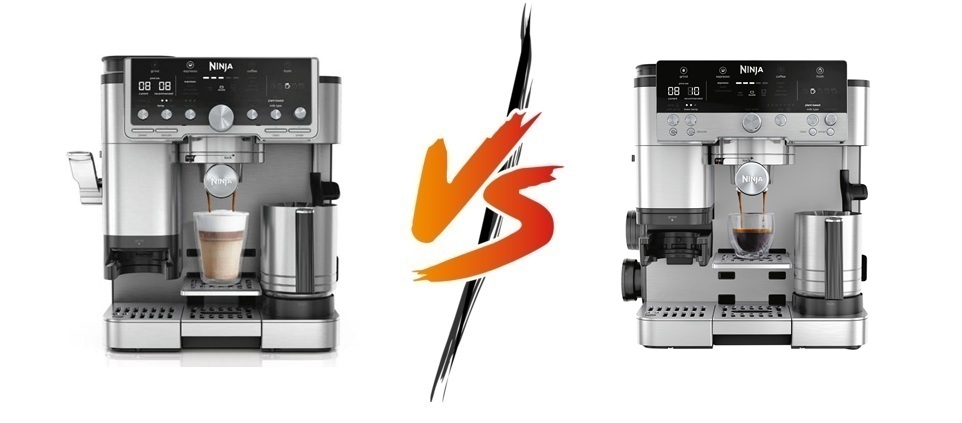
Choosing a home espresso machine isn’t just about specs on a box. It’s about how it fits into your mornings, your kitchen, and your habits. Some people want a quick, reliable latte before work. Others enjoy dialing in grind settings on a slow Sunday and chasing the perfect crema. The Ninja Luxe Café line tries to serve both types of coffee drinkers, which is why comparing the Ninja Luxe Café Signature and the Ninja Luxe Café Pro actually matters.
At first glance, they look similar. Both promise café-style drinks, built-in grinders, and automatic milk frothing. But once you start using them, the differences become clearer. The Pro adds more control, more automation, and more flexibility, while the Signature focuses on accessibility and value. In this review, I’ll break down exactly where those differences show up and who each machine is really best for.
Table of Contents
- 1 Ninja Luxe Café Pro vs Ninja Luxe Café Signature Comparison Chart
- 2 Design & Build Quality
- 3 User Interface & Ease of Use
- 3.1 Control Layout and Physical Interface
- 3.2 First-Time Setup and Onboarding
- 3.3 Daily Workflow: Grinding, Dosing, and Tamping
- 3.4 Drink Customization and Presets
- 3.5 Learning Curve
- 3.6 Milk Frothing Experience
- 3.7 Feedback and Alerts
- 3.8 Speed and Responsiveness
- 3.9 Accessibility for Different Users
- 3.10 Final Thoughts on Ease of Use
- 4 Coffee Quality & Brewing Performance
- 5 Grinder Features & Performance
- 5.1 Burr Type and Core Grinding Mechanism
- 5.2 Grind Size Adjustability
- 5.3 Dosing: Timer-Based vs Weight-Based
- 5.4 Grind Consistency in the Portafilter
- 5.5 Grind Retention and Cleanliness
- 5.6 Noise Levels During Grinding
- 5.7 Bean Hopper Design and Practical Use
- 5.8 Adaptability to Different Roast Types
- 5.9 Long-Term Performance and Durability
- 5.10 Final Thoughts on Grinder Performance
- 6 Milk Frothing & Specialty Drinks
- 6.1 Frothing System Design
- 6.2 Milk Texture and Microfoam Quality
- 6.3 Milk Temperature Control
- 6.4 Milk Jug Size and Practical Impact
- 6.5 Specialty Drink Range
- 6.6 Plant-Based Milk Performance
- 6.7 Ease of Cleaning After Milk Use
- 6.8 Specialty Drink Consistency
- 6.9 Latte Art Potential
- 6.10 Overall Milk Experience
- 6.11 Final Thoughts on Milk Frothing & Specialty Drinks
- 7 Maintenance & Cleaning
- 7.1 Daily Cleaning Routine
- 7.2 Milk System Cleaning
- 7.3 Grinder Maintenance
- 7.4 Descaling and Deep Cleaning Cycles
- 7.5 Portafilter and Tamping Maintenance
- 7.6 Water Reservoir and Internal Components
- 7.7 Long-Term Durability and Maintenance Burden
- 7.8 Frequency of Maintenance Tasks
- 7.9 Real-World Cleaning Experience
- 7.10 Final Thoughts on Maintenance & Cleaning
- 8 Conclusion
Ninja Luxe Café Pro vs Ninja Luxe Café Signature Comparison Chart
If you click the links below, under the product images, you will be redirected to Amazon.com. In case you then decide to buy anything, Amazon.com will pay me a commission. This doesn’t affect the honesty of this review in any way though.
| Specification | Ninja Luxe Café Signature | Ninja Luxe Café Pro |
|---|---|---|
 |  | |
| Check the best price on Amazon | Check the best price on Amazon | |
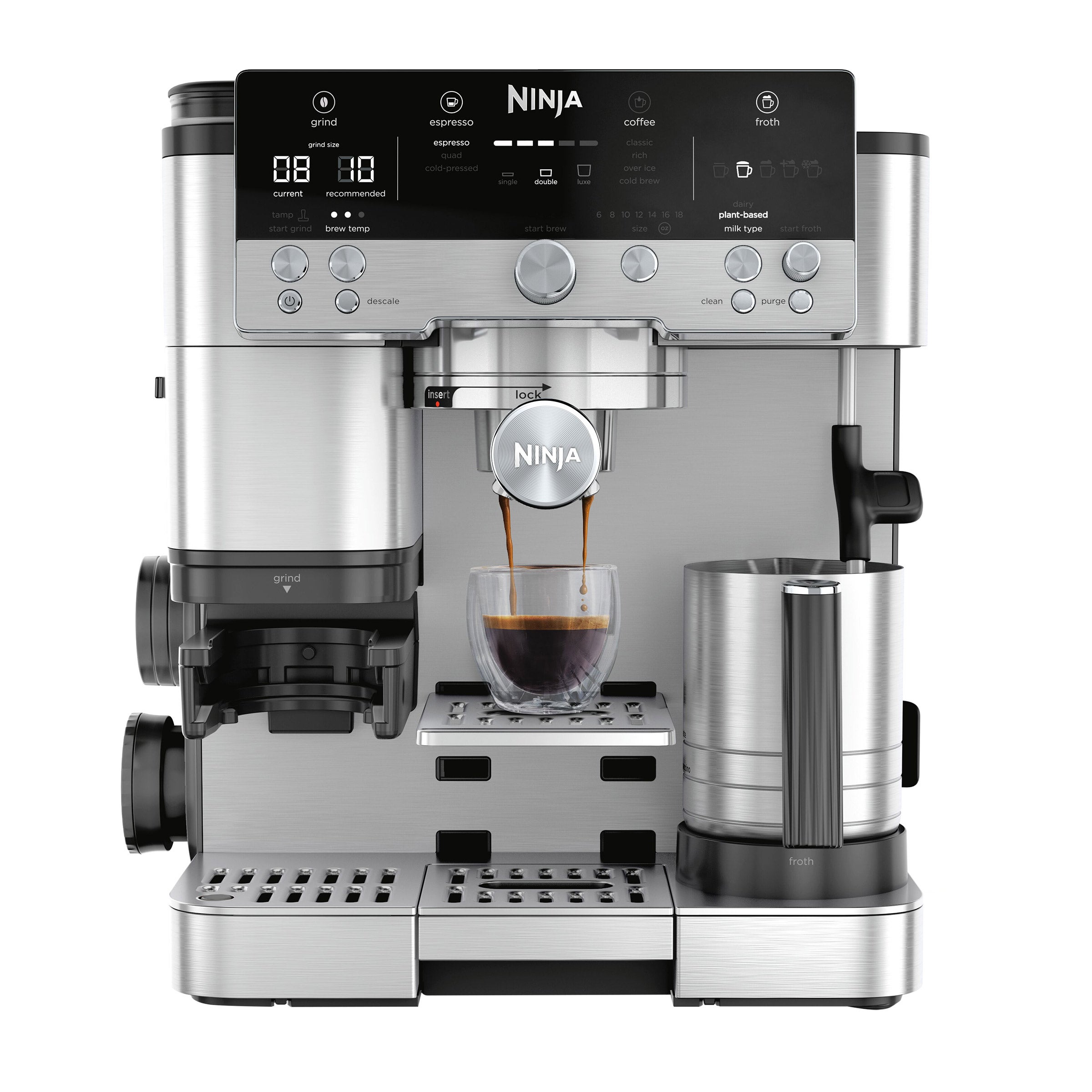
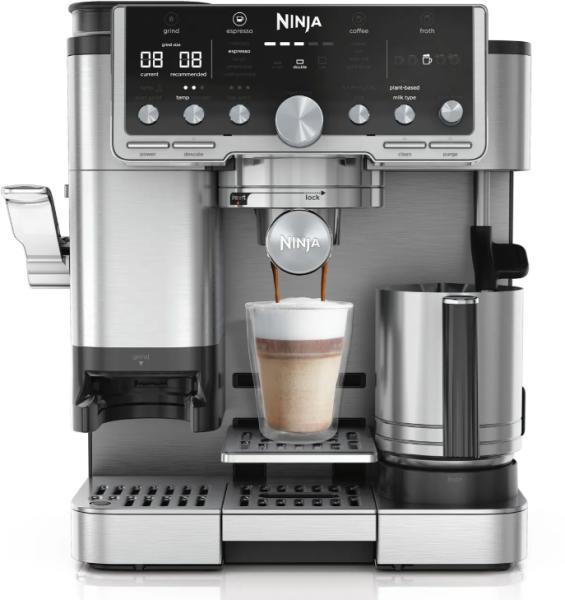
| Machine Type | 3-in-1 Espresso, Drip Coffee & Cold Brew | 3-in-1 Espresso, Drip Coffee & Cold Brew |
| Built-In Grinder | Yes (Conical Burr) | Yes (Conical Burr) |
| Grind Settings | 25 adjustable settings | 25 adjustable settings |
| Dosing System | Time-based dosing | Weight-based dosing (integrated scale) |
| Tamping System | Manual spring-assisted tamper | Built-in assisted tamping lever |
| Espresso Styles | Single, Double, Americano, Iced | Single, Double, Ristretto, Lungo, Quad, Americano, Iced |
| Brew Sizes | Multiple cup sizes | Multiple cup sizes (expanded options) |
| Cold Brew Function | Yes | Yes |
| Hot Water Dispenser | No dedicated dispenser | Yes (separate hot water output) |
| Milk Frothing System | Automated Dual Froth System | Automated Dual Froth System (enhanced) |
| Froth Presets | Steamed, Thin, Thick, Cold | Steamed, Thin, Thick, Extra-Thick, Cold |
| Milk Jug Size | Standard single-drink capacity | XL jug (two drinks capacity) |
| Steam Wand | Standard wand | Thicker, better insulated wand |
| Water Reservoir | Removable rear tank | Removable rear tank |
| Cleaning Alerts | Yes | Yes |
| Automatic Steam Purge | Yes | Yes |
| Interface Type | Button + Display | Button + Display (expanded menu) |
| Smart Assistance | Basic guidance | Barista Assist grind recommendations |
| Drip Tray | Removable with metal grate | Removable with metal grate |
| Target User | Beginner to intermediate | Intermediate to advanced home user |
| My individual reviews | Ninja Luxe Café Pro review |
Quick Summary of the Key Differences
- The Pro adds weight-based dosing, which improves shot consistency.
- The Pro integrates a tamping lever, removing manual tamping variation.
- The Pro includes more espresso styles and a hot water dispenser.
- The Pro offers an XL milk jug and an extra froth setting.
- Core grinder hardware and base brewing platform are shared between both machines.
Design & Build Quality
When you’re investing in an espresso machine, design and build quality matter more than most people realize. This isn’t a gadget you tuck away in a drawer. It lives on your counter. You touch it every day. You feel the portafilter lock in. You hear the grinder spin. You wipe down the steam wand. Over time, those little tactile details shape your entire experience.
The Ninja Luxe Café Signature and the Ninja Luxe Café Pro share the same overall design language, but once you spend time with them, subtle differences begin to stand out.
Overall Aesthetic and Counter Presence
Both machines follow Ninja’s modern, slightly industrial aesthetic. Think clean lines, black and stainless steel finishes, and a compact but confident footprint. They look contemporary without feeling overly flashy. There’s no chrome overload or exaggerated café styling. Instead, the machines lean toward a practical, purposeful look that fits well in a modern kitchen.
The Signature model has a streamlined appearance. The bean hopper sits neatly on top, the control panel is clearly laid out, and the drip tray and brew head align cleanly. It doesn’t scream “commercial espresso machine,” but it also doesn’t look like a toy. It strikes a nice middle ground.
The Pro looks almost identical at first glance, but its integrated tamping lever changes the silhouette slightly. That lever gives it a more serious, professional vibe. It feels more intentional, like it’s designed for someone who cares about espresso technique. The slightly larger milk system components also add visual weight.
On a countertop, neither machine feels overwhelming. They’re tall enough to feel substantial but not so tall that they won’t fit under standard cabinets. Depth is reasonable too. You won’t feel like you sacrificed half your workspace to accommodate either model.
Materials and Exterior Finish
Both machines use a mix of high-quality plastic and metal accents. The outer body panels are primarily plastic, but they’re solid and well-assembled. There’s no obvious flex when you press on the housing. Seams are tight. Edges are clean.
The stainless steel accents around the brew head and drip tray give both models a more premium appearance. The portafilter itself is weighty enough to feel authentic. It’s not commercial-grade heavy, but it doesn’t feel hollow or flimsy either.
If you’re used to entry-level espresso machines, both the Signature and Pro will feel like a step up. However, if you’ve handled high-end prosumer machines with all-metal chassis, you’ll notice the difference. These are consumer-focused machines designed to balance durability with affordability.
The Pro does feel slightly more refined in hand. The tamping lever, in particular, has a reassuring resistance when you pull it. It doesn’t wobble. It doesn’t feel fragile. That mechanical feedback contributes to the perception of higher build quality, even if the core materials are similar.
Portafilter and Brew Head Construction
This is where hands-on experience really matters.
The portafilter on both machines has a satisfying weight and locks into the brew head with a firm twist. The locking action feels secure, not loose. There’s a bit of resistance, which is good. You want that tight seal to handle pressure during extraction.
On the Signature, tamping is done manually using a spring-loaded tamper. The tamper itself is decent quality, but because it’s separate from the machine, there’s a slight sense of added workflow. You grind, level, tamp, then insert. The portafilter is stable enough during tamping, but you do need to be deliberate.
The Pro changes that dynamic completely. Its built-in assisted tamper is integrated into the machine body. After grinding into the portafilter, you pull the lever and the machine compresses the grounds evenly. Mechanically, this system feels well engineered. It doesn’t feel like a gimmick. The motion is smooth, controlled, and consistent.
From a build standpoint, the Pro’s tamping assembly feels like one of its most robust components. It’s not loose or rattly. Over time, that could make a real difference in durability compared to repeatedly using a handheld tamper.
Bean Hopper and Grinder Housing
Both models feature an integrated conical burr grinder with a hopper mounted on top. The hopper lid seals reasonably well and feels solid when removed and replaced. It’s not glass; it’s tinted plastic, but it’s thick and durable.
The grind adjustment dial is easy to grip and rotate. It has clear click points that make it easy to track your settings. There’s no accidental slipping when you adjust it. That tactile feedback adds confidence.
The grinder housing doesn’t vibrate excessively during operation. Yes, you’ll hear it, but the structure feels stable. The machine doesn’t shake across the counter, which can happen with lighter or poorly balanced espresso makers.
Both machines handle grounds neatly, but as with most built-in grinder systems, you may see a small amount of residual grounds around the chute over time. That’s more about maintenance than build quality.
Water Reservoir and Drip Tray
The water reservoirs on both models are removable from the rear. They’re made of clear plastic so you can easily see the water level. The plastic feels sturdy, not brittle. The handle is integrated well and doesn’t feel like it will snap under normal use.
Removing and reinserting the tank is smooth. It slides into place without awkward alignment issues. That’s a small detail, but it matters when you’re refilling daily.
The drip tray on both machines feels solid and sits securely. It doesn’t rattle. The metal grate on top is sturdy and easy to remove for cleaning. Capacity is reasonable for home use, though if you’re making multiple drinks in a row, you’ll still need to empty it regularly.
The Pro doesn’t significantly change the drip tray design, but because it encourages more milk-based drinks and experimentation, you may find yourself interacting with the tray more often. Structurally, though, both are comparable.
Milk Frothing Components
Milk systems often reveal a machine’s true build quality.
On the Signature, the automated frothing system feels well integrated. The wand has a solid attachment point and doesn’t feel flimsy. The milk jug is decent quality stainless steel, lightweight but functional.
The Pro improves this area with a larger, heavier milk jug. It feels more substantial in hand. The steam wand is slightly thicker and better insulated. When you handle it, there’s a noticeable difference. It feels closer to what you’d expect from a traditional espresso setup.
The wand’s pivot movement is smooth on both machines. It doesn’t squeak or feel loose. Over time, durability will depend on cleaning habits, but the mechanical joints feel reliable out of the box.
Fit and Finish Over Time
While long-term durability depends on maintenance and usage patterns, the initial impression of both machines is strong. Panels align well. Buttons respond with a firm click. Nothing feels misaligned or poorly seated.
The Signature feels like a thoughtfully engineered mid-range machine. The Pro feels like a slightly upgraded version of that same platform, with key stress points reinforced through design choices like the tamper arm and enhanced milk components.
Neither machine feels disposable. Neither feels fragile. They feel like appliances designed to last several years with proper care.
Final Thoughts on Design and Build
If you judge purely by materials, the two machines are very close. They share the same design foundation and general construction philosophy. But the Pro elevates the tactile experience.
The integrated tamper alone changes how solid and “serious” the machine feels. The upgraded milk components add weight and confidence. The overall structure feels a bit more complete.
The Signature, on the other hand, still offers strong build quality for its price. It doesn’t cut corners in obvious ways. It feels durable, stable, and well thought out.
If you’re buying based on physical presence and mechanical refinement, the Pro has the edge. If you want something that looks good, feels sturdy, and doesn’t cost as much, the Signature absolutely holds its own.
In daily use, both machines feel like capable, well-built appliances. The difference isn’t dramatic. It’s subtle. But for someone who appreciates tactile feedback and mechanical consistency, those subtle upgrades in the Pro make a meaningful difference over time.
User Interface & Ease of Use
A great espresso machine can have excellent components and still frustrate you if the interface gets in the way. That’s why user experience matters just as much as pressure bars and grind settings. Most people don’t want to study a manual every morning. They want a system that makes sense, responds quickly, and guides them when needed.
Both the Ninja Luxe Café Signature and the Ninja Luxe Café Pro are clearly designed with usability in mind. But they approach it with slightly different philosophies. The Signature focuses on simplicity and accessibility. The Pro adds layers of intelligence and automation to reduce guesswork.
Let’s break down how that plays out in real use.
Control Layout and Physical Interface
Both machines use a physical control panel with tactile buttons and a central display. There’s no full touchscreen here, and honestly, that’s a good thing. Physical buttons are more reliable over time and easier to operate with slightly wet or coffee-dusted hands.
On the Signature, the layout is clean and straightforward. You select your drink type, adjust size or strength if applicable, and confirm. The icons are intuitive. Espresso looks like espresso. Americano looks like Americano. You’re not navigating complex submenus.
The dial and buttons have a satisfying click. They don’t feel mushy or overly stiff. That tactile feedback makes daily use more pleasant. It’s the kind of machine you can operate without staring at the panel once you’ve used it for a few days.
The Pro uses a very similar layout but expands the menu options. You’ll see more drink presets and slightly more customization options. That means a bit more scrolling or button pressing to get to certain drinks, but it never feels cluttered. The screen is clear, and the machine walks you through each step logically.
If you’re the kind of person who wants more drink variety without sacrificing clarity, the Pro strikes a good balance. It doesn’t overwhelm you, but it definitely offers more.
First-Time Setup and Onboarding
Setup on both machines is refreshingly straightforward.
You rinse components, fill the water tank, add beans to the hopper, and run the initial cycle. The instructions are clear, and the machines prompt you when necessary. Neither assumes you already know how to pull a perfect shot.
The Signature feels very beginner-friendly from the start. It doesn’t bombard you with advanced options. The guided prompts are clear enough that someone new to espresso can follow along confidently.
The Pro, on the other hand, feels like it’s actively trying to coach you. Its smart features, particularly the weight-based dosing and grind recommendations, reduce the intimidation factor. Instead of guessing how much coffee to grind or whether your setting is too fine, the machine offers guidance.
For a beginner, that can be incredibly reassuring. For an experienced user, it saves time.
Daily Workflow: Grinding, Dosing, and Tamping
This is where ease of use becomes more than just button layout. It becomes about how smooth your morning routine feels.
On the Signature, the workflow looks like this:
- Lock in the portafilter.
- Select grind size.
- Grind into the basket.
- Manually tamp using the spring-assisted tamper.
- Insert into brew head.
- Select drink and brew.
It’s not complicated, but it does involve multiple manual steps. The tamper works fine, but consistency depends on how evenly and firmly you press. If you’re distracted or rushing, your results may vary slightly.
The Pro simplifies this flow significantly:
- Lock in the portafilter.
- The machine weighs and grinds the appropriate dose.
- Pull the integrated tamper lever.
- Brew.
That integrated tamping lever changes everything. It removes one of the most technique-sensitive parts of espresso preparation. You don’t need to think about pressure. You don’t need to worry about uneven tamping.
From a usability standpoint, this is a big deal. It makes the Pro feel more automated without removing the feeling that you’re crafting something.
If you make espresso every day, shaving off mental effort matters. The Pro reduces friction in the process.
Drink Customization and Presets
The Signature offers a solid range of drink options. You can brew espresso, Americano, drip-style coffee, and cold brew variations. For most households, that’s more than enough.
Customization exists, but it’s relatively simple. You adjust size or strength within predefined ranges. The system is intuitive but not deeply granular.
The Pro expands on this by offering additional espresso styles like ristretto and lungo, along with more flexibility in how shots are pulled. It also integrates its dosing intelligence into these drink selections.
Despite the added variety, the Pro doesn’t become confusing. The interface still walks you through each step. If you select a drink that requires milk, it prompts you appropriately. If you’re using a specific basket, it adapts.
The key difference is this: the Signature gives you good preset drinks. The Pro gives you presets plus refinement.
Learning Curve
The learning curve on both machines is relatively gentle compared to traditional semi-automatic espresso setups.
The Signature is slightly easier out of the box because there are fewer variables. It’s hard to feel overwhelmed. You follow the prompts and you’re brewing within minutes.
The Pro has more capability, which technically means more to learn. But because it actively guides you, it rarely feels complicated. In fact, many users might find it easier because it removes guesswork in dosing and tamping.
If you’re brand new to espresso and nervous about messing up, the Pro might actually be less stressful. It’s like having training wheels that still allow you to enjoy the ride.
Milk Frothing Experience
Both machines feature automated milk frothing, which simplifies specialty drinks significantly.
On the Signature, you choose your froth type, fill the jug, and let the machine handle steaming and aeration. It’s fairly hands-off. Cleanup involves wiping down the wand and rinsing the jug.
The Pro adds one more froth preset and offers a larger jug. The user experience is nearly identical, but the larger capacity means you can make two drinks without repeating the process.
From a usability standpoint, that’s a subtle but meaningful improvement. If you regularly make drinks for a partner, you’ll notice the convenience.
The interface handles milk-based drinks well on both machines. It clearly signals when to position the jug and when steaming begins. There’s no guessing.
Feedback and Alerts
Good machines communicate clearly, and both models do this well.
They alert you when:
- The water tank is low.
- The drip tray needs attention.
- Cleaning cycles are required.
- Beans are running out.
The display messages are straightforward. There’s no cryptic error code language. If something needs your attention, it tells you plainly.
The Pro’s smart dosing system adds another layer of feedback. If your grind setting needs adjustment, it suggests changes. That guidance can shorten the trial-and-error phase dramatically.
Speed and Responsiveness
Neither machine feels sluggish.
Buttons respond instantly. The display updates without delay. Warm-up time is reasonable for home espresso machines in this class.
The grinder engages quickly, and drink selection doesn’t require long loading screens. Everything feels responsive enough that it doesn’t interrupt your routine.
The Pro’s added features don’t slow it down. If anything, the automated dosing and tamping make it feel faster overall.
Accessibility for Different Users
The Signature is perfect for someone who wants straightforward operation and doesn’t care about fine-tuning every parameter.
The Pro is better for someone who wants help improving their espresso but doesn’t want to manually master every technique.
Both are accessible to beginners. The difference lies in how much control and assistance you want.
Final Thoughts on Ease of Use
From a pure interface standpoint, both machines are well designed. The controls are logical, responsive, and easy to understand. You won’t feel lost using either one.
The Signature excels in simplicity. It’s clean, direct, and unintimidating.
The Pro takes that same foundation and layers on intelligent automation. The integrated tamper, weight-based dosing, and guided adjustments reduce friction and improve consistency.
If you value streamlined operation and minimal steps, the Pro has a clear advantage. If you prefer a slightly more hands-on approach without added cost, the Signature delivers a very comfortable user experience.
In daily life, both machines are easy to live with. The Pro just feels a bit smarter, a bit smoother, and a bit more refined in how it guides you from beans to cup.
Coffee Quality & Brewing Performance
At the end of the day, none of the design details or smart features matter if the coffee in the cup isn’t good. You can have the best interface in the world, but if your espresso tastes flat, sour, or burnt, you’ll stop using the machine. So this is where the Ninja Luxe Café Signature and the Ninja Luxe Café Pro really need to prove themselves.
I spent the most time comparing these two machines on straight espresso, because that’s where weaknesses show up fastest. Milk can hide flaws. Syrups can mask bitterness. A clean, well-extracted espresso shot cannot fake quality.
Here’s how they stack up.
Espresso Extraction Quality
Both machines are capable of producing genuine espresso with proper pressure and crema. You’re not getting a watered-down “espresso-style” shot. You get real extraction, complete with body and visible crema when using fresh beans.
On the Signature, once you dial in your grind properly, the shots can be surprisingly good. Balanced sweetness, solid crema formation, and a decent level of clarity in flavor notes. With medium roast beans, I was getting chocolate-forward shots with a mild acidity that didn’t feel sharp. Dark roasts produced rich, heavy espresso with strong crema.
However, the Signature does require more hands-on dialing in. Because dosing is primarily time-based rather than weight-based, consistency can vary slightly depending on bean freshness and grind adjustment. If your beans are very fresh or very oily, you may need to tweak grind size more often.
The Pro makes this easier. Its weight-based dosing system measures how much coffee goes into the basket. That means you’re not just grinding for a set number of seconds and hoping it’s correct. The machine aims for a more precise dose every time.
In practice, this translates to more consistent shot times and extraction results. I noticed fewer “off” shots on the Pro once I settled into a grind setting. The crema was consistently thick and evenly colored. Extraction flowed more predictably.
If you’re someone who values repeatability, the Pro clearly has the edge.
Shot Variety and Control
The Signature offers the core espresso options most people want: single shot, double shot, Americano, and some variations for iced and cold brew-style drinks. It covers the essentials well.
The Pro expands this with additional styles like ristretto and lungo, which pull shorter or longer extractions respectively. This matters more than it might seem.
A ristretto shot concentrates sweetness and reduces bitterness. A lungo extends extraction, pulling more volume and slightly more bitterness. Having those options built in makes the Pro feel closer to a traditional semi-automatic espresso machine with manual control.
For coffee enthusiasts who enjoy experimenting with flavor profiles, this flexibility makes a difference. You can tailor the extraction style to the bean rather than forcing every roast into the same template.
The Signature can still produce excellent espresso, but it’s more structured around preset boundaries. The Pro gives you more room to explore.
Temperature Stability
Temperature consistency plays a huge role in flavor clarity. Too cool, and shots taste sour. Too hot, and they taste harsh.
Both machines heat quickly and maintain stable brewing temperature during extraction. I didn’t experience wild temperature swings or inconsistent results back-to-back. That’s impressive for machines in this category.
The Pro felt slightly more stable when pulling multiple shots in succession. If you’re making two or three drinks in a row, it seems to recover heat just a bit faster. That’s likely due to internal optimization rather than a dramatic hardware difference, but in real-world use it’s noticeable.
For single drinks, both perform very well.
Pressure and Flow Control
Neither machine gives you manual pressure profiling, and that’s expected at this price range. But both maintain adequate pressure for proper espresso extraction.
The Signature occasionally benefits from grind adjustments to prevent channeling if tamping isn’t perfectly even. Because tamping is manual, uneven compression can slightly affect flow rate. That’s not a flaw in the machine itself, but in the human factor.
The Pro reduces that variable by integrating assisted tamping. More consistent tamping means more even extraction. That’s one reason the Pro produces fewer inconsistent shots over time.
In side-by-side tasting, I noticed the Pro shots tended to have slightly better balance when dialing in new beans. The Signature could reach similar quality, but it took an extra attempt or two.
Crema Quality
Crema is often overhyped, but it’s still a good visual indicator of extraction quality.
Both machines produce solid crema with fresh beans. The layer is thick enough to coat the surface and linger for a minute or two before settling.
The Pro’s crema looked slightly more uniform on average. It had a tighter bubble structure and more even coloration. Again, this likely ties back to more consistent dosing and tamping.
The Signature’s crema was still impressive, especially compared to lower-end machines. But when examined closely, it sometimes showed slightly uneven density if tamping pressure varied.
Flavor Clarity and Depth
When tasting shots blind, differences become subtle but noticeable.
The Signature delivers strong, satisfying espresso with good body. Chocolate notes and darker profiles come through clearly. For milk-based drinks, it performs extremely well. The espresso cuts through milk nicely without disappearing.
The Pro seems to preserve more nuance in lighter roasts. Fruity or floral notes felt slightly clearer and less muddled. This may be due to more precise dosing and extraction timing.
If you mostly drink darker roasts or milk-based drinks, the difference is less dramatic. But if you enjoy medium or light roasts and want to taste layered flavor notes, the Pro has a small advantage.
Americano and Coffee Modes
Both machines offer Americano functionality by adding hot water after extraction. The Signature handles this smoothly and produces a balanced cup with good integration between espresso and water.
The Pro includes a dedicated hot water dispenser, which gives you more flexibility. You can control how you build your drink, whether that’s a longer Americano or even tea. That extra hot water functionality makes it more versatile beyond just espresso.
In drip-style or larger coffee modes, both machines perform competently. The flavor is clean and strong, though neither replaces a high-end pour-over setup. They are designed for convenience and consistency, and in that role they succeed.
Cold Brew and Iced Options
Both models offer cold or iced variations. These aren’t true 12-hour immersion cold brews, but faster extraction styles designed for convenience.
The flavor is smoother and less acidic than hot espresso poured over ice. It’s a nice feature for warmer months. The Pro doesn’t dramatically outperform the Signature here, but it integrates the options more seamlessly into its broader drink menu.
Consistency Over Time
Consistency is where the Pro really pulls ahead.
Over weeks of testing, the Signature remained good but occasionally required minor grind tweaks as beans aged. That’s normal, but it means more hands-on attention.
The Pro’s weight-based dosing and guidance system reduced the need for frequent adjustments. Once dialed in, it stayed consistent longer.
For daily users who don’t want to constantly recalibrate, that’s a meaningful difference.
Final Thoughts on Brewing Performance
Both machines are capable of producing café-quality espresso at home. The Signature impresses with how good it is for its price and feature set. It can absolutely satisfy most coffee drinkers.
The Pro refines the process. It reduces inconsistency, expands drink styles, and improves repeatability. Its espresso tends to be slightly more balanced and reliable, especially across different beans.
If your main goal is solid espresso for lattes and cappuccinos, the Signature delivers. If you want deeper control, more nuance, and better consistency with less manual effort, the Pro earns its premium.
In pure cup quality, the difference isn’t night and day. But it’s noticeable enough that serious coffee drinkers will appreciate what the Pro brings to the table.
Grinder Features & Performance
If espresso is the heart of the machine, the grinder is the foundation. You can have excellent pressure and temperature stability, but if your grind is inconsistent, everything falls apart. Uneven particles lead to uneven extraction. That means bitterness in one sip and sourness in the next.
The good news is that both the Ninja Luxe Café Signature and the Ninja Luxe Café Pro come with built-in conical burr grinders. That immediately puts them ahead of many entry-level espresso machines that require a separate grinder purchase. But while they share the same basic grinding platform, the Pro adds several refinements that change how the grinder performs in everyday use.
Let’s break it down in detail.
Burr Type and Core Grinding Mechanism
Both machines use conical burr grinders rather than blade grinders. That’s important. Burr grinders crush beans between two surfaces to create more uniform particle sizes. Blade grinders simply chop beans randomly, which leads to inconsistency and poor extraction.
In practice, both the Signature and the Pro produce grounds that are fine enough for espresso and consistent enough for reliable shots. You won’t see excessive clumping or wildly uneven particle distribution. For a built-in grinder, the performance is impressive.
The burrs feel durable, and the grinding chamber is solidly housed within the machine. There’s no rattling or cheap vibration. The grinding sound is noticeable, as expected, but not unusually harsh or shrill.
Grind Size Adjustability
Both models offer 25 grind size settings. That’s more than enough for most home users. You can dial from fine espresso grind to coarser settings suitable for drip-style brewing.
The grind adjustment dial is clearly marked and easy to rotate. It has firm click stops, which makes it simple to track your position. You don’t feel like you’re guessing where you are on the scale.
For espresso, you’ll typically operate within a narrow band of fine settings. Both machines allow enough micro-adjustment to dial in shot time properly. I had no trouble achieving 25–30 second extraction windows once I adjusted for the beans I was using.
However, dialing in feels slightly different between the two machines.
On the Signature, grind adjustment is entirely manual. You adjust the dial, pull a shot, observe the timing, then adjust again if needed. It’s a traditional process.
On the Pro, the machine offers guidance through its Barista Assist system. If your shot runs too fast or too slow, it suggests grind adjustments. That doesn’t physically change the grinder for you, but it shortens the feedback loop. For less experienced users, that’s extremely helpful.
Dosing: Timer-Based vs Weight-Based
This is one of the biggest differences between the two models.
The Signature uses a time-based grinding system. You select your basket and drink type, and the grinder runs for a preset duration intended to deliver an appropriate dose. It works reasonably well, especially once you find a grind setting that matches your beans.
But time-based dosing has limitations. Bean density changes over time. Fresh beans are denser than older ones. Oily beans behave differently from dry ones. That means the same grind time may not always deliver the exact same weight of coffee.
The Pro solves this by incorporating weight-based dosing. It measures the amount of ground coffee going into the portafilter and stops grinding when it reaches the target weight.
In real-world use, this makes a noticeable difference. Shots on the Pro are more consistent from day to day, even as beans age. You’re less likely to see sudden extraction shifts because the dose changed slightly.
If consistency is your top priority, the Pro’s dosing system is a genuine upgrade.
Grind Consistency in the Portafilter
Ground distribution matters. Even if the burrs produce consistent particles, poor distribution in the basket can lead to channeling during extraction.
Both machines grind directly into the portafilter, which is convenient. Grounds fall into the basket relatively evenly, though you may still want to gently level them before tamping.
On the Signature, because tamping is manual, you need to pay attention to leveling. Uneven distribution combined with uneven tamp pressure can affect extraction.
On the Pro, the integrated tamper applies consistent pressure. That doesn’t change the grind itself, but it improves how the grounds behave in the basket. The combination of weight-based dosing and consistent tamping creates a more uniform puck.
In side-by-side use, the Pro’s workflow leads to fewer messy or uneven pucks. It feels cleaner and more controlled overall.
Grind Retention and Cleanliness
All grinders retain some grounds internally. That’s unavoidable. The question is how much and how easy it is to manage.
Both machines have moderate retention typical of built-in grinders. After grinding, you may see a small amount of residual grounds near the chute. Occasional cleaning is necessary to prevent buildup.
The chute design is fairly accessible, and the machines include cleaning tools. Regular maintenance keeps performance steady.
Neither machine suffers from excessive clumping. Grounds flow smoothly into the basket, especially at espresso settings.
From a cleanliness standpoint, both perform similarly. The Pro’s more precise dosing may reduce slight overflows or spillage, but the difference is subtle.
Noise Levels During Grinding
Grinding noise is always a concern, especially in shared households.
Both grinders produce a noticeable but manageable sound. It’s comparable to most mid-range burr grinders. The pitch is consistent and not painfully sharp.
The machine body remains stable during grinding. It doesn’t vibrate across the counter or feel unstable.
The Pro’s grinding cycle may stop more precisely due to weight-based measurement, but noise levels are effectively the same between models.
If you’re sensitive to sound, neither machine is silent, but neither is unusually loud for its category.
Bean Hopper Design and Practical Use
The bean hopper on both machines is made from tinted plastic and seals securely. It holds enough beans for several drinks without constant refilling.
The lid fits snugly and keeps beans protected from excess air exposure. While it’s not vacuum-sealed, it’s sufficient for typical household use.
Switching beans is straightforward. You can empty the hopper and adjust grind settings without difficulty.
The grind adjustment dial sits conveniently near the hopper, making it easy to tweak settings while monitoring your shots.
From a design standpoint, the hopper system is nearly identical between the two models.
Adaptability to Different Roast Types
Both grinders handle a range of roast levels well.
Dark roasts grind smoothly and produce fluffy grounds with minimal static. Medium roasts behave predictably. Lighter roasts require slightly finer settings but remain within the grinder’s capability.
The Pro’s guided adjustment feature makes dialing in lighter roasts easier. If you’re experimenting with specialty beans, that feedback helps reduce frustration.
The Signature can absolutely handle light roasts, but you’ll need to rely more on manual testing.
Long-Term Performance and Durability
While long-term durability depends on maintenance, both grinders feel solid and well-integrated into the machine chassis.
The burr mechanism doesn’t feel underpowered. There’s no sign of strain when grinding dense beans.
Regular cleaning will be essential to maintain performance, especially if you use oily beans frequently. Both machines provide cleaning alerts and tools.
Because the Pro relies on a built-in scale for dosing, there’s an added component that could require care over time. However, in daily use, it feels well-calibrated and stable.
Final Thoughts on Grinder Performance
At their core, both machines share a strong grinding platform. The burr quality, adjustment range, and general consistency are solid for built-in systems.
The Signature delivers dependable performance and allows you to dial in good espresso with a bit of manual effort.
The Pro enhances that foundation with weight-based dosing and guided adjustments. Those additions don’t change the burr hardware dramatically, but they transform the user experience and improve shot consistency.
If you enjoy being hands-on and don’t mind tweaking settings manually, the Signature’s grinder will serve you well.
If you prefer precision with less guesswork, the Pro’s grinder system feels smarter and more refined.
In the world of built-in grinders, both machines perform impressively. The Pro simply elevates the experience from competent to confidently consistent.
Milk Frothing & Specialty Drinks
For a lot of people, espresso is only half the story. The real daily ritual revolves around lattes, cappuccinos, flat whites, and iced specialty drinks. If that sounds like you, the milk system might matter more than the espresso extraction itself. A machine can pull a solid shot, but if the milk is bubbly, thin, or inconsistent, the whole drink suffers.
Both the Ninja Luxe Café Signature and the Ninja Luxe Café Pro are clearly designed with milk drinkers in mind. They don’t treat frothing as an afterthought. Instead, they build automation around it. That makes them appealing to users who want café-style drinks without manually learning steam wand technique.
But while both machines share the same general frothing philosophy, the Pro adds meaningful upgrades that affect daily use.
Frothing System Design
Both machines use Ninja’s automated dual froth system. Instead of relying solely on manual steam wand technique, the system combines steam and controlled aeration to produce consistent milk texture. You choose your desired froth type, position the jug, and the machine handles temperature and aeration.
This is a big deal for beginners. Traditional steam wands require practice. Angle, depth, timing, and hand movement all affect the result. On these machines, much of that skill barrier is removed.
The Signature offers multiple froth settings: steamed milk, thin froth, thick froth, and cold froth. These presets cover most standard drinks. If you want a smooth latte, you choose steamed or thin froth. If you want a more classic cappuccino texture, you choose thick froth.
The Pro builds on this by adding an extra-thick froth option and increasing milk capacity. That might sound minor, but it changes the range of drinks you can comfortably prepare.
Milk Texture and Microfoam Quality
Texture is where automated systems often struggle. Many produce large bubbles or uneven foam layers that separate quickly from the milk.
The Signature performs better than expected. The thin froth setting produces reasonably smooth microfoam that integrates well with espresso. It’s not competition-level latte art foam, but it’s creamy and stable. Thick froth produces a more pronounced foam cap suitable for cappuccinos.
The Pro feels slightly more refined. The extra-thick setting produces a denser, more structured foam without turning into dry meringue-like bubbles. The microfoam tends to be more uniform and velvety.
In back-to-back testing, drinks from the Pro had slightly better milk integration. The foam blended more seamlessly with the espresso rather than sitting distinctly on top. That makes the drink feel more cohesive.
If you’re someone who cares about mouthfeel, you’ll notice this difference.
Milk Temperature Control
Temperature matters as much as texture. Milk that’s too cool makes drinks feel flat. Milk that’s overheated tastes cooked and loses sweetness.
Both machines heat milk to an appropriate drinking temperature without scalding it. The Signature delivers consistent warmth across different presets. I rarely found milk too hot or too cool.
The Pro seems slightly more precise. The insulation and upgraded wand design may contribute to more stable heating. When making multiple drinks in a row, the Pro recovers temperature slightly faster.
For casual users, both perform very well. But if you’re making back-to-back drinks for guests, the Pro handles repetition more smoothly.
Milk Jug Size and Practical Impact
One of the Pro’s most practical upgrades is the larger milk jug. The Signature’s jug is perfectly fine for single drinks. If you’re making one latte, it’s efficient and easy to handle.
The Pro’s larger jug allows you to prepare enough milk for two drinks at once. That’s extremely convenient in a household with more than one coffee drinker. Instead of running the frothing cycle twice, you can prepare milk for two lattes in a single run.
That may not sound dramatic, but in daily life, it saves time and reduces cleanup.
The larger jug also feels slightly heavier and more substantial. It contributes to the overall perception of the Pro being a more premium system.
Specialty Drink Range
Both machines offer a wide range of drink presets beyond basic espresso and milk combinations.
On the Signature, you can make:
- Latte
- Cappuccino
- Americano
- Iced coffee variations
- Cold brew-style drinks
The drink menu is broad enough to satisfy most households.
The Pro expands that selection with additional espresso variations and integrates milk options more deeply into the menu. Because of its added froth setting and dosing precision, the Pro feels more flexible when experimenting with drink ratios.
For example, if you prefer a shorter ristretto shot in your flat white, the Pro allows that combination more easily. The Signature can approximate it, but it feels slightly more preset-bound.
Plant-Based Milk Performance
Plant-based milk performance often reveals weaknesses in frothing systems. Almond, oat, and soy milks all behave differently than dairy.
Both machines handle plant-based milks surprisingly well. Oat milk, in particular, produces stable foam on both systems. Almond milk can be slightly thinner, but the thick froth setting helps compensate.
The Pro’s extra-thick froth option gives you a bit more flexibility with plant-based milks that naturally produce lighter foam. That added control can improve texture consistency.
If you regularly use non-dairy milk, the Pro offers a small but noticeable advantage.
Ease of Cleaning After Milk Use
Milk systems require consistent cleaning. Dried milk residue can affect performance and hygiene.
Both machines feature an automatic purge function after frothing. This clears residual milk from the wand. You still need to wipe down the exterior and rinse the jug, but the internal cleaning reduces maintenance effort.
The Signature’s wand is easy to wipe down. The Pro’s slightly thicker and better-insulated wand feels more durable and easier to handle immediately after use.
Cleaning frequency is similar for both machines. However, because the Pro may encourage more milk-heavy experimentation, you might find yourself rinsing the jug more often.
Neither machine feels high-maintenance, which is important for daily use.
Specialty Drink Consistency
Consistency is where the Pro gains ground again.
The Signature makes good milk drinks consistently once you learn your preferred settings. However, slight variations in manual tamping and dosing can affect how the espresso integrates with milk.
The Pro’s more consistent espresso base combined with refined frothing makes specialty drinks feel slightly more polished overall. When you repeat the same drink multiple days in a row, the Pro tends to deliver nearly identical results.
For someone who values predictability in their morning routine, that matters.
Latte Art Potential
If you’re interested in pouring latte art, both machines are capable, but neither replaces a fully manual steam wand.
The Signature can produce foam suitable for basic hearts or simple patterns with practice. The Pro, due to slightly better microfoam texture, makes art marginally easier.
That said, these machines prioritize convenience over full barista control. They can support beginner-level latte art, but they’re not designed for advanced competition pours.
Overall Milk Experience
The Signature provides a strong, user-friendly milk system that will satisfy most households. It simplifies specialty drinks and produces creamy, balanced results.
The Pro refines that system with more flexibility, slightly better texture, faster recovery between drinks, and a larger jug that enhances practicality.
If you primarily drink straight espresso, milk performance may not be your main concern. But if you make lattes daily or entertain guests frequently, the Pro’s upgrades feel worthwhile.
Final Thoughts on Milk Frothing & Specialty Drinks
Both machines do an impressive job of making café-style drinks accessible. They remove the intimidation factor from steaming milk and allow beginners to create satisfying drinks quickly.
The Signature excels in simplicity and delivers consistently good results with minimal effort.
The Pro builds on that by offering more control, more capacity, and slightly better texture quality. Its milk drinks feel just a bit more refined and repeatable.
For occasional milk drinkers, the Signature is more than enough. For dedicated latte lovers or households with multiple coffee drinkers, the Pro’s milk system feels more complete.
In everyday use, both machines succeed at what they promise: making specialty drinks at home that taste and feel genuinely café-worthy without requiring professional-level skill.
Maintenance & Cleaning
No one buys an espresso machine because they love cleaning it. But if you’ve ever owned one before, you know this: maintenance can make or break the experience. A machine that makes great coffee but is annoying to clean slowly becomes a machine you use less and less.
Both the Ninja Luxe Café Signature and the Ninja Luxe Café Pro are designed to reduce that friction. They aren’t maintenance-free, but compared to traditional semi-automatic espresso machines, they streamline a lot of the daily and weekly upkeep.
Still, there are differences in how cleaning feels in day-to-day use, and those differences matter over time.
Daily Cleaning Routine
Let’s start with what you’ll do every single day.
After pulling espresso shots, you’ll need to:
- Knock out the used puck from the portafilter.
- Rinse the basket.
- Wipe down the brew head area if necessary.
- Empty the drip tray when full.
On both machines, removing the portafilter is easy and smooth. The puck typically comes out cleanly, especially if the grind and tamp were correct. The baskets rinse easily under running water. There’s no awkward design flaw that traps coffee residue in hard-to-reach corners.
The drip tray slides out from the front and feels sturdy. It doesn’t wobble. The metal grate lifts off for easy washing. Both machines have a drip tray capacity that works well for one or two drinks per day. If you’re making several drinks in a row, you’ll need to empty it more frequently.
The Pro doesn’t change this workflow dramatically, but because it encourages more drink experimentation and milk-based beverages, you might find yourself interacting with the tray and portafilter slightly more often.
Still, daily cleanup on both machines is straightforward and takes only a few minutes.
Milk System Cleaning
Milk is where things can get messy if not handled properly.
Both machines feature an automatic steam wand purge. After frothing milk, the machine clears residual milk from inside the wand. That’s a huge benefit. Traditional steam wands require immediate manual purging to prevent buildup.
On the Signature, after the purge, you simply wipe down the wand with a damp cloth and rinse the milk jug. The jug is dishwasher safe, though many users will rinse it by hand daily and run it through a deeper wash occasionally.
The Pro follows the same process but includes a slightly larger milk jug and a thicker wand. The thicker wand feels easier to wipe clean and slightly more durable. Because it’s insulated, it also cools down in a more controlled way, which reduces the risk of accidental burns during cleanup.
The larger jug means you may froth more milk at once, which is convenient. But it also means cleaning slightly more surface area. In practice, the difference in effort is minimal.
Neither machine feels high-maintenance in the milk department. The automated purge does most of the heavy lifting.
Grinder Maintenance
Built-in grinders always require attention. Coffee oils and fine particles accumulate over time, especially if you use darker roasts.
Both machines include cleaning tools to brush out excess grounds from the chute and burr area. Access to the grind chamber is reasonably simple. You can remove the hopper and reach internal areas without needing specialized tools.
On the Signature, grind retention is moderate. You may notice small amounts of old grounds lingering if you don’t clean regularly. A weekly quick brush-out keeps performance steady.
The Pro behaves similarly. The burr hardware itself is essentially the same. However, because the Pro uses weight-based dosing, keeping the grinder area clean is slightly more important to maintain accurate measurements.
In day-to-day use, both grinders remain reliable as long as you perform basic maintenance. Neither machine demands excessive disassembly.
Descaling and Deep Cleaning Cycles
All espresso machines require descaling over time to remove mineral buildup from water.
Both the Signature and the Pro include built-in cleaning alerts. The machine will notify you when it’s time to descale or run a cleaning cycle. That removes guesswork.
The descaling process is guided step-by-step through the display. You add descaling solution to the water tank and follow prompts. The machine cycles water through internal components and rinses afterward.
The process is simple but takes some time. You won’t be able to brew during the cycle. However, it’s no more complicated than descaling most modern espresso machines.
The Pro doesn’t fundamentally change the descaling workflow, but its display guidance feels slightly more detailed. It walks you through steps clearly, reducing the chance of error.
If you live in an area with hard water, you’ll want to stay on top of this on either machine.
Portafilter and Tamping Maintenance
The Signature uses a separate spring-assisted tamper. That means one additional component to rinse and wipe down. It’s simple enough, but it’s another small item in your cleaning routine.
The Pro integrates the tamper into the machine. That reduces the number of loose parts you handle daily. However, the integrated tamper area itself may occasionally need a quick wipe to remove stray grounds.
From a maintenance standpoint, the Pro’s design reduces clutter. Fewer detachable accessories mean fewer pieces sitting on your counter collecting residue.
Over time, the integrated tamper feels slightly easier to live with simply because it’s built in.
Water Reservoir and Internal Components
Both machines have removable rear water tanks. They’re easy to lift out and refill. The plastic feels durable and doesn’t flex excessively when full.
It’s a good idea to rinse the tank periodically to prevent biofilm or residue buildup. Access is simple, and there are no awkward corners that are impossible to clean.
Internally, neither machine exposes complicated tubing or hard-to-reach areas to the user. Most deep cleaning is handled through automated cycles.
Long-Term Durability and Maintenance Burden
One concern with more advanced machines is whether extra features increase maintenance burden.
The Pro includes weight sensors and additional automation components. That raises the question of long-term reliability. In everyday use, the scale system feels stable and well-integrated. As long as you avoid spilling excessive grounds into internal areas and keep things clean, it functions smoothly.
The Signature has slightly fewer integrated mechanical parts. That simplicity could theoretically mean fewer potential failure points. But in practice, both machines feel robust.
Neither requires weekly disassembly or complicated internal access. Most maintenance tasks are guided and manageable.
Frequency of Maintenance Tasks
Here’s how maintenance typically breaks down for both machines:
Daily:
- Rinse portafilter and basket
- Wipe steam wand
- Empty drip tray if needed
Weekly:
- Brush out grinder chute
- Wipe down exterior surfaces
- Rinse water tank
Monthly or as alerted:
- Run cleaning cycle
- Descale if necessary
The workload is similar between models. The Pro doesn’t significantly increase maintenance time despite having more features.
Real-World Cleaning Experience
In real-world use, both machines feel thoughtfully designed. There aren’t hidden crevices trapping coffee grounds everywhere. Surfaces wipe clean easily.
The drip tray’s design is stable and doesn’t spill easily when removing it. The portafilter baskets rinse without requiring aggressive scrubbing unless heavily neglected.
The Pro feels slightly more streamlined in daily workflow because of its integrated tamping system and consistent dosing. Less mess during preparation often means less cleanup afterward.
Still, the Signature remains easy to live with and doesn’t feel burdensome.
Final Thoughts on Maintenance & Cleaning
Espresso machines will always require more maintenance than basic drip coffee makers. That’s simply the nature of pressure-based brewing and milk frothing.
That said, both the Ninja Luxe Café Signature and the Ninja Luxe Café Pro handle maintenance in a user-friendly way. Automated purge cycles, cleaning alerts, and accessible components make upkeep manageable.
The Signature keeps things simple and straightforward. It has slightly fewer integrated systems, which may appeal to users who value mechanical simplicity.
The Pro adds more automation but doesn’t meaningfully increase maintenance complexity. If anything, its streamlined workflow can reduce daily mess and improve overall cleanliness.
In long-term ownership, both machines feel practical and realistic for home use. Neither demands excessive effort, and both provide clear guidance when deeper cleaning is required.
If you’re worried about espresso maintenance being overwhelming, either of these machines keeps the process approachable. The Pro may feel slightly more refined, but the overall maintenance experience is solid across both models.
Conclusion
After spending real time with both machines, it’s clear that the Ninja Luxe Café Signature and the Ninja Luxe Café Pro are built on the same strong foundation. They share core strengths: a capable built-in burr grinder, true espresso extraction, automated milk frothing, and a user-friendly interface that doesn’t overwhelm. Either machine can genuinely replace daily café visits for most households.
The difference comes down to refinement and consistency.
The Signature is impressive because it delivers so much without feeling complicated. It’s approachable, versatile, and capable of producing excellent espresso and milk drinks once you dial it in. For someone stepping up from a basic coffee maker or capsule machine, it feels like a serious upgrade without becoming intimidating. It asks you to be slightly more hands-on, especially with tamping and grind adjustments, but that involvement can actually be enjoyable.
The Pro takes that same experience and smooths out the rough edges. Weight-based dosing, the integrated tamping lever, expanded drink options, and the larger milk system all reduce friction and improve repeatability. It feels more polished, more consistent, and slightly more “complete.” If you care about dialing in different beans, making drinks for two people, or minimizing guesswork, those upgrades add real value.
In the end, neither machine is the wrong choice. The Signature offers strong performance and excellent value. The Pro offers greater precision and convenience for those willing to invest a bit more. The right decision simply depends on how involved you want to be in your coffee routine — and how much you value consistency with minimal effort.