

If you’re shopping for a premium automatic espresso machine, chances are you want something that makes genuinely good coffee without turning your kitchen into a science lab. You want consistency, solid build quality, intuitive controls, and milk drinks that don’t taste like an afterthought. You also want to feel like you got your money’s worth every time you press the brew button.
That’s where the KitchenAid KF8 and the Philips 5500 LatteGo come in. Both sit firmly in the upper tier of fully automatic espresso machines. They target similar buyers but take very different approaches to design, usability, and how they deliver coffee.
I’ve spent time with both machines, living with them the way most people would. Daily espressos. Morning cappuccinos. Guests who want lattes with oat milk. Quick cleanups between meetings. This isn’t a spec-sheet comparison. It’s about how these machines actually feel to own and use.
Let’s break them down piece by piece.
Table of Contents
KitchenAid KF8 vs Philips 5500 LatteGo Comparison Chart
If you click the links below, under the product images, you will be redirected to Amazon.com. In case you then decide to buy anything, Amazon.com will pay me a commission. This doesn’t affect the honesty of this review in any way though.
| Feature / Specification | KitchenAid KF8 | Philips 5500 LatteGo |
|---|---|---|
 |  | |
| Check the best price on Amazon | Check the best price on Amazon | |
| Machine Type | Fully automatic espresso machine | Fully automatic espresso machine |
| Target User | Enthusiasts seeking premium build and control | Convenience-focused home users |
| Build Materials | Metal front panel with high-grade internal components | Predominantly high-quality plastic |
| Footprint | Large, wide, and heavy | Compact and space-efficient |
| Weight | Heavy and very stable | Lighter and easier to move |
| User Interface | Color display with physical buttons and dials | Full touch interface with drink icons |
| User Profiles | Yes | Yes (multiple profiles) |
| Grinder Type | Integrated burr grinder (steel) | Integrated ceramic burr grinder |
| Grind Settings | Wide range, fine adjustment | Limited steps, simpler adjustment |
| Grinder Noise | Relatively quiet and low-pitched | Louder, sharper grinding sound |
| Bean Hopper Capacity | Large (designed for frequent use) | Moderate |
| Brewing Temperature Control | Very stable and consistent | Good, slightly lower overall |
| Espresso Quality Focus | Nuance, body, and balance | Consistency and approachability |
| Milk System | Integrated milk frothing system with internal lines | LatteGo milk system (no tubes) |
| Milk Foam Texture | Dense, creamy, café-style | Lighter, airier foam |
| Milk Temperature | Hot, well-balanced | Warm, slightly cooler |
| Alternative Milk Handling | Good, varies by milk type | Very good, especially oat and soy |
| Specialty Drinks | Classic café drinks with structured recipes | Wide variety, quick selection |
| Brew Unit | Internal, not user-removable | Fully removable for manual cleaning |
| Daily Cleaning Effort | Moderate | Very low |
| Milk System Cleaning | Requires rinse cycles | Rinse or dishwasher safe |
| Descaling Process | Guided but time-intensive | Guided and beginner-friendly |
| Energy Consumption | Higher, maintains heat aggressively | Lower, quicker power-down |
| Auto-Off / Energy Saving | Yes | Yes |
| Noise During Brewing | Quiet and dampened | Moderate |
| Noise During Milk Frothing | Controlled and smooth | Relatively quiet |
| Overall Longevity Feel | Long-term, premium appliance | Practical, replaceable consumer machine |
| Typical Price Range | Premium | Upper-midrange |
| Best For | Coffee lovers who value control and build quality | Households prioritizing ease and speed |
| My individual reviews | KitchenAid KF8 review | Philips 5500 review |
Design & Build Quality
Design and build quality are often the first things you notice with an espresso machine, long before you taste a single shot. They shape how the machine feels on your counter, how confident you are pressing its buttons, and whether it feels like a long-term appliance or just another gadget. The KitchenAid KF8 and the Philips 5500 approach this area from very different philosophies, and those differences are obvious the moment you unbox them.
KitchenAid KF8
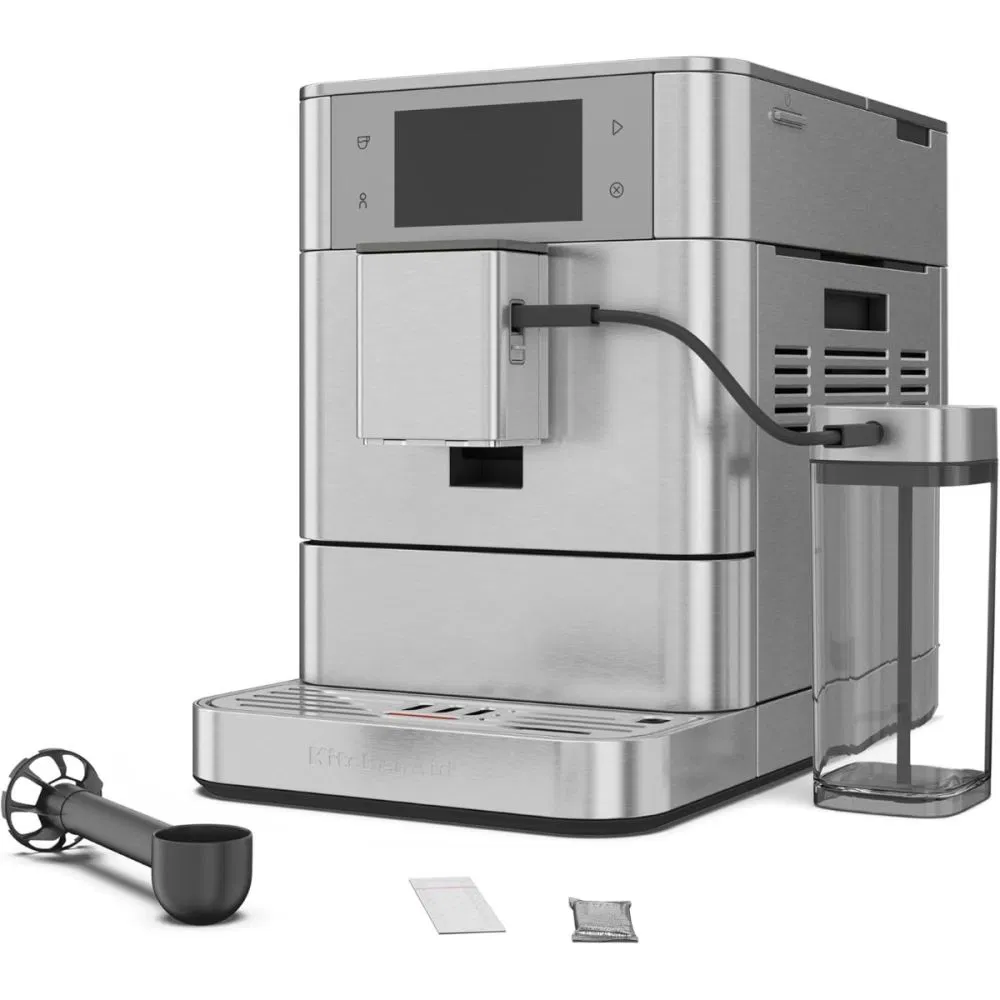
The KitchenAid KF8 looks and feels like a premium appliance in the traditional sense. It has presence. Once it’s on the counter, it immediately communicates that it’s a serious piece of equipment rather than a casual coffee maker. The design is bold, solid, and unmistakably KitchenAid.
One of the first things you notice is the weight. The KF8 is heavy, and that weight works in its favor. It doesn’t slide when you press buttons or remove the drip tray. It stays planted, which adds to the sense of confidence and durability. This is a machine that feels anchored, not flimsy or top-heavy.
Material choice plays a big role here. The front panel incorporates a substantial amount of metal, and even where plastic is used, it’s thick and well-finished. Panels don’t creak when you touch them. There’s no flex when you open doors or pull out components. Everything feels tightly assembled, as if tolerances were taken seriously during manufacturing.
Controls are another standout point. Buttons and dials have a satisfying resistance, the kind that suggests they’re designed to withstand thousands of presses over many years. Nothing feels loose or mushy. This might sound like a small detail, but it makes daily use feel more intentional and less disposable.
The water tank is large and well-integrated. It slides in smoothly without needing to be forced, and it sits flush with the body of the machine. The same goes for the drip tray and grounds container. They’re sturdy, easy to remove, and don’t feel like parts that will crack or break with regular handling.
Visually, the KF8 leans toward a professional, almost commercial aesthetic. It doesn’t try to be cute or minimalist. Instead, it looks like a machine that belongs in the kitchen of someone who takes their coffee seriously. The lines are clean, but not delicate. Edges are defined, and the overall shape is robust rather than sleek.
That said, the size can be a drawback. The KF8 is wide and deep, and it needs breathing room. In smaller kitchens, it can dominate the counter, especially if space is already limited. It also requires vertical clearance for accessing the bean hopper and water tank, which could be an issue under low cabinets.
Still, if you have the space, the KF8 rewards you with a feeling of permanence. It feels like an appliance you buy once and keep for a long time, not something you’ll be replacing in a few years.
Philips 5500 LatteGo
The Philips 5500 LatteGo takes a much more understated and practical approach to design. It’s clearly built with a broader audience in mind, prioritizing accessibility and efficiency over luxury materials.
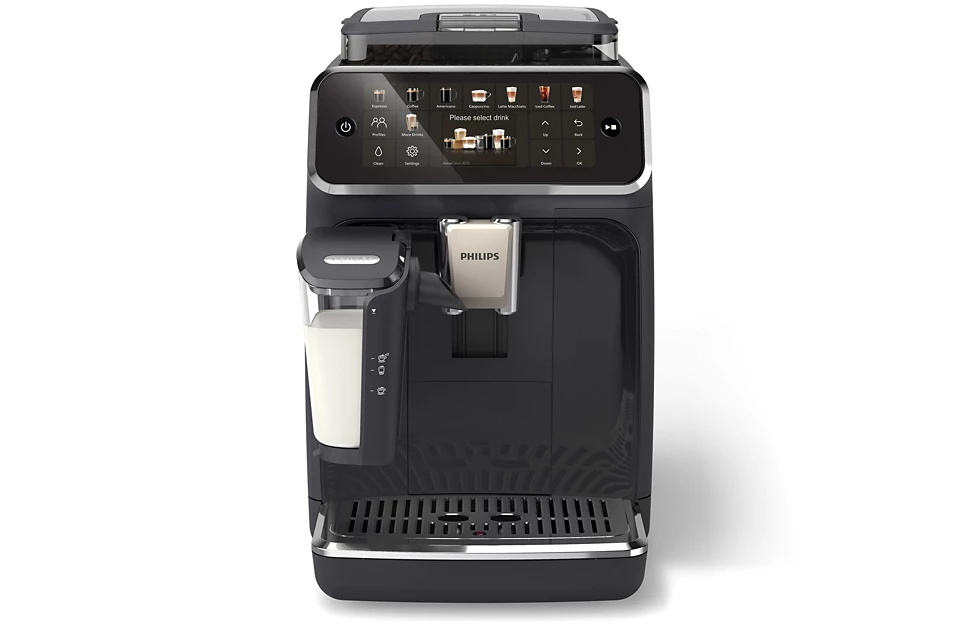
The most noticeable difference compared to the KF8 is the use of plastic. The body is predominantly plastic, with a matte or semi-gloss finish depending on the panel. This keeps the weight down and makes the machine easier to move, but it also changes how it feels in daily use.
That doesn’t mean the Philips 5500 feels poorly made. Panels are well-aligned, and nothing feels obviously cheap. However, there is some flex if you press on certain areas, especially around side panels. This is normal for machines in this category, but it does remind you that this is a consumer appliance rather than a premium showpiece.
One of the strengths of the Philips design is compactness. The 5500 has a slimmer profile and a more vertical orientation, which helps it fit into smaller kitchens. It’s easier to slide under cabinets, and it doesn’t visually overwhelm the counter. For many households, this alone will be a major advantage.
The LatteGo milk system is a standout in terms of design simplicity. It’s made up of just a few pieces that snap together intuitively. There are no hoses, no hidden connectors, and no fragile-feeling components. Everything feels deliberately engineered for easy handling, even if the materials themselves aren’t luxurious.
The water tank and drip tray are also well-designed for everyday use. They’re lighter than those on the KF8, but they’re easy to remove and reinstall. The tank is clear and easy to monitor, which is helpful if you don’t want to rely on on-screen warnings.
Aesthetically, the Philips 5500 is neutral. It doesn’t make a strong design statement, but it also doesn’t clash with most kitchens. The look is modern and inoffensive, with simple lines and minimal decoration. It’s the kind of machine that blends in rather than demanding attention.
One area where the lighter build shows is long-term perception. While the machine feels solid enough when new, it doesn’t inspire quite the same confidence about decade-long durability as the KF8. That doesn’t mean it won’t last, but the emotional impression is different. It feels replaceable in a way the KitchenAid does not.
Side-by-Side Impressions
When you place the KitchenAid KF8 and Philips 5500 next to each other, their design philosophies become very clear. The KF8 looks like a premium appliance meant to anchor a kitchen. The Philips 5500 looks like a smart, efficient machine designed to serve coffee without fuss.
The KitchenAid wins decisively on material quality and tactile satisfaction. Every interaction feels solid and deliberate. The Philips counters with practicality, lighter weight, and better adaptability to smaller spaces.
Neither approach is inherently better. If you value heft, metal construction, and a machine that feels like an investment, the KF8 will likely resonate with you. If you care more about fitting the machine comfortably into your kitchen and having something easy to live with day to day, the Philips 5500 makes a strong case.
Ultimately, design and build quality here aren’t just about looks. They shape how the machine fits into your life. The KitchenAid KF8 feels like a long-term companion for serious coffee drinkers. The Philips 5500 feels like a friendly, efficient appliance built to make good coffee with minimal friction.
User Interface & Ease of Use
User interface and ease of use matter more than most people expect when choosing a fully automatic espresso machine. These are machines you interact with every day, often when you’re half awake and in a hurry. A great interface fades into the background and lets you get coffee quickly. A bad one reminds you of its flaws every single morning. The KitchenAid KF8 and the Philips 5500 approach this part of the experience in very different ways, and those choices shape how enjoyable they are to live with.
KitchenAid KF8
The KitchenAid KF8 takes a calm, deliberate approach to its user interface. It combines a color display with physical controls, and that decision alone sets the tone for how the machine feels to use. Instead of forcing everything onto a touchscreen, KitchenAid gives you real buttons and dials that provide tactile feedback. This makes a bigger difference than it might sound on paper.
The screen itself is clear and easy to read. Text is sharp, icons are well-spaced, and nothing feels cluttered. The layout favors clarity over flash. There are no unnecessary animations or distracting graphics. When you turn the machine on, it tells you what’s happening, what it needs, and what your options are, without trying to impress you.
Navigation through menus feels logical. Drink options are grouped sensibly, and settings are nested in a way that makes sense after only a short learning period. You’re not constantly backing out of menus or wondering where a particular option is hiding. Once you’ve used the KF8 for a few days, moving through the interface becomes second nature.
One of the biggest advantages of the physical controls is consistency. Buttons respond the same way every time. Dials turn smoothly with clear stops. You don’t have to worry about damp fingers, accidental touches, or missed inputs. This is especially noticeable early in the morning or when you’re making several drinks in a row.
Customization on the KF8 is deep but controlled. You can adjust coffee strength, volume, temperature, and grind-related parameters without feeling overwhelmed. The machine doesn’t throw every possible setting at you all at once. Instead, it lets you refine your drinks gradually. This approach works well for people who care about dialing in their coffee but don’t want to think like an engineer.
Saving preferences is straightforward. Once you’ve set up a drink the way you like it, the machine remembers. That sense of continuity is important. It reinforces the feeling that the machine is adapting to you, not the other way around.
The KF8 also does a good job of communicating maintenance needs. Alerts are clear and polite rather than intrusive. When it needs water, beans, or cleaning, it tells you exactly what to do. Instructions are written in plain language, not technical jargon. This reduces friction and helps prevent mistakes.
There is a small learning curve, especially if you’re coming from a very basic machine. The KF8 assumes a certain level of curiosity and patience. However, once you’re past the initial setup, daily use feels smooth and intentional. It’s the kind of interface that grows on you over time.
Philips 5500 LatteGo
The Philips 5500 LatteGo takes a more immediately accessible route. It relies heavily on a touch-based interface with large icons and clearly labeled drink options. From the first use, it’s obvious that Philips designed this machine with beginners in mind.
The main screen presents drink choices visually. Espresso, coffee, cappuccino, latte, and other options are easy to spot and select. Adjusting strength, milk quantity, or volume is usually just a matter of tapping a button or sliding through a few levels. There’s very little guesswork involved.
This makes the 5500 extremely approachable. You don’t need to read the manual to get started. Most people can walk up to the machine and make a drink within minutes of turning it on for the first time. For households with multiple users, including guests, this is a real advantage.
User profiles are another strong point. The machine makes it easy to save preferences for different people and switch between them quickly. This is especially useful if one person likes strong espressos while another prefers milky lattes. The interface makes those transitions smooth and intuitive.
Where the touch interface occasionally struggles is responsiveness. Touch panels can be less forgiving than physical controls, and the Philips 5500 is no exception. If your fingers are wet, or if there’s coffee residue on the panel, inputs don’t always register perfectly. It’s not a constant problem, but it happens often enough to notice.
Another limitation is depth of customization. While the machine offers plenty of options, changes feel more incremental. You adjust strength in steps rather than fine increments. For many users, this is perfectly fine. In fact, it can be a benefit, because it reduces the chance of overthinking.
The Philips interface also tends to guide you more actively. It prompts you through steps, suggests actions, and confirms choices. This can feel reassuring, especially for less experienced users. However, for more confident coffee drinkers, it can sometimes feel a bit hand-holding.
Maintenance alerts are clear and frequent. The machine is very proactive about telling you when something needs attention. While this helps keep the machine running well, it can also feel slightly nagging compared to the more reserved tone of the KF8.
Day-to-Day Usability Comparison
In daily use, the differences between these two interfaces become very apparent. The KitchenAid KF8 feels like a machine designed for routine. Once you know your way around, you can move quickly and efficiently. The physical controls allow for confident, almost unconscious operation. You don’t have to look closely at the screen every time.
The Philips 5500, on the other hand, feels like a machine designed for flexibility and shared use. It shines when different people with different preferences use it throughout the day. The visual interface makes it easy to understand what the machine is doing at any given moment.
Speed is comparable, but the experience differs. The KF8 feels slightly more deliberate, as if it’s asking you to be part of the process. The Philips feels more automated, more eager to take over and guide you.
Neither approach is objectively better. They simply reflect different priorities. The KF8 assumes you’re willing to invest a bit of attention in exchange for control and refinement. The Philips 5500 assumes you want results quickly and with minimal thought.
Learning Curve and Long-Term Comfort
Over the long term, comfort becomes more important than first impressions. The KitchenAid KF8 tends to reward familiarity. The more you use it, the more natural it feels. Its interface doesn’t age quickly, because it relies on physical interaction rather than software flair.
The Philips 5500 remains easy to use even after months, but it doesn’t necessarily become more satisfying. It does its job well, but it doesn’t deepen the experience in the same way. For many people, that’s perfectly acceptable, even desirable.
In the end, ease of use is about alignment. If you want a machine that feels solid, controlled, and quietly capable, the KitchenAid KF8’s interface will likely appeal to you. If you want something friendly, visual, and instantly understandable, the Philips 5500 delivers that with confidence.
Both machines succeed in making coffee accessible. They just take very different paths to get there.
Coffee Quality & Brewing Performance
Coffee quality and brewing performance are ultimately what justify the space and cost of a fully automatic espresso machine. You can forgive a lot if the coffee tastes great, and you can grow frustrated very quickly if it doesn’t. The KitchenAid KF8 and the Philips 5500 both promise café-style drinks at home, but they go about delivering that promise in noticeably different ways.
KitchenAid KF8
The KitchenAid KF8 aims squarely at people who care about how espresso is supposed to taste. From the first shot, it’s clear that the machine prioritizes extraction quality and balance rather than just speed or volume.
Espresso from the KF8 has real body. It’s not watery or thin, even at standard settings. The mouthfeel is closer to what you’d expect from a good café than from a typical super-automatic machine. There’s weight on the tongue, especially with medium and medium-dark roasts, and that body holds up well when milk is added.
Crema production is another strong point. Shots consistently come out with a thick, stable crema that doesn’t disappear the moment you set the cup down. It’s not just for looks. That crema contributes to aroma and texture, giving the espresso a more complete sensory profile.
Temperature stability is where the KF8 really separates itself. The machine heats quickly and maintains a consistent brew temperature from shot to shot. Espresso comes out hot but not scorched. You don’t get that burnt edge that sometimes shows up in automatic machines trying too hard to hit high temperatures.
This stability also helps with lighter roasts, which are often a challenge for super-automatics. While the KF8 still performs best with medium roasts, it does a respectable job extracting lighter beans without making them taste sour or hollow. You can actually taste origin characteristics rather than just generic bitterness.
Customization plays a big role in brewing performance here. Changes to strength and grind settings result in noticeable differences in flavor. When you increase strength, you get more intensity without losing balance. When you adjust grind size, extraction responds accordingly. This responsiveness makes it easier to dial in your coffee rather than guessing and hoping for the best.
The KF8 also handles longer drinks thoughtfully. An Americano isn’t just an espresso drowned in hot water. The machine sequences the brew in a way that preserves flavor, resulting in a cup that tastes closer to a proper long coffee rather than a compromise.
Consistency over time is another advantage. Once dialed in, the KF8 produces very repeatable results. Morning after morning, you get the same flavor profile, assuming you’re using the same beans. That reliability is a big part of what makes it feel like a premium machine.
Philips 5500 LatteGo
The Philips 5500 approaches coffee quality with a different goal in mind. Rather than chasing maximum nuance, it focuses on approachability and reliability. The result is coffee that’s easy to enjoy, even if it doesn’t always reach the same depth as the KitchenAid.
Espresso from the 5500 is smooth and forgiving. It tends to emphasize darker, more traditional flavors. Chocolate, nutty, and roasted notes come through clearly, while brighter acidity is muted. For many people, especially those used to chain café drinks, this will feel familiar and comfortable.
Body is moderate. Shots aren’t watery, but they don’t have the same weight as those from the KF8. This is most noticeable when drinking espresso straight. In milk-based drinks, the difference becomes less obvious, and in some cases, the gentler profile actually works well.
Crema is present but lighter and less persistent. It looks good initially but dissipates faster. This doesn’t necessarily mean poor extraction, but it does reflect the machine’s more conservative brewing approach.
Temperature is generally good, though sometimes slightly lower than ideal, especially for straight espresso. Milk drinks can come out a bit warm rather than hot, depending on settings. This is unlikely to bother casual drinkers but might disappoint those who like very hot coffee.
The Philips 5500 is extremely consistent. It’s hard to make a truly bad cup with it. Even if your beans aren’t perfectly fresh or your settings aren’t dialed in, the machine compensates and produces something drinkable. That forgiveness is one of its biggest strengths.
Customization is present but more limited in impact. You can adjust strength and volume, but changes feel more incremental. Fine-tuning flavor is possible, but the machine doesn’t respond as dramatically as the KF8. This keeps things simple but also limits experimentation.
Bean Handling and Brew Adaptability
Both machines handle a wide range of beans, but their personalities show through. The KitchenAid KF8 rewards higher-quality beans. If you use freshly roasted coffee, you’ll taste the difference. Subtle flavors, sweetness, and balance come through more clearly.
The Philips 5500 is less demanding. It does a good job even with supermarket beans or blends that aren’t at their peak. This makes it more forgiving for households that don’t want to think too much about sourcing coffee.
With oily beans, both machines perform adequately, though the KF8 feels slightly more robust in handling them without clogging or losing consistency. Regular cleaning matters for both, but the KF8 inspires a bit more confidence in this area.
Milk Drinks and Espresso Integration
In milk-based drinks, brewing performance isn’t just about the espresso itself, but how well it stands up to milk. The KF8’s stronger, more structured espresso cuts through milk effectively. Lattes and cappuccinos taste layered rather than flat.
The Philips 5500 produces milk drinks that are smooth and cohesive. The espresso blends into the milk rather than asserting itself. This creates a comforting, easy-drinking result, though sometimes at the expense of coffee character.
If you prefer milk-forward drinks, the Philips profile may actually suit you better. If you want to taste coffee first and milk second, the KitchenAid has the edge.
Speed and Workflow
Both machines are reasonably fast, but the experience differs. The KF8 feels deliberate. It takes a moment to brew, but you get the sense that the machine is carefully controlling each step.
The Philips 5500 feels more eager to serve. It moves quickly from selection to cup, which is great for busy mornings. That speed, however, comes with a slightly more standardized result.
Overall Brewing Performance Comparison
The KitchenAid KF8 delivers a more expressive and refined coffee experience. It rewards attention and good beans, and it offers enough control to make you feel involved in the process, even though it’s fully automatic.
The Philips 5500 delivers consistency and ease. It’s designed to make coffee enjoyable without demanding much from the user. It doesn’t reach the same highs, but it also avoids major lows.
In the end, coffee quality here is about priorities. The KF8 is for people who want their automatic machine to get as close as possible to a café-style espresso experience. The Philips 5500 is for people who want reliable, pleasant coffee every day with minimal fuss. Both succeed, just in very different ways.
Grinder Features & Performance
The grinder is one of the most important components in any espresso machine, especially in a fully automatic system where you’re relying on the machine to make all the key decisions for you. A good grinder can elevate average beans into a satisfying cup. A poor one can flatten even excellent coffee. The KitchenAid KF8 and the Philips 5500 both use integrated grinders, but they differ significantly in design philosophy, adjustability, and how much control they give the user.
KitchenAid KF8
The KitchenAid KF8 treats the grinder as a core part of the brewing system rather than an accessory. From the first use, it’s clear that consistency and precision were priorities during design.
The grinder produces grounds that are visibly uniform. When you inspect the puck after brewing or look at spent grounds, the particle size appears even, without excessive dust or large chunks. This uniformity matters because it directly affects extraction. Even grounds lead to even water flow, which leads to better flavor balance.
The KF8 offers a wide range of grind settings, allowing for meaningful adjustments. Each step feels deliberate rather than arbitrary. Moving the grind finer or coarser produces noticeable changes in flavor and body. This responsiveness is important for anyone who enjoys dialing in their coffee rather than settling for a default profile.
Noise levels are relatively low for an integrated grinder. It’s not silent, but the sound is smooth and muted rather than sharp or rattly. Early morning use is less jarring, and the machine doesn’t feel like it’s straining during grinding.
Speed is another strength. The grinder works quickly without sounding rushed. This contributes to a smoother overall workflow and reduces waiting time, especially when making multiple drinks in a row.
The KF8 also handles a variety of bean types well. Medium and medium-dark roasts are where it shines, producing consistent results with minimal adjustment. Lighter roasts, which are more demanding, are handled competently as well. While it won’t fully unlock the complexity of very light, specialty roasts, it does a respectable job compared to most super-automatics.
Oily beans can be problematic in automatic grinders, but the KF8 manages them better than many competitors. The grinder doesn’t clog easily, and feeding remains consistent as long as basic maintenance is followed. This makes it more forgiving for users who prefer darker roasts.
One of the more subtle advantages of the KF8 grinder is how well it integrates with the machine’s overall brewing logic. Adjustments to grind size feel synchronized with changes in brew strength and volume. The machine responds predictably, which builds confidence over time.
Philips 5500 LatteGo
The Philips 5500 uses a ceramic grinder, which Philips promotes heavily as a durability advantage. Ceramic burrs generate less heat and are resistant to wear, which theoretically leads to more consistent grinding over the long term.
In practice, the grinder performs well, though it’s more conservative in its approach. Grind consistency is good, but not exceptional. Grounds are generally uniform, but there’s slightly more variation compared to the KF8. This doesn’t ruin the coffee, but it does limit how expressive the extraction can be.
The number of grind settings is more limited, and changes between them feel more incremental. Adjusting the grind does affect flavor, but the differences are subtler. This makes the grinder easier to live with for casual users but less satisfying for those who enjoy fine-tuning.
Noise levels are higher than the KF8. The sound is sharper and more noticeable, especially in quiet kitchens. It’s not painfully loud, but it’s clearly present.
Grinding speed is moderate. It’s fast enough for daily use but doesn’t feel as smooth or refined as the KitchenAid’s grinder.
The Philips grinder handles darker roasts well and is quite forgiving of less-than-ideal beans. It doesn’t punish you for using older coffee or supermarket blends. This fits well with the machine’s overall philosophy of accessibility.
One advantage of the ceramic grinder is long-term consistency. While it may not offer the same precision initially, it’s likely to maintain its performance over many years with minimal degradation. For users who value longevity over tweakability, this is a meaningful benefit.
Adjustability and User Control
The difference in grinder philosophy becomes especially clear when you start adjusting settings. On the KitchenAid KF8, changing the grind size feels like a creative tool. You can shape the flavor of your espresso by experimenting with finer or coarser settings. The machine rewards that curiosity.
On the Philips 5500, grind adjustment feels more like a corrective measure. You use it to fix something that’s off rather than to explore flavor nuances. This keeps the experience simple but limits how much influence you have over the final cup.
Both approaches are valid, but they cater to different users. The KF8 assumes you want to be involved. The Philips assumes you want reliability with minimal input.
Integration with Brewing Performance
A grinder doesn’t exist in isolation. Its performance only matters in how it supports brewing. The KF8’s grinder works in harmony with the machine’s extraction system. When you adjust grind size, the machine adapts smoothly, resulting in noticeable changes without instability.
The Philips 5500’s grinder is more tightly constrained by the machine’s preset brewing logic. This makes it harder to push the machine outside its comfort zone, but it also prevents major mistakes. The result is consistency rather than experimentation.
Maintenance and Reliability
Both grinders require basic maintenance, but their needs differ slightly. The KF8 benefits from regular cleaning, especially if you use oily beans. Keeping the grinder clean helps maintain its precision and reduces the risk of buildup.
The Philips ceramic grinder is less prone to heat-related issues and wear, but it still needs occasional attention. While it’s marketed as maintenance-free, basic care is still important for long-term performance.
Neither grinder is designed to be user-serviced in depth, which is typical for fully automatic machines. However, both feel reliable within their intended use cases.
Overall Grinder Performance Comparison
The KitchenAid KF8 offers a grinder that feels like a serious tool. It’s precise, responsive, and capable of producing expressive espresso when paired with good beans. It encourages involvement and rewards attention.
The Philips 5500 offers a grinder that prioritizes durability and ease of use. It delivers consistent results with minimal fuss and holds up well over time, even if it lacks the same level of refinement.
If you care deeply about dialing in your coffee and tasting subtle differences, the KF8’s grinder will likely feel more satisfying. If you want a machine that quietly does its job without demanding much thought, the Philips 5500’s grinder fits that role well.
Both grinders serve their machines effectively. They just reflect different ideas about what a great automatic coffee experience should be.
Milk Frothing & Specialty Drinks
For many people, milk frothing and specialty drinks are the main reason to buy a fully automatic espresso machine in the first place. Espresso is important, but lattes, cappuccinos, flat whites, and other milk-based drinks are what most households make day in and day out. The way a machine handles milk can either elevate those drinks or quietly undermine them. The KitchenAid KF8 and the Philips 5500 LatteGo take very different approaches here, and those differences strongly shape the overall experience.
KitchenAid KF8
The KitchenAid KF8 treats milk frothing as an extension of espresso quality rather than a separate feature. The system is designed to produce milk that complements the coffee rather than overpowering it.
Milk texture from the KF8 is dense and creamy, especially when using whole milk. The foam has a fine, velvety structure that sits comfortably between traditional cappuccino foam and latte microfoam. It’s not barista-level microfoam, but it’s closer than most super-automatic machines manage.
Temperature control is another strong point. Milk drinks come out hot enough to feel satisfying without scalding the milk. This balance matters more than it sounds. Overheated milk tastes flat and dull, while underheated milk makes drinks feel unfinished. The KF8 consistently lands in a good middle ground.
One of the benefits of this approach is how well the milk integrates with espresso. In a latte, the milk doesn’t just sit on top of the coffee. The flavors blend smoothly, allowing the espresso to remain present. Cappuccinos have a clear separation between foam and liquid milk without feeling overly dry.
Specialty drinks on the KF8 feel thoughtfully composed. Whether you’re making a latte macchiato, flat white, or café au lait, the machine follows a logical brewing and frothing sequence. Coffee and milk are layered intentionally rather than dumped together.
Alternative milks are handled reasonably well, though results depend heavily on the type and brand. Oat milk generally performs best, producing stable foam with decent density. Soy milk can work, but foam quality varies. Almond milk tends to be less reliable, often producing lighter, less stable foam.
The KF8 doesn’t try to compensate aggressively for alternative milks, which means results can feel more natural but also more variable. Users who frequently switch milk types may need to adjust expectations or experiment to find what works best.
One area where the KF8 requires more attention is cleaning. The milk system involves hoses and internal pathways that need regular rinsing. While the machine provides cleaning prompts and guided cycles, it still demands a bit of discipline from the user. If you skip cleaning, milk residue can build up and affect performance.
That said, the cleaning process itself isn’t difficult. It just takes more time and awareness than simpler systems.
Philips 5500 LatteGo
The Philips 5500 LatteGo system is built around convenience. Its design is immediately appealing because of how simple it looks and feels. The milk container consists of just a few pieces that snap together, with no tubes or hidden channels.
Foam quality from the LatteGo system is good, though it leans toward a lighter, airier texture compared to the KF8. Cappuccinos have plenty of foam, but the foam lacks some of the density and creaminess that give drinks a more luxurious mouthfeel.
For lattes, the foam is smooth but less integrated. The milk tends to blend evenly with the coffee, creating a uniform texture rather than distinct layers. This works well for people who prefer easy-drinking, milk-forward beverages.
Milk temperature is slightly cooler than the KF8. Drinks are warm and pleasant, but not piping hot. This is especially noticeable if you like to linger over your coffee. For some users, this is a non-issue. For others, it’s a small disappointment.
Where the LatteGo system really excels is versatility with alternative milks. Oat, soy, almond, and even some nut blends perform surprisingly well. The system seems forgiving, producing usable foam with minimal adjustment. This makes it a great option for households with diverse preferences or dietary needs.
The ease of cleaning is a major advantage. After making a drink, you can rinse the LatteGo container under the tap in seconds or place it in the dishwasher. There are no tubes to flush or hidden parts to worry about. This dramatically reduces friction and makes it more likely that users will keep the system clean.
Because cleaning is so easy, consistency stays high over time. There’s less risk of performance degrading due to neglected maintenance.
Specialty Drink Variety
Both machines offer a wide range of specialty drinks, but they approach variety differently.
The KitchenAid KF8 focuses on quality over quantity. It offers a solid selection of classic drinks, each executed thoughtfully. The emphasis is on balance and structure rather than novelty. Drinks feel composed rather than automated.
The Philips 5500 offers more variety and flexibility. The interface encourages experimentation, and it’s easy to switch between drink types. This makes it fun for households where people enjoy trying different beverages throughout the day.
Real-World Daily Use
In daily use, the differences become very clear. The KF8 feels like a machine for people who care about the details of their drinks. Milk texture, integration, and temperature all feel intentional. If you mostly drink lattes and cappuccinos and want them to taste as close to café quality as possible, the KF8 delivers a more refined result.
The Philips 5500 feels like a machine designed to remove barriers. It makes milk drinks quickly, cleans up easily, and works well with a wide range of milks. The drinks may not be as nuanced, but they’re consistently enjoyable.
For households making several milk drinks a day, the LatteGo system’s ease of cleaning becomes a significant advantage. It reduces the mental load of ownership. You’re more likely to make a quick afternoon cappuccino if you know cleanup will take seconds.
Foam Quality vs Convenience
Ultimately, milk frothing comes down to a tradeoff between quality and convenience. The KitchenAid KF8 leans toward quality. It produces better foam and more structured drinks, but it asks more from the user in return.
The Philips 5500 leans toward convenience. It produces good, reliable milk drinks with minimal effort and maintenance, even if foam quality is slightly less refined.
Overall Milk Performance Comparison
The KitchenAid KF8 is the better choice for users who care deeply about milk texture and how it interacts with espresso. It produces richer, more café-like milk drinks and rewards attention to detail.
The Philips 5500 LatteGo is the better choice for users who value simplicity, speed, and easy cleaning. It makes consistently pleasant milk drinks with almost no hassle.
Neither system is objectively superior. They simply serve different priorities. The right choice depends on whether you want your milk drinks to feel crafted or effortless.
Maintenance & Cleaning
Maintenance and cleaning are the less glamorous side of owning a fully automatic espresso machine, but they’re also some of the most important factors in long-term satisfaction. A machine can make great coffee on day one and still become frustrating if upkeep feels complicated or time-consuming. The KitchenAid KF8 and the Philips 5500 take very different approaches to maintenance, and those differences strongly affect how easy they are to live with over months and years.
KitchenAid KF8
The KitchenAid KF8 approaches maintenance with the assumption that its owner is willing to take an active role in caring for the machine. It doesn’t hide the fact that good coffee requires regular upkeep, but it does try to make that upkeep as clear and structured as possible.
Daily maintenance on the KF8 is straightforward but unavoidable. The drip tray and grounds container fill up at a predictable rate and need to be emptied regularly. Both are solidly built and easy to remove, but they are heavier than those on many competing machines. This adds to the premium feel but also means you’re more aware of handling them.
Rinsing the machine is largely automated. The KF8 performs quick rinse cycles when powered on or off, helping keep internal pathways clean. These cycles add a bit of time to the startup and shutdown process, but they contribute to consistency and hygiene.
The milk system requires more attention. After making milk-based drinks, you’ll need to run a cleaning cycle to flush milk residue from internal lines. The machine provides clear prompts and instructions, but it still takes a few minutes and requires user involvement. If you regularly make multiple milk drinks in a row, this becomes part of your routine.
Deeper cleaning tasks are also more involved. The KF8 periodically prompts you to clean or descale the machine. These processes are guided step by step on the screen, which reduces confusion, but they are not quick. Descaling, in particular, takes time and requires you to set aside a window where the machine can complete the cycle uninterrupted.
The brew unit is not designed for frequent user removal, which means most internal cleaning relies on automated cycles. This isn’t necessarily a downside, but it does mean you’re trusting the machine to take care of itself internally rather than being able to visually inspect everything.
The upside of this approach is performance stability. When you follow the maintenance schedule, the KF8 continues to perform consistently. Coffee quality doesn’t degrade slowly over time, which can happen with machines that are easier to neglect.
The downside is commitment. The KF8 is not a machine you can ignore for weeks and expect it to forgive you. It rewards regular care and gently punishes neglect through prompts and reduced performance.
Philips 5500 LatteGo
The Philips 5500 is designed to minimize the friction of maintenance as much as possible. Philips clearly understands that many users want great coffee without feeling like they’ve adopted a new hobby.
Daily maintenance on the 5500 is lighter. The drip tray and grounds container are easy to access and very lightweight. Emptying and rinsing them takes seconds. The machine also performs automatic rinses, but they feel quicker and less intrusive than those on the KF8.
The LatteGo milk system is the star of the maintenance story. Cleaning it is remarkably simple. After use, you can either rinse it under the tap or place it directly into the dishwasher. There are no tubes, no internal channels, and no hidden corners where milk can accumulate. This dramatically reduces both effort and anxiety.
Because cleaning is so easy, users are more likely to do it consistently. This has a real impact on long-term performance and hygiene. Milk frothing remains consistent over time because there’s less opportunity for residue buildup.
The brew group on the Philips 5500 is removable, which is a big advantage for many users. You can take it out, rinse it under water, and visually inspect it. This gives a sense of control and transparency that some people really appreciate.
Descaling on the Philips is also very user-friendly. The machine prompts you clearly, guides you through the process, and doesn’t require much technical knowledge. The process is still time-consuming, but it feels less demanding.
One thing to note is that the Philips machine tends to prompt more frequently. It’s very proactive about maintenance alerts. For some users, this is reassuring. For others, it can feel slightly nagging.
Long-Term Ownership Considerations
Over time, maintenance habits shape your relationship with a machine. The KitchenAid KF8 feels like a partnership. You invest time and attention, and the machine rewards you with consistent, high-quality results.
The Philips 5500 feels more like a service. It handles as much as possible on its own and asks very little in return. This makes it easier to live with, especially in busy households.
Neither approach is inherently better. They simply reflect different assumptions about the user.
Reliability and Wear
Regular maintenance also affects reliability. The KF8’s more demanding schedule helps protect its internal components, but it also means there are more steps where user error can occur. Skipping a cleaning cycle or delaying descaling can have noticeable consequences.
The Philips 5500’s simplified approach reduces the risk of user error. Fewer steps mean fewer opportunities to make mistakes. However, the lighter build and more frequent prompts suggest a design focused on preventing problems rather than encouraging precision.
Cleaning Time and Mental Load
Time is only part of the equation. Mental load matters too. The KF8 requires you to remember and plan maintenance tasks. Even with prompts, you’re more involved in the process.
The Philips 5500 reduces that mental load significantly. Cleaning becomes almost automatic, which makes it easier to maintain good habits.
Overall Maintenance Comparison
The KitchenAid KF8 offers a structured, performance-focused maintenance experience. It asks more from the user but delivers stability and confidence in return. It’s best suited to people who don’t mind routine care and see maintenance as part of the ownership experience.
The Philips 5500 LatteGo offers a low-effort, highly approachable maintenance experience. It removes barriers and makes it easier to keep the machine clean without thinking about it. For many households, this will be the more practical and enjoyable option.
In the end, maintenance and cleaning aren’t just about effort. They’re about how well the machine fits into your daily life. The KF8 and the Philips 5500 both succeed, but they do so by serving very different types of users.
Energy Efficiency & Noise Levels
Energy efficiency and noise levels are easy to overlook when comparing espresso machines, but they play a meaningful role in everyday ownership. These machines are often used early in the morning, sometimes multiple times a day, and they sit plugged in year-round. How quickly they heat up, how much power they consume while idle, and how loud they are during operation all affect how comfortable they are to live with. The KitchenAid KF8 and the Philips 5500 handle these aspects in different ways, reflecting their broader design philosophies.
KitchenAid KF8
The KitchenAid KF8 is a powerful machine, and that power comes with certain energy demands. From the moment you turn it on, it’s clear that the machine prioritizes readiness and performance over minimal power consumption.
Warm-up time on the KF8 is reasonably quick for a machine of its size. It doesn’t take long to reach brewing temperature, and once it’s there, it maintains heat very well. This thermal stability is a key contributor to its consistent brewing performance, but it also means the machine draws more power while active.
When left on between drinks, the KF8 holds its temperature confidently. This is convenient if you’re making several coffees in a row or returning for another drink shortly after. The tradeoff is that energy use remains relatively high during these periods.
Standby and auto-off functions help mitigate this. The machine can be set to power down after a period of inactivity, reducing unnecessary energy consumption. However, users who leave it on all day will notice a higher energy footprint compared to more lightweight machines.
Noise levels on the KF8 are well-managed. Grinding is the loudest part of operation, as expected, but the sound is muted and controlled. It’s a low, mechanical hum rather than a sharp, high-pitched noise. This makes it less intrusive, especially in quiet households.
Brewing itself is surprisingly quiet. Pump noise is present but subdued, and there’s no rattling or vibration. The machine feels stable, and its weight helps dampen sound.
Milk frothing produces a consistent hiss, but again, it’s not overly loud. The overall impression is of a machine that’s doing serious work without feeling frantic or strained.
Philips 5500 LatteGo
The Philips 5500 is more conservative in its energy use. Its smaller size and lighter construction contribute to lower overall power consumption.
Warm-up time is quick, and the machine doesn’t hold heat as aggressively as the KF8. This means it uses less energy when idle but may take slightly longer to recover between drinks. For most home use, this difference is minor.
The auto-off and energy-saving features are clearly implemented. The machine powers down efficiently when not in use, making it a good option for users who are conscious of electricity consumption.
Noise levels on the Philips 5500 are more noticeable, particularly during grinding. The ceramic grinder produces a sharper, more prominent sound. It’s not unbearably loud, but it’s more likely to catch your attention, especially early in the morning.
Brewing noise is moderate. The pump is audible, and the machine feels more active during operation. This doesn’t necessarily mean it’s poorly built, but it lacks the dampened, solid feel of the KF8.
Milk frothing with the LatteGo system is relatively quiet and quick. There’s less hissing and fewer mechanical sounds compared to traditional tube-based systems.
Daily Living Impact
In daily use, these differences add up. The KF8 feels calmer and more composed, but it’s also more energy-hungry if left on for extended periods. The Philips 5500 feels more efficient and lightweight, but it’s louder and slightly more utilitarian in sound.
For early risers or households with light sleepers, noise character matters as much as volume. The KF8’s lower-pitched, more controlled sounds are easier to live with than the Philips’ sharper grinder noise.
Energy efficiency becomes more relevant over time. Users who make many drinks throughout the day or leave the machine on will notice the difference more with the KF8.
Environmental Considerations
While neither machine is designed as a low-energy appliance, the Philips 5500 has a slight edge in efficiency. Its quicker power-down behavior and lighter thermal demands make it more environmentally friendly in everyday use.
The KF8’s durability and build quality may offset its higher energy use in the long term. A machine that lasts longer and performs consistently can be a better environmental choice than one that needs replacement sooner.
Balancing Performance and Efficiency
Ultimately, energy efficiency and noise levels are about balance. The KitchenAid KF8 favors performance, stability, and a refined operating experience, even if that means higher energy use. The Philips 5500 favors efficiency and simplicity, accepting a bit more noise in exchange.
Neither approach is wrong. The right choice depends on your priorities and living situation.
Overall Comparison
The KitchenAid KF8 is quieter and more composed but uses more power, especially when left on. It’s ideal for users who value a calm, premium feel and don’t mind slightly higher energy consumption.
The Philips 5500 is more energy-efficient and quick to power down, but it’s louder and more utilitarian in sound. It’s well-suited to users who want efficiency and don’t mind a bit more operational noise.
Both machines are acceptable for home use, but their differences become noticeable in everyday routines. Choosing between them means deciding whether you value refinement and stability or efficiency and simplicity more.
Conclusion
Choosing between the KitchenAid KF8 and the Philips 5500 LatteGo isn’t about finding a clear winner. It’s about understanding what kind of coffee experience you want in your home and how much involvement you’re comfortable with day to day.
The KitchenAid KF8 is a machine that takes coffee seriously. Its strengths lie in build quality, brewing performance, grinder precision, and milk texture. It feels deliberate and confident, like an appliance designed to reward attention and care. If you enjoy dialing in your drinks, notice subtle flavor differences, and appreciate a machine that feels solid and permanent on your counter, the KF8 makes a strong case for itself. It asks more of you in terms of space, cost, and maintenance, but it gives back a more refined and expressive cup.
The Philips 5500 LatteGo takes a more pragmatic approach. It prioritizes ease of use, quick cleanup, and consistent results over maximum nuance. The LatteGo milk system is genuinely convenient, and the machine is forgiving of different beans, milk types, and user habits. If your goal is to make good coffee quickly with minimal effort, especially in a household with multiple users or frequent milk drinks, the 5500 is hard to fault.
Neither machine is wrong. They simply serve different personalities. The KitchenAid KF8 suits the coffee enthusiast who wants a premium, long-term appliance and doesn’t mind routine care. The Philips 5500 suits the busy household that values convenience, flexibility, and ease of ownership.
In the end, the best machine is the one that fits your daily rhythm. Both the KF8 and the Philips 5500 can deliver satisfying coffee. The difference lies in how much you want to be involved in the process and what kind of experience you want every time you press the brew button.