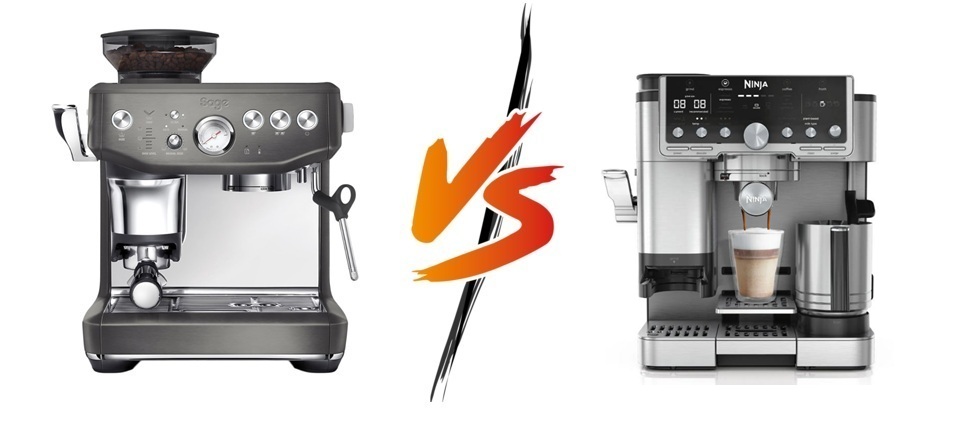
Home espresso machines have come a long way in the past few years. What used to require multiple pieces of equipment, a lot of counter space, and serious patience is now available in a single, relatively compact machine. The Breville Barista Express Impress and the Ninja Luxe Café Pro are both strong examples of how different brands approach the same problem: how to make good coffee at home without making the process frustrating.
At first glance, these two machines might seem like direct competitors, but they’re actually designed for different types of coffee drinkers. Breville leans toward the hands-on espresso experience, giving users control over grind, dose, extraction, and milk texturing. Ninja, on the other hand, focuses on convenience, automation, and versatility, aiming to deliver consistent results with minimal effort. This comparison looks closely at how each machine performs in real daily use, not just on paper, to help you decide which one actually fits your habits and expectations.
Table of Contents
- 1 Breville Barista Express Impress vs Ninja Luxe Café Pro Comparison Chart
- 2 Design & Build Quality
- 3 User Interface & Ease of Use
- 4 Coffee Quality & Brewing Performance
- 5 Grinder Features & Performance
- 6 Milk Frothing & Specialty Drinks
- 7 Maintenance & Cleaning
- 8 Energy Efficiency & Noise Levels
- 9 Conclusion
Breville Barista Express Impress vs Ninja Luxe Café Pro Comparison Chart
If you click the links below, under the product images, you will be redirected to Amazon.com. In case you then decide to buy anything, Amazon.com will pay me a commission. This doesn’t affect the honesty of this review in any way though.
| Feature | Breville Barista Express Impress | Ninja Luxe Café Pro |
|---|---|---|
 |  | |
| Check the best price on Amazon | Check the best price on Amazon | |
| Type | Semi-automatic espresso machine with built-in grinder | Fully automatic espresso & coffee maker with built-in grinder |
| Grinder Type | Conical stainless steel burr grinder | Built-in burr grinder |
| Grind Settings | Adjustable grind size dial with assisted dosing | Preset grind ranges optimized for drink types |
| Grinding Speed | Moderate; noticeable mechanical sound | Faster and quieter grinding |
| Water Tank Capacity | Approx. 67 oz (2 liters) | Approx. 60 oz (1.8 liters) |
| Boiler Type | Thermocoil heating system | Thermal block heating system |
| Heating Time | Around 30 seconds | Around 60 seconds |
| Pressure | 15 bar Italian pump | 15 bar pump |
| Milk Frothing | Manual steam wand with assisted tamping | Automated milk frothing system with removable frother |
| Specialty Drink Options | Manual control (espresso, latte, cappuccino, etc.) | Preset options for espresso, coffee, lattes, cappuccinos, and more |
| User Interface | Physical buttons and knobs with pressure gauge | Digital display with intuitive button controls |
| Cleaning & Maintenance | Manual backflushing, regular descaling and cleaning | Automated cleaning cycles, easy removable parts for cleaning |
| Energy Efficiency | Automatic standby mode, moderate energy use | On-demand heating, aggressive auto-shutoff |
| Noise Level | Moderate to loud during grinding and steaming | Quieter operation overall |
| Dimensions (WxDxH) | 12.6 x 14.2 x 14.8 inches | 11.8 x 15.5 x 16.5 inches |
| Weight | Approx. 16.5 lbs (7.5 kg) | Approx. 15.6 lbs (7.1 kg) |
| Price Range | Mid to high range | Mid-range |
| My individual reviews | Breville Barista Express Impress review |
Design & Build Quality
Design and build quality are often the first things people notice with an espresso machine, and they matter more than just aesthetics. These machines sit on your counter every day, get handled constantly, and deal with heat, pressure, water, and vibration. Over time, build quality becomes the difference between a machine that still feels solid after years of use and one that starts to rattle, leak, or feel worn. The Breville Barista Express Impress and the Ninja Luxe Café Pro take noticeably different approaches here, and those choices reflect who each machine is really built for.
Breville Barista Express Impress
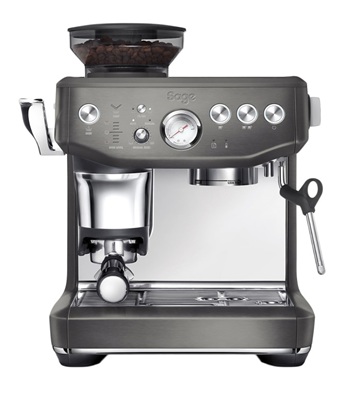
The Breville Barista Express Impress looks and feels like a serious piece of coffee equipment. Its exterior is dominated by brushed stainless steel panels that give it a professional, café-inspired appearance. This isn’t the kind of machine that tries to blend into the background. It makes a statement on the counter, and for many people, that’s part of the appeal.
From a build standpoint, the Breville feels dense and sturdy the moment you lift it. It has real weight, which helps keep it planted during grinding, tamping, and brewing. Nothing slides around or feels like it needs to be held in place. The metal construction also gives it a sense of longevity. It feels designed to be used daily, not just occasionally on weekends.
The portafilter is another standout. It’s heavy, solid, and well-balanced, with a metal body and a comfortable handle that feels good in the hand. Locking it into the group head has a satisfying resistance, reinforcing that this is a proper espresso setup rather than a lightweight appliance. The group head itself feels robust, and there’s no flex or looseness when attaching or removing the portafilter.
Breville’s attention to functional design shows up in smaller details as well. The drip tray is solid and slides in and out smoothly without rattling. The water reservoir is thick plastic and seats securely in the back of the machine. It doesn’t feel flimsy, and it’s easy to remove without spilling. Even the buttons and dials have a reassuring firmness, with clear tactile feedback when you press or turn them.
That said, the Breville’s design is unapologetically utilitarian. It looks more like café equipment than a designer appliance. If your kitchen leans heavily toward minimalist or ultra-modern styling, the Breville might feel a bit industrial. The pressure gauge, grinder dial, and various labels give the front panel a busy appearance. For espresso enthusiasts, this looks purposeful and inviting. For others, it may feel slightly intimidating or cluttered.
Durability-wise, the Breville inspires confidence. The metal components, solid internals, and overall heft suggest a machine built to last. It’s not immune to wear, of course, but it feels far more like an investment than a disposable appliance.
Ninja Luxe Café Pro
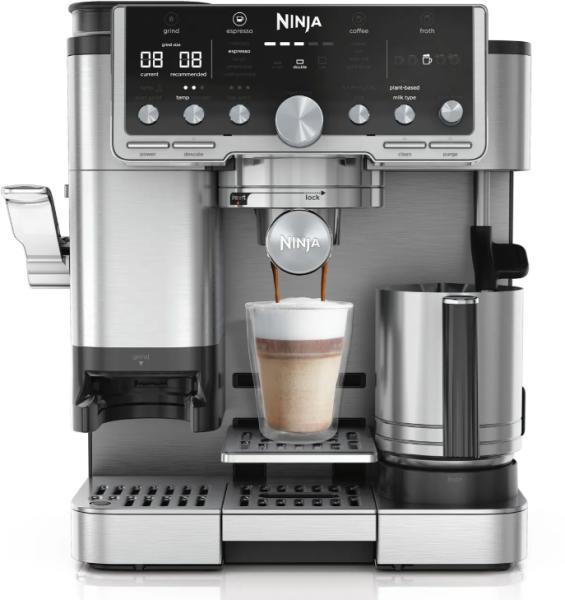
The Ninja Luxe Café Pro takes a very different design approach. Where Breville leans into a professional, almost barista-centric look, Ninja focuses on making the machine approachable, modern, and friendly. The overall design is sleeker, with smoother lines and fewer exposed elements.
The exterior combines stainless steel accents with high-quality plastic. While this doesn’t feel as premium as Breville’s mostly metal construction, it doesn’t feel cheap either. The plastics used are sturdy, with a matte or lightly textured finish that resists fingerprints better than brushed steel. This makes the Ninja easier to keep looking clean on a day-to-day basis.
In terms of size, the Ninja is a bit bulkier and taller. This is partly due to its multi-function nature. It’s designed to handle espresso-style drinks, brewed coffee, and milk-based beverages with automation built in. As a result, it takes up more vertical space and has a slightly larger footprint. On some counters, especially under low cabinets, this could be a consideration.
When it comes to build feel, the Ninja is lighter than the Breville. It doesn’t slide around excessively, but it doesn’t feel anchored in the same way either. This isn’t necessarily a problem, since the machine handles most tasks automatically, but it does reinforce the sense that this is more of a high-end appliance than a piece of café equipment.
The brew head and internal components are largely hidden, which contributes to the clean look but also makes the machine feel less mechanical and more consumer-focused. The water tank is easy to remove and refill, and the drip tray is simple to clean, though it’s lighter and less substantial than Breville’s. The buttons and controls feel well-made, but they don’t have the same tactile heft as Breville’s dials and switches.
One advantage of Ninja’s design is how intuitive it feels visually. The layout is clean, with clear labeling and logical spacing. Even someone completely new to espresso machines can look at it and feel comfortable using it. There’s less visual noise, fewer exposed controls, and more emphasis on simplicity.
Side-by-Side Design Philosophy
When you put these two machines next to each other, the contrast becomes very clear. The Breville Barista Express Impress looks like a machine designed by and for coffee enthusiasts. Everything about it suggests hands-on use, durability, and control. It’s the kind of machine that invites you to learn, tweak, and refine your process.
The Ninja Luxe Café Pro, by contrast, feels designed for everyday convenience. Its build prioritizes ease of use, modern styling, and approachability over raw heft and metal construction. It looks like something you’d expect from a premium kitchen appliance brand rather than a specialty coffee company.
Neither approach is inherently better. It depends entirely on what you value. If you want something that feels rock-solid, mechanical, and closer to what you’d find behind a café counter, the Breville delivers that experience. If you want a machine that looks sleek, fits seamlessly into a modern kitchen, and doesn’t feel intimidating, the Ninja has a clear advantage.
Long-Term Impressions
Over time, build quality becomes less about first impressions and more about how the machine holds up. The Breville’s heavier construction and metal components suggest it may age more gracefully, especially under frequent use. The Ninja’s lighter materials may show wear sooner, particularly on plastic components, though Ninja’s reputation for durable consumer appliances helps offset that concern.
In the end, the design and build quality of these machines reflect their core purpose. The Breville feels like a tool meant to be mastered. The Ninja feels like a companion meant to make life easier. Understanding that difference is key to deciding which one belongs on your counter.
User Interface & Ease of Use
User interface and ease of use are where the philosophical differences between the Breville Barista Express Impress and the Ninja Luxe Café Pro become impossible to ignore. Both machines are designed to make coffee at home, but they assume very different things about the person standing in front of them. One expects curiosity and a willingness to learn. The other expects you to be busy and just want a good drink without thinking too much. Neither approach is wrong, but they lead to very different day-to-day experiences.
Breville Barista Express Impress
The Breville Barista Express Impress is best described as guided manual control. It’s not a fully automatic machine, but it’s also not a bare-bones espresso setup that leaves you to figure everything out on your own. Breville has clearly tried to strike a balance between traditional espresso making and modern convenience.
The front panel is dominated by physical elements rather than screens. You get clearly labeled buttons for single and double shots, a grind size dial on the side, a grind amount control, and the pressure gauge front and center. At first glance, it can look busy, especially if you’re coming from pod machines or fully automatic coffee makers. There’s a lot going on visually, and it can feel like there’s something you’re supposed to understand before pressing anything.
In practice, though, the layout is logical. Each control has a clear purpose, and after a few uses, muscle memory kicks in. The Impress system plays a big role here. It automatically doses the right amount of coffee based on your settings and even guides you through tamping with a built-in assisted tamping mechanism. This removes one of the most intimidating parts of espresso for beginners while still letting you feel involved in the process.
Using the Breville feels like following a ritual. You grind into the portafilter, tamp, lock it into place, start the shot, and watch the pressure gauge as the espresso flows. This feedback loop is important. The machine constantly tells you how you’re doing, whether your grind is too fine or too coarse, or whether your tamp was off. It doesn’t correct mistakes automatically, but it shows you what’s happening so you can learn.
That learning curve is real, though. The first few days with the Breville can feel slow. You’ll likely pull a few underwhelming shots while you figure out grind size and timing. The machine doesn’t hide these imperfections. For some people, this is incredibly satisfying. You feel progress, improvement, and ownership over the results. For others, it can feel like work before caffeine, which is not ideal.
The steam wand adds another layer. It’s fully manual, which means you control how long you steam, how much air you introduce, and when you stop. There are no presets. If you don’t already know how to texture milk, you’ll need to practice. Breville provides guidance, but the machine itself doesn’t hold your hand. Again, this is rewarding for users who want to learn, but it can be frustrating for those who just want a latte without thinking about technique.
Overall, the Breville’s interface is well thought out, but it demands attention. It rewards patience and curiosity, and it assumes you’re okay with being part of the process rather than just pressing a button and walking away.
Ninja Luxe Café Pro
The Ninja Luxe Café Pro takes the opposite approach. Its user interface is designed to remove friction at every step. From the moment you power it on, it feels more like using a modern kitchen appliance than learning a new skill.
The controls are clean, clearly labeled, and centered around drink selection. Instead of asking you to think about grind size, dose, or extraction time, Ninja asks a simpler question: what do you want to drink? Espresso, coffee, latte, cappuccino. You select the drink, choose a size or strength if prompted, and the machine takes over from there.
This approach dramatically lowers the barrier to entry. You don’t need to understand espresso theory to get started. The machine guides you through any required steps, such as adding milk or refilling water, with clear indicators. There’s very little ambiguity, which makes the Ninja especially appealing to beginners or households with multiple users who don’t want to memorize settings.
Automation is the Ninja’s biggest strength. Grinding, brewing, and frothing are all coordinated by the machine. You’re not asked to monitor pressure or timing. You don’t need to adjust anything unless you want to. The result is a smoother, faster experience, especially in the morning when time and patience are limited.
Customization exists, but it’s framed in simple terms. Instead of fine grind adjustments, you choose strength levels or cup sizes. This makes experimentation feel safe and low-risk. You’re unlikely to mess anything up badly, but you’re also less likely to feel like you’ve mastered a craft.
Milk frothing is a good example of Ninja’s philosophy. You select the type of milk drink you want, pour milk into the container, and press a button. The machine handles temperature and texture automatically. You don’t need to listen for subtle changes in sound or watch the milk swirl. The result is consistent, even if it lacks the nuance of manual steaming.
One thing Ninja does particularly well is error prevention. The machine won’t let you start a process if something essential is missing or incorrectly placed. While this can feel restrictive to experienced users, it’s reassuring for beginners. It reduces waste, frustration, and confusion.
Day-to-Day Use Comparison
Living with these machines day after day highlights how different their interfaces really are. With the Breville, making coffee feels like a focused activity. You’re engaged, present, and involved. It’s slower, but it can also be relaxing if you enjoy the process. Many people find this ritual grounding, especially on weekends or quieter mornings.
The Ninja, on the other hand, fits seamlessly into a busy routine. You can start a drink, multitask, and come back to something ready to drink. It’s less about the journey and more about the result. In households where multiple people use the machine, the Ninja’s consistency and simplicity reduce friction. Anyone can use it without training.
There’s also the question of confidence. The Breville builds confidence over time. As you learn, you start to understand why your coffee tastes the way it does. The Ninja provides confidence immediately by removing opportunities for error. Both approaches work, but they appeal to different personalities.
Accessibility vs Control
At its core, the difference in user interface comes down to accessibility versus control. The Breville gives you control and expects you to take responsibility for the outcome. The Ninja prioritizes accessibility and consistency, even if that means limiting how much you can tweak.
Neither machine has a bad interface. In fact, both are excellent at what they’re trying to do. The key is choosing the one that aligns with how you want to interact with your coffee. If you enjoy learning, experimenting, and being hands-on, the Breville’s interface will feel rewarding rather than burdensome. If you value speed, simplicity, and reliability above all else, the Ninja’s interface will feel like a relief.
Understanding this difference is crucial, because user interface isn’t just about buttons and screens. It’s about how a machine fits into your life.
Coffee Quality & Brewing Performance
Coffee quality and brewing performance are ultimately what matter most. Design, interface, and features are important, but they all exist to serve one goal: making a drink that tastes good, consistently, and in a way that suits your preferences. This is where the Breville Barista Express Impress and the Ninja Luxe Café Pro really show their differences, not just in results, but in how those results are achieved.
Breville Barista Express Impress
The Breville Barista Express Impress is built with espresso as its core focus. Everything about the machine, from the grinder to the pressure gauge, is designed around producing a proper espresso shot rather than a coffee-like approximation. When it’s dialed in correctly, the results can be genuinely impressive for a home machine in this category.
Shot quality is where the Breville shines most. The machine is capable of producing espresso with a rich body, defined layers, and a crema that looks and tastes authentic. You can pull shots that highlight sweetness, acidity, or bitterness depending on your grind size, dose, and extraction time. This level of control allows you to adapt the machine to different beans rather than forcing every coffee into the same profile.
Temperature stability is another strong point. The Breville maintains consistent brewing temperatures shot after shot, which is critical for flavor clarity. Fluctuations in temperature can flatten or distort flavors, and this machine does a good job of avoiding that. You don’t need to wait long between shots for the system to recover, which makes it practical for making multiple drinks in a row.
Pressure feedback plays a big role in brewing performance. The pressure gauge isn’t just decorative. Watching it while pulling a shot teaches you how grind size and tamping affect extraction. If the needle shoots too high, you know the grind is too fine or the puck is too dense. If it barely moves, the grind is too coarse. Over time, this feedback helps you refine your technique and achieve more consistent results.
That said, the Breville does demand effort. Brewing performance is directly tied to user input. If your grind is off or your beans are stale, the machine won’t compensate. It will faithfully reflect those issues in the cup. This honesty is great for learning but less forgiving for casual users. The first few shots of the day may not always be perfect unless you’ve already dialed everything in.
When it comes to non-espresso drinks, the Breville is capable but not optimized. Americanos, for example, can be excellent if you dilute a well-pulled shot with hot water. However, the machine doesn’t offer dedicated brew programs for different coffee styles. Everything starts with espresso, and it’s up to you to build the drink from there.
Ninja Luxe Café Pro
The Ninja Luxe Café Pro approaches brewing performance from a very different angle. Rather than focusing narrowly on espresso perfection, it aims to deliver consistently good drinks across a wide range of styles with minimal user input. This affects both the flavor profile and the overall experience.
Espresso from the Ninja is generally smooth, approachable, and easy to drink. It tends to be less intense than what the Breville can produce when dialed in properly. Crema is present, but it’s often thinner and less persistent. The flavors are more blended, with fewer sharp edges, which many people will actually prefer, especially if they’re used to milk-based drinks.
Consistency is one of Ninja’s biggest strengths. Because the machine controls most variables automatically, you’re likely to get the same result every time. There’s less room for user error, which means fewer bad shots. You don’t need to think about extraction time or pressure. The machine takes care of those decisions for you.
The Ninja also excels at brewed coffee and hybrid drinks. Unlike the Breville, which is espresso-only by design, the Ninja can produce full-size cups of coffee that taste balanced and satisfying. This makes it more versatile for households where not everyone wants espresso or milk-based drinks. The brewing system is tuned to deliver reliable results across different cup sizes and strengths.
Temperature management on the Ninja is solid, though less transparent. You don’t get visual feedback about what the machine is doing internally. Instead, you trust the presets. In practice, this works well. Drinks come out hot enough, and flavor extraction is generally consistent. It may not achieve the same level of nuance as the Breville, but it rarely produces something unpleasant.
Flavor Profiles and Bean Sensitivity
One of the biggest differences between these machines is how sensitive they are to beans. The Breville is highly responsive to changes in coffee quality. Freshly roasted beans with distinct flavor notes will shine on this machine. You can taste differences between origins, roast levels, and even small grind adjustments. For coffee enthusiasts, this is a major advantage.
The Ninja, by comparison, smooths out those differences. It produces a more uniform flavor profile regardless of the beans used. This isn’t necessarily a flaw. For many people, especially those who buy supermarket beans or don’t want to think about roast dates, this consistency is a benefit. The machine makes decent coffee from a wide range of beans without demanding ideal conditions.
Brewing Multiple Drinks
Performance also shows up when making multiple drinks in a row. The Breville handles back-to-back espresso shots well, but it does require a bit of management. You may need to purge the group head, wipe the portafilter, and re-steam milk carefully to maintain consistency. It feels like running a small café, even at home.
The Ninja is much more forgiving in this scenario. Making multiple drinks is largely a matter of repeating the same steps. The machine handles internal adjustments automatically, which makes it better suited for families or entertaining guests.
Control vs Convenience
At its core, the difference in brewing performance comes down to control versus convenience. The Breville gives you the tools to make excellent espresso, but it requires engagement and attention. The Ninja gives you reliable, enjoyable drinks with far less effort, but it limits how far you can push quality.
Neither approach is inherently better. If you value the craft of coffee and want to extract the best possible flavor from your beans, the Breville is more capable. If you value consistency, speed, and versatility, the Ninja delivers a more relaxed experience.
Understanding how much involvement you want in the brewing process is key. Coffee quality isn’t just about taste. It’s about how the machine fits into your daily routine and how much responsibility you want to take for the final result.
Grinder Features & Performance
The grinder is one of the most important components of any espresso setup. You can have a great brewer and a powerful steam system, but if the grind is inconsistent or poorly suited to espresso, the results will suffer. This is an area where the Breville Barista Express Impress and the Ninja Luxe Café Pro reveal some of their most meaningful differences, because they treat grinding as two very different problems to solve.
Breville Barista Express Impress
Breville treats the grinder as a core part of the espresso experience rather than a convenience feature. The Barista Express Impress uses a built-in conical burr grinder designed specifically for espresso extraction. From the start, it’s clear that this grinder is meant to give the user control and precision.
The burrs themselves are made from stainless steel and are capable of producing a fine, consistent grind suitable for espresso. Particle consistency is generally very good for a built-in grinder, especially at this price point. You get relatively few large boulders or excessive fines once the grinder is properly set, which helps promote even extraction and better flavor clarity.
Grind size adjustment is one of the Breville’s strongest features. The machine offers a wide range of grind settings that allow you to dial in your espresso based on the beans you’re using. Light roasts, dark roasts, fresh beans, and older beans all behave differently under pressure, and having the ability to make small adjustments is essential. The grind size dial is easy to access and adjust, and changes are reflected quickly in the shot.
What really sets the Impress version apart is its assisted dosing system. The machine automatically adjusts the grind time to deliver a consistent dose into the portafilter. This removes a lot of guesswork from espresso preparation. You’re no longer trying to eyeball how much coffee you’ve ground or manually time the grind. The machine does that for you, based on feedback from previous shots.
This system doesn’t eliminate the need to think, but it dramatically reduces variability. Once you’ve found the right grind size for your beans, the machine helps you repeat that result consistently. For many users, this bridges the gap between full manual espresso and fully automatic machines.
The grinding process itself is relatively fast, but it’s not quiet. The grinder has a sharp, mechanical sound that’s common with burr grinders. It’s not unpleasant, but it’s noticeable, especially early in the morning. The machine’s solid construction helps dampen vibration, so it doesn’t feel rattly or unstable while grinding.
One limitation of the Breville grinder is retention. Like most built-in grinders, it retains a small amount of ground coffee between uses. This means the first shot of the day may contain some grounds from the previous session. For most home users, this is a minor issue, but for purists, it’s something to be aware of.
Cleaning and maintenance are fairly straightforward. The hopper can be removed, and the burrs are accessible for periodic cleaning. Breville includes basic tools to help with this. It’s not as easy as cleaning a standalone grinder designed for frequent disassembly, but it’s reasonable for a built-in system.
Ninja Luxe Café Pro
The Ninja Luxe Café Pro also includes a built-in grinder, but its purpose is different. Ninja’s grinder is designed to support automation and convenience rather than manual fine-tuning. It’s meant to work in the background, delivering acceptable results across a range of drink types with minimal user involvement.
The grinder produces a grind that is suitable for espresso-style drinks and brewed coffee, but it doesn’t aim for the same level of precision as the Breville. Particle distribution is more variable, with a wider range of sizes in the output. This is less noticeable in milk-based drinks or larger coffee servings, where small inconsistencies are masked by volume and milk.
Grind adjustment on the Ninja is more limited. Instead of fine incremental changes, you typically choose from preset grind ranges optimized for specific drinks. This simplifies the process but reduces flexibility. You’re trusting the machine’s internal logic to match grind size to brew method, rather than tailoring it yourself.
For many users, this is a positive trade-off. You don’t need to understand how grind size affects extraction. You just select the drink you want, and the machine adjusts accordingly. This makes the Ninja far more accessible to beginners or casual coffee drinkers who don’t want to think about grind theory.
Noise levels are slightly lower than the Breville. The grinder still makes noise, but it’s more muffled and less sharp. This contributes to the Ninja’s overall more appliance-like feel. It’s something you notice, but it’s not as jarring.
Retention is also present, but it’s less of a concern because the Ninja’s brewing system is designed around consistency rather than precision. The machine compensates internally, and the impact on flavor is minimal for its target audience.
Cleaning the Ninja’s grinder is generally easier. The design emphasizes ease of maintenance, with accessible components and clear cleaning instructions. While you won’t be deep-cleaning burrs as often as with a precision grinder, the system is forgiving and low-maintenance.
Impact on Flavor and Extraction
The differences in grinder performance have a direct impact on flavor. With the Breville, grind quality plays a major role in how your espresso tastes. Small changes can significantly affect sweetness, acidity, and bitterness. This makes the grinder a powerful tool for flavor exploration.
With the Ninja, the grinder’s role is more about consistency than exploration. The machine aims to produce a balanced, crowd-pleasing flavor rather than highlight subtle differences between beans. This makes it easier to get a good cup, but harder to chase exceptional ones.
Workflow and User Experience
Using the Breville grinder feels intentional. You adjust settings, watch how shots respond, and gradually refine your approach. It’s engaging, but it requires attention and patience. The grinder is part of the learning process.
Using the Ninja grinder feels invisible. It’s there, it works, and it doesn’t demand much from you. This makes the overall workflow smoother and faster, especially for busy mornings or shared households.
Choosing the Right Grinder Experience
Ultimately, the choice comes down to what you want from your coffee routine. If you care deeply about espresso quality and enjoy the process of dialing in, the Breville’s grinder is far superior. It gives you control, consistency, and the ability to grow your skills.
If you want reliable results with minimal effort and don’t plan on tweaking grind settings regularly, the Ninja’s grinder is perfectly adequate. It supports the machine’s broader goal of making coffee easy rather than making it a hobby.
Understanding this distinction is crucial, because the grinder sets the ceiling for what the machine can achieve.
Milk Frothing & Specialty Drinks
Milk frothing is where espresso machines often separate casual coffee drinkers from people who genuinely enjoy café-style beverages at home. The texture, temperature, and consistency of milk can make or break drinks like lattes, cappuccinos, and flat whites. It’s also an area where user preference matters a lot. Some people enjoy the hands-on process and the ability to fine-tune results, while others just want reliably good milk foam without any effort. The Breville Barista Express Impress and the Ninja Luxe Café Pro approach milk frothing from completely different directions, and those differences shape the kind of drinks each machine does best.
Breville Barista Express Impress
The Breville Barista Express Impress uses a traditional manual steam wand, and this choice alone tells you a lot about who the machine is designed for. This is the same style of wand you’d find on many commercial espresso machines, scaled down for home use. It gives you full control over how milk is steamed and textured, but it also expects you to learn how to use it properly.
Steam power on the Breville is strong for a home machine in this category. It heats quickly and produces a steady flow of steam that’s capable of creating true microfoam. With proper technique, you can achieve silky, glossy milk with fine bubbles that integrate smoothly into espresso. This is essential for latte art and for drinks where texture matters as much as flavor.
Using the steam wand is a skill-based process. You control when to introduce air, how long to stretch the milk, and when to stop steaming. The machine doesn’t tell you when the milk is ready. You rely on sound, temperature, and feel. This can be intimidating at first, and your early attempts may produce milk that’s either too foamy, too thin, or overheated.
However, the learning curve is part of the appeal for many users. As you practice, you gain a deeper understanding of how milk behaves and how small adjustments affect texture. Over time, this allows you to tailor milk for different drinks. A flat white requires a different texture than a cappuccino, and the Breville gives you the freedom to make that distinction.
The steam wand itself is well-designed. It swivels easily, allowing you to position your milk pitcher comfortably. The tip produces consistent steam, and the metal construction helps with durability and hygiene. Cleaning is straightforward but necessary. You need to wipe the wand and purge it after every use to prevent milk buildup. This is standard practice with manual steam wands, but it does add a step to your workflow.
When it comes to specialty drinks, the Breville doesn’t offer presets. There’s no button for “latte” or “cappuccino.” Instead, you build drinks manually, starting with a shot of espresso and adding milk as needed. This approach gives you maximum flexibility. You can make traditional drinks, experiment with ratios, or recreate café favorites exactly how you like them.
The downside is that consistency depends on you. If you’re in a hurry or distracted, results can vary. For some people, that variability is part of the fun. For others, it can be frustrating, especially during busy mornings.
Ninja Luxe Café Pro
The Ninja Luxe Café Pro takes a very different approach by automating the milk frothing process. Instead of a traditional steam wand, it uses an integrated frothing system designed to produce consistent milk foam with minimal user involvement.
Using the Ninja for milk-based drinks is extremely simple. You pour milk into the frothing container, select the drink you want, and press a button. The machine handles heating and frothing automatically. You don’t need to monitor temperature, listen for changes in sound, or adjust technique. This makes the process approachable for anyone, regardless of experience level.
The quality of the milk foam produced by the Ninja is generally good, especially for everyday drinks. The foam is consistent and well-suited to lattes, cappuccinos, and other popular beverages. It may not achieve the ultra-fine microfoam that a skilled user can produce with a manual steam wand, but it’s more than adequate for most home users.
One of the Ninja’s strengths is consistency. Every drink comes out roughly the same, which is ideal for households with multiple users or for people who want predictable results. You’re unlikely to get poorly textured milk unless something goes wrong mechanically.
Temperature control is handled automatically, and the machine tends to produce milk that’s hot enough without being scalded. This takes away one of the most common mistakes people make with manual frothing. You don’t have to worry about overheating milk and losing sweetness.
In terms of specialty drinks, the Ninja excels. It offers preset options for various milk-based beverages, making it easy to switch between them without thinking about ratios or technique. This is especially appealing for users who enjoy variety and want to try different drinks without learning new skills.
Cleaning the frothing system is also easier. Many components are removable and dishwasher-safe, and the machine often includes automated cleaning cycles. This reduces the maintenance burden compared to manual steam wands, which require immediate attention after every use.
Texture, Control, and Creativity
The biggest difference between these two machines in this category comes down to control versus convenience. The Breville gives you full creative control over milk texture. You can adjust foam density, temperature, and integration to suit each drink. This makes it possible to create café-quality beverages and even practice latte art.
The Ninja limits that control in favor of consistency. You can’t fine-tune foam texture beyond what the machine offers. For most people, this is a worthwhile trade-off. For those who enjoy experimenting and refining technique, it can feel restrictive.
Drink Variety and Everyday Use
For someone who drinks mostly straight espresso or enjoys the process of making milk drinks, the Breville’s manual approach makes sense. It turns milk frothing into a skill rather than a button press.
For someone who drinks a variety of milk-based beverages and values speed and ease, the Ninja is hard to beat. It makes specialty drinks accessible and repeatable, even for complete beginners.
Which One Fits Your Style?
If you enjoy learning, practicing, and perfecting your technique, the Breville’s milk frothing system will feel rewarding rather than frustrating. It gives you the tools to grow and experiment.
If you want great milk drinks with minimal effort and reliable results every time, the Ninja’s automated system is a better fit. It removes complexity and lets you focus on enjoying the drink rather than making it.
Milk frothing is a deeply personal aspect of coffee making, and choosing the right approach can make a big difference in how much you enjoy using your machine day after day.
Maintenance & Cleaning
Maintenance and cleaning are the less glamorous side of owning an espresso machine, but they have a huge impact on long-term performance, reliability, and day-to-day enjoyment. A machine that’s difficult to clean or requires constant attention can quickly become frustrating, no matter how good the coffee tastes. The Breville Barista Express Impress and the Ninja Luxe Café Pro approach maintenance very differently, and those differences reflect their overall design philosophies.
Breville Barista Express Impress
The Breville Barista Express Impress is a hands-on machine, and that mindset carries over directly into its maintenance requirements. It does not try to hide the fact that espresso machines need care. Instead, it assumes the user understands that good coffee comes with responsibility.
Daily cleaning on the Breville is straightforward but essential. After every espresso shot, you need to knock out the used coffee puck from the portafilter and rinse it. Grounds left sitting can dry out and become difficult to remove later. The group head should be briefly flushed with hot water to clear away residual coffee oils. These steps only take a minute or two, but skipping them consistently will affect flavor and cleanliness.
Milk frothing requires immediate attention. The steam wand must be wiped with a damp cloth right after use and purged to clear out any milk residue inside the tip. If milk dries inside the wand, it can clog the steam holes and create hygiene issues. This is standard practice for any machine with a manual steam wand, but it does require discipline. Forgetting even once can lead to extra cleaning later.
The drip tray on the Breville is solid and easy to remove. It fills up at a reasonable pace and includes a float indicator that lets you know when it needs emptying. Cleaning it is simple, though it’s best done regularly to avoid odors. The water reservoir is also easy to access and clean, with a wide opening that makes rinsing simple.
Periodic maintenance is where the Breville asks more of the user. Backflushing the group head is necessary to remove built-up coffee oils that can affect flavor and machine performance. Breville provides a cleaning disc and tablets for this purpose, and the process is clearly explained. While it’s not difficult, it does require time and attention. For users new to espresso, backflushing can feel intimidating at first, but it quickly becomes routine.
Descaling is another important task. Depending on water hardness and usage, this needs to be done every few months. The Breville includes alerts to remind you, but the process is manual. You’ll need to run a descaling solution through the machine and follow specific steps. It’s not complicated, but it’s more involved than pressing a single button and walking away.
The grinder also requires maintenance. Coffee oils and fines can build up in the burrs over time, affecting grind quality and flavor. Breville makes the burrs accessible for cleaning, and while it’s not something you’ll do often, it’s an important part of keeping the machine performing well.
Overall, maintaining the Breville feels like caring for a tool rather than an appliance. It rewards regular attention and punishes neglect. For enthusiasts, this is part of the experience. For others, it can feel like too much work.
Ninja Luxe Café Pro
The Ninja Luxe Café Pro takes a much more automated and user-friendly approach to maintenance and cleaning. It’s designed to reduce the amount of manual effort required and to guide the user through necessary tasks with reminders and built-in programs.
Daily cleaning on the Ninja is minimal. After brewing, most of the mess is contained internally. Used grounds are handled by the machine, and the drip tray catches any spills. Emptying and rinsing the drip tray is easy, and it tends to need attention less frequently than on the Breville.
Milk system cleaning is where the Ninja really stands out. Because it uses an automated frothing system, cleaning is largely handled by the machine. Many components are removable and dishwasher-safe, and the machine often prompts you to run a quick cleaning cycle after milk use. This greatly reduces the chance of milk residue building up unnoticed.
The Ninja also includes automated rinsing cycles that help keep internal components clean. These cycles run quickly and don’t require much user input. This is especially appealing for people who want to enjoy milk drinks without worrying about immediate cleanup every time.
Descaling on the Ninja is simpler than on the Breville. The machine provides clear alerts and guides you step by step through the process. While you still need to add a descaling solution and water, the machine handles most of the work. This reduces the risk of mistakes and makes the process less intimidating.
Grinder maintenance is also easier on the Ninja. The grinder is designed for lower intervention, and while it still benefits from occasional cleaning, it doesn’t demand as much attention as the Breville’s more precise system. Accessing components is generally straightforward, and instructions are clear.
Long-Term Reliability and Upkeep
Over the long term, the differences in maintenance approach can have a big impact on how the machine fits into your life. The Breville’s manual maintenance encourages awareness and care. Users who stay on top of cleaning often enjoy years of reliable performance and consistent flavor. However, neglect can lead to issues more quickly, such as bitter shots, clogged steam wands, or uneven extraction.
The Ninja’s automated approach is more forgiving. It’s harder to accidentally neglect important cleaning tasks because the machine prompts you and handles much of the process. This makes it a better choice for busy households or people who don’t want to think about maintenance beyond occasional reminders.
Effort vs Control
The difference in maintenance philosophy mirrors the difference in brewing philosophy. The Breville gives you control, but it expects effort. The Ninja gives you convenience, but at the cost of transparency and hands-on involvement.
If you enjoy understanding how your machine works and don’t mind regular maintenance tasks, the Breville’s cleaning routine will feel manageable and even satisfying. If you want a machine that takes care of itself as much as possible, the Ninja’s approach will be far more appealing.
Final Thoughts on Maintenance
Maintenance isn’t exciting, but it’s essential. Choosing a machine that matches your tolerance for cleaning and upkeep can make the difference between a machine you love using and one that slowly becomes a burden.
The Breville Barista Express Impress is best suited for users who are comfortable with regular hands-on care and understand that great espresso requires ongoing attention. The Ninja Luxe Café Pro is better suited for users who value ease, automation, and minimal maintenance effort.
Neither approach is wrong. The right choice depends on how much time and attention you’re willing to invest after the coffee is made.
Energy Efficiency & Noise Levels
Energy efficiency and noise levels are rarely the first things people think about when shopping for an espresso machine, but they play a big role in how pleasant the machine is to live with over time. These factors affect everything from your electricity bill to whether you feel comfortable making coffee early in the morning without waking the household. The Breville Barista Express Impress and the Ninja Luxe Café Pro both perform reasonably well in this area, but they do so in different ways that reflect their overall design priorities.
Breville Barista Express Impress
The Breville Barista Express Impress is a relatively powerful machine for home use, and that power comes with certain trade-offs in both energy use and noise. It’s built to heat water quickly and maintain stable brewing temperatures, which requires a fair amount of energy, especially during startup.
When you turn the Breville on, it draws noticeable power as the heating system comes up to temperature. The warm-up time is fairly quick, but during that period, the machine is clearly working. Once heated, it maintains temperature well, but it does continue to consume energy to stay ready for brewing and steaming.
Breville does include energy-saving features, such as an automatic standby mode. If the machine is left idle for a set period, it will reduce power consumption or turn itself off. This helps prevent unnecessary energy use, especially if you forget to power it down manually. However, users who leave the machine on all day for convenience will see higher energy usage compared to more automated machines that manage power more aggressively.
Noise is another area where the Breville makes its presence known. The built-in grinder is the loudest component. Burr grinders are inherently noisy, and the Breville’s grinder has a sharp, mechanical sound that can be quite noticeable in a quiet kitchen. It’s not unusually loud for its class, but it’s definitely not subtle.
During brewing, the pump produces a steady hum that’s audible but not overly intrusive. It sounds like a traditional espresso machine, which some users actually enjoy. It reinforces the feeling that something mechanical and purposeful is happening. Milk steaming adds another layer of noise, with a strong hissing sound that’s typical of manual steam wands.
The Breville’s solid build helps dampen vibration, so the noise feels controlled rather than rattly. The machine doesn’t shake or buzz excessively, which would otherwise make the noise feel harsher. Still, if you’re sensitive to sound or live in a small space, the Breville’s noise profile is something to consider.
Ninja Luxe Café Pro
The Ninja Luxe Café Pro places a stronger emphasis on energy efficiency and quieter operation. As a more automated, appliance-like machine, it’s designed to manage power and sound in a way that feels less disruptive.
Startup energy use is generally lower and more controlled. The Ninja heats water as needed rather than maintaining a constant high-temperature state. This reduces idle energy consumption and makes the machine more efficient for users who only make one or two drinks at a time. Automatic shutoff features are more aggressive, helping ensure the machine isn’t drawing power unnecessarily.
Because many processes are automated and enclosed, noise is also better managed. The grinder, while still audible, has a more muffled sound compared to the Breville. It’s less sharp and doesn’t feel as abrupt, which makes it more tolerable early in the morning.
Brewing noise is subdued. The pump and internal mechanisms operate with a lower overall sound profile. You’re aware that the machine is working, but it doesn’t dominate the room. Milk frothing is also quieter, as the automated system doesn’t produce the same loud hissing sound as a manual steam wand.
The overall impression is that the Ninja is designed to blend into your routine rather than announce itself. This makes it especially appealing for apartments, shared living spaces, or households with different schedules.
Day-to-Day Living Considerations
Over time, energy efficiency and noise become less about numbers and more about comfort. With the Breville, the experience feels more like running a piece of professional equipment. There’s a sense of presence when it’s on, and you’re aware of its power and activity. Some users find this engaging and satisfying. Others may find it intrusive.
The Ninja, by contrast, feels more passive. It does its job quietly and efficiently, then steps back. This makes it easier to integrate into daily life without much thought. You’re less likely to hesitate before making a quick drink because of noise or energy concerns.
Environmental and Cost Implications
From an environmental standpoint, the Ninja’s on-demand heating and aggressive power management give it an edge. Over months and years, lower idle energy use can add up. For users who are conscious of electricity consumption, this is worth noting.
The Breville’s higher energy use is partly the cost of its performance and control. Maintaining stable temperatures and delivering strong steam requires power. Users who value these capabilities may see the extra energy use as justified.
Choosing What Matters More
Ultimately, the difference in energy efficiency and noise levels reflects the broader choice between these machines. The Breville prioritizes performance and control, accepting higher noise and energy use as part of the trade-off. The Ninja prioritizes comfort, efficiency, and ease of living with the machine day to day.
If you enjoy the sounds and feel of a traditional espresso setup and don’t mind a bit of noise and energy draw, the Breville fits that lifestyle well. If you want a machine that’s quieter, more energy-conscious, and easier to live with in shared or small spaces, the Ninja has a clear advantage.
These factors may not be as exciting as flavor or features, but they can quietly shape how much you enjoy your machine over the long term.
Conclusion
The Breville Barista Express Impress and the Ninja Luxe Café Pro both succeed at what they set out to do, but they do so with very different priorities. This is not a case where one machine is clearly better than the other. Instead, it’s about choosing the machine that fits how you want to make coffee and how much involvement you want in the process.
The Breville Barista Express Impress is best suited for people who see coffee making as a skill to develop rather than a task to complete. It rewards patience, attention, and curiosity with espresso that can rival what you get from many cafés. The combination of a capable grinder, guided dosing, and manual control gives you room to grow and experiment. It does require more time, more cleaning, and more engagement, but for the right person, that effort becomes part of the enjoyment.
The Ninja Luxe Café Pro is designed for convenience, consistency, and versatility. It shines in households where different people want different drinks, or where speed and simplicity matter more than fine-tuning extraction variables. Its automated systems make it approachable, forgiving, and easy to live with day after day. While it doesn’t reach the same ceiling for espresso quality, it delivers reliable results with far less effort.
In the end, the best choice isn’t about features or specifications. It’s about how you want coffee to fit into your life. Whether you value control or convenience will tell you everything you need to know.