
If you’re shopping for an all-in-one espresso machine that can grind beans, dose, brew espresso and steam milk, these two machines represent some of the most talked-about options in the mid-to-premium home espresso segment. The Breville Barista Express Impress and the De’Longhi La Specialista Opera both aim to bring café-style coffee into your kitchen without needing separate grinders or professional barista experience—but they take slightly different paths to get there.
Below, I dive deep into every significant aspect of owning and using these machines. This isn’t a spec sheet comparison; it’s a real-world look at how they stack up in everyday life.
Table of Contents
- 1 Breville Barista Express Impress vs De’Longhi La Specialista Opera Comparison Chart
- 2 Design & Build Quality
- 3 User Interface & Ease of Use
- 4 Coffee Quality & Brewing Performance
- 5 Grinder Features & Performance
- 6 Milk Frothing & Specialty Drinks
- 7 Maintenance & Cleaning
- 8 Energy Efficiency & Noise Levels
- 9 Conclusion
Breville Barista Express Impress vs De’Longhi La Specialista Opera Comparison Chart
If you click the links below, under the product images, you will be redirected to Amazon.com. In case you then decide to buy anything, Amazon.com will pay me a commission. This doesn’t affect the honesty of this review in any way though.
| Specification | Breville Barista Express Impress | De’Longhi La Specialista Opera |
|---|---|---|
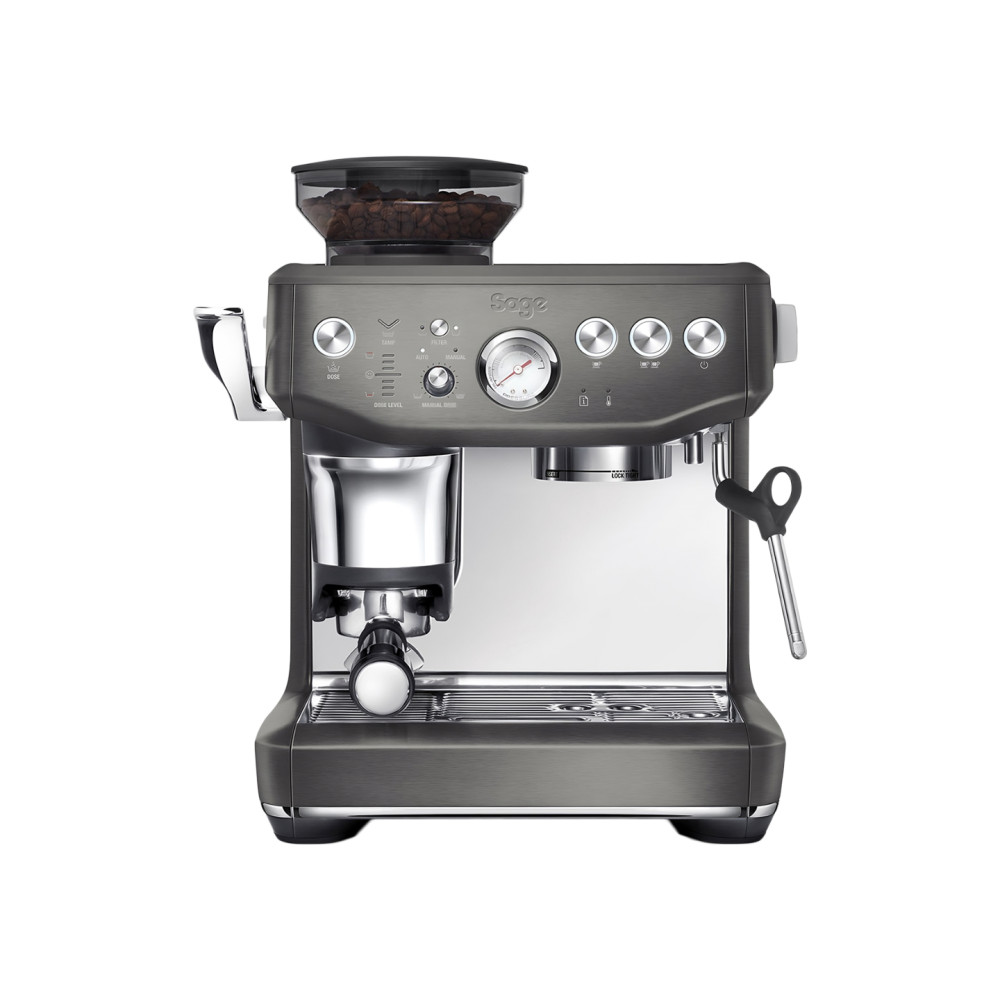 | 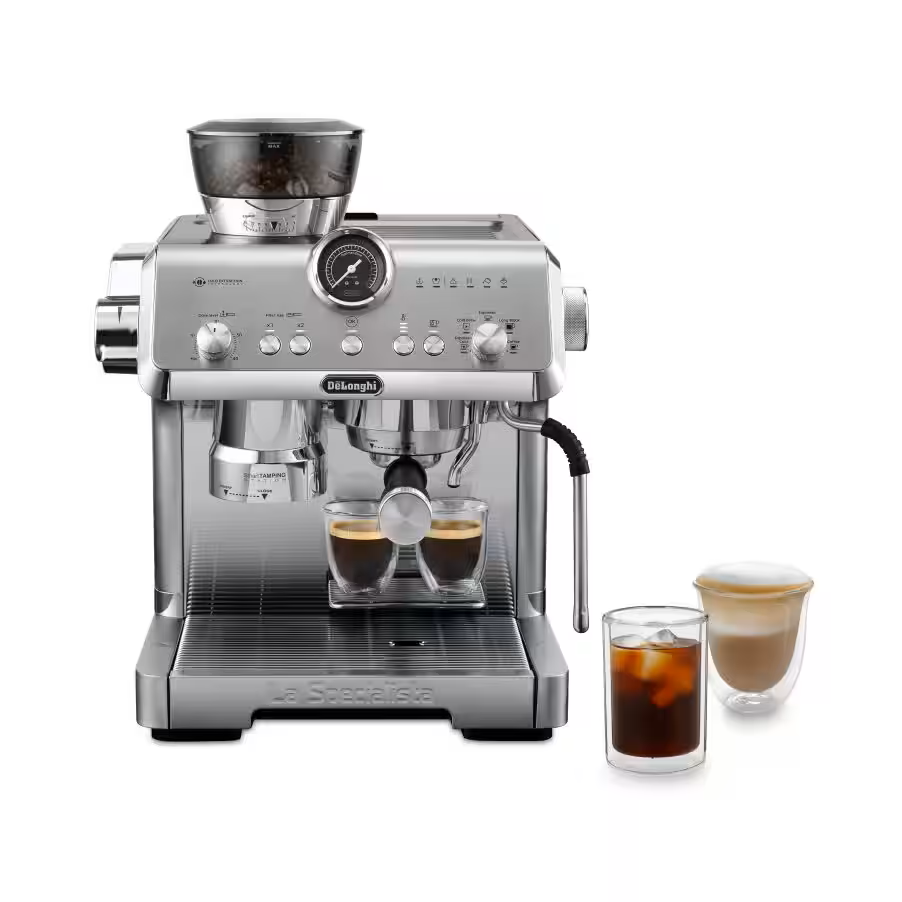 | |
| Check the best price on Amazon | Check the best price on Amazon | |
| Machine Type | Semi-automatic espresso machine | Semi-automatic espresso machine |
| Built-in Grinder | Yes (conical burr) | Yes (conical burr) |
| Grinder Adjustment Levels | Wide range, fine incremental steps | 15 grind settings |
| Dosing System | Assisted, time-based dosing with adaptive adjustment | Sensor-based automatic dosing |
| Tamping System | Integrated spring-loaded Impress lever | Smart tamping station |
| Pump Pressure | 15 bar | 19 bar |
| Heating System | Thermocoil | Thermoblock |
| Warm-Up Time | Approx. 2–3 minutes | Approx. 2–3 minutes |
| Temperature Control | PID controlled, limited user adjustment | Active Temperature Control (multiple presets) |
| Pre-Infusion | Yes (low-pressure) | Yes |
| Pressure Gauge | No | Yes |
| Milk Frothing | Manual steam wand | Manual steam wand (My LatteArt system) |
| Steam Power | Moderate | Strong |
| Specialty Drinks | Manual preparation only | Espresso, Coffee, Americano, Cold Brew, Espresso Cool |
| Cold Brew Function | No | Yes |
| Water Tank Capacity | Approx. 2 liters | Approx. 2 liters |
| Bean Hopper Capacity | Approx. 250 g | Approx. 250 g |
| Dimensions (W x D x H) | Approx. 33 × 38 × 41 cm | Approx. 28 × 37 × 45 cm |
| Weight | Approx. 11.5 kg | Approx. 13 kg |
| Body Material | Brushed stainless steel | Stainless steel with plastic components |
| Automatic Shut-Off | Yes | Yes |
| User Skill Level | Intermediate to advanced | Beginner to intermediate |
| Focus | Manual control and learning | Guided consistency and versatility |
| My individual reviews | Breville Barista Express Impress review | De’Longhi La Specialista Opera review |
Design & Build Quality
Design and build quality matter more than most people expect with an espresso machine. These are appliances you touch every day. You lock in portafilters, adjust grind settings, wipe down steam wands, and refill water tanks constantly. A machine can make great coffee, but if it feels flimsy, awkward, or poorly laid out, that frustration builds fast. Both the Breville Barista Express Impress and the De’Longhi La Specialista Opera aim to feel premium, but they express that goal in noticeably different ways.
Breville Barista Express Impress
The first thing you notice when unboxing the Barista Express Impress is its weight. This machine feels dense and planted, the kind of heft that reassures you it won’t slide around when you’re locking in the portafilter. The brushed stainless steel exterior dominates the design, with minimal plastic visible from the front. That metal casing gives it a professional, café-inspired presence that fits well in modern kitchens, especially if you like an industrial or minimalist look.
Breville has always been good at making machines that look purposeful, and the Impress continues that tradition. There’s nothing flashy here. No unnecessary chrome accents, no decorative curves just for show. The machine looks like it’s built to do a job, and do it consistently. Edges are clean, corners are slightly softened, and everything feels tightly assembled. When you tap the side panels, there’s no hollow sound or flex.
One of the standout design elements is the Impress tamping system itself. Instead of a traditional loose tamper, Breville integrates a spring-loaded tamp lever directly into the front of the machine. From a build standpoint, this is impressive. The lever has solid resistance, moves smoothly, and doesn’t feel like an afterthought bolted onto the chassis. It’s clearly designed as part of the machine from the start. Over time, this kind of integration tends to age better than add-on systems.
The portafilter is another strong point. It’s heavy, well-balanced, and has a satisfying lock-in motion. You don’t feel like you’re forcing it into place or worrying about wear after repeated use. The group head area is solidly built, and while Breville doesn’t use a commercial E61 group, the overall assembly still feels robust enough for daily use over many years.
That said, the Barista Express Impress is not compact. It has a fairly wide footprint, largely due to the integrated grinder and tamping system. If you have limited counter space, it can dominate visually. The hopper also adds height, which may be an issue under low cabinets. Still, everything feels proportionate. Nothing looks oversized or awkwardly placed.
Where some users may feel mixed is the internal grinder components. While the outer casing is premium, parts of the grinder assembly are plastic, which is fairly standard at this price point but worth mentioning. It doesn’t feel fragile, but it doesn’t have the same tank-like impression as the exterior shell. That said, in everyday use, it holds up well and doesn’t rattle or vibrate excessively.
Overall, Breville’s design philosophy here is clearly focused on durability, stability, and a hands-on espresso experience. It feels like a machine meant for people who want to engage with the process and appreciate solid mechanical feedback.
De’Longhi La Specialista Opera
The La Specialista Opera takes a slightly different approach. It still aims for a premium look, but its design leans more toward modern convenience than industrial seriousness. At first glance, the Opera looks sleek and well-organized, with a balanced mix of metal and high-quality plastic. It doesn’t feel cheap, but it also doesn’t have the same raw heft as the Breville.
The stainless steel panels are thinner, and you’ll notice more plastic components, especially around the grinder hopper, buttons, and side panels. That’s not necessarily a flaw, but it does change the tactile experience. When you interact with the Opera, it feels lighter and more refined, rather than heavy and mechanical.
Where De’Longhi shines is layout and ergonomics. Everything feels thoughtfully placed. The grind adjustment dial is easy to reach and clearly labeled. The buttons and indicators are logically grouped, making the machine feel less intimidating, especially for newer users. The pressure gauge on the front adds a visual focal point and gives the machine a more “technical” look without being overwhelming.
The smart tamping station is well integrated, though it feels slightly less robust than Breville’s lever system. It works smoothly, but the materials don’t inspire quite the same long-term confidence. That said, it does keep your workflow clean, and the area around the portafilter stays tidier during grinding and tamping, which is something you appreciate after weeks of daily use.
The steam wand on the Opera deserves special mention from a build perspective. It’s solid, well-mounted, and has good range of motion. Unlike some machines where the wand feels like a weak point, this one feels sturdy and capable of handling frequent use. The joints don’t feel loose, and the wand doesn’t wobble when steaming milk.
In terms of size, the Opera is taller than the Breville and slightly deeper, but it feels more vertical and less bulky across the counter. This can actually make it easier to fit into certain kitchen layouts, despite its larger overall volume. The water tank and drip tray slide in and out smoothly, with no awkward angles or flimsy tabs.
One thing to keep in mind is long-term wear. With more plastic involved, especially around control surfaces, the Opera may show cosmetic aging sooner than the Breville. Fingerprints, micro-scratches, and slight fading are more likely over time. However, De’Longhi’s plastics are good quality, and nothing feels brittle or poorly finished.
Side-by-Side Impressions
When you put these two machines next to each other, the differences become clearer. The Breville feels like a serious tool. It’s heavier, more mechanical, and gives the impression that it could handle years of daily use without complaint. The De’Longhi feels more like a refined appliance, designed to fit seamlessly into a modern kitchen while guiding the user through the espresso process.
Neither approach is objectively better. It comes down to what you value. If you like equipment that feels overbuilt and tactile, the Barista Express Impress will likely appeal more. If you prefer a machine that looks polished, approachable, and thoughtfully organized, the La Specialista Opera makes a strong case.
From a pure build quality standpoint, Breville has a slight edge in materials and perceived durability. From a design and usability standpoint, De’Longhi’s attention to layout and workflow is excellent. Both feel like premium machines, just aimed at slightly different types of home barista.
User Interface & Ease of Use
User interface and ease of use are where espresso machines either invite you in or quietly push you away. You can forgive a lot if the coffee is great, but if the daily routine feels clumsy or confusing, that enjoyment fades. These two machines approach usability from very different philosophies. The Breville Barista Express Impress assumes you want to be involved and learn. The De’Longhi La Specialista Opera assumes you want guidance, structure, and consistency with as little friction as possible.
Neither approach is wrong, but they lead to very different day-to-day experiences.
Breville Barista Express Impress
The Barista Express Impress is a semi-automatic machine at heart, and it behaves like one. The interface is largely physical: knobs, buttons, and a grind dial. There’s no digital display walking you through each step. Instead, Breville relies on tactile feedback and subtle indicators to guide you.
The learning curve is real, but not punishing. On your first few uses, you’ll likely spend time figuring out grind size, shot timing, and how your beans respond. Breville helps by simplifying two historically tricky steps: dosing and tamping. The Impress system automatically doses based on time and then uses a spring-loaded lever to apply consistent tamping pressure. This removes a lot of early frustration, especially for people who have never tamped espresso before.
What the machine does not do is make decisions for you. You still choose when to stop your shot. You still adjust grind size manually. You still decide how much milk to steam and how hot to make it. For some users, this feels empowering. For others, it can feel like extra work first thing in the morning.
The control layout is clean but not immediately obvious to beginners. The brew button, steam dial, and grinder controls are intuitive once learned, but there’s not much hand-holding. Breville assumes you’ll either read the manual or learn through repetition. After a week or two, muscle memory kicks in and the process becomes second nature. Before that, expect a bit of trial and error.
One thing the Barista Express Impress does well is workflow consistency. Once you dial in your beans, the machine behaves predictably. The grind dose adjusts over time, the tamping pressure stays consistent, and your results stabilize. That sense of control is rewarding, but it depends on your willingness to engage with the machine rather than expect it to think for you.
In short, the Breville feels like a tool. It doesn’t rush you, but it also doesn’t rescue you from mistakes. If you pull a bad shot, it’s usually clear why, and you can correct it next time.
De’Longhi La Specialista Opera
The La Specialista Opera takes a much more guided approach. From the moment you turn it on, it feels like it’s trying to make things easy and obvious. The interface combines physical controls with clear visual cues, and the workflow is designed to reduce decision-making.
Buttons are clearly labeled for specific drinks. Temperature settings are selectable rather than hidden. The pressure gauge gives immediate feedback during extraction, which helps users understand what’s happening without needing prior espresso knowledge. Even if you’ve never made espresso before, you can follow the machine’s logic and get a drinkable result very quickly.
Grinding and dosing are largely automated. You insert the portafilter, select your setting, and the machine stops grinding when it hits the target dose. There’s no guessing, no weighing, and no wondering if you underfilled the basket. For many users, this is a huge relief. It turns espresso from a hobby into a routine.
The smart tamping system also contributes to this sense of ease. You don’t need to worry about uneven pressure or crooked tamping. Everything happens in a contained space, which keeps the counter cleaner and the process more forgiving.
Milk frothing is another area where De’Longhi prioritizes ease. The steam wand is powerful and responsive, but the machine gives you more structure around temperatures and timing. It’s easier to get consistent milk texture without a lot of practice. For people who make milk drinks daily, this matters more than theoretical control.
That said, the Opera’s ease of use comes with some trade-offs. Because so much is automated, you don’t have the same level of granular control as with the Breville. Grind steps are fewer. Adjustments feel more coarse. If you enjoy tweaking every variable, the interface may feel limiting over time.
Still, for most people, the Opera strikes a smart balance. It gives you enough control to improve your coffee without overwhelming you with choices.
Daily Use Comparison
In everyday use, the difference between these machines becomes very clear. With the Breville, making coffee feels like a process. You engage with each step, and the interface stays mostly out of the way. With the De’Longhi, making coffee feels more like following a guided path. The machine nudges you toward success.
Mornings are a good example. If you’re half-awake and just want a reliable latte, the Opera is easier. You press a button, follow the prompts, and you’re done. With the Breville, you need to be a little more present. It rewards attention, but it demands it too.
For households with multiple users, this difference matters. The Opera is easier for guests or partners to use without instruction. The Breville works best when one person learns it and sticks with it.
Long-Term Usability
Over time, ease of use isn’t just about the interface. It’s about how the machine fits into your routine. The Breville grows with you. As you learn more, the interface never gets in your way. The De’Longhi stays consistent. It doesn’t demand growth, but it also doesn’t fully step aside once you become more experienced.
If you see espresso as a skill you want to develop, the Barista Express Impress feels more satisfying long term. If you see espresso as a daily pleasure you want to enjoy without thinking too hard, the La Specialista Opera feels more comfortable.
Final Thoughts on Usability
The Breville Barista Express Impress offers a hands-on, tactile interface that rewards involvement and curiosity. It’s easy enough to start with, but it never stops feeling like a semi-automatic machine that expects you to participate.
The De’Longhi La Specialista Opera offers a guided, confidence-building experience. It reduces friction, shortens the learning curve, and makes good coffee accessible quickly.
Ease of use here isn’t about which machine is simpler. It’s about which philosophy matches the way you want to make coffee every day.
Coffee Quality & Brewing Performance
Coffee quality and brewing performance are ultimately what justify the counter space, the cost, and the daily ritual of using a machine like this. Design and interface matter, but if the espresso in the cup isn’t satisfying, none of the rest counts. Both the Breville Barista Express Impress and the De’Longhi La Specialista Opera are capable of producing excellent coffee, but they get there in different ways, and the differences become more noticeable the more attention you pay to flavor, consistency, and control.
Breville Barista Express Impress
The Barista Express Impress is built around a fairly traditional espresso philosophy. It uses low-pressure pre-infusion to gently soak the coffee puck before ramping up to full extraction pressure. This approach helps reduce channeling and promotes more even extraction, especially when your grind or distribution isn’t perfect. In practice, it works well and gives the machine a forgiving nature without feeling overly automated.
When properly dialed in, the espresso from the Breville is rich, full-bodied, and well-balanced. Crema production is consistent, with a thick, hazelnut-colored layer that holds reasonably well. The machine tends to emphasize body and mouthfeel, which pairs nicely with medium and medium-dark roasts. Chocolate, caramel, and nutty notes come through clearly, making it a strong choice for classic espresso profiles.
Temperature stability is handled by a PID-controlled thermocoil system. In real-world use, this keeps brew temperatures steady shot to shot, which is critical for consistency. However, temperature adjustment options are limited. You can’t easily fine-tune brew temperature for lighter roasts or experimental beans. If you primarily drink traditional espresso or milk-based drinks, this won’t matter much. If you enjoy lighter roasts with higher acidity, you may feel slightly constrained.
Shot control is manual. You start and stop the extraction yourself, which allows you to tailor shot length to taste. This is both a strength and a weakness. Skilled users will appreciate the freedom. Less experienced users may pull inconsistent shots until they develop a feel for timing and yield. The machine doesn’t correct mistakes for you, but it also doesn’t lock you into a fixed recipe.
One thing worth noting is how sensitive the Breville is to grind size and bean freshness. Because the system is relatively open and manual, small changes in grind or dose can noticeably affect flavor. This can be frustrating early on, but it’s also how you learn. Over time, the machine teaches you how espresso behaves.
De’Longhi La Specialista Opera
The La Specialista Opera takes a more controlled and versatile approach to brewing performance. It also uses pre-infusion, but it pairs that with De’Longhi’s Active Temperature Control system, which allows you to choose between different temperature profiles. This gives you more flexibility when switching between beans, especially when moving from darker to lighter roasts.
In the cup, espresso from the Opera is clean, balanced, and consistent. The machine excels at repeatability. Once you’ve found settings you like, it produces very similar results day after day. Crema is slightly lighter in texture compared to the Breville, but still attractive and stable. Flavor clarity is a strong point, particularly with medium and medium-light roasts.
The built-in pressure gauge adds a practical layer to brewing performance. Watching the needle during extraction helps you understand whether your grind and dose are in the right range. This visual feedback is especially useful for beginners, but even experienced users may appreciate the extra insight.
One of the Opera’s defining features is its broader drink capability. Beyond standard espresso, it offers Americano, Coffee, Espresso Cool, and Cold Brew options. These aren’t gimmicks. The cold extraction system, in particular, produces a smooth, low-acid drink in minutes rather than hours. While purists may not see this as “true” cold brew, the results are surprisingly good and add genuine value.
Because the Opera automates more of the brewing process, there’s less variability. This is great for consistency but can feel restrictive if you want to experiment. Shot volumes and extraction parameters are more predefined. You can still make adjustments, but the machine gently nudges you back toward its preferred ranges.
Flavor Differences and Bean Compatibility
When comparing flavor side by side, the Breville often delivers a slightly heavier, more traditional espresso profile. It favors body over brightness and excels with classic espresso blends. The De’Longhi leans toward clarity and balance, handling a wider range of beans with fewer adjustments.
If you enjoy experimenting with different origins and roast levels, the Opera’s temperature control and guided extraction make that easier. If you stick to a favorite blend and want to refine it over time, the Breville gives you more room to fine-tune.
Consistency Over Time
Consistency is where these machines really diverge. The Breville’s consistency depends heavily on the user. Once you’ve mastered it, results are excellent, but off days happen. The De’Longhi minimizes those off days by design. It’s harder to make a truly bad shot unless your beans are stale or poorly suited.
Final Thoughts on Brewing Performance
The Breville Barista Express Impress delivers classic, satisfying espresso with a hands-on approach that rewards learning and attention. It shines when you want control and don’t mind engaging with the process.
The De’Longhi La Specialista Opera delivers consistent, versatile, and well-balanced coffee with minimal effort. It broadens your drink options and smooths out the learning curve.
Both make excellent coffee. The difference lies in whether you want to shape the brewing experience yourself or let the machine guide you toward reliable results.
Grinder Features & Performance
The grinder is one of the most important parts of any espresso setup, and when it’s built directly into the machine, its strengths and weaknesses become impossible to ignore. You can compensate for a lot in espresso, but a poor or inconsistent grind will undermine everything else. Both the Breville Barista Express Impress and the De’Longhi La Specialista Opera include integrated burr grinders, but they approach grinding with very different priorities: one leans toward manual control and adaptability, the other toward automation and consistency.
Breville Barista Express Impress
Breville has long treated the grinder as a core feature rather than an accessory, and the Express Impress reflects that. The machine uses a built-in conical burr grinder with a wide range of grind size adjustments, designed to cover everything from espresso to coarser grinds for other brewing methods. In practice, most users will keep it firmly in the espresso range, but the flexibility is there.
The grind size adjustment dial is mounted on the side of the machine and is easy to access. It clicks into place clearly, which helps with repeatability. The number of steps available gives you a good amount of fine control, allowing you to make small changes that have noticeable effects on extraction time and flavor. This is particularly valuable when dialing in new beans or compensating for changes in humidity or bean age.
One of the defining features of the Impress system is how the grinder integrates with dosing and tamping. Instead of grinding freely into a basket and weighing the result, the machine grinds based on time and adjusts that timing automatically over multiple shots. If the machine detects under-dosing or over-dosing based on resistance during tamping, it subtly changes future grind times. Over several uses, this leads to more consistent doses without requiring constant manual adjustment.
In real-world use, this system works reasonably well, especially with beans of similar roast level and density. However, it’s not perfect. Because dosing is time-based rather than weight-based, changes in bean density can still result in variation. Switching between light and dark roasts often requires re-dialing, and oily beans can affect grind flow more noticeably.
Grind quality itself is solid for an integrated grinder. Particle distribution is fairly even, and fines are kept under control well enough for stable espresso extraction. That said, it doesn’t match the precision of a high-end standalone grinder. You may notice slightly more variation shot to shot, especially at finer settings.
Noise is another consideration. The Breville grinder is not quiet. It produces a sharp, mechanical sound that’s noticeable, particularly in quieter households or early mornings. It’s not unbearable, but it’s clearly present. Vibration is minimal, though, which helps the machine feel stable during grinding.
Cleaning and maintenance of the grinder are straightforward but manual. You’ll need to remove the hopper and occasionally clean the burrs to prevent buildup, especially if you use darker, oilier beans. Access is easy, but it’s still a task you have to remember to do.
Overall, the Breville grinder is designed for people who want to learn how grind size affects espresso and don’t mind making adjustments. It rewards attention and experimentation.
De’Longhi La Specialista Opera
The grinder in the La Specialista Opera reflects De’Longhi’s focus on guided performance and ease of use. It also uses a conical burr grinder, but with fewer grind size steps compared to the Breville. On paper, this might seem like a limitation, but in practice, the steps are well chosen for espresso-focused brewing.
The standout feature here is the sensor-based dosing system. Instead of grinding for a set time, the Opera grinds until it reaches a target dose, then stops automatically. This removes much of the guesswork from espresso preparation. You don’t need to weigh grounds or worry about inconsistent dosing between shots. For most users, this leads to more consistent results right out of the box.
The grind adjustment dial is clearly labeled and easy to use, though it offers less fine-grained control than the Breville. This means dialing in a bean may take fewer steps, but you also have fewer options if you’re trying to make very small adjustments. For beginners and casual users, this is usually a benefit rather than a drawback.
Grind quality is very good for an integrated system. The particle size distribution is consistent enough to support stable extraction, and the machine’s pressure and temperature systems compensate well for minor grind variations. The result is reliable espresso with minimal fuss.
In terms of noise, the Opera’s grinder is slightly more muted than the Breville’s, though it’s still clearly audible. The sound is lower-pitched and feels less aggressive, which can make a difference in everyday use. Vibration is minimal, and the machine remains steady during grinding.
Maintenance is one area where the Opera feels more user-friendly. The grinder area stays cleaner thanks to the enclosed tamping and dosing system. Grounds don’t scatter as easily, and the need for frequent deep cleaning feels less urgent. That said, internal access is a bit more involved if you want to clean the burrs thoroughly.
Side-by-Side Grinder Experience
Using these grinders side by side highlights their philosophical differences. The Breville grinder feels like a learning tool. It encourages you to pay attention, adjust frequently, and understand how grind size interacts with extraction. The De’Longhi grinder feels like a helper. It aims to give you good results with minimal intervention.
If you frequently switch beans, especially across different roast levels, the Opera’s automated dosing makes transitions easier. If you stick with one bean and enjoy refining your grind over time, the Breville’s broader adjustment range is more satisfying.
Long-Term Performance
Over time, both grinders hold up well, but their strengths become clearer. The Breville’s grinder benefits from regular cleaning and user involvement. Neglect shows up quickly in shot quality. The De’Longhi is more forgiving and maintains consistency with less attention, though it offers less room to push boundaries.
Final Thoughts on Grinder Performance
The Breville Barista Express Impress offers a flexible, hands-on grinding experience that suits users who want control and are willing to learn. The De’Longhi La Specialista Opera offers a streamlined, automated grinding system that prioritizes consistency and ease of use.
Neither grinder is objectively better. The right choice depends on whether you see grinding as part of the craft or as a step you’d rather simplify.
Milk Frothing & Specialty Drinks
Milk frothing is where many home espresso machines either shine or fall apart. Pulling a decent espresso shot is one thing, but consistently steaming milk with the right texture and temperature is what separates an okay latte from one that actually feels café-quality. Specialty drinks add another layer to this, especially for people who don’t drink straight espresso every day. Both the Breville Barista Express Impress and the De’Longhi La Specialista Opera are designed with milk-based drinks in mind, but once again, they take very different approaches.
Breville Barista Express Impress
The Barista Express Impress uses a traditional manual steam wand, and Breville clearly expects users to learn proper milk steaming technique. There are no automatic milk programs, no temperature sensors built into the wand, and no one-touch cappuccino buttons. What you get is control, for better or worse.
The steam wand itself is well built and easy to position. It has enough range of motion to comfortably steam milk in different pitcher sizes, and it locks firmly into place when you angle it. Steam power is adequate, though not especially aggressive. It takes a little time for the machine to build steam pressure, and steaming a full pitcher of milk is not particularly fast. That said, once pressure is stable, the steam is consistent and predictable.
With some practice, the Breville can produce excellent microfoam. The texture is smooth and glossy, suitable for latte art, and the milk integrates well with espresso rather than sitting stiffly on top. However, the learning curve is real. Beginners may struggle at first with overheating milk, introducing too much air, or creating large bubbles. The machine won’t stop you from making mistakes, and it won’t correct them either.
Temperature control is entirely manual. You judge readiness by feel, sound, and experience. This is satisfying if you enjoy the craft aspect of coffee, but it can be frustrating if you just want a reliable latte without thinking too much. Consistency depends on you, not the machine.
In terms of specialty drinks, the Breville keeps things traditional. It doesn’t offer presets for cappuccinos, flat whites, or alternative styles. You make those drinks by combining espresso and milk manually. This simplicity is intentional. The machine focuses on classic espresso-based drinks rather than expanding into iced or specialty extraction methods.
Where this approach works well is flexibility. You can steam milk exactly how you like it. Dairy, oat, almond, and soy milk all behave differently, and the Breville gives you the freedom to adjust technique accordingly. With time, you can achieve very good results across milk types, but again, it requires involvement.
De’Longhi La Specialista Opera
The La Specialista Opera approaches milk frothing from a much more supportive angle. Its steam wand is still manual, but it’s more powerful and responsive, making it easier to achieve good texture quickly. The wand heats faster, and steam pressure feels more robust compared to the Breville.
De’Longhi’s My LatteArt system isn’t fully automatic, but it’s designed to help users get consistent results with less effort. The wand’s design and steam delivery make it easier to create fine microfoam without as much trial and error. For people new to milk steaming, this makes a noticeable difference.
Temperature control is still manual, but the faster response and stronger steam reduce the risk of under-textured or overheated milk. You spend less time waiting for the machine and more time actually steaming, which improves workflow and consistency.
Where the Opera really pulls ahead is in specialty drink support. Beyond standard espresso and milk drinks, it offers options like Espresso Cool and Cold Brew. These aren’t milk drinks per se, but they expand the range of beverages you can make without additional equipment. For people who enjoy iced lattes, cold coffee, or lower-acidity drinks, this versatility is a genuine advantage.
Milk-based specialty drinks are easier to replicate on the Opera because the espresso base itself is more consistent shot to shot. When your espresso doesn’t vary much, milk drinks naturally become more reliable. This is an indirect but important benefit of the machine’s overall design.
Milk Texture and Latte Art
When it comes to milk texture, both machines are capable, but the path to good results is different. The Breville rewards skill. With practice, you can produce excellent latte art-quality foam, but it takes time and attention. The De’Longhi lowers the barrier. It’s easier to get acceptable, café-style milk with less practice, even if the absolute ceiling is similar.
For users interested in latte art, both machines can get you there. The Breville may feel more satisfying because you’re fully in control. The Opera may feel more forgiving because it helps you reach the right texture faster.
Alternative Milks
Alternative milks are increasingly important, and both machines handle them reasonably well. The Breville requires more technique adjustment, especially with oat and almond milk, which foam differently than dairy. The De’Longhi’s stronger steam helps compensate, making it easier to get decent foam without extensive experimentation.
Daily Use and Convenience
In daily use, milk frothing on the Breville feels like a ritual. On the Opera, it feels like a step in a streamlined process. Neither is wrong, but the difference is noticeable over time, especially if you make multiple milk drinks per day.
Final Thoughts on Milk Frothing & Specialty Drinks
The Breville Barista Express Impress offers a traditional, skill-based milk frothing experience that rewards practice and precision. It’s ideal for users who enjoy learning and refining technique.
The De’Longhi La Specialista Opera offers stronger steam, easier milk texturing, and a wider range of specialty drink options. It’s better suited to users who want reliable results and versatility with less effort.
Your preference here comes down to whether you want milk frothing to feel like a craft or a convenience.
Maintenance & Cleaning
Maintenance and cleaning are the unglamorous side of espresso machines, but they have a huge impact on long-term satisfaction. A machine can make great coffee for the first few months, but if upkeep is annoying or time-consuming, many people start cutting corners. That’s when performance drops, flavors suffer, and mechanical issues begin to appear. The Breville Barista Express Impress and the De’Longhi La Specialista Opera both require regular care, but they differ in how much effort they ask from the user and how forgiving they are if you miss a step.
Breville Barista Express Impress
The Barista Express Impress is a fairly hands-on machine when it comes to maintenance. This aligns with its overall philosophy. It expects the user to be involved not just in brewing, but also in caring for the machine.
Daily cleaning tasks are straightforward but non-negotiable. After each milk steaming session, the steam wand needs to be purged and wiped down. Because the wand is manual and uncoated, milk residue can bake on if neglected, making later cleaning harder. Fortunately, the wand is easy to access and doesn’t have awkward angles, so wiping it clean takes only a few seconds if done immediately.
The portafilter and basket should be rinsed after each use. Coffee oils and fine grounds accumulate quickly, and if left in place, they can affect flavor and extraction. This is standard for semi-automatic machines, but it’s still something you need to build into your routine.
The group head requires regular attention as well. Breville recommends backflushing with a cleaning tablet on a scheduled basis. This process is simple enough, but it does take time and requires you to follow the steps correctly. Skip it too often, and you’ll notice bitter flavors creeping into your espresso.
The grinder is one of the more demanding components to maintain. Because the Breville uses time-based dosing and allows more manual intervention, grounds can accumulate in the burr chamber over time. Oily beans make this worse. Cleaning the grinder involves removing the hopper and accessing the burrs, which is not difficult but does require care and consistency. If you neglect this, grind consistency can suffer, and stale grounds can impact flavor.
The Impress tamping system also needs occasional cleaning. Grounds can build up around the tamping area, especially if you grind finer or use darker roasts. A quick brush or wipe keeps things tidy, but again, it’s on you to notice and address it.
Descaling is another essential task. Depending on your water hardness and usage frequency, descaling intervals can vary. The machine provides indicators, but you still need to perform the process manually. It’s not complicated, but it does take time and temporarily puts the machine out of commission.
Overall, maintenance on the Breville is manageable but requires discipline. It rewards users who enjoy caring for their equipment and are willing to stick to a routine. If you’re diligent, the machine stays clean, performs consistently, and ages well. If you’re not, performance degradation shows up relatively quickly.
De’Longhi La Specialista Opera
The La Specialista Opera is designed to make maintenance feel less like a chore. De’Longhi has clearly thought about how users interact with the machine over time and built in features that reduce mess and simplify cleaning.
Daily cleaning tasks are similar in principle but easier in execution. The steam wand still needs to be purged and wiped after use, but the stronger steam output and wand design make residue less stubborn. The machine also performs automatic purge cycles that help prevent milk buildup inside the wand.
The portafilter area stays cleaner thanks to the enclosed dosing and tamping system. Grounds are less likely to spill onto the counter or into crevices, which reduces the need for frequent wiping. This may seem minor, but over weeks and months, it makes a noticeable difference in how tidy the machine feels.
One of the biggest advantages of the Opera is its removable brew group. This allows you to rinse it under running water, removing coffee oils and residue more thoroughly than backflushing alone. For users unfamiliar with espresso machine maintenance, this feels more intuitive and reassuring.
Grinder maintenance is also less demanding day to day. Because the machine doses more precisely and contains grounds more effectively, buildup is slower. Deep cleaning the grinder is still necessary eventually, but it doesn’t feel as urgent or frequent as with the Breville.
Descaling is guided and partially automated. The machine alerts you when it’s time and walks you through the process step by step. This reduces the likelihood of skipping descaling or doing it incorrectly.
However, the Opera’s added features come with added complexity. Components related to specialty drinks, such as cold extraction parts or milk accessories, introduce additional cleaning steps. If you regularly use these features, you’ll need to stay on top of them to avoid residue buildup.
Long-Term Ownership Considerations
Over the long term, maintenance habits make a big difference with both machines. The Breville feels more sensitive to neglect. Small lapses add up and can affect taste and performance relatively quickly. The De’Longhi is more forgiving, but it’s not maintenance-free.
Parts availability and durability also matter. Both brands have good support networks, but Breville owners often report needing to replace seals or gaskets over time, especially with heavy use. De’Longhi’s modular design makes some replacements easier, though parts can be more specialized.
Daily Reality
In daily life, maintenance on the Breville feels like part of the espresso ritual. On the Opera, it feels more like background housekeeping. If you enjoy the process and don’t mind routine care, the Breville fits naturally. If you want maintenance to fade into the background, the Opera is easier to live with.
Final Thoughts on Maintenance & Cleaning
The Breville Barista Express Impress demands regular attention and rewards consistency. It’s best suited to users who are comfortable with hands-on care and understand the importance of routine cleaning.
The De’Longhi La Specialista Opera reduces friction with smarter design and guided maintenance, making it more approachable for users who want great coffee without constant upkeep.
Neither machine is low-maintenance in an absolute sense, but one asks you to be a caretaker, while the other tries to be a partner.
Energy Efficiency & Noise Levels
Energy efficiency and noise levels rarely get top billing when people shop for espresso machines, but they matter more than you might think. These machines are often used early in the morning, sometimes in quiet households, and they tend to stay on for extended periods while you prepare drinks. Over time, energy consumption and sound can affect both your utility bill and your daily comfort. The Breville Barista Express Impress and the De’Longhi La Specialista Opera perform similarly on paper, but the way they behave in real-world use reveals meaningful differences.
Breville Barista Express Impress
The Barista Express Impress uses a thermocoil heating system rather than a traditional boiler. From an energy perspective, this is a sensible choice for home use. Thermocoil systems heat water on demand, which reduces the need to keep a large volume of water hot at all times. As a result, the machine heats up relatively quickly and doesn’t consume as much idle power as boiler-based machines.
In daily use, the Breville reaches brewing temperature in a few minutes. This encourages users to turn it on only when needed rather than leaving it running all morning. For people who make one or two drinks and then shut the machine off, this can result in meaningful energy savings over time.
That said, the machine still draws a noticeable amount of power during grinding, brewing, and steaming. Espresso machines are energy-intensive by nature, and the Breville is no exception. Steam generation, in particular, requires sustained heating, which spikes energy usage temporarily. If you frequently make multiple milk drinks back to back, the energy footprint increases accordingly.
The Barista Express Impress includes an automatic power-down feature, which turns the machine off after a period of inactivity. This is a useful safeguard, especially for forgetful users. However, the default timing may not suit everyone. If you’re the type who likes to step away and return later, you may find the machine shutting down more often than expected.
From a noise standpoint, the Breville is assertive. The built-in grinder produces a sharp, high-pitched sound that’s very noticeable, especially in quiet environments. Grinding is the loudest phase of operation, and there’s no way to soften it. If you live in a small apartment or have light sleepers nearby, this is something to consider.
The pump noise during brewing is also audible, though less intrusive than the grinder. It has a steady mechanical hum that fades into the background after a while. Steaming milk adds another layer of sound, with a hissing noise that’s typical of manual steam wands.
Overall, the Breville feels like a machine that announces itself. It’s not obnoxiously loud, but it’s clearly doing work, and you hear that work happening.
De’Longhi La Specialista Opera
The La Specialista Opera also uses a thermoblock-style heating system, designed to balance performance and energy efficiency. Like the Breville, it heats up relatively quickly and doesn’t require long idle periods. This makes it practical for daily use without excessive energy waste.
One advantage of the Opera is how efficiently it transitions between brewing and steaming. The machine manages temperature changes smoothly, which can reduce the time and energy needed to prepare multiple drinks. This is especially noticeable if you often make milk-based drinks in succession.
The Opera also includes automatic standby and energy-saving modes. These features are well integrated and feel less abrupt than the Breville’s power-down behavior. The machine seems designed to conserve energy without disrupting workflow.
Noise is where the Opera feels slightly more refined. The grinder, while still audible, produces a lower-pitched, more muted sound. It’s less jarring, particularly in the morning. Grinding doesn’t feel quite as aggressive, even though it still gets the job done quickly.
Pump noise during extraction is similar to the Breville but slightly smoother. The pressure buildup feels controlled rather than abrupt. Steaming milk is still noisy, but the stronger steam output shortens steaming time, which indirectly reduces total noise exposure.
Real-World Noise Comparison
In practical terms, neither machine is quiet. Espresso machines with built-in grinders never are. The difference lies in tone and duration. The Breville’s grinder is louder and sharper, but grinding often finishes quickly. The De’Longhi’s grinder is softer but may run slightly longer depending on the dose.
If noise sensitivity is a major concern, the Opera has a small but noticeable advantage. It’s unlikely to wake someone in the next room as easily as the Breville, though neither is silent.
Long-Term Energy Considerations
Over months and years, energy efficiency comes down to habits. Both machines benefit from being turned off when not in use. Both reward shorter sessions rather than all-day standby. Neither will dramatically impact your energy bill on its own, but small differences add up over time.
The Opera’s guided workflow and faster transitions may encourage more efficient use. The Breville’s manual nature may lead some users to leave it on longer while dialing in or experimenting.
Final Thoughts on Energy & Noise
The Breville Barista Express Impress is efficient for its class but loud and unapologetically mechanical. It suits users who value performance over subtlety and don’t mind a bit of noise.
The De’Longhi La Specialista Opera feels slightly more polished in daily operation, with marginally better noise control and smoother energy management.
Neither machine excels dramatically here, but the Opera edges ahead in refinement, while the Breville remains perfectly acceptable if noise and energy use aren’t top priorities.
Conclusion
After spending time with both machines and looking at how they perform across every major category, it’s clear that the Breville Barista Express Impress and the De’Longhi La Specialista Opera are built for two slightly different types of coffee drinkers. Both are capable of producing excellent espresso and milk-based drinks, and neither feels like a compromise in terms of quality. The real difference lies in how involved you want to be in the process.
The Breville Barista Express Impress is best suited to people who enjoy making coffee as a skill. It feels more like a traditional semi-automatic machine that just happens to include some smart assistance. The integrated tamping system reduces frustration without removing control, and the overall experience rewards attention, curiosity, and practice. If you like dialing in beans, adjusting grind settings, and refining your technique over time, the Breville offers a deeper sense of ownership and satisfaction. It feels solid, mechanical, and built to grow with you.
The De’Longhi La Specialista Opera, on the other hand, is about confidence and consistency. It’s designed to help you get good results quickly and repeat them easily. The guided interface, automated dosing, stronger steam performance, and added specialty drink options make it easier to live with day to day, especially in busy households or shared kitchens. It reduces the chance of bad shots and lowers the learning curve without completely removing the hands-on experience.
Neither machine is objectively better. The right choice depends on what you want from your coffee routine. If you want espresso to feel like a craft you actively participate in, the Breville is the better fit. If you want reliable, high-quality drinks with less thinking and more versatility, the De’Longhi makes more sense.
In the end, both machines succeed at what they set out to do. Choosing between them isn’t about quality. It’s about personality, habits, and how you want coffee to fit into your daily life.