Espresso is one of those things where small details matter a lot. Water temperature, grind size, tamp pressure, dose weight — they all add up to make the difference between a flat, bitter shot and a rich, complex espresso that’s balanced and sweet. Breville has become one of the most popular consumer espresso brands in the world, and for good reason: they’ve consistently delivered machines that bring true espresso capabilities into the home without forcing users to learn a barista apprenticeship first.
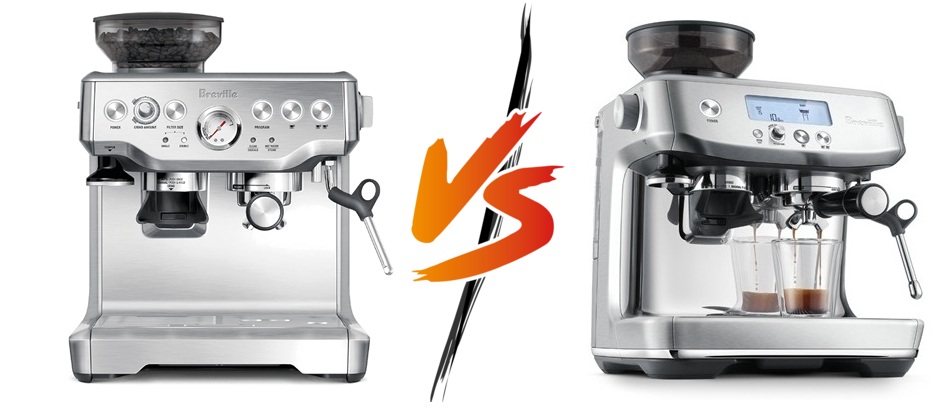
Two of the most talked-about Breville machines of the last decade are the Barista Express (BES870XL) and the Barista Pro (BES878). On paper, the Pro looks like a clear upgrade — but does that matter in everyday use? Are the improvements worth the premium? And where do they actually make a difference in your cup?
I’ve used both machines regularly, and I’ll be comparing them in real-use terms — not just specs.
Breville Barista Express vs Breville Barista Pro Comparison Chart
If you click the links below, under the product images, you will be redirected to Amazon.com. In case you then decide to buy anything, Amazon.com will pay me a commission. This doesn’t affect the honesty of this review in any way though.
| Feature | Breville Barista Express (BES870XL) | Breville Barista Pro (BES878) |
|---|---|---|
 |  | |
| Check the best price on Amazon | Check the best price on Amazon | |
| Heating System | Thermocoil heating system | ThermoJet heating system |
| Heat-Up Time | ~30 seconds (longer for full stability) | ~3 seconds |
| Grinder Type | Integrated conical burr grinder | Integrated conical burr grinder |
| Grind Settings | 18 external settings (plus internal burr adjustment) | 30+ precision grind settings |
| Display Type | Analog interface with pressure gauge | LCD digital display |
| Pressure Gauge | Yes (front-facing analog gauge) | No (digital shot timing instead) |
| Shot Control | Manual or programmable volumetric control | Manual or programmable volumetric control |
| Pre-Infusion | Low-pressure pre-infusion | Low-pressure pre-infusion |
| Pump Pressure | 15-bar Italian pump | 15-bar Italian pump |
| Water Tank Capacity | 67 oz (2 liters) | 67 oz (2 liters) |
| Bean Hopper Capacity | 1/2 lb (8 oz) | 1/2 lb (8 oz) |
| Portafilter Size | 54mm stainless steel | 54mm stainless steel |
| Steam Wand | Manual steam wand | Manual steam wand (stronger/faster steam) |
| Hot Water Outlet | Yes | Yes |
| Built-In Tamper | Magnetic storage | Magnetic storage |
| Auto Shutoff | Yes | Yes |
| Construction | Brushed stainless steel exterior | Brushed stainless steel exterior |
| Dimensions (W x D x H) | 12.5″ x 13.8″ x 15.9″ | 13.7″ x 16.1″ x 16″ (approx.) |
| Weight | ~23 lbs | ~20 lbs |
| Color Options | Stainless Steel (varies by region) | Multiple finishes (Stainless, Black, etc.) |
| My individual reviews | Breville Barista Express review | Breville Barista Pro review |
Key Differences at a Glance
- Heating speed: The Pro is dramatically faster.
- Grind precision: The Pro offers more adjustment steps.
- Interface: Express is analog; Pro is digital.
- Steam performance: Pro has faster transition and slightly stronger steam.
- Core capacity (water tank, hopper, portafilter): Essentially identical.
Both machines share the same espresso foundation — 54mm portafilter, 15-bar pump, integrated burr grinder — but the Pro modernizes the experience with faster heating and a more precise interface.
Design & Build Quality
When you’re buying an espresso machine that’s going to live on your kitchen counter every single day, design and build quality matter more than most people initially think. This isn’t a gadget you tuck into a drawer. It becomes part of your morning routine, part of your kitchen’s visual landscape, and something you physically interact with multiple times a day. Over months and years, the small design decisions start to matter just as much as what ends up in your cup.
Both the Breville Barista Express and the Breville Barista Pro share the same design DNA. They look related at a glance, and they are. But when you spend time with them side by side, the differences become clearer.
Overall Aesthetic and Visual Presence
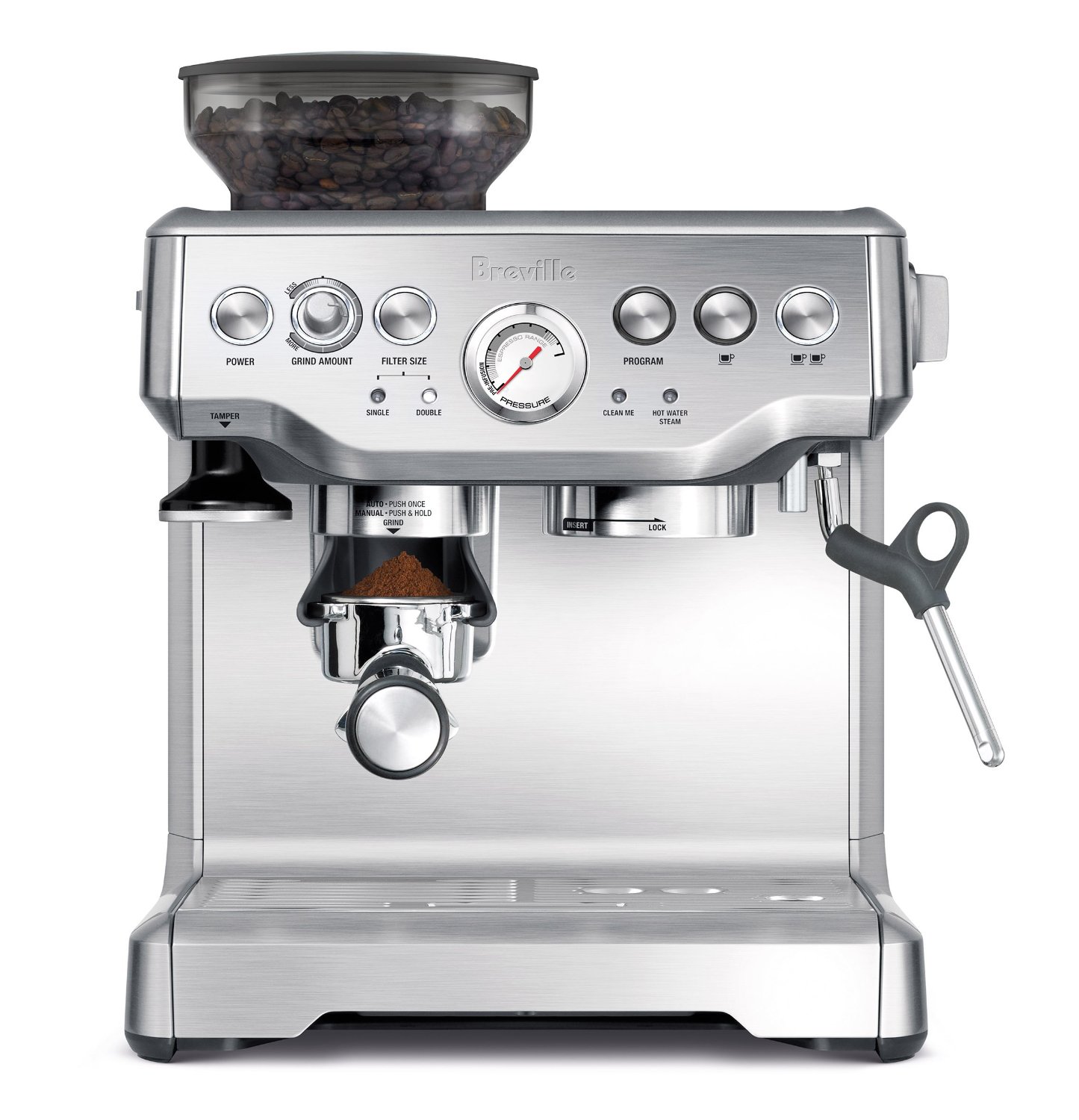
The Barista Express has been around longer, and its design reflects that. It has a classic stainless steel exterior with a slightly industrial feel. The front panel is dominated by physical buttons, a pressure gauge, and a central dial. It looks like a serious piece of equipment. There’s something reassuring about that. It feels mechanical, almost old-school in a good way.
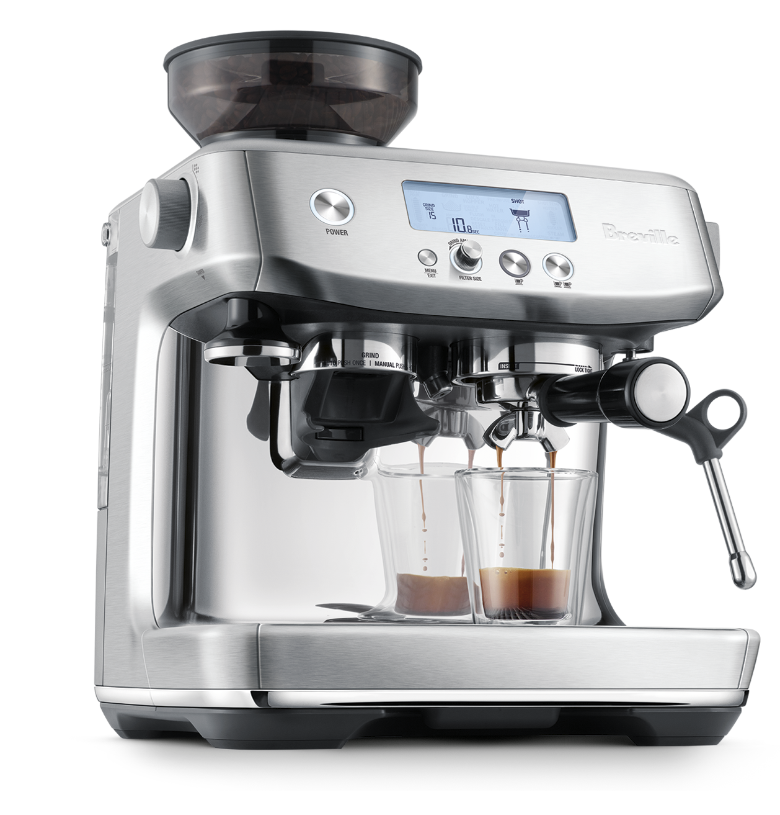
The Barista Pro, on the other hand, feels more modern. It still uses brushed stainless steel, but the layout is cleaner and more streamlined. The biggest visual difference is the LCD screen replacing some of the analog elements. The pressure gauge is gone. Instead, information is displayed digitally. The result is a front panel that looks less busy and more intentional.
In a contemporary kitchen with matte cabinets and minimalist styling, the Pro blends in more naturally. In a more traditional kitchen, the Express may actually feel more at home because of its mechanical look. Neither machine feels cheap or plasticky from the outside. Both have a weight and presence that signal you’re dealing with a real espresso setup, not a basic coffee maker.
Materials and Construction
Both machines rely heavily on stainless steel for the outer casing. That’s important. Stainless steel holds up well against heat, moisture, and daily handling. It also resists staining better than plastic housings. After months of wiping off splashes of milk and coffee, both machines maintain their appearance with minimal wear if you care for them properly.
Underneath that exterior, there’s a mix of metal and high-grade plastic components, which is standard at this price point. You’re not getting commercial café internals, but you’re also not getting flimsy construction. The portafilter is solid and weighty on both models, which makes a big difference in how the machine feels during use. A light, hollow portafilter would instantly cheapen the experience. Thankfully, that’s not the case here.
The drip tray is sturdy on both machines, though I’ve found the Pro’s tray slides in and out slightly more smoothly. It’s a small detail, but over time it contributes to the sense that the Pro is a refinement rather than a redesign.
The bean hopper is made from durable plastic on both units. It locks into place securely and includes a sealing mechanism so you can remove it without spilling beans everywhere. That’s thoughtful design. It’s something you may not think about until you actually need to switch beans or clean the grinder.
Footprint and Counter Space
In terms of dimensions, the Barista Express and Barista Pro are very similar. They occupy a moderate footprint. Neither is tiny, but neither is overwhelming. They’re wide enough to accommodate the integrated grinder on top and deep enough to allow comfortable cup placement and steam wand access.
If you have a small kitchen, you’ll want to measure carefully. These machines need breathing room. You’ll also want vertical clearance for removing the bean hopper lid. But compared to buying a separate espresso machine and standalone grinder, both the Express and the Pro save considerable space by combining the two.
Weight is another factor. Both machines are heavy enough that they don’t slide around while locking in the portafilter. That stability matters. When you twist the portafilter into place, the machine should stay put. The rubberized feet do a good job of anchoring the base to the counter.
Control Layout and Physical Feedback
The Barista Express leans into physical controls. There are dedicated buttons for power, single shot, double shot, and steam. There’s a grind size dial on the side and a grind amount dial on the front. The pressure gauge sits prominently in the center.
Physically turning dials and pressing solid buttons gives the Express a tactile charm. It feels hands-on and mechanical. For some users, that’s part of the appeal. You can glance at the pressure gauge during extraction and see exactly what’s happening in real time. It creates a sense of engagement with the brewing process.
The Barista Pro shifts some of that feedback into the LCD screen. The buttons feel slightly more refined, and the interface is cleaner overall. The screen displays grind size, shot time, and prompts. While it loses the analog pressure gauge, it gains clarity in other areas. Instead of interpreting needle movement, you get direct information.
From a build standpoint, both machines feel sturdy. Buttons don’t wobble. Dials don’t feel loose. But the Pro has a slightly more polished feel in how everything fits together. It’s subtle, not dramatic, but noticeable if you use both regularly.
Water Tank and Accessibility
Both machines feature a rear-mounted water reservoir. It’s easy to remove and refill. The tank size is generous enough for multiple drinks before needing a refill. The plastic is thick and doesn’t feel brittle.
One advantage of the Pro is that it feels slightly easier to slide the tank in and out smoothly. Again, it’s a small refinement, but it contributes to daily convenience. If your machine is placed under cabinets, you’ll need to pull it forward to access the tank on either model. Neither has a front-fill option.
Steam Wand Design
The steam wand on both machines is positioned on the right side and rotates with decent range of motion. It feels sturdy and holds its position well. The metal construction gives confidence that it can withstand regular use and high heat.
The Pro’s wand feels slightly more responsive when switching between brew and steam modes, likely due to the upgraded heating system. Physically, though, they are similar in construction and durability.
Long-Term Durability Expectations
Neither machine is built like a commercial café workhorse designed to run nonstop all day. But for home use, both are well built. With proper maintenance and regular cleaning, they can last years.
The Express has a longer track record, and many users report five or more years of reliable service. The Pro is newer but built on the same platform with refinements rather than shortcuts.
If I had to describe the difference in one sentence: the Barista Express feels solid and proven, while the Barista Pro feels solid and updated.
Final Thoughts on Design & Build
At a glance, these machines look similar. In daily use, the Pro feels like a matured version of the Express. The materials are comparable, the footprint is similar, and the core build quality is strong on both. The Pro just smooths out small rough edges in layout and ergonomics.
If you value analog charm and don’t mind a slightly busier front panel, the Express still holds up beautifully. If you prefer a cleaner, more modern interface with subtle refinements in fit and finish, the Pro takes the lead.
Neither machine feels like a compromise in build quality. The difference is less about durability and more about refinement. Over years of use, that refinement may matter more than you expect.
User Interface & Ease of Use
If design is about how a machine looks and feels on your counter, user interface is about how it behaves in your hands at 6:30 in the morning before you’ve had coffee. This is where the Breville Barista Express and the Breville Barista Pro start to separate themselves in a more noticeable way.
Both machines are designed for home users who want real espresso without diving into fully manual, commercial-level complexity. But they take slightly different approaches to how much guidance they offer and how modern the experience feels.
First-Time Setup and Initial Impressions
When you unbox the Barista Express, the setup process is straightforward but traditional. You rinse the water tank, insert the filter, load beans into the hopper, and you’re off. The manual does a decent job explaining how to dial in your grind and shot, but once you power the machine on, it doesn’t actively guide you through those steps. It assumes you’ll reference the manual or already understand basic espresso workflow.
The Barista Pro, in contrast, feels more contemporary from the moment you turn it on. The LCD screen walks you through initial setup in a more interactive way. It displays prompts, suggests steps, and provides visual feedback that reduces guesswork. It feels more like setting up a modern appliance than a traditional espresso machine.
For someone brand new to espresso, that difference matters. The Express expects you to learn by doing. The Pro teaches you as you go.
Physical Controls vs Digital Display
The biggest difference between these two machines is the interface style.
The Barista Express relies on physical controls: buttons for single and double shots, a grind amount dial, a grind size dial on the side, and a central pressure gauge. It’s tactile and mechanical. You push buttons, turn knobs, and watch a needle move during extraction. It feels hands-on in a very literal way.
There’s something satisfying about that. The pressure gauge gives you live feedback during your shot. If the needle climbs too high, you know your grind is too fine. If it barely moves, your grind is too coarse. You learn visually over time.
The Barista Pro removes the analog gauge and replaces much of that interaction with a digital LCD screen. Instead of reading a needle, you see shot time displayed clearly in seconds. Instead of guessing at grind settings, you see the current grind number on the screen. Adjustments are more precise and easier to track.
The Pro feels less mechanical and more guided. It doesn’t necessarily give you more control, but it presents information more clearly.
Learning Curve for Beginners
If you’ve never pulled a proper espresso shot before, both machines require a learning period. Espresso isn’t automatic. Grind size, dose, tamp pressure, and extraction time all interact.
With the Barista Express, dialing in can feel like trial and error. You adjust the grind size dial, pull a shot, observe the pressure gauge, taste the result, and repeat. It’s not difficult, but it requires patience. There’s a certain satisfaction in figuring it out yourself, but it can be frustrating in the beginning.
The Barista Pro shortens that frustration window. The LCD display shows shot time clearly, which is one of the most important variables in espresso. If your shot runs for 15 seconds, you know immediately it’s too fast. If it runs for 40 seconds, you know it’s too slow. Seeing that number consistently helps you understand cause and effect much faster.
In other words, the Pro accelerates the learning curve without removing manual control.
Daily Workflow and Morning Routine
Ease of use isn’t just about learning. It’s about repetition. Once you’ve dialed in your favorite beans, how smooth is the daily routine?
On the Barista Express, the process becomes second nature over time. You grind, tamp, lock in the portafilter, press the shot button, steam milk, and clean up. The physical layout makes sense, but it does feel slightly busier. There are more knobs and visual elements competing for attention.
The Barista Pro simplifies that experience. The screen centralizes information. You don’t need to look in multiple places to check settings. The shot timer automatically starts when extraction begins and stops when it ends. It’s a small detail, but it makes you feel more in control.
The Pro also heats up significantly faster thanks to its ThermoJet system. While that’s technically a performance feature, it directly impacts usability. On the Express, you wait for the machine to reach temperature. On the Pro, it’s ready in about three seconds. That changes your morning routine. You don’t plan around the machine warming up. You just turn it on and start.
Adjustability and Fine Tuning
Both machines allow for manual shot programming. You can adjust shot volume, grind size, and dose. However, the way you interact with those adjustments differs.
On the Express, adjusting grind size means turning a side-mounted dial with labeled increments. You can feel the clicks, but you don’t have a digital readout of exactly where you are unless you visually count the setting. If you switch beans and want to return to a previous setting later, you’re relying on memory or notes.
On the Pro, grind settings are displayed numerically on the screen. That makes experimentation easier. You can write down “Grind 12 works best for this roast” and return to it precisely. That kind of clarity appeals to people who like tracking and optimizing their process.
The Pro also provides clearer prompts when switching between brew and steam functions. It feels more responsive and intentional in how it transitions.
Feedback During Extraction
One of the unique aspects of the Barista Express is the pressure gauge. Some users love it because it offers immediate, analog insight into what’s happening inside the machine. It feels like you’re operating a real piece of espresso equipment.
Others find it less helpful over time because pressure alone doesn’t tell the full story. Shot time and taste matter more. Since the Express doesn’t prominently display shot time unless you manually track it, beginners may struggle to interpret what they’re seeing.
The Pro’s digital shot timer solves that. It automatically tracks extraction time without extra steps. That direct feedback simplifies troubleshooting. Instead of interpreting a gauge, you adjust based on seconds.
It’s not that one system is objectively better. It depends on how you prefer to receive information. Analog and tactile versus digital and precise.
Accessibility for Multiple Users
If more than one person in your household uses the machine, ease of use becomes even more important.
The Barista Express requires everyone to understand the basics. If someone changes the grind setting or dose without knowing what they’re doing, it can throw off the next shot. There’s no screen reminding you what’s been changed.
The Barista Pro makes shared use slightly easier because settings are clearly displayed. It’s easier to spot if something is different from your usual setup. That transparency reduces confusion.
Intuitive vs Engaging
There’s an interesting tradeoff here. The Barista Express feels more engaging in a mechanical sense. You’re actively reading gauges and turning dials. It feels like you’re learning a craft.
The Barista Pro feels more intuitive. It reduces friction and presents information clearly. It doesn’t remove the craft, but it streamlines the process.
For someone who wants a hobby, the Express may feel charming. For someone who wants great espresso without extra friction, the Pro feels more refined.
Final Thoughts on User Interface & Ease of Use
Both machines are user-friendly compared to traditional manual espresso setups. Neither requires professional training. But the experience differs.
The Barista Express is hands-on, tactile, and slightly old-school. It asks you to learn by observation and repetition. Over time, that can feel rewarding.
The Barista Pro modernizes the experience with a digital interface that simplifies adjustments and shortens the learning curve. It feels faster, clearer, and more polished in daily use.
If ease, clarity, and speed matter most to you, the Pro stands out. If you enjoy a more mechanical, analog interaction and don’t mind a bit of trial and error early on, the Express still delivers a satisfying experience.
In practical terms, the Pro removes small barriers that you might not notice at first but will appreciate over months of daily use. And when you’re making coffee every morning, small improvements add up quickly.
Coffee Quality & Brewing Performance
At the end of the day, this is what matters. You can have the best interface, the sleekest stainless steel body, and the fastest heat-up time in the world, but if the espresso tastes flat or inconsistent, none of that means much.
Both the Breville Barista Express and the Breville Barista Pro are capable of producing genuinely impressive espresso at home. Not “good for a home machine.” Not “better than a pod system.” I’m talking about espresso that can compete with many neighborhood cafés when dialed in properly. The differences between them are subtle, but they do show up in consistency, workflow, and how forgiving each machine feels.
Heating System and Temperature Stability
The first major difference lies in the heating system.
The Barista Express uses a thermocoil heating system. It’s reliable and delivers stable brewing temperatures once fully heated. However, it does take a bit longer to reach optimal temperature. If you turn it on and rush into brewing too quickly, you may not get the most stable extraction. Most owners learn to give it a few extra minutes to fully stabilize, even after the ready light comes on.
The Barista Pro uses Breville’s ThermoJet system, which heats up in about three seconds. That speed is not just convenient. It also changes how temperature behaves between shots. The Pro recovers faster, meaning if you’re pulling multiple shots back-to-back, the temperature remains more consistent.
In practical terms, if you’re making drinks for guests or dialing in multiple test shots, the Pro feels steadier. The Express can absolutely deliver stable temperatures, but it rewards patience more than speed.
Pre-Infusion and Extraction Control
Both machines use low-pressure pre-infusion. This is important. Pre-infusion gently saturates the coffee puck before full pressure extraction begins. It helps reduce channeling and promotes more even extraction.
In real use, both machines handle pre-infusion well. Shots start gently, then ramp up to full pressure. This contributes to balanced flavor and good crema formation. Neither machine feels abrupt or aggressive during the brewing process.
However, the Pro’s digital shot timing makes it easier to evaluate extraction length. Since espresso quality is closely tied to brew ratio and extraction time, having that number clearly displayed allows you to fine-tune more accurately. On the Express, you either watch the clock yourself or rely on experience.
Over time, this makes the Pro slightly easier to optimize for different beans.
Pressure and Crema Development
The Barista Express includes a front-facing pressure gauge. During extraction, you can see whether the shot falls into the “ideal” pressure zone. For beginners, this visual cue can be helpful. It teaches you how grind size and tamp pressure affect resistance.
The Barista Pro removes the analog gauge, which initially feels like a loss. But in reality, pressure alone doesn’t guarantee good espresso. Time, yield, and taste matter more. The Pro focuses on shot timing and consistency rather than visual pressure feedback.
In terms of actual espresso quality, both machines produce rich crema when dialed in properly. With fresh beans and the right grind setting, you’ll see thick, golden crema that lingers on the surface. The Pro sometimes produces slightly more uniform crema, likely due to improved temperature stability and grind precision. But the difference is not dramatic.
If you served two properly dialed shots side by side, most people would struggle to identify which machine produced which.
Flavor Clarity and Balance
Here’s where subtle differences start to appear.
The Barista Express can produce shots that are full-bodied and bold. It excels at medium to dark roasts, where chocolate and caramel notes dominate. It delivers that classic espresso punch that works beautifully in milk drinks.
The Barista Pro, thanks to slightly improved grinder consistency and temperature recovery, tends to extract lighter and medium roasts with a bit more clarity. Fruit notes and brighter acidity come through more cleanly. It doesn’t mean the Express can’t handle lighter roasts, but it may require more careful dialing in.
When pulling straight espresso shots without milk, the Pro feels slightly more refined. There’s a bit more separation between flavor notes. The Express leans toward a slightly heavier, more blended profile.
These are small differences. We’re talking about nuance, not dramatic contrast.
Consistency from Shot to Shot
Consistency is one of the biggest factors in brewing performance. It’s frustrating when one shot tastes great and the next tastes completely different using the same beans.
The Barista Express can absolutely produce consistent shots, but it requires stable workflow. If the machine isn’t fully warmed up, or if the grinder setting drifts slightly, results can vary. It rewards routine.
The Barista Pro feels more repeatable. The faster heat-up and improved recovery between shots make back-to-back brewing more reliable. If you pull two double shots in a row, they’re more likely to taste nearly identical.
For someone who makes one drink in the morning, this difference may not matter much. For someone making several drinks in a short time, the Pro feels steadier and less temperamental.
Brewing Speed and Workflow Impact
Brewing performance is not just about taste. It’s also about how the machine integrates into your routine.
The Express requires more warm-up time. If you value ritual and don’t mind waiting a few minutes, that’s not a problem. But if you’re in a rush, it can feel slow.
The Pro changes that dynamic entirely. The near-instant heat-up time means you can go from powering on to brewing in seconds. That convenience encourages more frequent use. It feels less like operating equipment and more like making coffee.
That speed doesn’t compromise flavor. In fact, the faster recovery often improves consistency.
Adjustability for Different Beans
Coffee quality is highly dependent on dialing in different beans. Fresh specialty beans behave differently from supermarket beans. Light roasts behave differently from dark roasts.
Both machines allow you to adjust grind size, dose, and shot volume. The Pro simply makes it easier to track those changes. That ease encourages experimentation.
Because espresso is sensitive to small adjustments, the ability to fine-tune precisely helps maximize flavor. The Pro supports that process more smoothly.
Straight Espresso vs Milk Drinks
In milk-based drinks like lattes and cappuccinos, subtle differences between the machines become less noticeable. Milk softens acidity and blends flavors. Both machines produce espresso strong enough to cut through steamed milk without tasting weak.
For straight espresso drinkers, though, the Pro’s slight edge in clarity and consistency becomes more noticeable. Shots feel a bit more polished and balanced.
Again, we’re talking about marginal improvement, not a night-and-day difference.
Long-Term Brewing Performance
Over time, both machines hold up well if maintained properly. Regular descaling and cleaning are essential for preserving brewing performance.
The Express has a longer track record and has proven reliable over years of home use. The Pro builds on that platform with updated internals. Neither feels fragile in daily brewing.
Final Thoughts on Coffee Quality & Brewing Performance
Both the Barista Express and the Barista Pro are capable of producing café-quality espresso at home. The foundation is strong in both cases: stable temperature, proper pressure, low-pressure pre-infusion, and integrated burr grinders.
The Express delivers bold, satisfying espresso with a slightly more hands-on dialing process. It shines with medium to dark roasts and rewards patience.
The Pro refines that experience. Faster heat-up, better recovery, clearer shot timing, and slightly improved grind precision lead to more consistent and nuanced results, especially with lighter roasts.
If your primary goal is excellent espresso at home and you’re willing to learn, the Express absolutely delivers. If you want the same core quality with more consistency and less friction, the Pro edges ahead.
In pure taste terms, the gap is not massive. In daily usability and repeatability, the Pro’s advantages become more meaningful over time.
Grinder Features & Performance
If espresso is the heart of these machines, the grinder is the lungs. You can have stable temperature, ideal pressure, and perfect technique, but if your grind isn’t consistent and dialed in correctly, your shot will fall apart. That’s why the built-in grinder is such a critical part of both the Breville Barista Express and the Breville Barista Pro.
At first glance, they appear similar. Both use conical burr grinders integrated directly into the machine. Both allow you to grind fresh beans straight into the portafilter. But once you spend time adjusting settings and dialing in different beans, you start to see meaningful differences in precision, usability, and overall performance.
Burr Type and Core Design
Both machines use stainless steel conical burrs. Conical burr grinders are known for producing consistent particle sizes with less heat buildup than blade grinders. That’s important because excess heat during grinding can negatively affect flavor.
In practical terms, both grinders are far superior to pre-ground coffee and miles ahead of blade grinders. You’re getting a true espresso-capable grind range in both machines. That alone is a big part of why these models have been so popular.
However, the Barista Pro uses an updated burr system and motor configuration. While it’s still a conical burr design, it feels more refined in its operation. The grind texture appears slightly more uniform at finer settings, which directly affects extraction quality.
The difference isn’t dramatic, but it’s noticeable if you pay attention to shot consistency and flavor clarity.
Grind Settings and Range
This is where the gap becomes more obvious.
The Barista Express offers 18 external grind settings. You adjust the grind size using a side-mounted dial, clicking through coarser or finer increments. For many users, 18 settings are more than enough to dial in espresso properly. You can also adjust the internal burr position if needed, which expands the range further.
The Barista Pro increases that range significantly, offering over 30 grind settings. The adjustment is controlled digitally, and the current setting is displayed clearly on the LCD screen.
That expanded range matters most when working with different roast levels and bean origins. Lighter roasts often require finer adjustments to hit the ideal extraction time. With more incremental steps available, the Pro allows finer tuning without large jumps between settings.
On the Express, you may occasionally find yourself wishing for a setting between two clicks. On the Pro, that frustration happens less often.
Precision and Repeatability
One of the underrated benefits of the Pro’s digital interface is repeatability.
With the Barista Express, if you discover that setting 7 works perfectly for a specific bag of beans, you either memorize it or write it down manually. The dial gives you approximate positions, but there’s no digital confirmation. If someone bumps the dial or you experiment and forget your previous position, you’re relying on visual estimation to return to your sweet spot.
On the Barista Pro, the grind number is displayed clearly. If you find that grind setting 14 works best for a medium roast from a local roaster, you can return to that exact setting instantly. This level of clarity encourages experimentation because you know you can always go back.
For people who like to rotate beans frequently, this makes a real difference.
Grind Consistency and Extraction Impact
Grind consistency plays a huge role in extraction. Uneven particles lead to channeling, where water finds the path of least resistance through the coffee puck. That results in under-extracted and over-extracted areas within the same shot.
The Barista Express produces a solid, espresso-appropriate grind. For medium and darker roasts, it performs very well. You can achieve balanced, syrupy shots with good body and crema.
The Barista Pro edges ahead in consistency at finer settings. Shots tend to extract more evenly, especially with lighter roasts that require precision. The grind feels slightly fluffier and more uniform when distributed into the portafilter.
This translates to more predictable shot times and slightly clearer flavor separation. Again, we’re not talking about a massive jump in quality, but it’s enough to matter for enthusiasts chasing incremental improvements.
Grind Speed and Motor Performance
Both machines grind directly into the portafilter using a hands-free cradle. You press the portafilter into the cradle, and grinding begins automatically. This keeps workflow efficient and minimizes mess.
The Barista Pro’s grinder motor feels slightly faster and smoother. It grinds a double shot dose quickly and with a bit less high-pitched strain. The sound is still noticeable, but the tone is more refined compared to the Express, which can sound a bit harsher during operation.
Grind speed alone isn’t everything, but smoother motor performance contributes to a more polished overall experience.
Dosing Control
The Barista Express allows you to adjust grind amount using a physical dial. You turn the dial to increase or decrease how long the grinder runs. It works, but it’s somewhat imprecise. Small changes can have noticeable effects on dose weight, and you may need a scale to truly fine-tune consistency.
The Barista Pro improves dosing control by displaying grind time digitally. You can adjust grind duration in smaller increments, and the screen clearly shows your settings. This makes it easier to maintain consistent doses without constant trial and error.
If you’re serious about espresso, you’ll likely use a scale with either machine. But the Pro reduces the guesswork slightly.
Retention and Cleanliness
Grinder retention refers to how much ground coffee remains inside the grinder after each use. Excess retention can lead to stale grounds mixing into fresh doses.
Both machines have relatively low retention compared to standalone grinders in a similar price range. Since the grinder is built directly above the portafilter, grounds travel a short distance. That helps keep things fresh.
Cleaning access is similar on both models. You can remove the bean hopper and upper burr for maintenance. The process is straightforward and doesn’t require special tools. However, the Pro’s interface provides clearer reminders about maintenance timing, which indirectly supports long-term grinder performance.
Noise and Vibration
Built-in grinders are rarely quiet, and neither of these machines is silent. However, the Pro sounds slightly more controlled. The Express has a sharper grinding noise that can feel more abrupt in a quiet kitchen.
Vibration is minimal on both machines thanks to solid construction and rubberized feet. The machine stays stable during grinding, and the portafilter cradle holds securely in place.
Suitability for Different Users
If you’re a casual home user who drinks mostly milk-based drinks and sticks to medium roasts, the Barista Express grinder will likely satisfy you completely. It’s capable, durable, and produces strong espresso results.
If you’re more experimental, switching between beans frequently or exploring lighter specialty roasts, the Barista Pro’s expanded grind range and digital precision make the process smoother. It gives you more room to fine-tune without frustration.
Standalone Grinder Comparison Perspective
It’s worth mentioning that neither built-in grinder will outperform high-end standalone espresso grinders costing several hundred dollars on their own. But within the context of integrated machines, both are impressive.
The Pro simply pushes the integrated grinder concept a bit further, narrowing the gap between built-in and standalone performance.
Final Thoughts on Grinder Features & Performance
The grinder is one of the most important components in any espresso setup, and both the Barista Express and the Barista Pro take it seriously.
The Express offers 18 grind settings, solid consistency, and a reliable hands-free workflow. It’s more than capable of producing café-quality espresso with proper dialing in.
The Pro builds on that foundation with over 30 grind settings, digital precision, improved motor refinement, and slightly better grind consistency at finer settings. It makes dialing in easier and repeatability more precise.
If you value simplicity and strong baseline performance, the Express delivers. If you want more control, finer adjustments, and a smoother overall experience, the Pro justifies its upgrade in this category.
Over time, especially if you experiment with different beans, that extra precision becomes increasingly valuable.
Milk Frothing & Specialty Drinks
For many people, espresso isn’t the final destination. It’s the base. The real goal is a silky latte, a balanced cappuccino, or a smooth flat white with microfoam that blends seamlessly into the espresso. If that sounds like you, then milk performance matters just as much as shot quality.
Both the Breville Barista Express and the Breville Barista Pro are manual milk frothing machines. That’s important to understand upfront. Neither one offers automatic milk texturing. You control the steam wand yourself. That means technique matters. The upside is that you can produce true café-quality microfoam once you learn how. The downside is that there’s a learning curve.
That said, there are meaningful differences between the two machines in how they deliver steam and how easy they make it to produce consistent milk texture.
Steam Power and Heating Systems
The biggest technical difference between these two machines shows up again here: the heating system.
The Barista Express uses a thermocoil system that heats water for brewing and steam generation. It does a solid job, but there’s a transition time between brewing and steaming. After pulling a shot, you need to switch to steam mode and wait briefly while the machine builds steam pressure.
The Barista Pro uses the ThermoJet heating system. It heats up much faster and transitions between brewing and steaming more quickly. In practical terms, this makes the Pro feel more responsive. You pull a shot, flip to steam mode, and it’s ready almost immediately.
That speed doesn’t just save time. It also helps maintain workflow. When making multiple milk drinks back-to-back, the Pro recovers faster and feels less strained.
In terms of raw steam power, the Pro has a slight edge. The steam feels stronger and more consistent throughout the frothing process. The Express produces good steam, but it can feel slightly less aggressive, especially if you’re used to commercial café machines.
Steam Wand Design and Mobility
Physically, both machines have a stainless steel steam wand positioned on the right side. The wand rotates with decent flexibility, allowing you to angle your milk pitcher comfortably.
The wand tips are designed to create a vortex in the milk when positioned correctly. This vortex is essential for integrating air and creating microfoam rather than large, bubbly froth.
In terms of build quality, both wands feel sturdy and durable. They don’t feel flimsy or loose. The Pro’s wand, however, feels slightly smoother in its range of motion and control. It’s a subtle difference, but noticeable when switching between the two regularly.
Learning to Texture Milk
If you’re new to manual steaming, both machines require practice. You’ll need to learn how to position the steam tip just below the surface of the milk to introduce air during the initial phase, then lower the pitcher slightly to continue heating while incorporating that air into fine microfoam.
On the Barista Express, it can take a few tries to consistently produce smooth, paint-like milk texture. The steam pressure is good, but you may need to be more deliberate about positioning and timing.
The Barista Pro feels slightly more forgiving. Because the steam power is stronger and more consistent, it’s easier to create a stable vortex. That vortex helps break down larger bubbles and produce smoother microfoam with less effort.
Neither machine makes you an expert automatically. But the Pro reduces some of the early frustration.
Milk Temperature Control
Both machines rely on manual temperature control. There’s no built-in thermometer or automatic shutoff at a specific milk temperature. You’ll need to rely on feel or use a separate thermometer.
The typical guideline is to stop steaming when the pitcher becomes too hot to hold comfortably, usually around 140 to 150 degrees Fahrenheit. With practice, this becomes intuitive.
The Pro’s faster heating means milk reaches target temperature more quickly. That’s convenient, but it also requires attention. If you’re distracted, you can overheat milk more easily because of the stronger steam power.
The Express heats slightly more gradually, which can feel easier for beginners learning timing.
Microfoam Quality and Latte Art Potential
Microfoam is where good milk drinks are made. It should look glossy, smooth, and almost like wet paint. When poured correctly, it integrates with espresso rather than sitting on top as thick foam.
Both machines are capable of producing true microfoam suitable for latte art. That’s a key point. These are not automatic frothers that create stiff foam for cappuccino-style drinks only. You have full control.
With proper technique, the Barista Express can produce excellent latte art milk. Hearts, rosettas, and even basic tulips are achievable.
The Barista Pro makes that process slightly easier and more consistent. The steam power helps create finer bubbles more quickly. The milk tends to look shinier and more uniform when you hit the technique correctly.
For casual milk drinkers, the difference may not be obvious. For someone who enjoys practicing latte art or values texture precision, the Pro feels a bit more capable.
Performance in Different Milk Types
Milk alternatives have become increasingly popular. Oat milk, almond milk, soy milk, and others all behave differently when steamed.
Whole dairy milk is the easiest to texture on both machines. It stretches and integrates air smoothly. Both machines handle it well.
Oat milk also performs reasonably well, especially barista-specific blends. The Pro’s stronger steam helps create more stable microfoam in plant-based milks, which can sometimes struggle to hold structure.
Almond milk and lighter alternatives are more challenging on either machine. Steam power helps, but technique becomes even more important.
Overall, the Pro handles alternative milks slightly better due to more consistent steam pressure.
Making Multiple Specialty Drinks
If you regularly make drinks for family members or guests, workflow becomes important.
On the Barista Express, after pulling a shot, you switch to steam mode and wait briefly for pressure to build. After steaming, you often need to purge the wand and allow the system to cool slightly before brewing another shot. This adds a bit of downtime between drinks.
The Barista Pro feels quicker in transitions. The ThermoJet system reduces waiting time between brew and steam modes. If you’re making two or three lattes in a row, that faster recovery makes the process smoother and less drawn out.
For single daily drinks, this difference is minor. For entertaining, it’s noticeable.
Cleaning and Maintenance of the Steam Wand
Both machines require you to wipe the steam wand immediately after use and purge steam to clear milk residue from the tip. This is essential to prevent buildup and maintain hygiene.
The wand tip can be removed for deeper cleaning on both machines. The process is straightforward and doesn’t require complicated tools.
There’s no major difference in maintenance between the two. However, because the Pro heats faster and delivers stronger steam, milk residue can dry quickly if not wiped promptly. It simply demands the same level of attention.
Overall Experience with Milk Drinks
If your primary goal is straight espresso, the milk system may feel secondary. But for most users, milk drinks are the main attraction.
The Barista Express delivers solid steam performance that’s more than capable of producing café-style lattes and cappuccinos at home. It requires practice, but the results are rewarding.
The Barista Pro refines that experience. Faster steam readiness, slightly stronger pressure, and smoother integration make milk texturing easier and more consistent. It feels more responsive and slightly more professional.
Final Thoughts on Milk Frothing & Specialty Drinks
Both machines give you manual control over milk frothing, which is a major advantage for anyone who wants authentic café-style drinks. Neither relies on automatic foam systems that limit texture quality.
The Barista Express offers dependable steam performance and enough power to create excellent microfoam with practice. It’s capable and reliable.
The Barista Pro builds on that foundation with faster heat-up, stronger steam pressure, and smoother workflow transitions. It makes learning and repeating good milk texture slightly easier.
If you drink mostly lattes, cappuccinos, and flat whites, both machines will satisfy you. If you value speed, consistency, and slightly better performance with alternative milks, the Pro has the edge.
Over time, those small improvements make milk-based drinks feel less like a chore and more like a seamless part of your daily routine.
Maintenance & Cleaning
No espresso machine stays impressive for long without proper maintenance. Coffee oils build up. Milk residue hardens. Mineral deposits from water slowly accumulate inside the heating system. If you ignore cleaning, performance drops. Shots become inconsistent, steam pressure weakens, and flavors turn bitter or dull.
The good news is that both the Breville Barista Express and the Breville Barista Pro are designed with home maintenance in mind. They don’t require professional servicing for routine care, and most tasks are simple once you understand the rhythm. The difference between the two machines isn’t about difficulty. It’s about guidance, reminders, and how streamlined the process feels.
Daily Cleaning Routine
Daily maintenance is straightforward on both machines. After each session, you should:
- Knock out the spent coffee puck
- Rinse the portafilter and basket
- Wipe down the shower screen
- Purge and wipe the steam wand
- Empty and rinse the drip tray if needed
The portafilters on both machines are solid stainless steel and easy to rinse. Coffee grounds don’t cling excessively, and a quick wipe keeps things clean.
The steam wand demands immediate attention after frothing milk. If milk dries on the wand, it becomes difficult to remove and can clog the steam tip. Both machines allow you to purge steam quickly, which clears internal residue. Wiping the wand with a damp cloth right after use prevents buildup.
There’s no real difference between the Express and the Pro here. Daily cleaning takes about two to three minutes and becomes part of the routine.
Drip Tray and Water Reservoir
The drip tray collects excess water from purging, rinsing, and occasional overflows. On both machines, it slides out from the front. There’s a float indicator that rises when the tray is full, letting you know it’s time to empty it.
The tray design is similar on both models, though the Pro’s feels slightly smoother when removing and reinserting. It’s a small refinement, but it adds to the overall polished feel.
The water reservoir sits at the back of each machine. It’s removable and easy to refill at the sink. Both machines include a charcoal water filter that helps reduce mineral buildup and improve taste. Replacing the filter regularly is important, especially if you live in a hard water area.
Accessing the tank is simple, but if your machine sits under low cabinets, you may need to slide it forward slightly. Neither machine offers a front-fill solution.
Backflushing and Internal Cleaning
Backflushing is a critical part of maintaining espresso quality. It cleans internal pathways and removes coffee oil buildup from the group head.
Both the Barista Express and the Barista Pro include cleaning discs and tablets for this purpose. You insert the cleaning disc into the portafilter, add a cleaning tablet, and run a cleaning cycle.
The process itself is similar for both machines. However, the Barista Pro provides clearer on-screen prompts when it’s time to run a cleaning cycle. The LCD display walks you through the steps, reducing uncertainty.
On the Express, you rely more on indicator lights and the manual. It’s not difficult, but it feels slightly less guided. If you’re forgetful or new to espresso machines, the Pro’s prompts make a difference.
Backflushing typically needs to be done every few weeks depending on usage. It takes about five to ten minutes total.
Descaling
Descaling removes mineral buildup inside the heating system. This is especially important if your water contains high levels of calcium or magnesium.
Both machines require periodic descaling. The frequency depends on your water hardness and usage habits. In most households, descaling every two to three months is reasonable.
The descaling process involves adding a descaling solution to the water tank and running it through the system. Both machines have automated cycles for this, but again, the Pro’s digital interface makes it more intuitive.
The Barista Express uses indicator lights to signal when descaling is needed. You then follow the manual instructions. It works fine, but it feels slightly more manual.
The Barista Pro displays clear instructions on the screen, guiding you step by step. That added clarity reduces the chance of skipping or delaying maintenance.
Grinder Cleaning and Maintenance
Because both machines have built-in grinders, grinder maintenance is part of ownership.
Coffee oils can coat the burrs over time, and fine grounds can accumulate in hidden areas. Both machines allow you to remove the bean hopper and access the upper burr for cleaning. This is a smart design choice. You don’t need specialized tools, and the process is relatively simple.
On the Barista Express, cleaning the grinder feels straightforward but manual. You remove the hopper, twist out the burr, brush away grounds, and reassemble.
On the Barista Pro, the process is similar, but the interface can remind you when it’s time for maintenance. This small difference helps keep performance consistent long term.
Neither machine eliminates retention entirely, but both are designed to minimize stale grounds lingering between sessions.
Longevity and Wear
In terms of long-term durability, both machines have strong reputations for home use. The Barista Express has been on the market longer and has proven itself over years of daily operation in many households.
The Barista Pro builds on that same platform. Internally, it shares many components, though with upgrades to the heating system and interface.
Parts like group head gaskets, water filters, and burrs may need replacement after extended use. Breville makes replacement parts accessible, and the machines are designed with serviceability in mind.
If you maintain either machine properly, there’s no reason it can’t last for many years.
Cleaning Time Commitment
One concern many potential buyers have is how much time maintenance actually takes.
Daily cleaning is minimal. Two to three minutes after making your drink is enough to keep things tidy.
Weekly cleaning may involve wiping down surfaces more thoroughly and brushing out stray grounds.
Monthly tasks like backflushing take a bit longer but are not complicated.
Descaling every few months requires planning but is manageable.
Overall, maintenance is consistent but not burdensome. Both machines are far less demanding than commercial espresso equipment.
Mess Factor
Espresso can be messy. Grinding fresh beans creates stray grounds. Tamping can scatter coffee if you’re not careful.
Both machines include a portafilter cradle that reduces mess during grinding. However, you’ll still occasionally need to wipe down the surrounding area.
The Pro feels slightly cleaner in workflow because grind settings and timing are more controlled digitally. That can reduce accidental over-grinding. But realistically, the difference is minor.
User Experience and Guidance
This is where the Pro pulls ahead slightly. The LCD screen doesn’t just display brew information. It also acts as a reminder system. When it’s time to clean or descale, it tells you clearly.
The Express uses indicator lights, which work but feel less informative. You may need to consult the manual more often.
For someone new to espresso machines, the Pro’s guidance lowers the intimidation factor of maintenance.
Final Thoughts on Maintenance & Cleaning
Both the Barista Express and the Barista Pro require regular cleaning to perform at their best. Neither machine is maintenance-free. But neither is overly demanding either.
The daily routine is simple and quick. Weekly and monthly tasks are manageable. Access to key components like the burr grinder and water reservoir is well designed on both models.
The main difference lies in user guidance. The Pro feels more supportive, with on-screen prompts that make maintenance feel less like guesswork. The Express requires a bit more manual awareness.
In terms of actual workload, they’re nearly identical. In terms of ease and clarity, the Pro has a slight advantage.
If you’re willing to invest a few minutes each day and a bit more time each month, both machines will reward you with consistent performance and long-term reliability. And when you’re pulling great espresso at home, that small effort feels worth it.
Energy Efficiency & Noise Levels
Energy consumption and noise aren’t always the first things people think about when buying an espresso machine. Flavor and features usually come first. But once the machine becomes part of your daily routine, especially in a shared household, these factors start to matter more than you expect.
The Breville Barista Express and the Breville Barista Pro are similar in size and power category, but they differ in heating technology. That one difference has a noticeable impact on both energy efficiency and day-to-day experience.
Heating Systems and Energy Use
The biggest factor influencing energy efficiency in these two machines is the heating system.
The Barista Express uses a thermocoil heating system. It takes a few minutes to fully warm up. Even after the indicator light says it’s ready, many users give it extra time to stabilize for best results. During this warm-up period, the machine draws steady power as it brings water and internal components up to brewing temperature.
The Barista Pro uses Breville’s ThermoJet heating system, which reaches brewing temperature in about three seconds. That near-instant heat-up time has two major benefits. First, it reduces the need to leave the machine idling for extended periods. Second, it cuts down on unnecessary standby energy use.
In practical terms, if you turn on the Barista Express and let it warm up for five to ten minutes every morning, you’re using more energy than someone who powers on the Pro and starts brewing almost immediately.
Over the course of a year, that difference adds up. It won’t dramatically change your electricity bill, but it does make the Pro the more efficient option overall.
Standby Mode and Auto Shutoff
Both machines include automatic shutoff features to conserve energy. After a period of inactivity, they power down automatically. This is useful if you forget to turn the machine off before leaving the house.
The Barista Express powers down after a set time of inactivity, typically around one hour. The Barista Pro offers similar functionality, but the interface makes it easier to confirm status and settings.
Neither machine is designed to remain on all day like a commercial café machine. They’re meant for session-based use: turn on, brew, steam, turn off.
If you’re someone who makes one drink in the morning and another later in the afternoon, the Pro’s faster heat-up encourages you to turn it off between sessions. With the Express, you might be tempted to leave it on longer to avoid waiting for warm-up again.
That behavioral difference can influence real-world energy use more than technical specifications.
Brewing Efficiency
From a brewing standpoint, both machines are efficient in how they use water and heat. They don’t require large boilers that continuously maintain high volumes of hot water. Instead, they heat water on demand.
The Pro’s faster transition between brew and steam modes also means less idle heating time. If you’re making a latte, you move from pulling a shot to steaming milk almost immediately. The Express takes slightly longer to build steam pressure, which keeps the heating element active for longer periods.
Again, these differences are incremental. But if energy efficiency matters to you, the Pro has the edge.
Grinder Noise
Both machines include built-in conical burr grinders, and grinders are typically the loudest part of the espresso process.
The Barista Express grinder produces a sharp, mechanical grinding sound. It’s not unbearable, but it’s noticeable. In a quiet kitchen early in the morning, it will wake light sleepers.
The Barista Pro’s grinder sounds slightly smoother and more controlled. It still makes noise. There’s no getting around that when crushing whole coffee beans. But the tone feels a bit less harsh. It’s more of a steady hum than a high-pitched rattle.
The difference isn’t dramatic, but side by side, the Pro sounds more refined.
In terms of duration, both grinders run for roughly the same amount of time for a double shot dose, usually under 15 seconds. The noise is brief but unavoidable.
Pump and Extraction Noise
During espresso extraction, both machines use a vibration pump. Vibration pumps are common in home espresso machines and produce a characteristic buzzing sound as they push water through the coffee puck.
The Barista Express pump is audible but consistent. It doesn’t fluctuate dramatically in pitch during a well-dialed shot.
The Barista Pro’s pump sounds similar, though slightly more controlled during pre-infusion and ramp-up. Because the Pro heats and transitions faster, the overall session may feel quieter simply because there’s less waiting and fewer mode changes.
Neither machine is whisper-quiet during brewing. If absolute silence is important, a manual lever machine would be quieter. But within the category of pump-driven home machines, both perform within expected norms.
Steam Wand Noise
Steaming milk produces a distinct hissing sound as pressurized steam enters the milk pitcher.
The Barista Express delivers steady steam but at a moderate intensity. The sound level is noticeable but manageable.
The Barista Pro, with slightly stronger steam power, produces a more forceful sound during frothing. It’s not dramatically louder, but it feels more energetic. Because the Pro reaches steam pressure faster, the total steaming time may be slightly shorter, which reduces overall noise duration.
If you’re making drinks early in the morning while others are sleeping, neither machine is silent. But the noise levels are comparable to most home espresso setups.
Vibration and Stability
Both machines are heavy enough to stay stable during grinding and brewing. Rubberized feet prevent excessive movement on the counter.
The Barista Express feels solid, though the grinder vibration can transmit slightly through the chassis.
The Barista Pro feels marginally more dampened during operation. Vibrations are present but controlled. This contributes to the perception of refinement rather than a large measurable difference.
Overall Household Impact
In a typical kitchen environment with background noise, neither machine will feel disruptive. The sound levels are expected for this category.
In a small apartment with thin walls, early morning grinding could be noticeable. However, because the grinding time is short, it’s rarely a long disturbance.
From an energy standpoint, the Pro’s rapid heat-up and efficient transitions make it the more economical long-term option. From a noise standpoint, both are similar, with the Pro feeling slightly smoother and more polished in tone.
Final Thoughts on Energy Efficiency & Noise Levels
Energy efficiency and noise aren’t the headline features of either machine, but they do influence daily experience.
The Barista Express consumes slightly more energy due to longer warm-up times and slower transitions between modes. It’s still reasonable for home use, but less optimized.
The Barista Pro’s ThermoJet system makes it faster, more responsive, and more energy-conscious. Its ability to heat in seconds encourages better power habits and reduces idle consumption.
Noise levels are comparable across both machines. Grinding is the loudest part, followed by pump extraction and steaming. The Pro sounds slightly smoother, but neither machine is dramatically quieter than the other.
If efficiency and polish matter to you, the Pro has a small but clear advantage. If you’re focused mainly on flavor and cost, the Express remains perfectly acceptable in this category.
Conclusion
After spending serious time with both machines, the difference between the Breville Barista Express and the Breville Barista Pro isn’t about one being good and the other being great. It’s about refinement.
The Barista Express has earned its reputation for a reason. It delivers real espresso with proper pressure, solid temperature stability, and an integrated burr grinder that’s more than capable for home use. It feels mechanical and hands-on in a satisfying way. If you enjoy learning the craft of espresso and don’t mind a bit of trial and error while dialing in beans, the Express gives you everything you need. For the price, it remains one of the strongest all-in-one espresso options available.
The Barista Pro takes that same foundation and smooths out the rough edges. The ThermoJet heating system changes the daily workflow more than you might expect. Faster heat-up, quicker transitions between brewing and steaming, and improved recovery between shots make it feel modern and responsive. The LCD interface simplifies dialing in and improves repeatability. The grinder offers more precise adjustments. The steam wand feels slightly stronger and more consistent.
In the cup, the difference isn’t dramatic. Both can produce excellent espresso and milk drinks. The Pro simply makes it easier to get consistent results with less friction.
If budget is tight, the Express is still an excellent choice. If you value speed, clarity, and a more refined daily experience, the Pro justifies the upgrade. Ultimately, both machines can elevate your home coffee routine. The decision comes down to how much convenience and precision matter to you over the long run.