
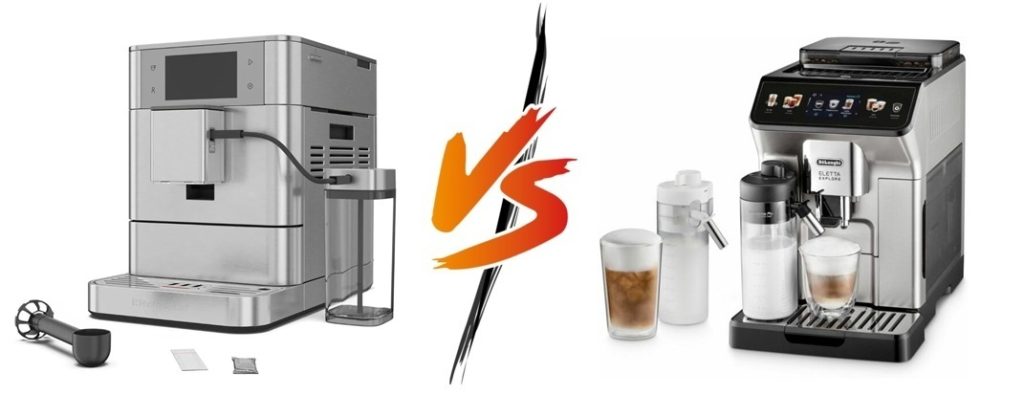
Buying a high-end bean-to-cup espresso machine is less about chasing café perfection and more about finding the right balance between convenience, control, and daily enjoyment. The KitchenAid KF8 and the De’Longhi Eletta Explore both sit firmly in that premium space, promising café-quality drinks at the touch of a button, but they approach that promise in noticeably different ways. One leans toward refined simplicity and build quality, while the other focuses on versatility, customization, and drink variety. On paper, they can look surprisingly similar: built-in grinders, automatic milk systems, touchscreens, and a wide range of drinks. In real-world use, though, their personalities start to diverge. This comparison is written from the perspective of someone actually living with these machines, not just reading spec sheets. The goal isn’t to crown a universal winner, but to help you understand which machine better fits your habits, preferences, and expectations from a premium home espresso setup.
KitchenAid KF8 vs De’Longhi Eletta Explore Comparison Chart
If you click the links below, under the product images, you will be redirected to Amazon.com. In case you then decide to buy anything, Amazon.com will pay me a commission. This doesn’t affect the honesty of this review in any way though.
| Specification | KitchenAid KF8 | De’Longhi Eletta Explore |
|---|---|---|
 |  | |
| Check the best price on Amazon | Check the best price on Amazon | |
| Machine Type | Fully automatic bean-to-cup espresso machine | Fully automatic bean-to-cup espresso machine |
| Grinder Type | Integrated steel burr grinder | Integrated conical steel burr grinder |
| Grinder Settings | Limited, optimized range | Multiple adjustable grind settings |
| Bean Hopper Capacity | Approx. 270 g | Approx. 300 g |
| Water Tank Capacity | Approx. 2.2 L | Approx. 1.8 L |
| Milk System | Automatic milk frothing system (hot only) | Automatic hot milk + separate cold milk foam system |
| Cold Brew / Cold Foam | No | Yes |
| Drink Presets | Core espresso and milk drinks | Extensive menu including iced and cold drinks |
| User Profiles | Yes (multiple profiles) | Yes (varies by region/model) |
| Display | Full-color touchscreen (approx. 5″) | Full-color touchscreen |
| App Connectivity | No | Yes (region-dependent) |
| Brew Group | Removable | Removable |
| Automatic Rinsing | Yes | Yes |
| Milk System Auto-Clean | Yes | Yes (for both hot & cold carafes) |
| Descaling Program | Guided, semi-automatic | Guided, fully enforced |
| Pump Pressure | 15 bar | 15 bar |
| Heating System | Thermoblock | Thermoblock |
| Power Consumption | Approx. 1450 W | Approx. 1450 W |
| Auto Shut-Off | Yes | Yes |
| Noise Level (Grinding) | Lower, smoother tone | Louder, sharper tone |
| Dimensions (WxHxD) | Large footprint | Large footprint |
| Weight | Heavier, more metal construction | Slightly lighter |
| Materials | Metal exterior with premium finish | High-quality plastic with metal accents |
| Target User | Simplicity-focused, consistency-driven users | Feature-driven, experimentation-oriented users |
| Typical Price Range | Higher | Slightly lower |
User Interface & Ease of Use
For a fully automatic espresso machine, the user interface matters almost as much as the coffee itself. These machines are designed to remove friction from the process of making espresso and milk drinks, so if the interface feels confusing, slow, or cluttered, it quickly undermines the whole point of spending this much money. Both the KitchenAid KF8 and the De’Longhi Eletta Explore rely heavily on touchscreens rather than physical buttons, but they take slightly different approaches to how much control they give you and how they guide you through everyday use.
KitchenAid KF8: Clean, Calm, and Approachable
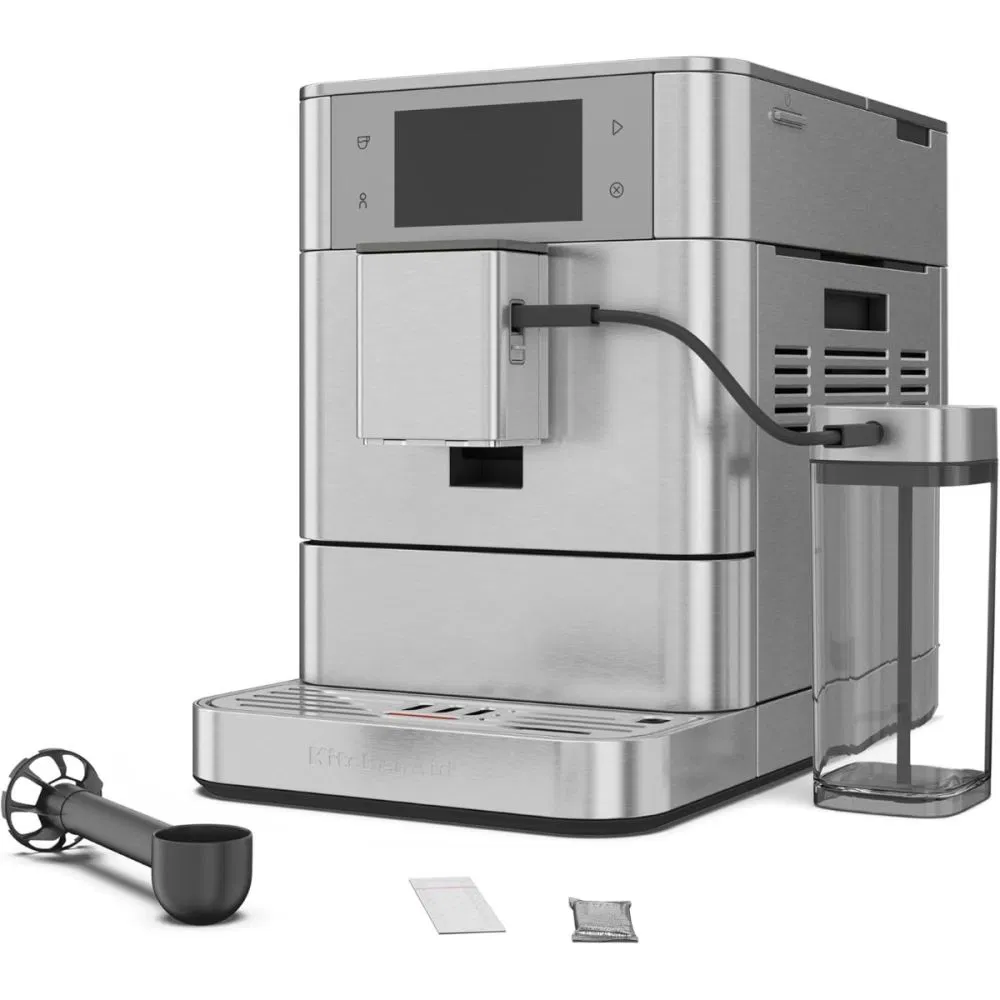
The KitchenAid KF8 uses a large, full-color touchscreen that feels deliberately restrained. From the moment you power it on, the interface is calm and uncluttered. Drink icons are large, clearly labeled, and spaced out enough that you never feel like you’re navigating a smartphone app that’s been crammed onto an appliance. This matters more than it sounds, especially early in the morning when you just want coffee, not a menu puzzle.
Setting up the machine for the first time is straightforward. The KF8 walks you through filling the water tank, adding beans, and running an initial rinse cycle with clear, plain-language prompts. Nothing is hidden behind multiple layers of menus, and there’s very little jargon. Even if you’ve never owned a bean-to-cup machine before, you can be making your first espresso within minutes.
Once you’re up and running, the main screen presents your drink options front and center. Espresso, coffee, cappuccino, latte, and a few variations are immediately accessible. Customization is there, but it’s optional rather than forced. You can adjust strength, volume, and milk levels with simple sliders, and the changes are clearly explained. You always know what you’re changing and why.
One of the KF8’s strongest usability features is its user profiles. You can create multiple profiles and save personalized drink settings for each one. Switching between profiles is fast and intuitive, which is especially useful in households where people have very different coffee preferences. There’s no digging through menus or reprogramming drinks every time someone else uses the machine.
Importantly, KitchenAid doesn’t overload the interface with features that most people won’t use. There’s no companion app, no Wi-Fi setup, and no phone pairing. For some buyers, that will feel like a missing feature. For others, it’s a relief. The machine does what it needs to do directly on the screen, without asking you to download anything or create an account.
Maintenance prompts are another area where the KF8 shines. When the machine needs cleaning, rinsing, or descaling, it tells you clearly and walks you through the process step by step. You’re never left guessing what to do next, and the instructions are written in plain language rather than cryptic symbols. This makes ongoing ownership feel manageable instead of intimidating.
That said, the KF8’s simplicity does come with limits. Advanced users may find the customization options a bit shallow. You can’t fine-tune brewing parameters to the same degree as some competitors, and if you enjoy tinkering with every variable, the interface may feel a little restrictive over time. KitchenAid has clearly prioritized ease and clarity over deep experimentation.
De’Longhi Eletta Explore: Feature-Rich and Highly Customizable
The De’Longhi Eletta Explore takes a more ambitious approach. Its touchscreen interface is also modern and responsive, but it packs in significantly more options. From the home screen alone, you’re presented with a wide range of drinks, including hot and cold options, specialty beverages, and customizable recipes. This is great if you like variety, but it can feel slightly overwhelming at first.
Initial setup on the Eletta Explore is still fairly smooth, but it takes longer than with the KF8. There are more prompts, more choices, and more explanations to read through. It’s not difficult, but it does require more attention. You get the sense that De’Longhi expects users to spend some time learning the machine rather than treating it as a purely plug-and-play appliance.
Once you’re familiar with the interface, its depth becomes a strength. You can adjust coffee strength, volume, temperature, grind behavior, and milk texture across many drinks. The machine also allows you to save custom recipes, which is ideal if you enjoy dialing in specific drinks for different moods or times of day. The touchscreen gives visual feedback for these changes, making it easier to understand how each adjustment affects the final cup.
One standout feature is the integration with De’Longhi’s app in supported regions. Through the app, you can access additional recipes, fine-tune settings, and use tools like Bean Adapt, which helps optimize extraction based on the beans you’re using. This adds a layer of control that the KF8 simply doesn’t offer. If you enjoy using your phone to manage smart devices, this can be a real advantage.
However, app integration also adds complexity. Firmware updates, connectivity issues, or app changes can occasionally disrupt the experience. Some users prefer everything to live on the machine itself, and if that’s you, the Eletta Explore’s reliance on optional digital features may feel like unnecessary overhead.
Day-to-day operation is generally smooth once you’re past the learning curve. Drink selection is quick, and the machine remembers your preferences well. That said, the sheer number of options means it’s easier to mis-tap or choose the wrong setting if you’re rushing. Compared to the KF8’s minimalism, the Eletta Explore sometimes feels like it’s trying to do everything at once.
Maintenance notifications are clear, but more frequent. Because the machine runs automatic milk cleaning cycles and offers both hot and cold milk systems, you’ll see prompts to rinse, clean, or empty trays more often. The interface explains these tasks well, but they do interrupt the flow more than on the KitchenAid.
Ease of Use in Real Life
Living with these machines highlights their philosophical differences. The KitchenAid KF8 is the kind of machine you stop thinking about after a week. You turn it on, pick a drink, and it does its job with minimal fuss. It feels designed for people who want excellent coffee without having to engage with the machine beyond the basics.
The De’Longhi Eletta Explore, by contrast, rewards engagement. The more time you spend exploring its menus and features, the more value you get from it. It’s ideal for users who enjoy variety, experimentation, and the idea of a coffee machine that adapts to different beans, seasons, and drink styles.
Neither approach is inherently better. If ease of use means speed, clarity, and low mental effort, the KF8 is hard to beat. If ease of use means having powerful tools that are logically organized and accessible once learned, the Eletta Explore makes a strong case.
Ultimately, this section may be where many buyers decide between the two. The KitchenAid KF8 prioritizes confidence and comfort. The De’Longhi Eletta Explore prioritizes flexibility and control. Knowing which of those matters more to you will make the choice much easier.
Coffee Quality & Brewing Performance
Coffee quality is ultimately the reason these machines exist. Design, screens, and features all fade into the background if the espresso in the cup doesn’t deliver. With both the KitchenAid KF8 and the De’Longhi Eletta Explore, expectations are high. They sit in a price range where “good enough” isn’t acceptable. The question isn’t whether they can make decent coffee, but how consistently they do it, how flexible they are with different beans, and how close they get to the kind of drinks people pay for in cafés every day.
KitchenAid KF8: Consistency and Balance First
The KitchenAid KF8 is clearly tuned for balance and reliability rather than experimentation. From the first few shots, what stands out is how even and predictable the results are. Espresso comes out hot, well extracted, and with a thick, stable crema that looks the part and holds up long enough to actually enjoy it rather than disappearing within seconds.
Flavor-wise, the KF8 tends to produce espresso that leans smooth rather than aggressive. Acidity is present but controlled, bitterness is kept in check, and the overall cup feels rounded. This works especially well with medium to dark roasts, which are likely what many people use in a fully automatic machine. Chocolate, nutty, and caramel notes come through clearly without much effort on your part.
With lighter roasts, the KF8 still performs well, but you can tell it’s operating within a narrower comfort zone. The machine can extract enough to avoid sourness, but it doesn’t quite bring out the brighter, more complex acidity that lighter roasts are known for. This isn’t a flaw so much as a design choice. KitchenAid has clearly prioritized consistency and accessibility over chasing the extremes of flavor.
Temperature stability is another strong point. Shots come out at a reliably hot temperature without tasting burnt. This matters more than many people realize, especially for milk drinks. A properly hot espresso holds its character better once milk is added, and the KF8 does a good job here. There’s no sense of the machine struggling to keep heat between drinks, even when making multiple coffees back to back.
The brewing process itself is quiet and smooth. Water flow feels controlled, and extraction times are consistent. You don’t get the sense that the machine is rushing or under-extracting to save time. For everyday use, this kind of predictability is comforting. You know what you’re getting each morning, and it rarely surprises you in a bad way.
Where the KF8 is slightly less impressive is in how much control it gives you over the brewing process. You can adjust strength and volume, but deeper parameters like pre-infusion behavior or pressure curves are not exposed to the user. For many people, this won’t matter. The machine’s default tuning is good enough that you don’t feel like you’re missing out unless you’re already very coffee-savvy.
De’Longhi Eletta Explore: Flexibility and Range
The De’Longhi Eletta Explore approaches brewing performance from a different angle. Instead of locking you into a carefully tuned default, it offers more room to shape the cup to your liking. Out of the box, espresso quality is solid but slightly less polished than the KF8. Shots can sometimes taste a touch lighter or less intense until you start adjusting settings.
Once dialed in, though, the Eletta Explore can produce excellent results. The ability to fine-tune strength, volume, and grind behavior allows you to push extraction further when needed. With darker roasts, you can get a bold, punchy espresso with plenty of body. With medium roasts, it’s easier to balance sweetness and acidity by tweaking settings rather than accepting a one-size-fits-all approach.
Lighter roasts are where the Eletta Explore shows its strengths. While fully automatic machines are rarely ideal for very light beans, the Eletta does a better job than most at extracting them without excessive sourness. It still won’t match a manual espresso setup, but it gets closer than expected. Brightness and fruit notes are more apparent, especially if you’re willing to experiment a bit.
Crema quality is good, though slightly less thick and stable than the KitchenAid’s in some cases. This can vary depending on bean freshness and grind settings. When everything is dialed in correctly, crema is attractive and persistent, but it’s less forgiving if your beans are past their prime or your settings are slightly off.
Temperature control on the Eletta Explore is generally reliable, but there can be more variation between drinks, especially when switching between hot and cold beverages. The machine is doing more behind the scenes, and that complexity can sometimes show. Still, for most home users, the differences are minor and rarely impact enjoyment in a meaningful way.
One standout feature is the Eletta Explore’s handling of cold drinks. Its cold brew and cold extraction options don’t just chill hot coffee. They use slower extraction and lower temperatures to create smoother, less acidic cold beverages. While this isn’t traditional espresso brewing, it expands what “coffee quality” means in a home context. If you enjoy iced lattes or cold brew-style drinks, this adds real value.
Milk Drinks and Espresso Integration
While milk frothing deserves its own section, it’s worth mentioning how espresso quality holds up once milk is added. The KF8’s espresso tends to maintain its presence in milk drinks. Cappuccinos and lattes still taste like coffee rather than just warm milk with a hint of bitterness. This speaks to the machine’s ability to produce a strong, well-balanced base shot.
The Eletta Explore’s espresso can sometimes get lost in milk if the strength isn’t adjusted upward. This is easy to fix, but it does require awareness. Once configured correctly, milk drinks are rich and flavorful, but the machine relies more on user input to get there.
Consistency Over Time
Long-term performance matters just as much as first impressions. Over weeks of use, the KF8 remains remarkably consistent. As long as you keep up with basic maintenance and use reasonably fresh beans, the quality of espresso doesn’t drift much. This makes it ideal for households where multiple people use the machine and expectations are high but patience for tweaking is low.
The Eletta Explore is also consistent, but in a different way. It stays consistent within a given set of parameters, but because it encourages experimentation, it’s easier to create variability. This can be a positive or a negative depending on your mindset. If you enjoy adjusting settings, it keeps things interesting. If you just want the same coffee every day, it may feel like more effort than necessary.
Overall Brewing Performance Verdict
In terms of pure coffee quality, both machines perform at a high level, but they prioritize different values. The KitchenAid KF8 delivers espresso that is smooth, balanced, and dependable with minimal input. It’s tuned to please a wide range of palates and excels at making coffee that simply tastes right without fuss.
The De’Longhi Eletta Explore offers a broader range of flavors and brewing styles, especially for users willing to engage with its settings. It rewards curiosity and experimentation and stands out for its ability to handle both hot and cold coffee well.
If your idea of great coffee is a consistently satisfying cup every morning, the KF8 feels like the safer, more relaxing choice. If your idea of great coffee involves tweaking, learning, and exploring different beans and styles, the Eletta Explore gives you more room to play.
Grinder Features & Performance
The grinder is one of the most important components in any bean-to-cup espresso machine, and it’s also one of the hardest things to get right. A great grinder needs to be consistent, reasonably quiet, and flexible enough to handle different beans without turning the process into a science experiment. Both the KitchenAid KF8 and the De’Longhi Eletta Explore use integrated burr grinders, but they differ in how much control they give you and how they behave in daily use.
KitchenAid KF8: Designed for Stability and Simplicity
The KitchenAid KF8’s grinder is clearly built around the idea of set-and-forget reliability. It uses a steel burr system designed to produce a consistent grind suited primarily for espresso and espresso-based drinks. KitchenAid doesn’t advertise extreme adjustability here, and that’s intentional. The grinder offers a limited range of grind settings compared to the De’Longhi, but the range it does offer is carefully tuned.
In practice, this means the KF8 rarely produces bad shots due to grind issues. Beans are ground evenly, without visible clumping or excessive fines, and dosing is consistent from shot to shot. For most users, this consistency is far more important than having a wide array of grind sizes they may never use.
One particularly thoughtful feature is the removable bean hopper. This makes it easier to switch between different beans without having to grind out a large amount of the previous batch. It also simplifies cleaning, which is often overlooked when discussing grinders. You can remove the hopper, vacuum out stray grounds, and put everything back together without feeling like you’re disassembling a piece of industrial equipment.
Noise levels are also well managed. While no built-in grinder is silent, the KF8’s grinding sound is relatively muted and smooth. It has a lower-pitched hum rather than a sharp, high-frequency whine. Early mornings are more bearable with this machine, especially in shared living spaces.
The grinder performs best with medium to dark roasts, which again reflects the machine’s overall design philosophy. These beans feed smoothly, grind evenly, and produce stable extraction. With lighter roasts, the grinder still functions well, but you may notice slightly longer grinding times and a bit more mechanical strain. This is typical for many integrated grinders and not a deal-breaker, but it reinforces the idea that the KF8 is optimized for mainstream espresso use rather than edge-case experimentation.
One limitation worth mentioning is the lack of fine micro-adjustments. If you’re someone who likes to adjust grind size by tiny increments to chase a specific flavor profile, the KF8 may feel restrictive. The steps between settings are noticeable, and while the default tuning is good, you don’t have infinite precision. For most households, this won’t matter. For coffee hobbyists, it might.
De’Longhi Eletta Explore: Control and Flexibility
The De’Longhi Eletta Explore takes a more enthusiast-friendly approach to grinding. It uses a conical burr grinder with multiple grind settings, giving you a wider range of adjustment. This allows the machine to adapt more easily to different bean types, roast levels, and drink styles.
In daily use, the Eletta’s grinder feels more responsive to changes. Adjusting the grind setting has a noticeable impact on extraction time and flavor, which is exactly what you want if you enjoy dialing things in. This makes it easier to compensate for beans that are too fresh, too old, or simply behave differently than expected.
Grind consistency is generally very good, especially for a built-in system. Grounds are fairly uniform, and while you may see some clumping at finer settings, it’s not excessive. The grinder handles lighter roasts better than the KF8’s, largely because the extra adjustability lets you find a sweet spot rather than forcing the machine to work outside its comfort zone.
Noise is slightly more pronounced than on the KitchenAid. The Eletta Explore’s grinder has a sharper sound profile, especially at finer settings, and it’s more noticeable in quiet kitchens. It’s not unpleasant, but it’s something you’ll be aware of. If noise sensitivity is a concern, this could factor into your decision.
The bean hopper on the Eletta Explore is not as easy to remove, and swapping beans takes more effort. You typically need to grind through the remaining beans or manually empty the hopper, which can be messy. For users who stick to one type of bean for long periods, this isn’t an issue. For those who like variety, it’s less convenient.
Grinding for Different Drinks
One area where the grinder differences really show is in how each machine handles a variety of drinks. The KF8 is optimized for espresso and milk drinks that rely on a stable, fine grind. It performs extremely well in this role, delivering consistent results without much thought. If your daily routine revolves around espresso, cappuccino, and latte, the grinder will rarely let you down.
The Eletta Explore’s grinder, by contrast, supports a wider range of drinks. Coarser settings work better for long coffees and cold extraction modes, while finer settings allow for more traditional espresso. This versatility aligns well with the machine’s broader drink menu and makes it feel more adaptable overall.
Long-Term Performance and Wear
Integrated grinders raise concerns about longevity, and both machines address this reasonably well. The KF8’s grinder feels robust and under less strain due to its narrower operating range. This could translate to longer life and more consistent performance over time, assuming regular cleaning and reasonable bean quality.
The Eletta Explore’s grinder works harder, especially when users experiment with lighter roasts and fine settings. This doesn’t mean it’s fragile, but it does mean maintenance becomes more important. Keeping the grinder clean and avoiding overly oily beans will help preserve performance.
Overall Grinder Verdict
The grinder comparison mirrors the broader personality of these two machines. The KitchenAid KF8’s grinder is about confidence, stability, and ease. It’s designed to produce good results with minimal input, and it succeeds at that goal. You give up some flexibility, but you gain predictability and a quieter, smoother experience.
The De’Longhi Eletta Explore’s grinder is about control and exploration. It gives you more tools to shape your coffee and adapts better to a wide range of beans and drinks. In exchange, it asks for more attention and tolerates less neglect.
If you want a grinder that quietly does its job and rarely needs adjustment, the KF8 will feel like a trustworthy companion. If you want a grinder that invites you to experiment and rewards curiosity, the Eletta Explore is the more engaging choice.
Milk Frothing & Specialty Drinks
For many people, milk drinks are the reason to buy a fully automatic espresso machine in the first place. Straight espresso is great, but the real daily staples tend to be cappuccinos, lattes, flat whites, and, increasingly, iced milk-based drinks. This is where differences between the KitchenAid KF8 and the De’Longhi Eletta Explore become very clear. Both machines handle milk automatically, but they approach frothing and specialty drinks with very different priorities.
KitchenAid KF8: Focused and Refined Milk Performance
The KitchenAid KF8 uses an integrated automatic milk system designed primarily for hot milk drinks. The setup is clean and straightforward. You connect the milk container, select your drink, and the machine handles steaming and frothing without requiring any manual intervention. This simplicity is one of the KF8’s strongest points.
In terms of milk quality, the KF8 does an excellent job. The foam it produces is smooth, fine-textured, and stable, especially for traditional drinks like cappuccinos and lattes. There’s very little of the large-bubble foam that can make milk feel dry or airy. Instead, the texture leans toward creamy and cohesive, which integrates well with espresso rather than sitting awkwardly on top.
Temperature control is another area where the KF8 performs well. Milk comes out hot without being scalded, which preserves sweetness and avoids that cooked milk taste that some automatic machines produce. This is especially noticeable with whole milk, where the natural sugars come through nicely.
Plant-based milks are also handled surprisingly well. Oat milk, almond milk, and soy milk can all be frothed with decent consistency. While results vary depending on the brand and formulation of the milk, the KF8 generally produces usable foam without collapsing too quickly. This makes it a good option for households where dairy-free drinks are the norm rather than the exception.
What the KF8 does not do is cold milk frothing or cold specialty drinks. There’s no cold foam option and no iced latte or cold brew program. If your idea of a specialty drink involves ice and chilled milk, you’ll need to improvise manually. For some users, this is a non-issue. For others, especially those who enjoy iced drinks year-round, it’s a noticeable limitation.
Another thing to note is the lack of granular control over milk texture. The KF8 is tuned to produce good foam for common drinks, but you can’t significantly adjust foam density beyond basic drink presets. If you want very dry foam or very flat steamed milk for something like a traditional flat white, you may find the results a little too standardized.
That said, what the KF8 does, it does reliably. Every cappuccino tastes like the last one, and there’s comfort in that. The machine doesn’t surprise you, and in daily use, that consistency often matters more than endless options.
De’Longhi Eletta Explore: Versatility and Drink Variety
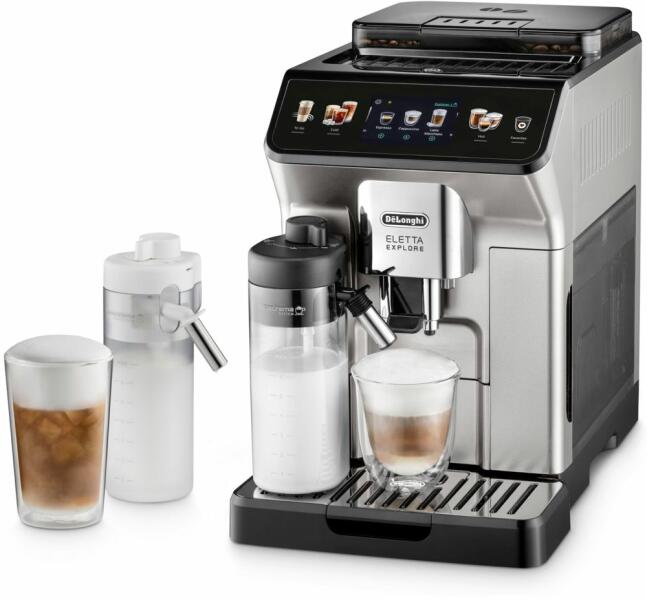
The De’Longhi Eletta Explore takes a far more expansive approach to milk and specialty drinks. It includes two separate milk carafes: one designed for hot milk foam and another for cold milk foam. This immediately sets it apart from the KitchenAid.
Hot milk performance on the Eletta Explore is very good. Foam texture is slightly airier than the KF8’s by default, but it’s still pleasant and well suited to cappuccinos and lattes. You have more control over milk settings, which allows you to tweak foam levels to better suit your preferences. With some adjustment, you can get results that are very close to café-style milk drinks.
Cold milk frothing is where the Eletta Explore really distinguishes itself. The cold milk system produces a surprisingly convincing cold foam that works well for iced lattes, iced cappuccinos, and other chilled drinks. The foam isn’t warm or melted by residual heat, and it holds its structure long enough to feel intentional rather than gimmicky.
In addition to milk frothing, the Eletta Explore offers a wide menu of specialty drinks. These include traditional options like flat whites and lattes, as well as modern favorites like iced coffee drinks and cold brew-style beverages. The cold brew function doesn’t replicate a 12-hour immersion brew, but it produces a smoother, lower-acidity coffee that works well over ice and integrates nicely with cold milk foam.
For households with varied tastes, this versatility is a major advantage. One person can make a hot cappuccino in the morning, another can prepare an iced latte in the afternoon, and the machine handles both without requiring additional tools or accessories.
The downside to this flexibility is complexity. Managing two milk carafes means more parts to clean and store. Switching between hot and cold milk systems takes a bit of planning, and if you forget which carafe is attached, the machine won’t always stop you from making a less-than-ideal choice. It’s not difficult, but it’s more involved than the KF8’s single-system approach.
Cleaning and Daily Practicality
Milk systems live or die by how easy they are to clean. The KitchenAid KF8 keeps things simple. After making a milk drink, the machine prompts you to run a quick cleaning cycle through the milk system. The process is easy to follow and doesn’t take long. Because there’s only one milk pathway, there’s less to go wrong.
The De’Longhi Eletta Explore also offers automatic cleaning cycles for its milk systems, but because there are two separate carafes, you’ll be cleaning more often. The upside is that many parts are dishwasher safe, which helps offset the extra work. Still, if you’re making multiple milk drinks every day, you’ll notice the added maintenance compared to the KF8.
Real-World Use and Preferences
In everyday use, the difference comes down to lifestyle. The KitchenAid KF8 is ideal for someone who drinks hot milk-based coffee regularly and wants it to be effortless. You press a button, get a well-made drink, and move on with your day. There’s very little thinking involved.
The De’Longhi Eletta Explore is better suited to someone who sees coffee as a flexible ritual. You might want a hot latte one day and a cold foam iced coffee the next. You might enjoy experimenting with different drink styles or entertaining guests with a wide menu of options. For that kind of user, the Eletta Explore feels more exciting.
Overall Milk and Specialty Drink Verdict
The KitchenAid KF8 delivers excellent hot milk drinks with minimal fuss. Its foam quality is refined, consistent, and well matched to its espresso. What it lacks in variety, it makes up for in reliability and ease.
The De’Longhi Eletta Explore offers unmatched versatility in this comparison. Cold milk foam, iced drinks, and an expansive specialty menu make it feel like a café in a box. That versatility comes with added complexity, but for many users, the trade-off is worth it.
If milk drinks are central to your coffee routine and you value simplicity, the KF8 is a strong choice. If you want your machine to handle almost any milk-based drink you can think of, hot or cold, the Eletta Explore clearly leads the way.
Maintenance & Cleaning
Maintenance is the unglamorous side of owning a fully automatic espresso machine, but it’s also one of the most important. No matter how good a machine is out of the box, poor cleaning routines or frustrating maintenance requirements can quickly turn daily coffee into a chore. The KitchenAid KF8 and the De’Longhi Eletta Explore both aim to simplify upkeep, but they do so in different ways, and the long-term ownership experience reflects those choices.
KitchenAid KF8: Guided, Minimal, and Predictable
The KitchenAid KF8 approaches maintenance with the same philosophy it applies to most of its design: keep things clear, guided, and as unobtrusive as possible. From day one, the machine communicates maintenance needs directly through its touchscreen. When it needs attention, it tells you plainly what to do and when to do it.
Daily maintenance is light. The machine automatically rinses internal components during startup and shutdown, which helps prevent coffee oils from building up in the brew group. The drip tray and used grounds container are easy to access from the front, and both are quick to remove and empty. The machine doesn’t nag you constantly, but it does keep track of usage well enough to avoid surprises.
The brew group itself is removable, which is a big plus. Being able to take it out, rinse it under warm water, and let it air dry adds a layer of reassurance that fully sealed systems don’t offer. You can visually inspect it, clean away residue, and feel confident that you’re preventing long-term buildup. KitchenAid recommends a regular rinse rather than constant deep cleaning, which feels realistic for everyday users.
Milk system cleaning is straightforward. After making a milk-based drink, the KF8 prompts you to run a short cleaning cycle. This flushes hot water through the milk circuit to remove residue before it has a chance to dry and stick. The process is quick and doesn’t require disassembly. Over time, this routine becomes second nature and rarely feels intrusive.
Descaling is where many machines become annoying, but the KF8 handles it reasonably well. The touchscreen walks you through each step, including filling the water tank with descaling solution, placing a container, and confirming progress. The process takes time, but it’s not complicated, and the machine makes sure you don’t skip steps. The frequency depends on water hardness, which you can usually configure during setup.
One limitation is that some cleaning steps still require manual involvement rather than being fully automated. You need to be present to empty trays, refill water, and confirm prompts. That’s not unusual, but it’s worth noting that the KF8 doesn’t aim for a completely hands-off experience. Instead, it focuses on making manual steps as painless as possible.
Overall, the KF8’s maintenance routine feels balanced. It respects your time while still encouraging good habits. As long as you follow the prompts, the machine rewards you with stable performance and minimal long-term issues.
De’Longhi Eletta Explore: Thorough and Automated, but More Demanding
The De’Longhi Eletta Explore takes a more aggressive approach to maintenance. It automates more cleaning tasks, especially around milk systems, but in doing so, it also asks for more frequent attention from the user. This is the trade-off that comes with greater complexity.
Like the KF8, the Eletta Explore performs automatic rinses during startup and shutdown. These cycles are slightly longer and more frequent, which helps keep internal components clean but also uses more water. You’ll notice that the drip tray fills up faster, and emptying it becomes part of the regular routine.
The brew group is also removable, which is a strong point. De’Longhi has a long history with automatic machines, and the brew group design is familiar and user-friendly. Removing it for cleaning is simple, and the machine reminds you when it’s time to do so. Regular rinsing under warm water is usually sufficient, and deeper cleaning is rarely required if you stay consistent.
Milk system cleaning is where the Eletta Explore really leans into automation. Both the hot and cold milk carafes have built-in cleaning programs that flush the internal pathways after use. This is excellent from a hygiene perspective, especially if you make milk drinks often. It significantly reduces the risk of milk residue lingering inside the system.
However, having two milk carafes means double the components. You’ll be cleaning more parts, more often. While many of these parts are dishwasher safe, it still adds time and mental overhead. If you’re making multiple milk drinks every day, the cleaning prompts can start to feel frequent.
Descaling on the Eletta Explore is thorough but time-consuming. The machine monitors water usage closely and will lock out brewing if descaling is overdue. While this ensures longevity, it can be frustrating if you’re in a hurry. The descaling process itself is well guided, but it takes longer than on simpler machines due to the number of internal pathways being flushed.
Long-Term Maintenance Considerations
Over months and years, maintenance routines matter as much as features. The KF8’s simpler system means fewer parts to wear out and fewer cleaning steps to forget. This can translate to better long-term reliability for users who prefer minimal intervention.
The Eletta Explore’s complexity offers excellent cleanliness and hygiene, especially for milk systems, but it demands consistency. Skipping cleaning cycles or ignoring prompts can lead to faster buildup and potential issues. The machine assumes a certain level of user engagement, and if you meet that expectation, it performs well.
Water Management and Waste
Both machines generate wastewater during cleaning cycles, but the Eletta Explore produces more overall. This isn’t necessarily wasteful in a negative sense, but it does mean you’ll be emptying trays and refilling tanks more often. The KF8 feels slightly more restrained in this regard, which can be appealing in daily use.
Overall Maintenance Verdict
The KitchenAid KF8 offers a maintenance experience that feels manageable and respectful of your time. It guides you clearly, avoids unnecessary complexity, and keeps manual tasks simple and predictable.
The De’Longhi Eletta Explore prioritizes thoroughness and automation, especially for milk systems, but asks more in return. Cleaning is more frequent, more involved, and more demanding, but it also delivers a higher level of hygiene and flexibility.
If you value a low-friction ownership experience, the KF8 will likely feel easier to live with. If you’re comfortable with regular cleaning in exchange for advanced features and drink variety, the Eletta Explore remains a strong option.
Energy Efficiency & Noise Levels
Energy use and noise aren’t usually the first things people think about when buying a premium espresso machine, but they quickly become part of everyday life once the machine is sitting on your counter. A coffee machine that takes too long to heat up, wastes power while idle, or sounds like a power tool at six in the morning can quietly wear down the experience over time. The KitchenAid KF8 and the De’Longhi Eletta Explore both aim to balance performance with practicality, but they handle efficiency and noise in slightly different ways.
KitchenAid KF8: Quiet Confidence and Sensible Power Use
The KitchenAid KF8 feels thoughtfully tuned for daily home use. From an energy standpoint, one of its biggest strengths is how quickly it reaches operating temperature. The machine heats up efficiently, which means it’s not drawing maximum power for long periods before you can make a drink. This is especially noticeable if you tend to make coffee in short bursts rather than leaving the machine on all day.
Once warmed up, the KF8 manages power sensibly. It doesn’t feel like it’s constantly reheating or cycling aggressively to maintain temperature. This helps keep overall energy consumption lower and contributes to the machine’s calm, steady behavior. There’s also an automatic standby or sleep mode that activates after a period of inactivity, reducing unnecessary power draw if you forget to turn it off manually.
In real-world terms, this means the KF8 fits well into a typical household routine. You can turn it on, make a coffee or two, and let it shut itself down without worrying that it’s quietly burning electricity in the background. Over months and years, that kind of efficiency adds up, even if the individual savings aren’t dramatic.
Noise is another area where the KF8 excels. No fully automatic machine with an integrated grinder is silent, but the KF8 is one of the quieter options in its class. The grinder produces a low, smooth hum rather than a harsh, high-pitched whine. It’s noticeable, but not jarring. In a quiet kitchen, it won’t startle anyone awake, and in a busy household, it blends into the background.
During brewing, the KF8 is even quieter. The sound of water pumping through the system is subdued, and there’s very little rattling or vibration. The machine feels mechanically composed, which reinforces the sense that it’s well built and carefully engineered. Even the automatic rinsing cycles are relatively unobtrusive.
Milk frothing adds a bit more noise, as expected, but again, it’s controlled. There’s no sudden burst of sound, just a steady operation that feels predictable. If you live in an apartment or share a space with light sleepers, this kind of noise profile matters more than you might expect.
De’Longhi Eletta Explore: More Power, More Activity
The De’Longhi Eletta Explore is a more ambitious machine, and that ambition shows in how it uses energy and how much sound it produces. It has more systems running, more cleaning cycles, and more drink modes, and all of that requires power.
Heat-up time on the Eletta Explore is still reasonable, but it’s slightly longer than the KF8. The machine does more checks and preparatory steps before it’s ready to brew, which adds a bit of delay. This isn’t a deal-breaker, but if you’re used to very fast startup, you’ll notice the difference.
Once running, the Eletta Explore is more active. It cycles more frequently to maintain temperature and performs automatic rinses more often. This contributes to higher overall energy use, though it also supports better hygiene and consistency across its wide range of drinks. There’s an automatic power-off feature as well, but because the machine encourages frequent interaction and cleaning, it can feel like it’s working more often.
Noise levels reflect this increased activity. The grinder on the Eletta Explore is louder and sharper than the KF8’s. It’s not excessive, but it’s more noticeable, especially early in the morning. The sound has a higher pitch, which tends to travel further through walls and doors.
Brewing noise is moderate, with more audible pump action and internal movement. When making milk drinks, especially cold milk foam, the machine can sound quite busy. There are more mechanical steps happening, and you can hear them. This isn’t necessarily a problem, but it does make the Eletta Explore feel more like a complex appliance rather than a quietly confident one.
Standby, Sleep, and Everyday Efficiency
Both machines include automatic standby modes, but they feel different in practice. The KF8 fades into the background when not in use. You don’t hear it clicking, cycling, or flushing unexpectedly. It simply goes to sleep and stays there until you wake it.
The Eletta Explore, by contrast, feels more proactive. It’s more likely to run short cleaning or rinsing cycles when powered on, and these actions use both energy and water. From a maintenance standpoint, this is a positive, but from an efficiency and noise perspective, it can feel a bit intrusive.
Real-World Living Considerations
In a quiet household, especially one with early risers or sleeping children, the KF8’s calmer noise profile is a genuine advantage. You can make coffee without feeling like you’re announcing it to the entire home. In open-plan spaces, this matters less, but it’s still noticeable.
The Eletta Explore fits better in environments where noise isn’t a major concern, or where the machine is used more socially. If coffee-making is part of a lively kitchen routine rather than a quiet ritual, the added sound fades into the background.
Overall Energy and Noise Verdict
The KitchenAid KF8 is the more restrained, efficient, and quieter machine. It uses power sensibly, heats up quickly, and operates with a smooth, low-noise profile that suits daily home use.
The De’Longhi Eletta Explore consumes more energy and produces more sound, but this is the cost of its versatility and automation. It’s busier, louder, and slightly less efficient, but it also does more.
If energy efficiency and low noise are high priorities, the KF8 is the more comfortable long-term companion. If you’re willing to accept higher activity and sound levels in exchange for broader capabilities, the Eletta Explore remains a compelling choice.
Conclusion
Choosing between the KitchenAid KF8 and the De’Longhi Eletta Explore isn’t about which machine is objectively “better,” because both deliver high-quality coffee and justify their premium price in different ways. The real decision comes down to how you want coffee to fit into your daily life.
The KitchenAid KF8 feels like a machine designed for people who value calm consistency. It focuses on doing a smaller number of things very well. Espresso quality is reliable and balanced, milk frothing is refined for hot drinks, the interface is clear, and maintenance stays manageable. Over time, it becomes a background appliance in the best possible sense. You stop thinking about settings, cleaning schedules, or noise levels and simply enjoy your coffee. For households that drink mostly espresso, cappuccinos, and lattes, and want the process to be smooth and predictable, the KF8 makes a lot of sense.
The De’Longhi Eletta Explore, on the other hand, is built for variety and exploration. It offers a much wider drink menu, including cold foam and cold brew-style options, deeper customization, and more control over how coffee is extracted. That flexibility comes with added complexity. It requires more engagement, more cleaning, and a bit more patience, but it rewards users who enjoy experimenting and tailoring drinks to their preferences.
In practical terms, the KF8 is better suited to people who want great coffee with minimal involvement, while the Eletta Explore is ideal for those who see their espresso machine as a hobby as well as a convenience. Neither choice is a compromise; they simply serve different personalities. Understanding which experience you want is the key to making the right decision.