
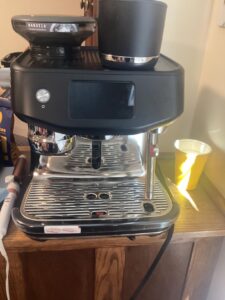
The Breville Oracle Jet sits in a strange but interesting place in the espresso machine world. It’s not fully automatic, but it’s also far from traditional. It tries to bridge the gap between hands-on espresso making and push-button convenience.
After spending time with it, I can say this: it’s one of the most impressive home machines I’ve used, but also one of the most opinionated. It does a lot for you, sometimes brilliantly, and sometimes in ways that might frustrate you if you like control.
Let’s break it down properly.
If you click the button above you will be redirected to Amazon.com. In case you then decide to buy anything, Amazon.com will pay me a commission. This doesn’t affect the honesty of this review in any way though.
Table of Contents
Design & Build Quality
The Breville Oracle Jet makes a strong first impression, and that impression holds up over time. This is not one of those machines that looks good in photos but feels underwhelming in person. From the moment you lift it out of the box, it’s clear that Breville intended this to sit at the higher end of the home espresso market, both in terms of aesthetics and physical construction.
The overall design leans heavily into a professional, almost commercial look. It has a brushed stainless steel exterior that reflects light just enough to feel polished without becoming flashy. It doesn’t try to mimic a café machine outright, but it borrows enough cues to feel serious. The finish is consistent across the body, with clean lines and minimal visible seams. Nothing about it looks cheap or rushed.
At the same time, it doesn’t feel overly industrial. There’s still a sense that this is designed for a home kitchen. The edges are softened, the corners are slightly rounded, and the interface is modern rather than mechanical. It strikes a balance between “pro-grade” and “approachable,” which is not easy to pull off.
Size is one of the first practical considerations. The Oracle Jet is large. It takes up a noticeable amount of counter space, both in width and depth, and it stands tall enough that it may not fit comfortably under all cabinets. If you’re used to compact espresso machines or pod systems, this will feel like a major step up in footprint. You need to plan for it, not just squeeze it into whatever space you have.
That said, the size is not wasted. The machine uses its footprint well. Everything has a place, and nothing feels cramped. The spacing between the grinder, group head, and steam wand is generous enough that you’re not constantly bumping into parts while working. That’s something you only really appreciate after making several drinks in a row.
One thoughtful touch is the inclusion of small built-in wheels on the base. They’re subtle and easy to miss at first, but they make a big difference. Moving a machine of this size and weight would normally be a hassle, especially on a crowded countertop. With the wheels, you can shift it forward to refill the water tank or clean behind it without lifting the entire unit. It’s a small design decision that shows real attention to how people actually use these machines at home.
Weight also plays a role in how the machine feels day to day. It’s heavy enough to stay firmly in place while you’re locking in the portafilter, which is important. With lighter machines, you often have to brace them with one hand while turning the portafilter with the other. That’s not the case here. The Oracle Jet stays put, which makes the whole process feel smoother and more stable.
The portafilter itself is another highlight. It’s a standard 58mm size, which is what you’d find in many commercial setups. That matters more than it might seem. A lot of home machines use smaller portafilters, which can limit your options and slightly affect extraction quality. Here, you’re working with something that feels substantial in the hand. The handle has a good weight to it, and the metal basket locks in with a reassuring firmness.
Moving up to the front of the machine, the group head area is well designed and easy to access. There’s enough clearance to comfortably insert and remove the portafilter without awkward angles. The drip tray below is wide and deep, designed to catch spills and accommodate different cup sizes. It slides out smoothly for cleaning, though it does fill up fairly quickly if you’re making multiple drinks or rinsing often.
The water reservoir is another area where the design shows practical thinking. Instead of requiring you to remove it from the back, it’s designed to be filled from the front. This might not sound like a big deal, but in daily use, it saves time and effort. You don’t have to pull the machine away from the wall or reach around it. You can simply open the top and pour water in. For a machine that encourages frequent use, that convenience adds up.
Material quality across the machine is generally very good. The stainless steel panels feel durable and resistant to fingerprints, at least compared to more polished finishes. The plastic components, where used, don’t feel flimsy. They’re solid and well-fitted, without creaking or flexing under pressure. This includes parts like the bean hopper, drip tray housing, and internal compartments.
That said, not every element feels equally premium. Some of the smaller components, particularly around the grinder and internal mechanisms, lean more toward function than form. They work well, but they don’t have the same refined feel as the exterior panels. This isn’t unusual in machines with built-in grinders, but it’s noticeable if you’re paying close attention.
The bean hopper itself is large enough to hold a decent amount of coffee, and it locks securely into place. The lid seals well, helping to keep beans fresh for longer. However, the grinder area can get a bit messy during use. Grounds tend to scatter slightly during the grinding and dosing process, which means you’ll likely find yourself wiping down that section more often than you might expect. It doesn’t feel like a flaw in build quality so much as a side effect of the machine’s design choices.
The steam wand is sturdy and well-mounted, with a good range of motion. It doesn’t feel loose or overly stiff. You can position it easily, and it stays where you put it. This is important whether you’re using the automatic milk frothing system or steaming manually. The wand’s finish matches the rest of the machine, which helps maintain a cohesive look.
Another design element worth mentioning is the cup clearance. The machine accommodates a range of cup sizes, from small espresso cups to taller mugs. There’s enough vertical space to avoid constant adjustments, though if you’re using very small cups, you may want to use a riser or keep a closer eye on splashing.
Visually, the machine integrates well into most modern kitchens. The stainless steel finish pairs nicely with other appliances, and the overall design avoids anything too trendy or likely to date quickly. It feels like something you could keep on your counter for years without it looking out of place.
Durability is harder to judge without years of use, but the initial impression is positive. The materials, weight, and assembly all suggest that this is built to last. There are no obvious weak points or poorly fitted parts. Everything lines up properly, and the machine feels cohesive rather than assembled from mismatched components.
In everyday use, the design choices start to make more sense. The size, the weight, the layout, and the small conveniences all contribute to a smoother workflow. You’re not fighting the machine. You’re working with it. Even when it gets a bit messy or requires cleaning, the underlying structure feels solid and dependable.
If there’s a downside, it’s that the machine demands space and attention. This is not something you tuck away in a corner and forget about. It becomes a focal point in your kitchen, both visually and functionally. For some people, that’s exactly what they want. For others, it might feel like too much.
Overall, the Design & Build Quality of the Breville Oracle Jet is one of its strongest aspects. It combines a premium look with practical features and a solid, durable feel. While there are a few minor compromises in certain components, the overall package feels thoughtfully designed and built to handle regular, long-term use.
User Interface & Ease of Use
The user interface is where the Breville Oracle Jet really tries to set itself apart. Plenty of espresso machines focus on build quality or raw performance, but this one leans heavily into how you interact with it day to day. It’s designed to make espresso feel less technical without removing the sense that you’re still making something real.
At the center of everything is the touchscreen. It’s about five inches, bright, and responsive in a way that feels closer to a modern smartphone than a typical appliance display. That alone changes the experience. Instead of turning dials or memorizing button combinations, you’re tapping through menus that are clearly labeled and easy to follow.
The layout is straightforward. When you turn the machine on, you’re greeted with a home screen that shows drink options, settings, and guidance tools. The icons are large enough to tap without precision, and the text is readable from a comfortable distance. There’s no need to lean in or squint, which is a small but meaningful detail if you’re using this first thing in the morning.
One thing that stands out quickly is how guided the experience is. The machine doesn’t just give you options. It actively walks you through the process of making coffee. If you select an espresso, for example, it will guide you through grinding, tamping, and extraction step by step. This makes a big difference for people who are new to espresso and might otherwise feel overwhelmed.
There’s a built-in system often referred to as barista guidance. In practice, this means the machine gives you feedback as you go. It might suggest adjusting the grind size, changing the dose, or paying attention to extraction time. It’s not overly technical in how it communicates. It uses simple language and visual cues, which makes the information easier to act on.
For beginners, this is one of the most valuable aspects of the machine. Espresso can be intimidating. There are a lot of variables, and small changes can affect the result. The Oracle Jet reduces that complexity by offering suggestions in real time. It doesn’t expect you to already know what you’re doing.
At the same time, the interface doesn’t feel dumbed down. You can still access more detailed settings if you want to. There are options for adjusting shot volume, temperature, milk texture, and more. The difference is that these settings are layered beneath the main interface, so they don’t get in the way unless you go looking for them.
Switching between modes is smooth. You can move from making a simple espresso to a more complex milk drink without navigating through confusing menus. Everything is organized in a way that feels logical. After a few uses, you start to build muscle memory for where things are, which makes the process even faster.
The drink menu itself is quite extensive. You’re not limited to just espresso and a couple of milk drinks. There are presets for lattes, cappuccinos, americanos, and even cold drinks. Each option is clearly labeled, and selecting one brings up any additional choices you might need to make, like milk type or strength.
Customization is another strong point. You can adjust drinks to match your preferences and save those settings for later. If you like your latte a bit hotter or with less foam, you can set it once and not think about it again. This makes the machine feel more personal over time, rather than something you have to reconfigure every morning.
The automatic workflow is where ease of use really becomes obvious. Once you start a drink, the machine takes care of most of the steps. It grinds the beans, tamps the coffee, pulls the shot, and can even handle milk frothing. You’re not juggling multiple tasks at once. Instead, you’re overseeing the process.
That said, there’s still enough involvement to make it feel like you’re part of the process. You’re placing the portafilter, positioning the milk pitcher, and making small decisions along the way. It doesn’t feel like pressing a single button and walking away. It’s more like assisted coffee making.
For people who want a balance between manual and automatic, this works well. You get consistency and convenience without completely losing the hands-on aspect.
However, this guided approach can also feel limiting if you’re more experienced. The machine has a tendency to steer you toward its idea of the “correct” way to make espresso. If you try to experiment outside of that, you might find the interface pushing back slightly, either through suggestions or by making certain adjustments less accessible.
It’s not that you can’t customize things. You can. But it sometimes feels like you’re working around the system rather than fully controlling it. For someone who enjoys dialing in every variable manually, this can be a bit frustrating.
Another aspect of ease of use is how quickly you can go from turning the machine on to actually making coffee. The Oracle Jet performs well here. The heat-up time is fast, and the interface is ready almost immediately. You’re not waiting around for menus to load or systems to initialize.
Daily use becomes very predictable. You turn it on, select your drink, follow a few prompts, and you’re done. There’s very little friction in the process. That consistency is part of what makes the machine appealing for regular use.
The interface also includes maintenance reminders and cleaning prompts. These are integrated in a way that feels helpful rather than intrusive. Instead of leaving you to guess when to clean or descale the machine, it gives you clear notifications and instructions. This reduces the chance of neglecting maintenance, which can affect performance over time.
From a usability standpoint, this is a smart inclusion. It lowers the barrier to proper care, especially for people who might not be familiar with espresso machine upkeep.
One thing worth mentioning is the reliance on software. Because so much of the experience is tied to the touchscreen and internal systems, any glitches or updates can have an impact. While the interface is generally stable and responsive, there have been reports of firmware updates affecting certain features.
This doesn’t happen often, but it’s something to be aware of. With more traditional machines, the controls are mechanical and unlikely to change. Here, the software plays a bigger role, which introduces a different kind of dependency.
In terms of accessibility, the interface is well designed for a wide range of users. You don’t need prior experience with espresso machines to get started. The learning curve is relatively gentle, and the guidance helps you improve over time.
At the same time, it doesn’t completely lock out more advanced users. You can still explore settings and make adjustments, even if the machine nudges you in certain directions.
The overall experience feels polished. The transitions between screens are smooth, the touch response is accurate, and the visual design is clean without being overly stylized. It feels like a modern appliance, not something stuck in an older design philosophy.
In everyday use, the biggest benefit is how much mental effort it removes. You don’t have to remember ratios, timing, or specific steps. The machine handles that for you or reminds you when needed. This makes it easier to enjoy the process without constantly thinking about it.
At the same time, it introduces a slightly different kind of relationship with coffee making. You’re relying more on the machine’s logic and less on your own intuition. For some people, that’s a welcome trade-off. For others, it might feel like a step away from the craft.
Overall, the User Interface & Ease of Use is one of the Oracle Jet’s defining features. It’s approachable without being simplistic, guided without being completely restrictive, and modern without feeling complicated. It won’t satisfy everyone, especially those who want full manual control, but for a large number of users, it strikes a very effective balance between convenience and involvement.
Coffee Quality & Brewing Performance
At the end of the day, none of the features matter if the coffee isn’t good. That’s the baseline. A machine at this level needs to produce consistently strong espresso, not just occasionally, but as part of a daily routine. The Breville Oracle Jet largely delivers on that expectation, though it does so in a way that reflects its hybrid, semi-automated nature.
Starting with espresso, the overall quality is genuinely impressive. Shots tend to come out balanced, with a solid body and a clean finish. There’s a noticeable level of clarity in the flavor, especially when the machine is dialed in properly. You can taste distinct notes in the beans rather than just getting a generic “strong coffee” profile. That alone puts it above many entry-level or fully automatic machines.
Crema is another area where the machine performs well. You get a consistent layer on top of the espresso, with a texture that leans toward smooth and slightly dense rather than thin or overly bubbly. It’s not quite at the level of a high-end commercial setup, but it’s close enough that most people will be more than satisfied. Visually and texturally, the shots feel like proper espresso.
A big factor behind this consistency is the machine’s heating system. The Oracle Jet uses a fast-heating system that gets up to temperature quickly and maintains it reasonably well during extraction. In practical terms, that means you don’t have to wait long to start brewing, and you’re less likely to see temperature-related inconsistencies from one shot to the next.
Temperature stability is often one of the harder things for home machines to manage, especially ones that try to do multiple tasks. Here, the Oracle Jet does a solid job. Shots don’t swing wildly in temperature, which helps keep the flavor profile more predictable. You won’t get that occasional sour or overly bitter shot that comes purely from temperature fluctuation.
Extraction itself is largely automated, but not completely out of your control. The machine handles the timing and pressure, but you still influence the outcome through grind size, dose, and bean selection. This creates an interesting middle ground. You’re not manually controlling every variable, but you’re also not completely removed from the process.
When everything lines up, the results are excellent. Espresso comes out with good balance between acidity, sweetness, and bitterness. Medium roasts, in particular, tend to shine. You get enough complexity to appreciate the beans without needing to fight the machine to get there.
Darker roasts are also handled well. The machine brings out their richness and body, producing shots that feel full and slightly heavier. If you prefer classic, bold espresso flavors, you’ll likely be very happy with the results.
Where things get a bit more nuanced is with lighter roasts. These require more precise control over extraction to really shine, and this is where the Oracle Jet’s semi-automated approach can feel limiting. While it can produce good results, it doesn’t always extract the full range of flavors that lighter beans have to offer.
This isn’t a failure, exactly. It’s more a reflection of the machine’s design priorities. It’s optimized for consistency and ease of use, not for pushing the limits of every type of bean. If you primarily use medium or dark roasts, you may never notice this limitation. If you’re deeply into specialty light roasts, you might.
Shot consistency is generally good, but not perfect. Over multiple uses, you’ll notice that most shots fall within a fairly tight range in terms of volume and extraction time. However, there can be occasional variations. One shot might run slightly longer or produce a bit more liquid than the previous one, even if you haven’t changed anything.
These inconsistencies aren’t extreme, but they’re noticeable if you’re paying attention. For many users, they won’t matter. The coffee will still taste good. But if you’re the kind of person who measures every shot and expects near-identical results, this might stand out.
Part of this comes from the automated dosing and tamping system. While it’s designed to be consistent, it doesn’t always match the precision of a skilled human using separate tools. Small variations in dose or tamp pressure can affect extraction, and those differences can show up in the final shot.
Pressure during extraction feels well managed. The machine builds pressure smoothly and maintains it through the shot. You don’t get sudden spikes or drops that would disrupt the flow. The result is a steady stream of espresso that looks and feels controlled.
The flow rate is another indicator of performance. When things are dialed in, the espresso flows evenly, with a texture that starts thick and gradually thins out toward the end of the shot. This is what you want to see, and the Oracle Jet is capable of producing it consistently once you’ve found the right settings.
Beyond standard espresso, the machine offers a range of brewing options that add to its versatility. One of the more interesting features is its ability to produce cold espresso and quick cold brew-style drinks. These aren’t just gimmicks. They actually produce drinkable, enjoyable results.
The cold espresso, in particular, retains a surprising amount of flavor. It’s not just hot espresso poured over ice. The machine adjusts the process to preserve more of the coffee’s character, resulting in a smoother, less diluted drink. For people who enjoy iced coffee, this is a meaningful addition.
The quick cold brew option is also worth mentioning. Traditional cold brew takes hours, but the Oracle Jet compresses that process into a much shorter time. The result isn’t identical to a long-steeped cold brew, but it’s close enough to be a convenient alternative. It has a smoother, less acidic profile compared to regular iced coffee.
Americano-style drinks are straightforward and well executed. The machine adds hot water to espresso in a controlled way, producing a balanced cup that doesn’t feel watered down. This is a simple feature, but one that’s easy to get wrong if the ratios aren’t handled properly.
One limitation that affects overall brewing performance is the inability to brew and steam at the same time. Because the machine uses a single heating system, it has to switch between brewing and steaming modes. In practice, this means you pull your shot first, then steam your milk.
For a single drink, this isn’t a big deal. The transition is quick enough that it doesn’t feel like a major delay. But if you’re making multiple drinks, especially milk-based ones, it can slow you down. It also slightly interrupts the workflow compared to machines that can handle both tasks simultaneously.
Despite this, the machine remains fast overall. The quick heat-up time and automated processes keep things moving. You’re not waiting long between steps, and you can produce drinks in a relatively short amount of time.
Another aspect worth mentioning is how forgiving the machine is. Because it handles so much of the process, it reduces the chances of completely ruining a shot. Even if your grind or dose isn’t perfect, the machine often compensates enough to produce a decent result.
This makes it a good option for people who don’t want to obsess over every detail. You can get consistently good coffee without needing to fine-tune every variable. At the same time, it might frustrate those who want to push beyond “good” into “exceptional.”
In daily use, the brewing performance feels reliable. You develop a sense of what to expect, and the machine delivers within that range most of the time. It’s not about chasing the perfect shot every single time. It’s about getting a very good shot, consistently, with minimal effort.
Overall, the Coffee Quality & Brewing Performance of the Breville Oracle Jet is strong, especially when viewed through the lens of its intended purpose. It produces flavorful, well-balanced espresso with a level of consistency that will satisfy most users. It may not reach the absolute peak of what’s possible with more manual, high-end setups, but it comes close enough while being far easier to use.
Grinder Features & Performance
The built-in grinder is one of the defining features of the Breville Oracle Jet, and in many ways, it shapes the entire experience of using the machine. By integrating grinding, dosing, and tamping into a single workflow, it removes several steps that would normally require separate tools and a fair amount of practice. That convenience is a major part of the machine’s appeal, but it also comes with trade-offs that are worth understanding.
At a basic level, the grinder is designed to do three things automatically: grind the beans, dose the correct amount into the portafilter, and tamp it with consistent pressure. This all happens with minimal input from the user. You insert the portafilter into the cradle, the machine recognizes it, and the process begins. Within a short time, you have a prepared puck ready for extraction.
This level of automation is genuinely impressive, especially if you’ve used traditional setups where each of these steps is done manually. Grinding alone can be messy and inconsistent without a good standalone grinder. Dosing accurately takes practice, and tamping evenly is a skill in itself. The Oracle Jet simplifies all of that into a repeatable process.
In terms of grind settings, the machine offers a wide range. With dozens of adjustments available, you can fine-tune the grind size to match your beans and desired extraction. The settings are easy to access through the interface, and changes take effect quickly. This gives you enough flexibility to dial in your coffee without feeling restricted to a few preset options.
For most users, especially those working with medium to dark roasts, the grinder performs very well. The grounds come out with a consistent texture, and the machine does a good job of distributing them evenly into the portafilter. This leads to stable extractions and reliable results in the cup.
The dosing system is also fairly accurate. It aims to deliver a consistent amount of coffee each time, which is crucial for maintaining shot consistency. While it may not be perfectly precise down to the decimal, it’s close enough that most people won’t notice any significant variation. In everyday use, this contributes to a sense of reliability. You’re not constantly second-guessing whether you added too much or too little coffee.
Tamping is handled automatically as well, and this is one of the more unique aspects of the machine. Instead of manually pressing down on the grounds, the Oracle Jet applies a controlled amount of pressure to create a level, compact puck. This removes one of the more error-prone steps in espresso preparation.
When it works well, the result is a clean, even puck that extracts properly. You don’t have to worry about uneven pressure or angled tamping, which can lead to channeling and inconsistent shots. For beginners, this is a huge advantage. It eliminates a common source of frustration and helps produce better results right away.
However, the automation is not flawless. There can be slight variations in how the coffee is distributed and tamped. These differences are usually small, but they can affect extraction in subtle ways. Over time, you might notice that some shots run a bit faster or slower than others, even if you haven’t changed your settings.
The grinder’s performance also depends heavily on the type of beans you’re using. With medium and darker roasts, it tends to perform consistently. These beans are generally easier to grind and less demanding in terms of precision. The machine handles them without much trouble, producing grounds that work well for espresso.
Lighter roasts, on the other hand, can be more challenging. They’re denser and require a finer, more uniform grind to extract properly. This is where the limitations of the built-in grinder become more noticeable. While it can still produce usable results, it may struggle to achieve the same level of consistency and control that a high-end standalone grinder would provide.
This doesn’t mean you can’t use light roasts at all. It just means you may need to spend more time adjusting settings and accepting that the results might not be as refined. For casual use, this may not matter. For enthusiasts who are chasing specific flavor profiles, it could be a drawback.
Another aspect to consider is retention and freshness. Because the grinder is built into the machine, it holds a small amount of ground coffee internally after each use. This is common in integrated systems, but it means that the first bit of coffee in your next shot may not be completely fresh. In most cases, the impact on flavor is minimal, but it’s something that more detail-oriented users will notice.
The bean hopper is designed to hold a reasonable amount of coffee, making it convenient for daily use. You can fill it once and not worry about it for a while. The lid fits securely, helping to keep beans protected from air exposure. However, if you like to switch between different types of beans frequently, this setup can be less convenient. You’ll need to empty the hopper and run the grinder to clear out old beans before adding new ones.
Noise is another factor. Like most burr grinders, the Oracle Jet’s grinder is not quiet. It produces a noticeable sound during operation, especially when grinding finer settings. It’s not unusually loud compared to other machines in its class, but it’s not something you can ignore either. If you’re making coffee early in the morning, it’s likely to be heard.
Mess is a small but persistent issue. Even though the grinder is integrated, it doesn’t completely contain the grounds. You’ll often find a light scattering of coffee around the grinding area. This isn’t excessive, but it does mean you’ll need to wipe down the machine regularly to keep it clean. It’s one of those minor inconveniences that becomes part of the routine.
One of the more subtle trade-offs with the built-in grinder is the loss of flexibility. With a separate grinder, you can upgrade or change it independently of the espresso machine. Here, the grinder is part of the system. If you’re not satisfied with its performance, you don’t have the option to swap it out without changing your entire setup.
That said, the integration is also what makes the machine so convenient. Everything is designed to work together, from grind size to dosing to extraction. You don’t have to worry about compatibility or calibration between different pieces of equipment. It’s a cohesive system, and that simplicity is a big part of its appeal.
In terms of long-term performance, the grinder appears to be built to handle regular use. The components feel solid, and the adjustment mechanism is smooth and reliable. There’s no sense of looseness or instability when changing settings. This gives some confidence that it will hold up over time, though like any grinder, it will eventually require maintenance or part replacement.
Cleaning the grinder is relatively straightforward, but not entirely hands-off. You’ll need to brush out residual grounds and occasionally remove parts for a deeper clean. The machine provides guidance for this, which helps, but it still requires a bit of effort. Neglecting this step can lead to buildup that affects performance.
In everyday use, the grinder becomes almost invisible in the best way. You stop thinking about it as a separate step and start seeing it as part of the overall process. You insert the portafilter, and the machine takes care of the rest. This reduces friction and makes it easier to focus on the end result rather than the individual steps.
Overall, the Grinder Features & Performance of the Breville Oracle Jet strike a balance between convenience and capability. It offers enough control to dial in your coffee while removing much of the complexity associated with traditional grinding and preparation. It’s not the most precise or flexible grinder available, but it’s good enough to produce consistently enjoyable espresso for most users. For those who value ease of use and integration, it’s a strong asset. For those who prioritize absolute control and performance, it may feel like a compromise.
Milk Frothing & Specialty Drinks
Milk frothing is often where espresso machines either win people over or frustrate them. It’s one of the hardest parts of making café-style drinks at home, and it’s also one of the most important. A great shot of espresso can easily be overshadowed by poorly textured milk. The Breville Oracle Jet clearly recognizes this, and it puts a lot of emphasis on making milk preparation as easy and consistent as possible.
The centerpiece of this system is the automatic milk frothing feature. Instead of requiring you to manually control steam pressure, timing, and pitcher positioning, the machine handles most of it for you. You place the milk pitcher under the steam wand, select your desired drink or milk settings, and let the machine take over. It textures the milk and heats it to the selected temperature with minimal input.
For many people, this is a game changer. Traditional steam wands have a steep learning curve. Getting the right balance of air and heat takes practice, and even small mistakes can lead to milk that’s too foamy, too thin, or overheated. The Oracle Jet removes that uncertainty. It produces consistent results without requiring you to develop those manual skills.
In terms of texture, the milk produced by the automatic system is smooth and well integrated. It leans toward microfoam rather than large, airy bubbles, which is exactly what you want for drinks like lattes and cappuccinos. The foam blends nicely with the milk instead of sitting on top, creating a more cohesive texture.
Temperature control is another strong point. The machine heats milk to a precise level, which helps avoid one of the most common issues with manual steaming: overheating. Burnt milk can ruin a drink, and it’s surprisingly easy to do when you’re learning. Here, the machine keeps things within a controlled range, so you get warm, drinkable milk without that scorched taste.
One feature that stands out is the ability to adjust milk settings based on the type of milk you’re using. The Oracle Jet includes options for dairy as well as alternatives like oat, almond, and soy milk. This isn’t just a cosmetic setting. The machine actually adjusts how it textures the milk to account for differences in protein and fat content.
This matters more than you might expect. Plant-based milks behave very differently from dairy when steamed. Some foam easily but lack structure, while others resist foaming altogether. By tailoring the process, the machine improves the consistency of results across different milk types. If you regularly switch between dairy and non-dairy options, this feature becomes especially useful.
In terms of convenience, the automatic system is hard to beat. You don’t have to stand there actively managing the process. Once it starts, you can step back and prepare something else or simply wait for it to finish. This makes it easier to prepare multiple drinks without feeling rushed or overwhelmed.
However, this convenience comes with some limitations. While the automatic frothing is consistent, it’s not as flexible as manual control. If you’re someone who enjoys fine-tuning milk texture for specific drinks or experimenting with different styles, you may find the system a bit restrictive.
For example, latte art requires very specific milk texture, often with subtle adjustments depending on the design. While the Oracle Jet can produce milk that’s suitable for basic latte art, it doesn’t always match the level of precision you can achieve manually. The foam may be slightly too thick or not perfectly integrated for more intricate designs.
That said, the machine does allow for some manual intervention. You can use the steam wand in a more traditional way if you prefer. This gives you the option to practice and refine your technique, though it somewhat defeats the purpose of the automation. Most users will likely stick with the automatic system for its ease and consistency.
The steam wand itself feels solid and well constructed. It has a good range of motion and stays in place when positioned. This makes it easy to align the pitcher correctly, whether you’re using the automatic function or steaming manually. The wand also purges itself after use, which helps keep it clean and reduces milk buildup.
When it comes to specialty drinks, the Oracle Jet offers a wide range of options. You’re not limited to just espresso and basic milk drinks. The machine includes presets for lattes, cappuccinos, flat whites, and more. Each drink is programmed with specific ratios of espresso, milk, and foam, which helps maintain consistency.
The ability to customize these drinks adds another layer of flexibility. You can adjust factors like milk temperature, foam level, and overall strength to suit your preferences. Once you find a combination you like, you can save it and return to it easily. This makes the machine feel more personalized over time.
Iced and cold drinks are also part of the experience. The machine supports cold espresso and iced milk drinks, which expands its usefulness beyond traditional hot beverages. Preparing these drinks is straightforward, and the results are surprisingly good. The machine adjusts its process to avoid simply watering down the coffee, which helps preserve flavor.
One thing to keep in mind is workflow. Because the Oracle Jet uses a single heating system, it cannot brew espresso and steam milk at the same time. This means you’ll need to complete one step before moving on to the other. In practice, you’ll usually pull your shot first, then steam your milk.
For a single drink, this isn’t a major issue. The transition between brewing and steaming is quick enough that it doesn’t feel disruptive. But if you’re making multiple drinks, especially for guests, it can slow things down. You’ll need to work in sequence rather than multitasking, which can add a bit of time to the process.
Despite this limitation, the overall experience remains smooth. The machine guides you through each step, and the automation reduces the amount of effort required. You’re not juggling multiple tools or trying to coordinate timing manually. Everything is structured in a way that feels manageable.
Cleaning is another aspect tied to milk frothing. The Oracle Jet does a decent job of simplifying this as well. The steam wand automatically purges after use, which helps prevent milk residue from building up inside. You’ll still need to wipe it down and occasionally clean it more thoroughly, but the day-to-day maintenance is relatively light.
The milk pitcher included with the machine is functional and well sized. It works well with the automatic system, though it doesn’t feel particularly special compared to standalone pitchers. If you’re interested in latte art, you might eventually want to use a different pitcher with a more precise spout.
In everyday use, the milk system becomes one of the most appreciated features. It removes a significant barrier to making café-style drinks at home. You don’t have to think too much about technique or timing. You simply select your drink, position the pitcher, and let the machine handle the rest.
At the same time, it changes the nature of the experience. You’re less involved in the craft of milk steaming and more focused on the end result. For some people, that’s exactly what they want. For others, it may feel like something is missing.
Overall, the Milk Frothing & Specialty Drinks capabilities of the Breville Oracle Jet are a major strength. The automatic system delivers consistent, high-quality results with minimal effort, and the range of drink options adds versatility. While it may not satisfy those who want complete manual control or perfect latte art precision, it excels at making everyday coffee drinks easy, reliable, and enjoyable.
Maintenance & Cleaning
Maintenance is one of those aspects of espresso machines that people tend to underestimate at first. It doesn’t feel exciting, and it’s easy to assume that a more automated machine will take care of most of it for you. The Breville Oracle Jet does reduce some of the workload, but it doesn’t eliminate it. If anything, it changes the type of maintenance you do rather than removing it entirely.
On a day-to-day level, the cleaning routine is fairly manageable. After making a drink, you’ll typically deal with a few basic tasks: emptying the used coffee puck, rinsing the portafilter, wiping down the steam wand, and occasionally clearing the drip tray. None of these steps are difficult, and the machine is designed to make them as straightforward as possible.
The portafilter, for example, releases the used puck cleanly most of the time. Because the machine handles dosing and tamping automatically, the puck tends to come out evenly compacted, which makes it easier to knock out without leaving residue behind. You still need to rinse the basket to remove oils and fine grounds, but it’s a quick process.
The drip tray is large enough to handle regular use, but it does fill up faster than you might expect, especially if you’re rinsing the group head or running cleaning cycles. It slides out smoothly from the front, which makes it easy to empty and clean. However, because of the machine’s size, the tray itself is fairly wide, and carrying it to the sink without spilling can take a bit of care.
One of the more helpful features is the machine’s built-in cleaning guidance. The interface doesn’t just focus on making coffee. It also tracks usage and prompts you when maintenance is needed. This includes reminders for tasks like cleaning cycles, descaling, and emptying certain components. For users who are new to espresso machines, this is a big advantage. You don’t have to guess when something needs attention.
The cleaning prompts are generally clear and easy to follow. When the machine asks for a cleaning cycle, it walks you through the steps on the screen. This reduces the chance of doing something incorrectly or skipping an important part of the process. It turns maintenance into a guided task rather than something you have to research or remember on your own.
The steam wand is another area where the machine tries to simplify cleaning. After each use, it automatically purges itself, releasing a burst of steam to clear out milk residue from inside the wand. This is important because milk can dry and harden quickly, leading to blockages and hygiene issues if not cleaned properly.
Even with the automatic purge, you still need to wipe down the outside of the wand after each use. Milk residue can stick to the surface, and if it’s not cleaned promptly, it becomes harder to remove. The wand’s design makes this relatively easy, as it’s smooth and accessible, but it’s still a step you can’t skip.
Over time, you may also need to remove and clean the steam wand tip more thoroughly. This can be slightly more involved. In some cases, the tip can become tight or difficult to remove, especially if milk residue builds up in the threads. Regular cleaning helps prevent this, but it’s something to be aware of as part of long-term maintenance.
The grinder adds another layer to the cleaning process. Because it’s integrated into the machine, you don’t have the option to clean it separately as you would with a standalone unit. Instead, you need to maintain it in place. This typically involves brushing out loose grounds from the grinding area and occasionally removing parts to access deeper sections.
Ground coffee tends to accumulate around the grinder chute and dosing area. This isn’t unusual, but it does mean you’ll need to clean that section regularly to prevent buildup. If left unattended, old grounds can affect both flavor and performance. The machine doesn’t completely contain the mess, so a quick wipe-down becomes part of the routine.
The bean hopper is relatively easy to manage. It can be removed for cleaning, and the lid helps keep dust and debris out. However, if you switch between different types of beans, you may need to empty and clean the hopper more frequently. Oils from coffee beans can leave a residue over time, which can go rancid if not cleaned.
Descaling is one of the more important long-term maintenance tasks. Like all espresso machines, the Oracle Jet is affected by mineral buildup from water. Over time, this can impact heating efficiency and internal components. The machine tracks usage and will prompt you when it’s time to descale.
The descaling process is guided through the interface, which helps simplify what can otherwise be a confusing task. You’ll need a descaling solution and some time, as the process takes longer than basic cleaning. It’s not something you’ll do every week, but it’s essential for keeping the machine running properly over the long term.
One thing to keep in mind is that while the machine provides guidance, it still requires your attention during these cycles. You can’t just start the process and walk away entirely. You’ll need to follow prompts, refill water, and ensure everything is set up correctly. It’s manageable, but not completely hands-off.
The group head also requires periodic cleaning. This includes running cleaning cycles with a cleaning tablet to remove coffee oils and residue. The machine will prompt you when this is needed, and the process is fairly straightforward. You insert the tablet, start the cycle, and let the machine do the rest.
Despite all this automation, there’s still a level of manual involvement that shouldn’t be overlooked. The Oracle Jet reduces the complexity of maintenance, but it doesn’t eliminate the need for regular care. If you ignore cleaning tasks, performance will suffer over time, just as it would with any espresso machine.
One subtle aspect of maintenance is how the machine encourages good habits. Because it provides reminders and guidance, it makes it easier to stay on top of cleaning. You’re less likely to forget or delay important tasks. This is especially helpful for users who might otherwise neglect maintenance until problems arise.
In terms of durability, regular cleaning plays a big role. The machine feels well built, but like any appliance with moving parts and exposure to heat and moisture, it benefits from consistent care. Keeping components clean helps prevent wear and extends the life of the machine.
There are a few minor frustrations. Some areas, particularly around the grinder and internal pathways, can be harder to access. Cleaning them thoroughly may require a bit of patience. The process isn’t difficult, but it’s not as simple as wiping down an external surface.
Another point is that automation can sometimes create a false sense of security. Because the machine handles so much of the brewing process, it’s easy to assume it also takes care of itself. In reality, it still relies on you to perform regular maintenance. The difference is that it tells you when to do it.
In everyday use, the cleaning routine becomes part of the workflow. You make a drink, rinse a few parts, wipe down surfaces, and move on. It doesn’t feel like a major chore, but it does require consistency. Skipping small tasks can lead to bigger ones later.
Overall, the Maintenance & Cleaning experience with the Breville Oracle Jet is well thought out. It strikes a balance between automation and necessary user involvement. The machine does a good job of guiding you and reducing complexity, but it still expects you to stay engaged in keeping it clean. For most users, this balance works well. It keeps the machine running smoothly without turning maintenance into an overwhelming task, but it also reinforces the idea that good coffee comes with a bit of responsibility.
Energy Efficiency & Noise Levels
Energy use and noise aren’t always the first things people think about when buying an espresso machine, but they matter more over time than you might expect. The Breville Oracle Jet does a solid job in both areas, though it follows the general pattern of machines in this category: efficient in some ways, unavoidable trade-offs in others.
Starting with energy efficiency, one of the biggest advantages of the Oracle Jet is how quickly it heats up. The machine uses a fast-heating system that reaches operating temperature in well under a minute. In practical terms, this changes how you use it. Instead of turning it on and waiting several minutes before you can brew, you can power it up and start making coffee almost immediately.
This quick heat-up time has a direct impact on energy consumption. Traditional machines, especially those with large boilers, often stay on for extended periods to maintain temperature. That continuous heating draws more power over time. The Oracle Jet, by contrast, doesn’t need to sit idle in the same way. You can turn it on when you need it and off when you’re done without feeling like you’re wasting time waiting for it to warm up again.
There’s also an element of efficiency in how the machine manages temperature during use. It heats water on demand rather than storing large volumes of hot water. This reduces the amount of energy needed to keep the system ready. For a home user making a few drinks a day, this approach makes a noticeable difference over weeks and months of use.
The machine also includes an automatic standby or sleep mode. If it’s left idle for a period of time, it reduces its energy consumption by powering down certain functions. This is a useful feature if you tend to forget to turn appliances off. It helps limit unnecessary power use without requiring constant attention.
That said, it’s still a high-powered appliance. When it’s actively brewing or steaming, it draws a significant amount of energy, as you’d expect from anything that heats water and generates pressure. The efficiency comes more from how quickly it completes tasks and how little energy it uses while idle, rather than from low power usage at all times.
Noise is the other half of the equation, and here the Oracle Jet performs about as expected for a machine with a built-in grinder and pump system. It’s not silent, but it’s not unusually loud either.
The grinder is the most noticeable source of noise. When it’s running, you’ll hear a sharp, mechanical grinding sound that’s typical of burr grinders. It’s not excessive, but it’s definitely present. If you’re making coffee early in the morning in a quiet house, it’s something other people will hear.
The pitch and duration of the grinding noise are fairly standard. It runs for a short burst rather than continuously, which helps keep it from becoming too disruptive. Still, it’s not something you can easily ignore.
The pump used for espresso extraction produces a lower, more mechanical hum. This is the sound of pressure building and water being pushed through the coffee. It’s less sharp than the grinder noise but still noticeable. The sound remains steady during extraction, which at least makes it feel controlled rather than erratic.
The steam wand adds another layer of sound when frothing milk. It produces a hissing noise as steam is released and incorporated into the milk. This is normal for any steam-based system. The volume is moderate, and because the process is relatively short, it doesn’t feel overwhelming.
What’s worth noting is that none of these sounds feel out of place. If you’ve used an espresso machine before, the Oracle Jet sounds exactly like you’d expect. It doesn’t introduce any unusual or jarring noises. Everything is consistent with the functions being performed.
In everyday use, the noise becomes part of the routine. You start to associate the sounds with each step of the process, and they become less noticeable over time. It’s not a machine you’d describe as quiet, but it’s also not one that dominates the space with sound.
Overall, the Energy Efficiency & Noise Levels of the Breville Oracle Jet are well balanced. It uses energy intelligently by heating quickly and avoiding long idle periods, and while it produces the expected sounds of grinding, pumping, and steaming, it stays within a reasonable range for a machine of its type.
Conclusion
The Breville Oracle Jet is a machine that knows exactly what it wants to be, and for the most part, it delivers on that vision. It’s designed for people who want high-quality espresso at home without getting pulled too deeply into the technical side of the process. It doesn’t remove the experience of making coffee, but it reshapes it into something more guided and consistent.
What stands out most is how cohesive the whole system feels. The grinder, brewing process, milk frothing, and interface all work together in a way that reduces friction. You’re not juggling separate tools or trying to manage multiple variables at once. Instead, the machine handles the heavy lifting while still leaving you involved enough to feel connected to the process.
The coffee itself is very good. Not just acceptable, but genuinely enjoyable on a daily basis. For most people, it will easily match or exceed what they’re used to from cafés. The added ability to make a range of drinks, including iced and cold options, makes it even more versatile.
That said, it’s not trying to satisfy everyone. If you’re someone who enjoys full manual control or wants to push every variable to its limit, this machine may feel a bit restrictive. The automation, while helpful, can sometimes get in the way of that level of experimentation.
For the right user, though, those trade-offs make sense. You’re getting convenience, consistency, and speed in return. The Oracle Jet isn’t about chasing perfection in every shot. It’s about making really good coffee easier to achieve, every single day.