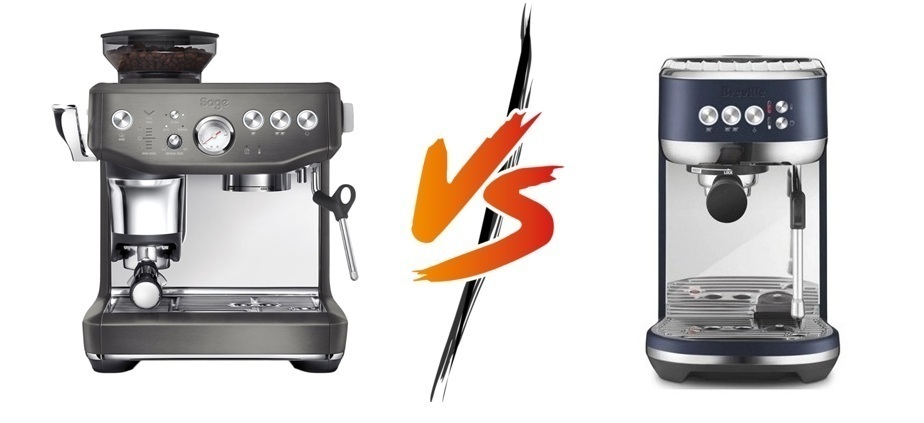
Choosing a home espresso machine sounds simple at first. You just want good coffee. But once you start comparing models, things get complicated fast. Features, grinders, milk systems, automation, manual control. It adds up quickly. Two machines that consistently come up in serious discussions are the Breville Barista Express Impress and the Breville Bambino Plus. On paper, they seem similar. Both are made by the same company. Both promise café-quality espresso at home. Both are popular for good reason.
But they’re built for different kinds of users.
The Barista Express Impress leans into control and hands-on espresso making, with a built-in grinder and assisted tamping system that bridges the gap between beginner and enthusiast. The Bambino Plus, on the other hand, focuses on speed, convenience, and automatic milk texturing in a compact body. In this review, I’ll break down how they truly compare in daily use, not just on spec sheets.
Table of Contents
- 1 Breville Barista Express Impress vs Breville Bambino Plus
- 2 Design & Build Quality
- 3 User Interface & Ease of Use
- 4 Coffee Quality & Brewing Performance
- 4.1 Extraction Control and Pressure
- 4.2 Temperature Stability
- 4.3 Shot Quality and Flavor Clarity
- 4.4 Pre-Infusion and Extraction Consistency
- 4.5 Back-to-Back Shots and Performance Under Load
- 4.6 Crema and Visual Appeal
- 4.7 Forgiveness and Margin for Error
- 4.8 Overall Brewing Experience
- 4.9 Final Thoughts on Coffee Quality
- 5 Grinder Features & Performance
- 5.1 Integrated Grinder on the Barista Express Impress
- 5.2 Grind Consistency and Performance
- 5.3 Noise and Grinding Experience
- 5.4 Cleaning and Maintenance of the Integrated Grinder
- 5.5 Grinder Flexibility with the Bambino Plus
- 5.6 Performance Depends on Pairing
- 5.7 Workflow Comparison
- 5.8 Long-Term Upgrade Potential
- 5.9 Final Thoughts on Grinder Features & Performance
- 6 Milk Frothing & Specialty Drinks
- 6.1 Steam Power and Performance Basics
- 6.2 Manual Milk Texturing on the Barista Express Impress
- 6.3 Automatic Milk Texturing on the Bambino Plus
- 6.4 Speed and Transition Between Brewing and Steaming
- 6.5 Steam Wand Design and Movement
- 6.6 Milk Texture Quality
- 6.7 Specialty Drink Flexibility
- 6.8 Alternative Milks
- 6.9 Noise and Experience
- 6.10 Final Thoughts on Milk Frothing & Specialty Drinks
- 7 Maintenance & Cleaning
- 8 Conclusion
Breville Barista Express Impress vs Breville Bambino Plus
If you click the links below, under the product images, you will be redirected to Amazon.com. In case you then decide to buy anything, Amazon.com will pay me a commission. This doesn’t affect the honesty of this review in any way though.
| Specification | Breville Barista Express Impress | Breville Bambino Plus |
|---|---|---|
 |  | |
| Check the best price on Amazon | Check the best price on Amazon | |
| Machine Type | Semi-automatic espresso machine with integrated grinder | Semi-automatic espresso machine (no grinder) |
| Dimensions (W x D x H) | Approx. 12.5″ x 14.5″ x 16″ | Approx. 7.7″ x 12.6″ x 12.2″ |
| Weight | Approx. 23–24 lbs | Approx. 11 lbs |
| Water Tank Capacity | 67 oz (2 liters) | 64 oz (1.9 liters) |
| Bean Hopper Capacity | 250g (about 0.5 lb) | N/A |
| Built-in Grinder | Yes (conical burr) | No |
| Grind Settings | 25 grind settings (plus internal adjustment) | Depends on external grinder |
| Tamping System | Assisted “Impress” tamping lever | Manual tamp (user supplied) |
| Portafilter Size | 54mm stainless steel | 54mm stainless steel |
| Heating System | Thermocoil with PID temperature control | ThermoJet heating system |
| Heat-Up Time | ~30 seconds (optimal after a few minutes) | ~3 seconds |
| Pump Pressure | 15-bar Italian pump | 15-bar pump |
| Pre-Infusion | Yes (low-pressure pre-infusion) | Yes (low-pressure pre-infusion) |
| Milk Frothing | Manual steam wand | Automatic + manual steam wand |
| Adjustable Milk Temp | Manual control only | Yes (3 temperature settings) |
| Adjustable Milk Texture | Manual technique | Yes (3 foam levels) |
| Programmable Shot Volume | Yes | Yes |
| Hot Water Outlet | Yes | No dedicated outlet (steam wand only) |
| Cup Clearance | Standard + removable tray for taller cups | Removable tray for taller cups |
| Cleaning Cycle | Automatic cleaning & descaling alerts | Automatic cleaning & descaling alerts |
| Steam Wand Auto Purge | No | Yes |
| Power | 1600W | 1600W |
| Voltage | 110–120V (US version) | 110–120V (US version) |
| My individual reivews | Breville Barista Express Impress review | Breville Bambino Plus review |
Quick Summary of Spec Differences
- The Barista Express Impress is larger, heavier, and includes a built-in grinder and assisted tamping system.
- The Bambino Plus is significantly more compact, heats up much faster, and includes automatic milk texturing.
- Both use 54mm portafilters and 15-bar pumps.
- The Bambino Plus requires a separate grinder, which adds to total setup cost but increases flexibility.
Design & Build Quality
When you’re buying an espresso machine, design isn’t just about looks. It affects how the machine feels in your kitchen, how it holds up over time, and whether you enjoy using it every morning. Build quality determines durability, stability during brewing, and even temperature consistency. With the Breville Barista Express Impress and the Breville Bambino Plus, you’re looking at two very different design philosophies.
One aims to feel like a traditional semi-automatic espresso machine scaled for home use. The other prioritizes compact efficiency and modern simplicity. Both are well made, but they communicate different intentions from the moment you place them on your counter.
Overall Aesthetic and Presence
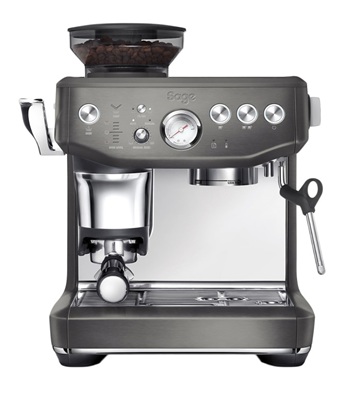
The Barista Express Impress has a substantial presence. It looks like a serious piece of coffee equipment. The brushed stainless steel exterior gives it a professional, almost commercial feel. It’s not flashy, but it’s confident. The visible grinder hopper on top, the pressure gauge on the front panel, and the mechanical controls all contribute to that impression. It looks like something that expects you to participate in the process.
It’s also undeniably large. The machine occupies noticeable counter space, both in width and height. The hopper adds vertical bulk, and the integrated grinder makes the body wider than a basic espresso unit. In a spacious kitchen, it looks impressive. In a small apartment kitchen, it can feel dominant.
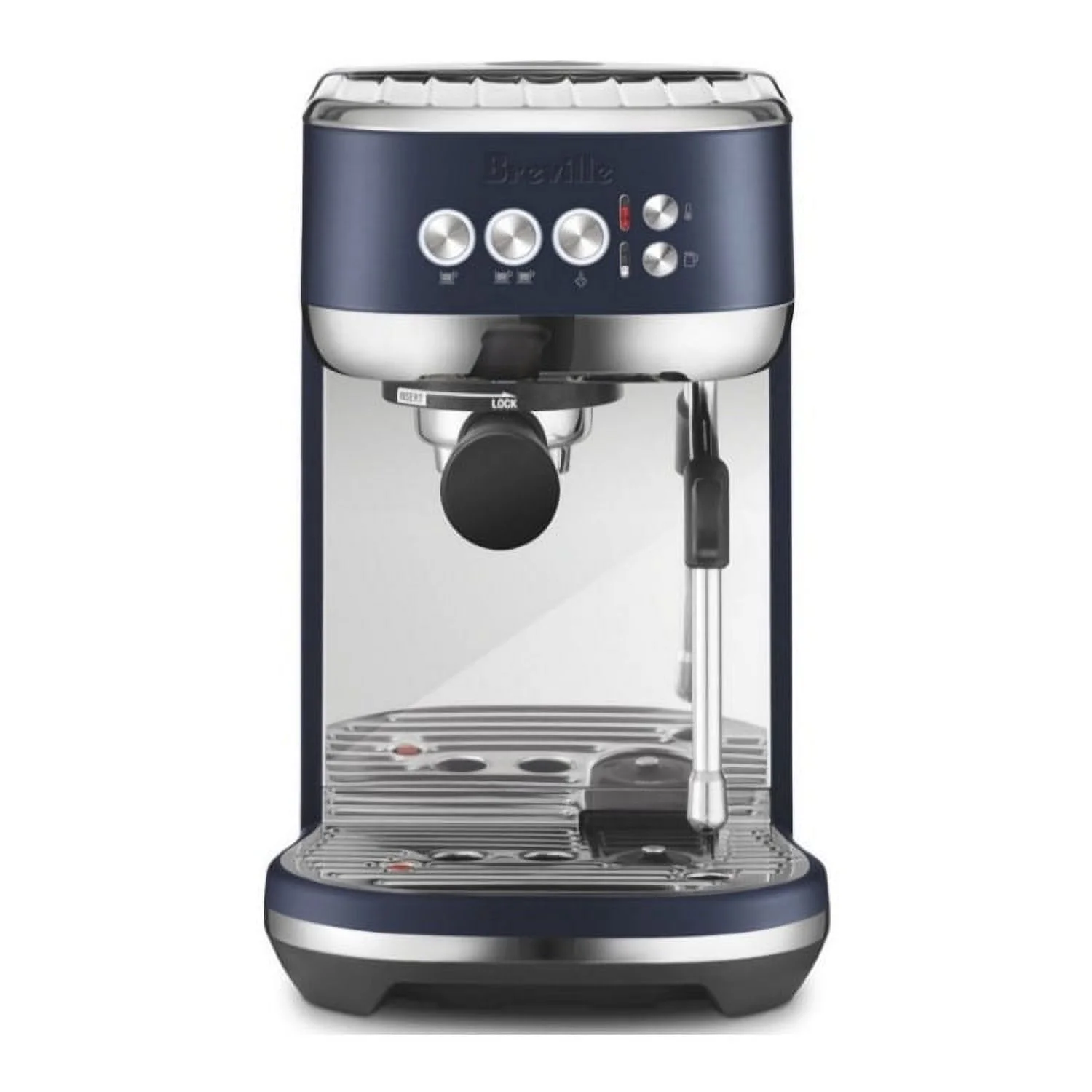
The Bambino Plus takes a completely different approach. It’s compact, minimal, and understated. It feels designed for modern kitchens where space and aesthetics matter. The footprint is small enough to fit easily under cabinets, and its clean lines make it blend into most environments rather than stand out. There’s no grinder on top, no pressure gauge on the front, and fewer protruding elements. It looks streamlined and efficient.
If you want your espresso machine to look like a traditional café tool, the Barista Express Impress delivers that visual appeal. If you prefer something subtle and space-conscious, the Bambino Plus feels more at home.
Materials and Exterior Construction
Both machines use stainless steel in their exterior panels, but the overall construction differs in weight and thickness.
The Barista Express Impress feels heavy and solid when you move it. That weight isn’t accidental. A heavier machine tends to stay stable during grinding and brewing. When the pump engages or the grinder runs, the machine doesn’t vibrate excessively or shift on the counter. The portafilter locks in with a firm, reassuring resistance. The group head feels sturdy and tightly integrated into the frame.
The control knobs and buttons have a mechanical feel. There’s tactile feedback when adjusting grind size or activating brewing. The tamping lever on the Impress model is especially notable. It feels engineered, not flimsy. When you pull it down, there’s resistance and a smooth compression motion that makes it feel purposeful.
The Bambino Plus is lighter. That doesn’t mean it’s poorly built, but the difference is noticeable. If you lift both machines side by side, the Barista Express Impress clearly feels denser and more industrial. The Bambino Plus uses high-quality plastic in certain structural areas combined with stainless steel accents. The result is a machine that feels well assembled but not as rugged.
During brewing, the Bambino Plus remains stable, but because it’s lighter, you may need to hold the machine slightly when locking in the portafilter, especially on a slick countertop. It’s a small detail, but one that reveals the difference in overall mass and construction philosophy.
Portafilter and Group Head
The portafilter is one of the most important tactile components of any espresso machine. It’s something you handle every day.
The Barista Express Impress uses a solid 54mm stainless steel portafilter. It has weight to it. When you hold it, it feels substantial. Locking it into the group head requires a firm twist, and it sits securely in place. That tight seal contributes to consistent pressure during extraction. The group head itself is well integrated and feels durable.
The Bambino Plus also uses a 54mm portafilter, and it’s similar in design. However, the overall interaction feels slightly lighter. It still locks in securely, but because the machine body is lighter, the experience doesn’t feel as anchored as with the Barista Express Impress. The portafilter itself is solid, but the surrounding structure is less industrial.
Both machines include single and double shot baskets. The finish on both portafilters is clean and durable, and neither feels cheaply made. The difference lies more in how they integrate into the body of each machine.
Water Tank and Drip Tray
The Barista Express Impress features a rear-mounted water tank that is generously sized. It slides out smoothly and feels thick enough to withstand daily handling. The lid is sturdy, and the fit into the rear housing is tight without feeling forced. Because the machine is larger, the tank capacity supports multiple drinks before refilling becomes necessary.
The drip tray is wide and deep. It has a solid metal grate and a clear indicator that pops up when it’s full. The tray itself feels durable and easy to remove for cleaning.
The Bambino Plus also has a rear water tank, but it’s smaller due to the machine’s compact footprint. The plastic feels slightly thinner, though not fragile. Refilling is straightforward, and the tank slides in and out easily. For smaller households or light daily use, the capacity is sufficient, but you may refill more often compared to the Barista Express Impress.
The drip tray on the Bambino Plus is compact and efficient. It’s easy to remove and rinse. Because the machine purges automatically after steaming, you’ll likely empty it more frequently. It feels lighter than the tray on the larger machine, but it’s well designed for its size.
Integrated Grinder Housing vs Minimal Body
One of the biggest structural differences is the built-in grinder on the Barista Express Impress.
The hopper on top is made of thick plastic with a locking mechanism that feels secure. The grind size adjustment dial is integrated into the side and has firm detents. The dosing system feeds directly into the portafilter cradle, which holds the portafilter in place while grinding. The cradle itself feels sturdy and well aligned.
This integration gives the machine a unified feel. Everything is connected. Grinding, dosing, tamping, and brewing happen within one cohesive body.
The Bambino Plus has no grinder housing. Its top surface is flat and uncluttered. This simplicity reduces mechanical complexity and gives it a cleaner look. However, it also means you’ll have a separate grinder somewhere else on your counter if you’re serious about espresso. From a design standpoint, the Bambino Plus is modular. The Barista Express Impress is self-contained.
Steam Wand Construction
Both machines feature stainless steel steam wands, but they function differently.
The Barista Express Impress uses a manual steam wand that rotates smoothly on a ball joint. It feels sturdy and allows precise positioning. There’s a satisfying resistance when you move it, and it stays where you place it. The control dial for steam has a mechanical firmness that matches the machine’s overall build character.
The Bambino Plus uses an automatic steam wand with temperature sensors. It also rotates freely and feels well constructed, though slightly lighter in motion. Because it handles milk texturing automatically, it has a more technological feel rather than a purely mechanical one.
Both wands are durable and easy to wipe down, but the tactile experience of the Barista Express Impress leans more traditional and manual.
Long-Term Durability Considerations
In terms of longevity, both machines are built with quality in mind. However, complexity can affect long-term reliability.
The Barista Express Impress contains more mechanical components: grinder burrs, dosing mechanisms, and the assisted tamping system. More parts can mean more potential maintenance down the line. That said, Breville’s reputation for engineering in this category is solid, and the materials used don’t feel fragile.
The Bambino Plus has fewer moving parts internally. No integrated grinder means one major component is eliminated. Its simpler internal design may appeal to buyers who prioritize fewer mechanical systems to maintain.
Final Thoughts on Design & Build
The Barista Express Impress feels like a serious, substantial espresso station. It’s heavy, stable, and purpose-built for hands-on brewing. Every component communicates durability and engagement.
The Bambino Plus feels modern, compact, and efficient. It’s thoughtfully designed for smaller spaces and simpler routines without feeling cheap.
If you want a machine that feels like a miniature café setup, the Barista Express Impress delivers that presence. If you want something that fits seamlessly into your kitchen without dominating it, the Bambino Plus strikes a clean and practical balance.
User Interface & Ease of Use
When it comes to espresso machines, the user interface is where expectations meet reality. You can have great build quality and strong brewing performance, but if the machine feels confusing or frustrating at 6:30 in the morning, that matters. Ease of use isn’t just about how many buttons there are. It’s about workflow. It’s about how intuitive each step feels. It’s about how forgiving the machine is when you’re still learning.
The Breville Barista Express Impress and the Breville Bambino Plus approach usability from two very different angles. One assumes you want to participate in the craft. The other assumes you want excellent results with minimal friction. Neither approach is wrong, but they create very different daily experiences.
First Impressions and Learning Curve
The Barista Express Impress looks more complex from the start. You see a pressure gauge, grind size dial, dosing controls, steam knob, and brewing buttons. If you’ve never used a semi-automatic espresso machine before, it can feel like a lot. There’s no large digital screen guiding you step by step. Instead, the controls are physical and mechanical. You turn dials. You press buttons. You pull the tamp lever.
For beginners, that can feel intimidating for the first few days. You need to learn how grind size affects extraction. You need to understand dose and yield. You may pull a few shots that are too sour or too bitter before dialing it in. The machine doesn’t hide the learning curve. It invites you into it.
The Bambino Plus feels different immediately. It has a clean front panel with clearly labeled buttons for single shot, double shot, and milk texturing. The layout is minimal. There’s no grinder adjustment. No pressure gauge. No manual tamping lever. You grind separately, tamp, lock in the portafilter, and press a button. That’s it.
For someone new to espresso, the Bambino Plus feels far less overwhelming. It doesn’t demand technical understanding upfront. You can get good results quickly, even if you don’t fully understand the science behind extraction.
Workflow from Start to Finish
Let’s walk through a typical morning with each machine.
With the Barista Express Impress, you fill the hopper with beans. You adjust grind size if needed. You insert the portafilter into the grinding cradle and press to dose. The machine grinds directly into the basket. Then you pull down the Impress tamp lever, which compresses the grounds with consistent pressure. If the dose is slightly off, the system adjusts and prompts for correction. Once tamped, you lock the portafilter into the group head and press brew.
There are more steps, but they feel integrated. Grinding, dosing, and tamping happen within one unified system. The assisted tamping feature removes a major variable for beginners. You don’t need to worry about uneven pressure or crooked tamping. That alone reduces frustration dramatically compared to traditional semi-automatic machines.
Still, you are actively involved in every phase. If the shot runs too fast, you adjust grind size. If it’s too slow, you adjust again. The machine gives you tools, but you make decisions.
With the Bambino Plus, the workflow depends heavily on your grinder. Assuming you have a capable grinder set correctly, the process is streamlined. Grind into the portafilter. Tamp manually. Lock it in. Press the single or double shot button. The machine handles the rest. Extraction volume is programmable but pre-set for convenience.
For milk drinks, the difference becomes even clearer. On the Barista Express Impress, you manually purge the steam wand, stretch the milk, texture it, and monitor temperature. On the Bambino Plus, you place the milk jug under the wand, select your temperature and foam level, and press a button. The machine automatically textures and stops when finished. It even purges the wand afterward.
The Bambino Plus minimizes manual decision-making. The Barista Express Impress encourages it.
Control vs Automation
One of the biggest differences in user interface philosophy is control versus automation.
The Barista Express Impress offers tactile, physical feedback. The grind size dial has incremental adjustments. The pressure gauge provides real-time extraction feedback. You can see if you’re under-extracting or over-extracting by watching the needle. That gauge is educational. It teaches you how grind and dose affect pressure.
There’s no touchscreen. No layered menus. Just direct interaction. For some users, that simplicity is refreshing. You’re not navigating digital settings. You’re turning knobs and pressing solid buttons. It feels mechanical and grounded.
However, it does require attention. You can’t completely zone out while making espresso. You’re observing flow rate, shot time, and pressure. That involvement is rewarding if you enjoy process, but less appealing if you just want caffeine fast.
The Bambino Plus simplifies control. It hides pressure details. It automates milk texturing. It heats up quickly and doesn’t require you to manage temperature stability manually. Its buttons are clearly labeled and responsive. You press once, and it executes consistently.
For busy households or shared kitchens where multiple people use the machine, the Bambino Plus is easier to standardize. You don’t have to teach everyone how to dial in grind size or interpret a pressure gauge.
Heat-Up Time and Readiness
Ease of use also includes how long you wait.
The Bambino Plus is impressively fast. It reaches brewing temperature in seconds, thanks to its thermocoil heating system. You can turn it on and pull a shot almost immediately. That speed changes how the machine fits into your routine. There’s no extended warm-up period. It feels ready when you are.
The Barista Express Impress takes longer to fully heat, especially if you want optimal group head temperature. It’s not excessively slow, but it’s not instant either. Some users leave it on for several minutes before brewing to ensure everything is thermally stable.
In practical terms, if you’re rushing in the morning, the Bambino Plus fits better into a tight schedule.
Feedback and Guidance
The Barista Express Impress provides feedback through its pressure gauge and grind adjustment system. The assisted tamping feature also signals if more grinding is needed. That interactive feedback helps beginners improve over time.
The Bambino Plus offers less diagnostic information. It assumes your grind is correct and proceeds accordingly. While that simplifies operation, it means troubleshooting relies more on external knowledge. If your shot tastes off, the machine won’t visually indicate why.
For learners, the Barista Express Impress feels more instructive. For convenience-focused users, the Bambino Plus feels smoother and less demanding.
Milk Drink Simplicity
Ease of use for milk drinks is where the Bambino Plus clearly stands out.
Manual milk steaming has a learning curve. You need to position the wand correctly, create a whirlpool, and stop at the right temperature. The Barista Express Impress requires that skill. It’s satisfying once mastered, but early attempts may result in bubbly foam or overheated milk.
The Bambino Plus eliminates that uncertainty. You choose your milk texture and temperature level, and the machine handles stretching and texturing automatically. The consistency is impressive. For households that make daily lattes or cappuccinos, this automation reduces effort significantly.
Cleaning Workflow and Daily Interaction
User interface also includes how easy it is to manage daily cleaning tasks.
The Bambino Plus automatically purges its steam wand after use. That small detail saves time and reduces milk buildup. The drip tray and water tank are easy to remove and reinsert.
The Barista Express Impress requires manual purging and wiping of the steam wand. The grinder area may need occasional brushing to prevent buildup. None of it is difficult, but it adds steps to the routine.
Final Thoughts on Ease of Use
The Barista Express Impress feels like a machine that grows with you. It’s approachable thanks to the assisted tamping system, but it still encourages learning and experimentation. It rewards patience and curiosity. The interface is mechanical, tactile, and hands-on.
The Bambino Plus feels effortless. It prioritizes speed, automation, and reliability. It minimizes barriers and reduces variables. For many people, especially those new to espresso or short on time, that simplicity makes it easier to enjoy consistently good coffee without stress.
In the end, ease of use depends on what you want from the experience. If you enjoy the ritual and don’t mind learning, the Barista Express Impress feels engaging. If you want great espresso and milk drinks with minimal effort and fast turnaround, the Bambino Plus feels refreshingly straightforward.
Coffee Quality & Brewing Performance
At the end of the day, design and features only matter if the espresso in your cup is good. You can forgive a larger footprint or a steeper learning curve if the machine consistently produces rich, balanced shots with proper crema and depth. This is where the Breville Barista Express Impress and the Breville Bambino Plus start to separate themselves in meaningful ways.
Both machines are capable of producing café-quality espresso. But they get there differently. One emphasizes control and dialing in. The other focuses on stability and streamlined consistency. The result in the cup can be excellent with either machine, but the path you take to get there changes the experience.
Extraction Control and Pressure
The Barista Express Impress gives you more visible feedback during extraction. The pressure gauge on the front panel shows whether you’re within the ideal espresso range. That gauge isn’t just decorative. It teaches you how grind size, dose, and tamping pressure affect flow resistance.
When you dial it in properly, you can produce beautifully balanced shots with a steady flow that starts dark and syrupy, gradually lightening as it pours. Crema tends to be thick and persistent, especially with fresh beans. Because you have control over grind size via the integrated conical burr grinder, you can make fine adjustments when shots run too fast or too slow.
The Bambino Plus does not display a pressure gauge. It manages pressure internally and focuses on delivering stable extraction without requiring you to monitor variables in real time. You still control grind size through your external grinder, but the machine itself simplifies the brewing interface. Press a button and it runs the programmed shot.
In practice, that means the Bambino Plus depends more heavily on having a properly dialed-in grinder. If the grind is too coarse, you’ll see a fast, thin extraction. If it’s too fine, the shot may choke. The machine won’t guide you visually, so you rely on taste and timing.
The Barista Express Impress, on the other hand, feels more interactive. You can see when pressure is too low or too high and adjust accordingly. For users who enjoy refining technique, that feedback adds value.
Temperature Stability
Temperature stability is crucial for consistent espresso. If water temperature fluctuates too much, flavors shift unpredictably. Sourness can creep in when water is too cool. Bitterness can spike if it’s too hot.
The Barista Express Impress uses a thermocoil heating system with digital temperature control. Once warmed up properly, it maintains steady brewing temperature. However, because the machine is larger and has more internal mass, it benefits from a brief preheating period. Many users let it warm for several minutes before pulling a shot to ensure thermal consistency in the group head and portafilter.
The Bambino Plus is known for its rapid heat-up time. It reaches brewing temperature very quickly, often within seconds. Despite its smaller size, it delivers stable temperature during extraction thanks to its internal control system. For back-to-back shots, recovery time is fast, which is useful in busy households.
In real-world use, both machines produce stable temperatures once warmed up. The difference is mainly in how long you wait before that stability is achieved.
Shot Quality and Flavor Clarity
With fresh beans and proper dialing in, the Barista Express Impress can produce impressive espresso. The flavor clarity is strong. You can taste nuanced notes in lighter roasts and deep chocolate richness in darker blends. Because you can fine-tune grind size precisely, you can adjust extraction time to highlight sweetness or reduce acidity.
The assisted tamping system helps here. Consistent tamp pressure reduces channeling, where water finds weak spots in the puck and flows unevenly. That consistency translates into smoother, more balanced shots. Beginners who might struggle with uneven manual tamping benefit significantly from this feature.
The Bambino Plus, when paired with a good grinder, also produces excellent espresso. Shots are balanced, with good crema and solid body. While you don’t get the same tactile feedback during brewing, the end result in the cup can be just as satisfying. The difference is that the Bambino Plus doesn’t feel as “tweakable.” You can adjust grind and dose, but the brewing process itself is more automated.
For many people, that’s perfectly fine. The flavor quality is still strong. Espresso is rich, full-bodied, and consistent. But if you’re the kind of person who enjoys chasing subtle differences between roast profiles, the Barista Express Impress gives you more room to experiment.
Pre-Infusion and Extraction Consistency
Both machines include pre-infusion, where water gently saturates the coffee puck before full pressure is applied. This step improves extraction by allowing even saturation, reducing channeling, and enhancing sweetness.
On the Barista Express Impress, pre-infusion is part of the brewing cycle and works well when grind and dose are dialed correctly. Because you have access to pressure feedback, you can observe how pre-infusion affects extraction dynamics.
The Bambino Plus also includes low-pressure pre-infusion. It handles this automatically without requiring adjustment. For most users, this leads to consistently smooth extractions without needing to understand the mechanics behind it.
In daily use, both machines produce repeatable results once settings are established. The difference again lies in how much involvement you want in shaping that consistency.
Back-to-Back Shots and Performance Under Load
If you’re making multiple drinks in a row, performance stability matters.
The Barista Express Impress can handle consecutive shots, but you may notice slight delays as the system recovers temperature. It performs well for small gatherings or two to three drinks in a row, but it’s not designed for heavy commercial use.
The Bambino Plus recovers quickly between shots. Its compact heating system allows rapid cycling, which can be surprisingly convenient. If you frequently make drinks for multiple people, this quick recovery feels efficient.
In both cases, performance is more than adequate for home use. Neither machine struggles under normal household demands.
Crema and Visual Appeal
Crema isn’t everything, but it does indicate proper extraction.
With freshly roasted beans and proper dialing in, the Barista Express Impress produces thick, golden crema that lingers. The integrated grinder helps maintain freshness because you grind on demand. That alone improves crema formation compared to pre-ground coffee.
The Bambino Plus can produce equally attractive crema if paired with a quality grinder and fresh beans. Because it lacks a built-in grinder, freshness depends entirely on your setup. With a good grinder, crema quality is comparable.
Forgiveness and Margin for Error
The Barista Express Impress is forgiving thanks to its assisted tamping and integrated system. If your dose is slightly off, the machine compensates by prompting an adjustment. This reduces wasted shots and frustration for beginners.
The Bambino Plus is less forgiving if your grinder settings are incorrect. Since it doesn’t control grind or tamping, errors show up directly in the cup. That said, once dialed in, it’s very consistent.
Overall Brewing Experience
Using the Barista Express Impress feels immersive. You engage with grind adjustments, observe pressure, and refine your process. The coffee quality rewards that attention. It feels like you’re crafting each shot.
Using the Bambino Plus feels efficient and smooth. You press a button and trust the machine to execute consistently. It’s less about craft and more about reliable results.
Final Thoughts on Coffee Quality
Both machines are capable of producing genuinely excellent espresso at home. The Barista Express Impress offers more control, feedback, and room for experimentation. It’s ideal for people who want to grow their skills and fine-tune every variable.
The Bambino Plus delivers impressive consistency and strong flavor with less involvement. When paired with a quality grinder, it produces espresso that satisfies even discerning drinkers, but without demanding constant adjustment.
In the cup, the differences are subtle when both are set up properly. The bigger distinction lies in how much control you want over achieving that quality.
Grinder Features & Performance
When it comes to espresso, the grinder matters just as much as the machine itself. You can own a beautifully engineered espresso machine, but if your grind size is inconsistent or imprecise, your shots will suffer. Espresso is sensitive. Tiny adjustments in grind size can change flow rate, extraction time, and flavor dramatically.
This is where the Breville Barista Express Impress and the Breville Bambino Plus take completely different approaches. One integrates the grinder directly into the machine, creating a single, unified system. The other assumes you’ll bring your own grinder to the table. Neither approach is automatically better. It depends on how much flexibility, control, and simplicity you want in your setup.
Integrated Grinder on the Barista Express Impress
The Barista Express Impress includes a built-in conical burr grinder. At first glance, this is one of its biggest selling points. Having the grinder integrated into the body means fewer appliances on your countertop and a streamlined workflow from whole beans to espresso.
The grinder uses stainless steel conical burrs, which are known for producing consistent grind particles suitable for espresso. Conical burrs are typically quieter and generate less heat than flat burrs, which can help preserve flavor during grinding. While this grinder won’t compete with high-end standalone commercial grinders, it performs impressively well for an integrated system.
One of the most important features here is grind size adjustment. The Barista Express Impress allows fine tuning through a side dial. Adjustments are incremental and responsive. If your shot runs too fast, you can make it finer. If it chokes the machine, you can go slightly coarser. The level of precision is sufficient for dialing in specialty beans, and that’s not something you always get in integrated grinders.
There’s also grind amount control, which determines how much coffee is dispensed into the portafilter. Combined with the Impress tamping system, this creates a consistent puck density. The machine even compensates if the dose is slightly off, prompting additional grinding when needed.
In real-world use, the workflow feels cohesive. You insert the portafilter into the cradle, press to grind, and the machine dispenses directly into the basket. No transferring grounds. No static-filled mess. Then you pull the tamp lever and move straight to brewing. The integration reduces friction in daily use.
Grind Consistency and Performance
Consistency is everything for espresso. Uneven grind particles can cause channeling, where water finds weak spots in the coffee puck and flows unevenly. That results in sour or bitter flavors.
The Barista Express Impress grinder produces a consistent enough grind for balanced espresso extraction. Shots can be dialed in to run within the ideal 25 to 35 second range with minor adjustments. Crema production is strong, and extraction is stable once the grind is set correctly.
However, compared to premium standalone grinders, the particle distribution isn’t quite as refined. High-end grinders can produce tighter distributions with fewer fines and boulders. Most home users won’t notice this difference immediately, but experienced espresso enthusiasts might.
Still, for an integrated grinder, performance is impressive. It strikes a balance between convenience and quality.
Noise and Grinding Experience
Grinding beans is inherently noisy, and the Barista Express Impress is no exception. The grinder produces a noticeable burr grinding sound, though it’s not unusually loud for its class. The machine’s weight and solid build help dampen vibration, preventing excessive rattling during operation.
Because the grinder is built into the espresso machine, grinding and brewing noise come from one device. If you’re making espresso early in the morning, the grinding phase will likely be the loudest part of the process.
That said, the grind time is short, and the convenience of having everything in one place often outweighs the noise factor.
Cleaning and Maintenance of the Integrated Grinder
Integrated grinders require occasional cleaning to maintain performance. Coffee oils and fine particles accumulate over time. The Barista Express Impress allows access to the burrs for cleaning, but it’s more involved than cleaning a standalone grinder with removable components.
You’ll need to remove the hopper, vacuum out loose grounds, and occasionally brush the burr set. It’s manageable, but it’s an extra maintenance step built into owning this machine.
The upside is that you’re maintaining one integrated system rather than two separate appliances. The downside is that if the grinder ever develops an issue, you can’t simply swap it out for another unit without replacing the machine.
Grinder Flexibility with the Bambino Plus
The Bambino Plus does not include a built-in grinder. That absence changes everything about grinder performance because the machine itself has no influence over grind quality. The responsibility shifts entirely to the grinder you pair with it.
This can be a disadvantage or a major advantage.
If you already own a high-quality burr grinder, pairing it with the Bambino Plus gives you flexibility and potentially superior grind performance compared to integrated systems. You can choose between conical or flat burr grinders, invest in stepless adjustment models, or upgrade over time without replacing the espresso machine.
That modularity appeals to enthusiasts who want to build their setup piece by piece.
However, if you don’t own a capable grinder, you’ll need to purchase one. Espresso requires a grinder that can produce very fine, consistent particles with precise adjustment. Blade grinders are not sufficient. Budget burr grinders often lack the fine-tuning necessary for proper espresso extraction.
In other words, the Bambino Plus demands a quality grinder to reach its potential.
Performance Depends on Pairing
With the right grinder, the Bambino Plus can produce exceptional espresso. If paired with a mid-to-high range espresso grinder, grind consistency can exceed that of the integrated grinder in the Barista Express Impress.
But that performance depends entirely on your investment and setup.
For example, a dedicated espresso grinder may offer micro-adjustments between settings, lower retention of old grounds, and superior burr alignment. That translates to clearer flavor separation and more precise dialing in.
On the other hand, if paired with a mediocre grinder, the Bambino Plus cannot compensate. The machine doesn’t correct grind size or provide dosing feedback. Shot quality will reflect grind limitations directly.
Workflow Comparison
From a workflow perspective, the Barista Express Impress is more streamlined. Grind, tamp, brew all happen within one system. Everything is aligned and calibrated to work together. That cohesion simplifies the morning routine.
With the Bambino Plus, the workflow includes an extra step. You grind using a separate machine, then transfer the portafilter to the espresso unit. This isn’t complicated, but it adds space requirements and another device to manage.
Some users appreciate this separation. It allows for easier grinder cleaning and more precise control. Others prefer the convenience of an all-in-one system.
Long-Term Upgrade Potential
The integrated grinder in the Barista Express Impress is fixed. It performs well, but it can’t be swapped for a higher-end model. If you later decide to upgrade your grinder, you’d need to add a separate unit and effectively bypass the built-in one.
The Bambino Plus, by contrast, is future-proof in this regard. You can start with an entry-level espresso grinder and upgrade later without replacing the machine. For people who anticipate growing deeper into the espresso hobby, that flexibility is appealing.
Final Thoughts on Grinder Features & Performance
The Barista Express Impress offers strong grinder performance for an integrated system. It’s convenient, consistent, and well matched to the machine’s brewing capabilities. The assisted tamping and dosing features enhance reliability, especially for beginners.
The Bambino Plus offers no built-in grinder, but that absence creates flexibility. When paired with a high-quality standalone grinder, it can outperform integrated setups in grind precision and flavor clarity. The tradeoff is added cost and countertop space.
If you want simplicity and an all-in-one espresso station, the Barista Express Impress makes the process cohesive and efficient. If you value modular upgrades and maximum grind precision, the Bambino Plus paired with a capable grinder offers greater long-term potential.
Milk Frothing & Specialty Drinks
For many people, espresso is only half the story. Lattes, cappuccinos, flat whites, cortados, and macchiatos are daily staples. If you mostly drink straight espresso, milk performance may not matter much. But if your morning routine includes textured milk, the steam system becomes just as important as the brew group.
This is one area where the Breville Barista Express Impress and the Breville Bambino Plus feel very different in everyday use. Both are capable of producing silky microfoam. Both can create café-style drinks. The difference lies in how much work you want to do yourself.
Steam Power and Performance Basics
Both machines use thermocoil heating systems to generate steam. They are not dual boiler machines, meaning they can’t brew and steam simultaneously at full power like commercial units. However, for home use, they provide more than enough steam pressure to texture milk properly.
The Barista Express Impress features a manual steam wand controlled by a dedicated dial. You activate steam mode and manually position the wand in the milk pitcher. Steam pressure builds quickly, and once engaged, it’s strong enough to create proper microfoam if you use the correct technique.
The Bambino Plus also features a stainless steel steam wand, but it adds automation. You can steam manually if you prefer, but its defining feature is automatic milk texturing. You select the milk temperature and foam level, and the machine handles the rest.
Both machines are capable of good steam performance. The real difference is control versus convenience.
Manual Milk Texturing on the Barista Express Impress
Using the Barista Express Impress to steam milk feels like learning a skill. You purge the wand, insert it just below the surface of the milk, and listen for the subtle paper-tearing sound that indicates proper stretching. Then you lower the pitcher slightly to incorporate air and create microfoam. As the milk heats, you angle the pitcher to create a whirlpool, which smooths the foam into a glossy texture.
When done correctly, the result is silky milk with tight, fine bubbles that integrate seamlessly into espresso. Latte art becomes possible once you refine your technique. The wand provides enough power to create the texture needed for hearts, tulips, and basic rosettas.
The learning curve is real. Early attempts may result in overly airy foam or milk that’s too hot. Without a thermometer, you rely on touch to gauge temperature. This process takes practice.
But that manual control is also rewarding. You can adjust the texture for different drinks. A cappuccino needs thicker foam. A flat white requires minimal foam and ultra-smooth milk. With practice, the Barista Express Impress allows you to fine-tune those differences.
For enthusiasts, this hands-on approach is part of the fun.
Automatic Milk Texturing on the Bambino Plus
The Bambino Plus changes the equation completely. It offers adjustable milk temperature settings and multiple foam levels. You fill the pitcher, place it under the wand, and press a button. The machine injects steam, monitors temperature, and stops automatically when finished.
The consistency is impressive. Milk is heated to the selected temperature without overheating. Foam texture is repeatable from cup to cup. For someone who makes milk drinks daily but doesn’t want to master manual steaming, this feature is transformative.
It’s especially helpful in busy households. Anyone can operate it without worrying about technique. There’s no guessing when to stop steaming. No burned milk. No large bubbles if technique slips.
That said, automatic steaming slightly limits customization. While you can choose between foam levels, you don’t have infinite nuance like you would manually. For most people, that’s not a drawback. But advanced users might prefer manual control.
Speed and Transition Between Brewing and Steaming
After pulling a shot, you typically switch to steaming milk.
On the Barista Express Impress, you activate steam mode and wait briefly for the system to reach steaming temperature. It doesn’t take long, but it’s not instant. After steaming, the machine needs a short recovery period before brewing again.
The Bambino Plus transitions quickly. Its heating system ramps up fast, making it efficient when preparing milk drinks back to back. Because the milk process is automated, the workflow feels streamlined. You can focus on preparing your cup while the machine handles the steaming.
If you frequently prepare multiple milk drinks in a row, the Bambino Plus feels faster and more hands-off.
Steam Wand Design and Movement
Both machines use stainless steel wands mounted on ball joints, allowing for flexible positioning. The Barista Express Impress wand feels slightly more traditional in movement. It has a mechanical, café-style feel when adjusting its angle.
The Bambino Plus wand also moves smoothly and is easy to position. In automatic mode, it stays in place while steaming. After steaming, it performs an automatic purge, which reduces milk buildup inside the wand. That self-cleaning feature adds convenience and lowers daily maintenance effort.
The Barista Express Impress requires manual purging and wiping after each use. It’s not difficult, but it’s another step.
Milk Texture Quality
With proper technique, the Barista Express Impress can produce excellent microfoam. The texture can be glossy and paint-like, ideal for latte art. The control allows subtle differences between drinks.
The Bambino Plus, despite being automatic, produces surprisingly refined milk texture. The foam is tight and smooth, not bubbly or stiff. For most users, the difference in quality between manual and automatic steaming is minimal. Only experienced baristas might notice slight differences in nuance.
For everyday lattes and cappuccinos, both machines perform very well.
Specialty Drink Flexibility
If you enjoy experimenting with drink styles, the Barista Express Impress offers more flexibility because you control every aspect of milk texture manually. You can intentionally stretch milk longer for thicker foam or keep it minimal for velvety flat whites.
The Bambino Plus simplifies specialty drinks by standardizing milk texture. It works beautifully for common café drinks but offers less creative variation.
For example, if you want to experiment with alternative milk textures for drinks like cortados or traditional cappuccinos with dry foam, the manual system offers more artistic control.
Alternative Milks
Plant-based milks behave differently than dairy. Oat, almond, soy, and coconut all foam differently.
The Barista Express Impress handles alternative milks well as long as you adjust your technique. You can compensate for thinner or thicker milk by controlling air incorporation manually.
The Bambino Plus also performs well with alternative milks, especially because it offers temperature and foam level adjustments. Automatic steaming tends to produce consistent results even with oat or soy milk. This consistency makes it appealing for households that regularly use non-dairy options.
Noise and Experience
Both machines generate steam noise during milk texturing. The Barista Express Impress produces a traditional steam sound that feels café-like. The Bambino Plus is similar in volume, though the automatic mode means you’re not actively manipulating the wand during the process.
Final Thoughts on Milk Frothing & Specialty Drinks
The Barista Express Impress appeals to users who want to master milk steaming. It offers full control, strong steam power, and the satisfaction of developing technique. It rewards practice and allows customization.
The Bambino Plus prioritizes convenience and consistency. Its automatic milk texturing removes uncertainty and delivers reliable results with minimal effort. For busy mornings or households where multiple people use the machine, that ease can’t be overstated.
If you see milk steaming as part of the craft, the Barista Express Impress feels more engaging. If you see it as a step between you and your latte, the Bambino Plus feels refreshingly simple and dependable.
Maintenance & Cleaning
No one buys an espresso machine because they’re excited about cleaning it. But maintenance is part of the ownership experience, and it plays a bigger role in long-term satisfaction than most people expect. A machine that’s frustrating to clean will slowly become a chore. One that’s easy to maintain will feel sustainable in daily life.
The Breville Barista Express Impress and the Breville Bambino Plus differ not just in features, but in how much ongoing attention they require. Neither is difficult to maintain, but the level of involvement varies due to complexity and integrated components.
Daily Cleaning Routine
Let’s start with what happens after you make your morning drink.
With the Barista Express Impress, the daily routine typically includes:
- Knocking out the used coffee puck
- Rinsing and wiping the portafilter
- Flushing the group head briefly
- Wiping and purging the steam wand
- Emptying the drip tray if needed
Because it has an integrated grinder and dosing system, you may also brush away stray grounds around the grinding cradle. Coffee grounds can accumulate in small corners near the dosing area, especially if you grind frequently.
The Bambino Plus daily routine is slightly simpler:
- Knock out the puck
- Rinse the portafilter
- Flush the group head
- Wipe the steam wand
One key difference is that the Bambino Plus automatically purges the steam wand after use. This is a small but meaningful convenience. Milk residue is one of the most stubborn cleaning challenges in espresso machines. Automatic purging reduces buildup inside the wand, which lowers the risk of clogging over time.
In daily use, the Bambino Plus feels quicker to reset between drinks. The Barista Express Impress requires a bit more manual attention, particularly around the grinder area.
Steam Wand Maintenance
Milk residue hardens quickly, so steam wand cleaning is critical.
On the Barista Express Impress, you must manually purge the wand immediately after steaming. Then wipe it thoroughly with a damp cloth. If you forget, milk can dry onto the surface and become harder to remove. Occasionally, you may need to soak the wand tip or use a cleaning pin to clear any small blockages.
The Bambino Plus reduces this risk with its auto-purge function. After steaming, the machine releases a burst of steam to clear milk from the internal tube. You still need to wipe the exterior, but the automatic purge reduces internal residue buildup.
Over time, this feature lowers maintenance effort and helps keep steam performance consistent. For households that make multiple milk drinks daily, this convenience becomes noticeable.
Drip Tray and Water Tank
Both machines have removable drip trays and rear-mounted water tanks.
The Barista Express Impress has a larger drip tray due to its bigger body. It includes a “full” indicator that rises when the tray reaches capacity. Because the machine includes a grinder and dosing area above the tray, coffee grounds can sometimes fall into it. That means you’ll likely rinse it regularly.
The tray is solid and easy to remove, though slightly heavier than the Bambino’s due to size.
The Bambino Plus drip tray is smaller and lighter. Because the machine automatically purges the steam wand after each use, it may fill more quickly than expected. Frequent milk drinkers will empty it often. Fortunately, removal and rinsing are simple.
Both water tanks are straightforward to detach and refill. The Barista Express Impress has a slightly larger capacity, meaning fewer refills for heavy users. The plastic on both feels durable enough for daily handling, though the Barista’s tank feels thicker overall.
Backflushing and Deep Cleaning
Espresso machines require periodic backflushing to remove coffee oils from the group head. These oils accumulate over time and can cause bitterness or performance issues.
The Barista Express Impress includes cleaning cycles and alerts to guide you through backflushing. You insert a cleaning disc into the portafilter, add cleaning tablet if needed, and run the cleaning cycle. The process is clear and supported by the machine’s indicators.
Because this machine integrates a grinder and more complex internal systems, deep cleaning also involves maintaining the burr set. Every few weeks, depending on usage, you may remove the hopper and brush out residual grounds. This step adds to the maintenance routine but helps preserve grind consistency.
The Bambino Plus also supports backflushing with a cleaning disc and cleaning tablets. The process is straightforward and typically quicker due to the simpler internal design. There’s no built-in grinder to maintain, so deep cleaning is limited to the brew group, steam wand, and water pathways.
Overall, the Bambino Plus has fewer components requiring attention.
Descaling
Both machines require periodic descaling to remove mineral buildup from internal water lines and heating elements. Frequency depends on water hardness and usage.
The Barista Express Impress includes alerts when descaling is needed. The process involves running a descaling solution through the machine, flushing thoroughly afterward. It takes time but is manageable with clear instructions.
The Bambino Plus also signals when descaling is required. The procedure is similar but may feel slightly quicker due to the machine’s smaller size and simpler plumbing.
In either case, using filtered water can reduce descaling frequency and extend machine lifespan.
Grinder Cleaning and Retention
This is where maintenance differences become more pronounced.
The Barista Express Impress grinder must be cleaned periodically. Coffee oils and fine particles accumulate inside the burr chamber. If left uncleaned, this buildup can affect grind consistency and flavor.
Cleaning involves removing the hopper, unlocking the top burr, brushing away grounds, and vacuuming the chamber. It’s not overly complicated, but it’s more involved than wiping down an external grinder that may have easier access.
Grind retention, meaning leftover grounds inside the system, is moderate. It’s not excessive, but it’s another factor to consider in routine upkeep.
With the Bambino Plus, grinder cleaning depends entirely on the separate grinder you choose. Some standalone grinders are easier to maintain than integrated ones. Others are more complex. The key advantage is flexibility. If your grinder develops issues, you can repair or replace it without affecting the espresso machine itself.
Long-Term Reliability and Component Wear
Machines with more moving parts require more attention over time.
The Barista Express Impress includes a grinder motor, burr set, dosing system, tamping mechanism, pump, thermocoil heater, and steam system. While built well, more components mean more potential wear points.
The Bambino Plus eliminates the integrated grinder and tamping system. Fewer moving parts inside the body can translate to simpler long-term maintenance.
That said, both machines are designed for home use and hold up well when maintained properly.
Ease of Access and User-Friendly Design
Breville generally designs machines with user maintenance in mind. Both models provide access to key components without requiring technical expertise.
The Barista Express Impress feels slightly more mechanical during cleaning. You interact with burrs and grinding components. The Bambino Plus feels more appliance-like. Maintenance steps are straightforward and less involved.
If you enjoy taking care of equipment and don’t mind occasional hands-on cleaning, the Barista Express Impress won’t feel burdensome. If you prefer minimal upkeep beyond basic rinsing and wiping, the Bambino Plus feels lighter in responsibility.
Final Thoughts on Maintenance & Cleaning
The Barista Express Impress demands more attention because it does more. The integrated grinder, assisted tamping system, and larger body require regular cleaning to maintain peak performance. For enthusiasts who enjoy the ritual of espresso, this added maintenance may feel like part of the craft.
The Bambino Plus keeps things simpler. With fewer internal components and automatic steam wand purging, daily upkeep feels faster and less involved. Deep cleaning tasks are straightforward and less frequent in scope.
If low-maintenance ownership is a priority, the Bambino Plus has the edge. If you’re comfortable maintaining an integrated system and value the all-in-one design, the Barista Express Impress remains entirely manageable with consistent care.
Conclusion
Choosing between the Breville Barista Express Impress and the Breville Bambino Plus really comes down to what kind of espresso experience you want at home.
The Barista Express Impress feels like a complete espresso station. It brings grinding, dosing, assisted tamping, brewing, and manual steaming into one cohesive machine. It invites you to learn. It rewards attention to detail. If you like the idea of dialing in beans, watching pressure during extraction, and refining your milk texturing technique over time, this machine offers that depth. It feels substantial on the counter and delivers strong performance once you understand how to work with it.
The Bambino Plus takes a different approach. It focuses on speed, simplicity, and consistency. It heats up quickly, automates milk texturing, and minimizes the learning curve. Pair it with a good grinder, and it produces excellent espresso without demanding constant adjustment. It’s compact, efficient, and easier to live with day to day, especially in busy kitchens or shared households.
Neither machine is objectively better. They serve different priorities.
If you want an all-in-one system that encourages hands-on involvement and skill development, the Barista Express Impress is the better fit. If you want high-quality espresso and milk drinks with less effort and a smaller footprint, the Bambino Plus may suit you better.
Both are capable machines. The right choice depends on whether you want control and craft, or convenience and consistency.