
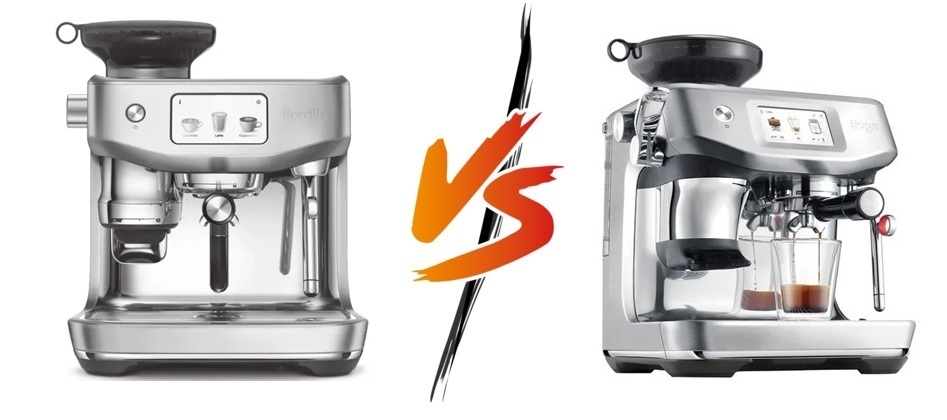
Choosing between the Breville Oracle Jet and the Breville Barista Touch Impress isn’t just about picking an espresso machine. It’s really about deciding how you want to experience coffee at home. Both machines sit at the premium end of Breville’s lineup, and both promise café-quality drinks with a high level of automation. But they go about it in different ways.
The Oracle Jet leans toward a more professional setup. It brings in features you’d normally find in commercial machines, along with advanced automation that takes over the most technical parts of espresso making. The Barista Touch Impress, on the other hand, is designed to guide you. It simplifies the process, helps you avoid common mistakes, and makes consistently good coffee easy to achieve.
On paper, they overlap a lot. In practice, they feel quite different. This review breaks down those differences in a clear, practical way so you can decide which one actually fits your daily routine.
Breville Oracle Jet vs Breville Barista Touch Impress Comparison Chart
If you click the links below, under the product images, you will be redirected to Amazon.com. In case you then decide to buy anything, Amazon.com will pay me a commission. This doesn’t affect the honesty of this review in any way though.
| Feature | Breville Oracle Jet | Breville Barista Touch Impress |
|---|---|---|
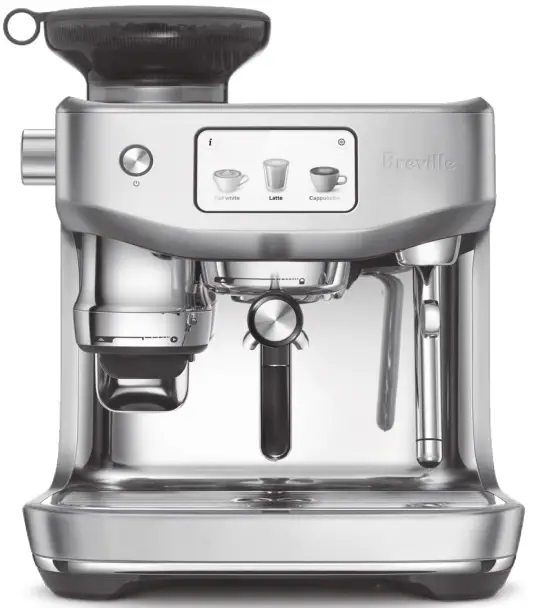 | 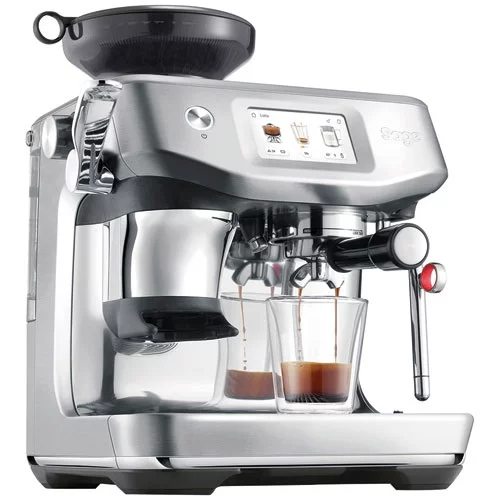 | |
| Check the best price on Amazon | Check the best price on Amazon | |
| Price Range | Higher premium tier | Mid-premium tier |
| Portafilter Size | 58 mm (commercial standard) | 54 mm |
| Heating System | Advanced ThermoJet (fast heat-up, improved stability) | ThermoJet (3-second heat-up) |
| Boilers / Heating | Single advanced system (fast, efficient) | Single ThermoJet system |
| Grinder Type | Precision burr grinder (Baratza-style) | Stainless steel conical burr grinder |
| Grind Settings | ~45 settings, fine control | ~30 settings, stepped adjustments |
| Dosing System | Automatic weight-based dosing | Assisted dosing via Impress system |
| Tamping | Fully automatic internal tamping | Assisted manual lever tamp (guided) |
| User Interface | Large touchscreen, faster processor | Touchscreen with guided interface |
| Connectivity | Wi-Fi enabled, OTA updates | No connectivity |
| Drink Options | Wide range + cold brew / cold espresso (model dependent) | Standard espresso drinks |
| Customization | High level (manual adjustments, profiles) | Moderate (user-friendly adjustments) |
| Milk Frothing | Auto MilQ system (advanced control, manual option) | Auto MilQ system (guided and consistent) |
| Alternative Milk Support | Yes (adjustable profiles) | Yes (preset profiles) |
| Water Tank | Front-fill, approx. 2.3L | Rear-fill, approx. 2L |
| Size & Weight | Larger, heavier, more “prosumer” | More compact, lighter |
| Noise Level | Slightly quieter overall | Slightly louder grinder and steam |
| Maintenance Features | Automated cleaning cycles, alerts, OTA improvements | Guided cleaning cycles and alerts |
| Warm-Up Time | ~30 seconds | ~3 seconds |
| Best For | Enthusiasts, control-focused users | Beginners, convenience-focused users |
| My individual reviews | Breville Oracle Jet review | Breville Barista Touch Impress review |
Quick Summary
- Choose the Oracle Jet if you want more control, a better grinder, and a more “professional” feel.
- Choose the Touch Impress if you want a simpler, more guided experience with consistently good results.
Both machines are strong performers, but the specs show clearly how one leans toward precision while the other leans toward ease of use.
Design & Build Quality
When you’re spending this much on an espresso machine, design and build quality aren’t just about looks. They affect how the machine feels every day, how easy it is to use, how long it lasts, and even how confident you feel making coffee on it. This is one area where the Breville Oracle Jet and the Breville Barista Touch Impress clearly show their different priorities.
First impressions and overall presence
The Breville Oracle Jet makes a strong first impression. It’s large, solid, and immediately feels like a serious piece of equipment. This is not the kind of machine you tuck into a corner and forget about. It becomes a focal point in your kitchen. The size alone tells you it’s built to do more than a typical home espresso machine.
In contrast, the Breville Barista Touch Impress feels more approachable right away. It’s still premium, but it doesn’t dominate your counter. It looks like something designed to fit into everyday life rather than take it over. If your kitchen space is limited or you prefer a cleaner, less crowded setup, this difference matters more than you might expect.
Size, footprint, and practicality
The Oracle Jet is noticeably bigger and heavier. That extra size comes from its internal components, including a more advanced system for heating and brewing. While that’s great for performance, it does mean you need to plan where it’s going to live. Once it’s in place, you probably won’t want to move it often.
The Touch Impress is easier to manage. It has a smaller footprint and is lighter, which makes it more flexible. You can shift it around if needed, and it doesn’t feel like a permanent installation. For people who share kitchen space with other appliances, that flexibility can make a big difference.
There’s also the day-to-day practicality. Filling the water tank, emptying the drip tray, and accessing the bean hopper all feel a bit easier on the Touch Impress simply because everything is more compact and within reach. The Oracle Jet, while well-designed, sometimes feels like it expects you to work around it rather than the other way around.
Materials and finish
Both machines use stainless steel as their primary material, and both feel premium. There’s no cheap plastic feel here. However, the way that material is used is slightly different.
The Oracle Jet leans heavily into an all-metal construction. The portafilter, drip tray, and many of the external components feel thick and durable. It gives off a commercial vibe, like it’s built to handle heavy daily use. You get the sense that it’s designed to last for years without much wear.
The Touch Impress also uses stainless steel, but it balances it with more practical design choices. Some components feel a bit lighter, and the overall finish is slightly more refined and consumer-friendly. It still looks high-end, but it’s less industrial.
In everyday use, both hold up well. The Oracle Jet might edge ahead in terms of raw durability, but the Touch Impress is easier to keep looking clean. Fingerprints and smudges are less noticeable, and the overall design feels a bit more forgiving.
Portafilter and group head design
One of the biggest physical differences between these machines is the portafilter size.
The Oracle Jet uses a 58mm commercial-style portafilter. This is the same size you’ll find in many professional espresso machines. It allows for larger coffee doses and gives you more flexibility if you want to experiment with different baskets or accessories.
The Touch Impress uses a smaller 54mm portafilter. While that might sound like a downgrade, it’s actually more than enough for most home users. It’s easier to handle, slightly more forgiving, and still capable of producing excellent espresso.
In practical terms, the 58mm portafilter on the Oracle Jet feels more “serious.” It’s heavier, wider, and gives you that café-style workflow. The 54mm portafilter on the Touch Impress feels simpler and more user-friendly.
If you’re someone who enjoys the ritual of making espresso and wants that professional feel, the Oracle Jet has an advantage here. If you just want something that works without much fuss, the Touch Impress feels more natural.
Built-in grinder integration
Both machines include integrated grinders, but their design and integration differ slightly.
The Oracle Jet’s grinder feels more like a standalone unit built into the machine. It’s robust, with precise adjustments and a design that matches the rest of the machine’s professional feel. The grind dial is solid, and making adjustments feels deliberate and controlled.
The Touch Impress grinder is more streamlined. It’s designed to work seamlessly with the machine’s guided system. You don’t think about it as much because the machine handles a lot of the decision-making for you.
From a build perspective, both are well integrated. There are no awkward gaps or cheap-feeling components. But the Oracle Jet’s grinder feels like it’s built for someone who wants to interact with it, while the Touch Impress keeps it in the background.
Tamping system design
This is another area where the two machines take very different approaches.
The Oracle Jet has a fully automatic internal tamping system. You don’t see it working as much, but it’s doing a lot behind the scenes. This adds to the machine’s complexity, but it also creates a cleaner, more streamlined workflow. You press a button, and the machine handles the tamping for you.
The Touch Impress uses a manual lever-based tamping system. It’s assisted, so you still get consistent pressure, but you’re physically involved in the process. This might sound like more work, but it actually feels satisfying. You get a bit of that hands-on experience without the risk of doing it wrong.
From a build standpoint, the Oracle Jet’s system is more complex and impressive. The Touch Impress system is simpler and arguably more reliable over time. There’s less that can go wrong.
Interface design and screen placement
Both machines use touchscreens, but their design and integration differ.
The Oracle Jet features a larger, more advanced screen. It feels modern and responsive, almost like using a tablet. The placement is central and easy to read, even from a slight distance. It fits the machine’s high-tech identity.
The Touch Impress screen is slightly smaller but still very clear and responsive. It’s designed to guide you step by step, so the layout is more instructional. Everything is simple and easy to follow.
In terms of build, both screens feel solid and well-integrated. There’s no wobble or cheapness. The Oracle Jet’s screen feels more premium, while the Touch Impress prioritizes clarity and usability.
Stability and everyday feel
When you actually use these machines, their weight and construction become more noticeable.
The Oracle Jet feels extremely stable. When the grinder is running or the steam wand is in use, the machine doesn’t move at all. That stability adds to the sense of quality and control.
The Touch Impress is also stable, but it’s lighter. You might notice a bit more vibration during grinding, though it’s not excessive. It still feels well-built, just not as heavy-duty.
Long-term durability considerations
Both machines are built to last, but they approach durability differently.
The Oracle Jet relies on more advanced systems and internal automation. That can be a strength, but it also introduces more potential points of failure over time. If something goes wrong, it may be more complex to repair.
The Touch Impress keeps things simpler. Fewer moving parts and a more straightforward design can make it easier to maintain in the long run. It may not feel as overbuilt, but it’s practical.
Final thoughts on design and build
At the end of the day, both machines are well-designed and feel premium. The difference comes down to what kind of experience you want.
The Breville Oracle Jet feels like a professional tool scaled down for home use. It’s large, powerful, and built with performance in mind.
The Breville Barista Touch Impress feels like a thoughtfully designed home appliance. It’s compact, intuitive, and built to fit into your daily routine without friction.
Neither approach is better in absolute terms. It depends on what matters more to you: the feel of a café machine or the comfort of something designed for everyday living.
User Interface & Ease of Use
If design is about how a machine looks and feels, the user interface is about how it behaves when you actually use it. This is where the gap between the Breville Oracle Jet and the Breville Barista Touch Impress becomes very clear. Both machines aim to simplify espresso making, but they take very different paths to get there.
One leans toward automation with a “hands-off” feel. The other focuses on guidance, helping you learn while still doing much of the work for you. Which one feels easier depends a lot on what you expect from your daily coffee routine.
First interaction and setup experience
The first time you turn on either machine sets the tone.
With the Touch Impress, the setup feels almost like using a smartphone for the first time. The touchscreen walks you through everything step by step. You’re not left guessing what to do next. It explains things clearly, from filling the water tank to adding beans and running the first rinse cycle.
It’s designed to remove hesitation. Even if you’ve never made espresso before, you can get started without watching tutorials or reading a long manual.
The Oracle Jet also has a guided setup, but it feels a bit more technical. The interface is polished and responsive, but it assumes you’re comfortable exploring. It doesn’t hold your hand as much. Instead, it introduces features and lets you interact with them more freely.
The difference is subtle, but noticeable. The Touch Impress feels like it’s teaching you. The Oracle Jet feels like it’s giving you tools and expecting you to learn by doing.
Touchscreen design and responsiveness
Both machines rely heavily on touchscreens, and in both cases, they work well.
The Oracle Jet has a larger, more advanced display. It feels fast and modern, with smooth transitions and clear visuals. There’s very little lag, and navigating between menus feels natural. It’s closer to using a tablet than a typical appliance interface.
The Touch Impress screen is slightly smaller, but still very responsive. What stands out more here is the layout. It’s designed to be simple and direct. Large icons, clear labels, and straightforward menus make it easy to find what you need.
Where the Oracle Jet impresses with speed and polish, the Touch Impress wins with clarity. You don’t have to think about where to tap. Everything is obvious.
Guided workflows vs independent control
This is the biggest difference in day-to-day use.
The Touch Impress is built around guided workflows. When you choose a drink, the machine walks you through each step:
- Grind the coffee
- Tamp the puck
- Insert the portafilter
- Start extraction
It also gives feedback along the way. If your grind size is off or your extraction time isn’t ideal, it tells you and suggests adjustments.
This makes a huge difference for beginners. Instead of guessing why a shot tastes bad, you get immediate, practical guidance. Over time, you start to understand what’s happening, even if the machine is doing most of the work.
The Oracle Jet takes a different approach. It still offers guidance, but it’s less structured. You have more freedom to adjust settings, experiment, and fine-tune your process.
It provides feedback, but it doesn’t walk you through every step in the same way. It assumes you either know what you’re doing or are willing to figure it out.
In simple terms:
- Touch Impress = guided experience
- Oracle Jet = flexible experience
Automation of key steps
Both machines automate a lot of the espresso process, but they do it differently.
The Oracle Jet automates more steps overall. Grinding, dosing, and tamping are handled internally. You don’t need to pull a lever or manually intervene as much. This creates a smoother, more hands-off workflow.
On paper, this sounds easier. And in many ways, it is. But there’s a catch. Because everything is automated, you have less visibility into what’s happening. If something goes wrong, it can feel less obvious how to fix it.
The Touch Impress keeps you slightly more involved. You still grind automatically, but you use a lever to tamp the coffee. This might seem like extra work, but it actually helps you understand the process better.
It’s a small action, but it creates a sense of control. You feel like you’re making the coffee, not just watching the machine do it.
Learning curve and long-term usability
The Touch Impress has one of the easiest learning curves of any semi-automatic espresso machine.
You can go from zero experience to making a solid latte in minutes. The guided interface removes most of the common mistakes:
- Incorrect tamping pressure
- Poor grind size
- Uneven extraction
Over time, you can start experimenting, but you never feel lost. The machine acts like a safety net.
The Oracle Jet has a slightly steeper learning curve, but it rewards you more as you get comfortable. At first, you might need a few tries to dial in your grind size and shot settings. But once you do, the process becomes very smooth.
It’s not difficult, but it expects a bit more patience in the beginning.
In the long run, both machines are easy to use. The difference is how quickly you get there.
Customization and drink options
Both machines allow you to customize drinks, but the depth of control varies.
The Touch Impress focuses on practical customization. You can adjust:
- Coffee strength
- Milk texture
- Temperature
It’s enough for most people. You can tweak your drinks to your taste without getting overwhelmed.
The Oracle Jet goes further. It offers more detailed control over brewing variables and allows for deeper customization. This is great if you enjoy experimenting with different beans and recipes.
It also includes features like real-time extraction feedback, which helps you fine-tune your shots more precisely.
For casual users, the extra options might feel unnecessary. For enthusiasts, they’re a big advantage.
Error handling and feedback
This is an underrated part of usability.
The Touch Impress is very good at handling mistakes. If something isn’t right, it tells you clearly and suggests what to do. It’s hard to feel stuck because the machine is always guiding you forward.
The Oracle Jet also provides feedback, but it’s more technical. It might show extraction data or suggest adjustments, but it doesn’t always explain things in simple terms.
Again, this comes down to audience. One is designed to teach. The other is designed to empower.
Daily workflow and speed
In daily use, both machines are fast and efficient.
The Touch Impress is slightly quicker to operate because the workflow is so structured. You move from one step to the next without thinking. It’s almost automatic once you get used to it.
The Oracle Jet can be just as fast, but it depends on how you use it. If you’re adjusting settings or experimenting, it might take a bit longer. If you stick to a routine, it’s very efficient.
Both machines heat up quickly, so you’re not waiting around in the morning.
Accessibility for different users
This is where the Touch Impress really shines.
It’s ideal for:
- Beginners
- Busy households
- Anyone who wants consistent results with minimal effort
Multiple people can use it without much training. The interface is clear enough that anyone can walk up and make a coffee.
The Oracle Jet is better suited for:
- Enthusiasts
- People who enjoy the process
- Users who want more control
It’s still user-friendly, but it benefits from a bit of familiarity.
Final thoughts on usability
Both machines are easy to use, but in very different ways.
The Breville Barista Touch Impress is designed to remove friction. It guides you, corrects you, and helps you succeed with minimal effort. It’s one of the most approachable espresso machines you can buy.
The Breville Oracle Jet is designed to give you power and flexibility. It automates the hard parts but leaves room for control and experimentation. It’s not difficult, but it expects a bit more from you.
If you want a machine that feels like a helpful assistant, the Touch Impress is the better choice.
If you want a machine that feels like a tool you can grow into, the Oracle Jet stands out.
Coffee Quality & Brewing Performance
At the end of the day, everything comes back to the cup. You can have the best design, the smartest interface, and the most advanced features, but none of that matters if the coffee isn’t good. This is where both the Breville Oracle Jet and the Breville Barista Touch Impress prove why they sit at the premium end of the market.
They are both capable of producing genuinely excellent espresso. But the way they approach brewing, and the level of control they give you, creates subtle but important differences in the final result.
First shots and out-of-the-box performance
One of the most interesting things about these machines is how quickly they can produce a good shot.
With the Touch Impress, you can get a solid espresso almost immediately. The guided system, combined with automated tamping and dosing, removes most of the variables that usually trip people up. Even on day one, the espresso is balanced, smooth, and drinkable.
You don’t need to “dial in” the machine in the traditional sense. It does a lot of that for you.
The Oracle Jet, on the other hand, can take a bit more effort at the start. The grinder is more precise, and the machine gives you more control, which means you may need a few attempts to find the perfect settings for your beans. But once you get there, the results can be noticeably better.
This difference sets the tone. The Touch Impress prioritizes immediate consistency. The Oracle Jet prioritizes long-term potential.
Espresso extraction and flavor profile
When both machines are dialed in properly, they produce high-quality espresso with good crema, balanced acidity, and solid body. But there are differences in how the shots taste and feel.
The Oracle Jet tends to produce a slightly richer and more complex shot. This comes down to a few factors:
- The 58mm portafilter allows for a more even extraction
- The grinder offers finer adjustments
- Temperature stability is more refined
These details add up. You may notice deeper flavors, more clarity between tasting notes, and a thicker mouthfeel.
The Touch Impress produces a very consistent and approachable espresso. It’s smooth, well-balanced, and forgiving. Even if your grind isn’t perfect, the machine compensates to a degree and still delivers a good result.
However, it doesn’t quite reach the same level of nuance. The flavor is excellent, but slightly more uniform.
For many people, this difference is subtle. For those who pay close attention to taste, it becomes more noticeable over time.
Temperature control and stability
Temperature plays a huge role in espresso quality, and both machines handle it well, but with different strengths.
The Touch Impress uses a ThermoJet heating system that heats up extremely quickly. Within seconds, it’s ready to brew. It also maintains stable temperatures during extraction, which helps with consistency.
The Oracle Jet takes this further. Its system is designed to improve temperature stability, especially during back-to-back shots. This matters if you’re making multiple drinks or trying to fine-tune your espresso.
In practice, both machines are reliable. You won’t run into major temperature issues with either one. But the Oracle Jet has a slight edge in precision, especially under heavier use.
Pre-infusion and pressure control
Pre-infusion is one of those details that doesn’t get much attention, but it can make a big difference in the cup.
Both machines handle pre-infusion automatically, ensuring the coffee puck is evenly saturated before full pressure is applied. This helps prevent channeling and improves extraction.
The Oracle Jet gives you a bit more control here. It allows for more refined adjustments, which can be useful if you’re experimenting with different beans or roast levels.
The Touch Impress keeps things simpler. It uses preset parameters that work well for most situations. You don’t need to think about it, and the results are consistently good.
Again, this reflects the overall philosophy:
- Oracle Jet = control and flexibility
- Touch Impress = simplicity and reliability
Consistency over time
Consistency is where the Touch Impress really shines.
Because it automates so many steps and guides you through the process, it’s very difficult to get a bad shot. Even if you’re not paying close attention, the machine keeps things on track.
This makes it ideal for everyday use. You can make the same coffee every morning without worrying about small variations.
The Oracle Jet is also consistent, but it depends more on how you use it. Once you’ve dialed in your settings, it performs very reliably. But if you’re constantly changing beans or adjusting variables, you may see more variation.
This isn’t a flaw. It’s the trade-off that comes with greater control.
Brewing speed and workflow efficiency
Both machines are fast, but in slightly different ways.
The Touch Impress is quick because it simplifies the process. You follow the guided steps, and everything flows smoothly. There’s very little downtime or hesitation.
The Oracle Jet is fast in terms of raw performance. It heats quickly and handles multiple tasks efficiently. But because it offers more options, the overall workflow can feel a bit slower if you’re making adjustments.
If you’re in a rush, the Touch Impress feels more straightforward. If you’re taking your time, the Oracle Jet feels more capable.
Handling different types of beans
Not all coffee beans behave the same, and this is where the Oracle Jet starts to stand out.
Its more advanced grinder and adjustable settings make it easier to work with:
- Light roasts that require finer grinding
- Dark roasts that extract quickly
- Single-origin beans with unique characteristics
You can tweak the machine to bring out the best in each type of bean.
The Touch Impress handles most beans well, especially medium and darker roasts. It’s designed to work within a certain range and deliver consistent results.
However, it’s less flexible when it comes to more challenging beans. You can still get good results, but you may feel limited if you like experimenting.
Shot volume and customization
The Oracle Jet allows for larger doses and more flexibility in shot volume, thanks to its 58mm portafilter and higher capacity. This gives you more room to experiment with different recipes.
The Touch Impress sticks to more standard parameters. It’s optimized for typical espresso drinks, and while you can adjust settings, it doesn’t offer the same range.
For most users, this won’t matter. But for enthusiasts, it’s another point in favor of the Oracle Jet.
Real-world taste differences
So what does all of this actually mean in the cup?
If you were to compare shots side by side:
- The Oracle Jet might have slightly more depth and complexity
- The Touch Impress would be just as smooth, but a bit more straightforward
The difference isn’t dramatic. It’s not like one is good and the other is bad. It’s more about refinement.
Many people wouldn’t notice the difference unless they were actively looking for it. But once you do notice it, it’s hard to ignore.
Reliability of results
This is where personal preference really comes into play.
If you value reliability above all else, the Touch Impress is hard to beat. It delivers good coffee every time with minimal effort.
If you value potential and control, the Oracle Jet is more rewarding. It can produce better results, but it asks a bit more from you.
Final thoughts on coffee quality
Both machines deliver on their promise of café-quality coffee at home. You’re not sacrificing quality with either choice.
The Breville Barista Touch Impress is all about making great coffee easy. It reduces mistakes, smooths out inconsistencies, and gives you a dependable result every time.
The Breville Oracle Jet is about pushing performance further. It gives you the tools to refine your espresso and explore different flavors, with a higher ceiling for quality.
If you just want excellent coffee without thinking too much about it, the Touch Impress is the better fit.
If you enjoy the process and want to get the most out of your beans, the Oracle Jet gives you that extra edge.
Grinder Features & Performance
If there’s one part of an espresso machine that quietly determines how good your coffee will be, it’s the grinder. You can have perfect temperature, ideal pressure, and great beans, but if your grind size is off, the shot will never quite come together.
Both the Breville Oracle Jet and the Breville Barista Touch Impress come with built-in grinders, which is a big part of their appeal. You don’t need a separate machine, and everything is designed to work together. But while they share that convenience, the grinders themselves are quite different in how they perform and how much control they give you.
Why the grinder matters so much
Before getting into specifics, it’s worth understanding why this matters.
Espresso requires a very precise grind. Too coarse, and water flows through too quickly, resulting in weak, sour coffee. Too fine, and the shot chokes, leading to bitterness and over-extraction.
A good grinder gives you:
- Fine control over grind size
- Consistent particle distribution
- Reliable dosing
This is where the differences between these two machines really start to show.
Grinder design and build quality
The Oracle Jet uses a more advanced grinder system, built with precision in mind. It features high-quality burrs and a design that feels closer to a standalone premium grinder. When you adjust it, the changes feel deliberate and exact.
The Touch Impress also uses a conical burr grinder, and it’s a good one. It’s solid, consistent, and well-integrated into the machine. But it’s designed more for ease of use than maximum precision.
In terms of physical feel, the Oracle Jet’s grinder has a more substantial, “engineered” quality. The Touch Impress feels more streamlined and simplified.
Both are well-built, but they serve slightly different purposes.
Grind settings and adjustment range
This is one of the clearest differences.
The Oracle Jet offers a wider range of grind settings, with more fine-tuned adjustments. This allows you to dial in your espresso with greater accuracy. Small changes in grind size can have a big impact on extraction time and flavor, and the Oracle Jet gives you the control to make those changes precisely.
The Touch Impress has fewer grind settings. While it still covers the full espresso range, the steps between settings are larger. This makes it easier to use, but slightly less precise.
In practice:
- The Oracle Jet lets you fine-tune your grind exactly
- The Touch Impress gets you close, but not always perfectly dialed in
For most users, the Touch Impress is more than sufficient. But if you’re chasing that perfect shot, the extra control on the Oracle Jet becomes valuable.
Dosing and grind consistency
Both machines aim to deliver the right amount of coffee every time, but they approach it differently.
The Oracle Jet uses a more advanced dosing system that measures the amount of coffee being ground and stops automatically when the target is reached. This creates a very consistent workflow. You don’t have to guess how long to grind or worry about overfilling the portafilter.
The Touch Impress also handles dosing well, but it relies more on its guided system. It grinds, checks the dose, and then uses the Impress tamping system to correct any inconsistencies.
This works surprisingly well. Even if the grind isn’t perfectly measured, the machine compensates and still produces a good puck.
The Oracle Jet feels more precise. The Touch Impress feels more forgiving.
Ease of dialing in espresso
Dialing in is the process of adjusting grind size and dose to get the best possible shot.
With the Touch Impress, this process is simplified. The machine gives you feedback and suggests adjustments. You don’t need to understand all the details. You just follow the prompts and make small changes.
This makes it very beginner-friendly. You can get good results without much trial and error.
The Oracle Jet takes a more traditional approach. You adjust the grind manually and observe the results. The machine may provide feedback, but it doesn’t guide you step by step in the same way.
This means you might need a few attempts to get things right, especially when switching beans. But once you’re dialed in, the level of control is much higher.
Performance with different coffee beans
Not all beans behave the same, and this is where grinder quality really matters.
The Oracle Jet handles a wide range of beans very well. Whether you’re using light roasts, dark roasts, or single-origin coffees, you can adjust the grind to suit the specific characteristics of the beans.
Light roasts, in particular, benefit from finer grind adjustments. The Oracle Jet makes it easier to extract these properly without under-extracting.
The Touch Impress works best with medium to dark roasts. It can handle lighter beans, but you may find it harder to dial them in perfectly. The larger grind steps limit how precise you can be.
For everyday coffee, this isn’t a big issue. But for enthusiasts who like experimenting with different beans, the Oracle Jet has a clear advantage.
Retention and freshness
Grinder retention refers to how much ground coffee stays inside the grinder after use. Lower retention means fresher coffee for each shot.
Both machines are designed to minimize retention, and in practice, they perform well. You’re not going to see large amounts of stale grounds building up.
The Oracle Jet’s more advanced system may have a slight edge here, especially with its dosing accuracy. It tends to deliver exactly what you need with minimal waste.
The Touch Impress is still very good, but you might occasionally notice small variations, especially when switching beans or grind settings.
Noise and grinding experience
Grinding coffee is never completely silent, but both machines handle noise reasonably well.
The Oracle Jet feels a bit more refined. The grinder noise is slightly more controlled and less harsh. It’s still noticeable, but it doesn’t feel as abrupt.
The Touch Impress is a bit louder during grinding, though not excessively so. It’s typical for a built-in grinder at this level.
In everyday use, the difference is minor. But if you’re sensitive to noise or making coffee early in the morning, the Oracle Jet has a slight advantage.
Integration with the overall workflow
One of the biggest benefits of these machines is how well the grinder integrates with the rest of the system.
On the Touch Impress, the grinder works as part of a guided process. You don’t think about it much. You follow the steps, and the machine handles the details. This makes the experience feel smooth and stress-free.
On the Oracle Jet, the grinder feels like a key part of the process. You interact with it more, adjust it more often, and rely on it for precision. It’s less passive and more hands-on.
Neither approach is better. It depends on what kind of experience you prefer.
Reliability and long-term use
Both grinders are designed for regular use, and both are reliable.
The Touch Impress benefits from a simpler design. Fewer adjustments and a more guided workflow mean fewer opportunities for user error. This can make it feel more dependable over time.
The Oracle Jet’s grinder is more complex, but also more capable. As long as it’s maintained properly, it should perform consistently. However, the added complexity means there’s slightly more to manage.
Real-world differences in the cup
So how much does all of this actually matter?
In everyday use, both grinders produce good results. You’ll get fresh, well-ground coffee that leads to solid espresso.
But when you start paying attention to detail, the differences become clearer:
- The Oracle Jet allows for more precise extraction
- The Touch Impress delivers more consistent, repeatable results
If you’re not experimenting much, the Touch Impress is more than enough. If you enjoy tweaking and refining your shots, the Oracle Jet gives you more room to improve.
Final thoughts on grinder performance
The grinder is one of the biggest factors separating these two machines.
The Breville Barista Touch Impress offers a grinder that is easy to use, consistent, and well-integrated into a guided system. It’s designed to make good coffee simple, and it succeeds at that.
The Breville Oracle Jet takes things further. Its grinder is more precise, more adjustable, and better suited for users who want to fine-tune their espresso.
In simple terms:
- Touch Impress = convenience and consistency
- Oracle Jet = control and precision
Both are excellent in their own way. The right choice depends on how much you want to be involved in the process.
Milk Frothing & Specialty Drinks
For a lot of people, espresso is only half the story. Drinks like lattes, cappuccinos, flat whites, and even iced variations are what you actually make every day. That’s where milk frothing becomes just as important as espresso extraction.
Both the Breville Oracle Jet and the Breville Barista Touch Impress are designed to handle milk-based drinks with minimal effort. They aim to take what is usually the hardest part of coffee making, steaming milk properly, and make it easy and consistent. But just like with espresso, they approach it in slightly different ways.
The role of automatic milk systems
Traditionally, steaming milk requires practice. You have to control the steam wand, position the pitcher correctly, and listen for subtle changes in sound and texture. It’s not difficult forever, but it does take time to learn.
Both of these machines remove most of that learning curve by using Breville’s automatic milk texturing system. This means:
- The machine controls steam pressure
- It monitors milk temperature
- It adjusts texture automatically
In practical terms, you place the steam wand in the milk, select your settings, and let the machine do the work.
This alone makes both machines much more accessible than traditional espresso setups.
Ease of use for milk drinks
The Touch Impress is designed to make milk drinks as simple as possible.
You select a drink on the touchscreen, and the machine guides you through the process. When it’s time to froth milk, it tells you what to do. Once you start the steam function, it handles everything automatically.
The result is very consistent milk with minimal effort. You don’t need to worry about overheating or creating too much foam. It’s all controlled for you.
The Oracle Jet works in a similar way, but feels slightly more advanced. The automation is still there, but you have more flexibility in how you use it. You can rely on the automatic system or take more control if you want to.
This makes it a bit more versatile, especially if you enjoy experimenting with different textures.
Milk texture and quality
When it comes to the quality of the milk itself, both machines perform very well.
The Touch Impress produces smooth, creamy milk that works perfectly for lattes and cappuccinos. The foam is consistent, with a fine texture that blends well with espresso. It’s not overly airy or bubbly, which is a common issue with lower-end machines.
The Oracle Jet takes things a step further. The milk texture tends to be slightly more refined, with better microfoam. This is especially noticeable if you’re trying to pour latte art or create more delicate drinks like flat whites.
The difference isn’t huge, but it’s there. The Oracle Jet gives you a bit more control over the final texture, which can lead to better results if you know what you’re doing.
Working with different types of milk
One area where modern espresso machines have improved a lot is handling non-dairy milk.
Both machines are designed to work with:
- Whole milk
- Skim milk
- Oat milk
- Almond milk
- Other plant-based options
The automatic system adjusts temperature and texture based on the type of milk you choose.
The Touch Impress does this very well. It’s consistent and reliable, making it easy to switch between different types of milk without much adjustment.
The Oracle Jet also handles alternative milks effectively, but with slightly more flexibility. You can fine-tune the texture if needed, which can be useful for certain plant-based milks that behave differently.
In everyday use, both machines perform strongly here. You won’t struggle to get good results with non-dairy options on either one.
Manual steaming capability
Even though both machines focus on automation, they still allow for manual steaming.
On the Touch Impress, manual control is available but somewhat secondary. The machine is clearly designed for automatic use, and that’s where it performs best. You can steam milk manually, but it’s not the main focus.
The Oracle Jet offers a bit more freedom. You can take over the steaming process and adjust things more directly. This is useful if you want to practice traditional techniques or fine-tune your results.
For beginners, this might not matter. For more experienced users, it adds another layer of flexibility.
Both machines come with a range of preset drinks, accessible through the touchscreen.
The Touch Impress includes the essentials:
- Espresso
- Latte
- Cappuccino
- Flat white
- Americano
Each drink is pre-programmed with specific settings for coffee and milk, making it easy to get consistent results.
The Oracle Jet offers a broader range of options. In addition to standard drinks, it may include:
- Cold brew-style beverages
- Iced espresso drinks
- More customizable recipes
This makes it more versatile if you like experimenting with different types of coffee.
The interface also allows you to save custom drinks, so you can fine-tune recipes and return to them easily.
Workflow for making milk drinks
The process of making a milk-based drink is slightly different on each machine.
With the Touch Impress, the workflow is structured:
- Grind and tamp the coffee
- Extract the espresso
- Steam the milk using the automatic system
The machine guides you through each step, so there’s very little room for confusion.
With the Oracle Jet, the workflow is more flexible. You can follow a similar sequence, but you have more control over timing and settings. This can make the process feel more natural if you’re used to making coffee manually.
In both cases, the process is quick and efficient. You can go from beans to a finished latte in just a few minutes.
Consistency and repeatability
Consistency is one of the biggest advantages of automatic milk systems.
The Touch Impress excels here. Every time you make a latte or cappuccino, the milk texture is almost identical. This makes it easy to rely on the machine for daily use.
The Oracle Jet is also consistent, but because it offers more control, results can vary slightly depending on how you use it. If you stick to the automatic settings, it’s just as reliable. If you start adjusting things, you may see more variation.
This isn’t a downside, but it does mean the Touch Impress feels more predictable.
Noise and steaming experience
Milk steaming always involves some noise, but both machines handle it well.
The Oracle Jet tends to be slightly quieter and smoother during steaming. The sound is more controlled, which makes the process feel a bit more refined.
The Touch Impress is a bit louder, but still within a normal range. It’s not disruptive, just slightly more noticeable.
In most situations, this won’t be a deciding factor, but it’s something you’ll notice if you use the machine daily.
Cleaning the steam system
Milk systems need regular cleaning, and both machines make this relatively easy.
The steam wand on both machines automatically purges itself after use, which helps prevent milk buildup. This is a small feature, but it makes a big difference in keeping things hygienic.
The Touch Impress keeps things simple. The cleaning process is straightforward and guided, just like the rest of the machine.
The Oracle Jet also includes automatic cleaning features, but with a bit more complexity due to its additional capabilities. It’s still easy to maintain, but there are more components involved.
Real-world performance
In everyday use, both machines deliver excellent milk-based drinks.
The Touch Impress is perfect for:
- Quick, reliable lattes
- Consistent cappuccinos
- Minimal effort
The Oracle Jet is better suited for:
- More refined milk texture
- Greater variety of drinks
- Users who want more control
The difference in quality is noticeable but not dramatic. Both can produce café-quality results.
Final thoughts on milk frothing and drinks
Milk frothing is often the part of espresso making that intimidates people the most, and both of these machines do a great job of removing that barrier.
The Breville Barista Touch Impress focuses on simplicity and consistency. It makes it easy to create great milk-based drinks without needing any prior experience.
The Breville Oracle Jet builds on that foundation with more flexibility and slightly better performance. It gives you the option to refine your technique and explore more advanced drinks.
If you want something that just works every time, the Touch Impress is hard to beat.
If you want a bit more control and the ability to push your drinks further, the Oracle Jet offers that extra capability.
Maintenance & Cleaning
Maintenance is one of those things you don’t think much about when buying an espresso machine, but it quickly becomes part of your daily routine. No matter how advanced or expensive a machine is, it still needs regular cleaning to keep working properly and to maintain good coffee quality.
Both the Breville Oracle Jet and the Breville Barista Touch Impress are designed to make maintenance as easy as possible. They automate some cleaning tasks, remind you when attention is needed, and simplify the process where they can. But because they take slightly different approaches to automation and design, the day-to-day experience isn’t exactly the same.
Daily cleaning routine
Let’s start with what you’ll actually do every day.
With the Touch Impress, the daily routine is very simple:
- Empty the drip tray when it fills up
- Knock out the used coffee puck
- Wipe down the steam wand after use
- Run a quick rinse cycle if needed
The machine often prompts you to do these things, which helps keep everything on track. It doesn’t feel like maintenance, just part of making coffee.
The Oracle Jet follows a similar routine, but with a bit more happening behind the scenes. Because it automates more steps, it also handles some cleaning automatically. For example, the steam wand purges itself after use, and certain internal processes help keep the system clear.
From a user perspective, both machines are easy to live with day to day. The Touch Impress feels slightly more hands-on, while the Oracle Jet feels more self-managing.
Cleaning the portafilter and group head
The portafilter and group head are key areas that need regular attention.
On the Touch Impress, you’ll need to:
- Rinse the portafilter after each use
- Occasionally clean the basket more thoroughly
- Run a backflush cycle when prompted
This is standard for semi-automatic machines, and it’s not difficult. The machine will guide you through deeper cleaning when necessary.
The Oracle Jet simplifies some of this. Because it automates dosing and tamping internally, there’s less direct handling of the coffee puck. However, you still need to keep the portafilter clean and run maintenance cycles.
The difference is more about feel than effort. The Touch Impress makes you more aware of each step. The Oracle Jet reduces how much you interact with those components.
Grinder maintenance
Built-in grinders are convenient, but they also require occasional cleaning.
With the Touch Impress, grinder maintenance is straightforward:
- Empty the hopper if switching beans
- Brush out loose grounds
- Occasionally clean the burrs
The design makes it relatively easy to access the grinder, and because it’s simpler, there’s less to manage.
The Oracle Jet’s grinder is more advanced, which means there’s a bit more to consider. You may need to:
- Clean the burrs more carefully
- Pay attention to dosing mechanisms
- Ensure everything stays properly aligned
It’s not difficult, but it does require a bit more attention over time. The benefit is better performance, but the trade-off is slightly more involved maintenance.
Steam wand cleaning
Milk systems can become messy if not cleaned properly, so this is an important area.
Both machines use automatic steam wand purging, which is a huge help. After steaming milk, the wand releases a short burst of steam to clear out any residue.
With the Touch Impress, you’ll still need to wipe the wand after each use. The process is simple and quick, but it’s something you can’t skip if you want to keep things hygienic.
The Oracle Jet also purges automatically and tends to feel a bit more thorough in its cleaning cycle. It still requires wiping, but the automation reduces the chance of buildup.
In practice, both machines make this easy. As long as you follow the basic steps, you won’t run into issues.
Water system and descaling
Water quality plays a big role in both performance and maintenance. Over time, mineral buildup can affect the machine, which is why descaling is necessary.
The Touch Impress includes reminders for descaling and guides you through the process. It’s fairly straightforward:
- Add descaling solution
- Follow on-screen instructions
- Let the machine run its cycle
The Oracle Jet also handles this well, but with an added advantage. It can receive updates and potentially improve maintenance processes over time. It may also provide more detailed feedback on when descaling is needed.
Both machines make descaling manageable, but it’s still something you’ll need to do periodically. Neither completely eliminates this requirement.
Cleaning alerts and guidance
One of the best things about these machines is how they remind you to take care of them.
The Touch Impress is very clear and direct. It tells you exactly what needs to be done and often provides step-by-step instructions. This makes it easy to stay on top of maintenance without having to think about it.
The Oracle Jet also provides alerts, but they can feel slightly more technical. The information is there, but it’s not always as simplified. This fits with the overall design philosophy of the machine.
For most users, the Touch Impress feels more approachable in this area.
Internal cleaning cycles
Both machines include internal cleaning programs that run automatically or with minimal input.
The Touch Impress uses guided cleaning cycles for:
- Backflushing
- Descaling
- General system maintenance
These cycles are easy to start and don’t require much effort.
The Oracle Jet also includes cleaning cycles, but with a bit more automation built in. Some processes happen in the background, reducing how often you need to intervene.
This makes the Oracle Jet feel slightly more self-sufficient, especially over long-term use.
Long-term maintenance considerations
Over time, all espresso machines require some level of upkeep beyond daily cleaning.
The Touch Impress benefits from a simpler design. Fewer moving parts and a more guided system mean fewer things that can go wrong. This can make it feel more reliable in the long run.
The Oracle Jet is more complex, which can be both a strength and a weakness. It offers more features and automation, but that also means more components that may need attention over time.
This doesn’t mean it’s unreliable, just that it’s a more advanced machine with more going on.
Ease of cleaning components
Physical cleaning is another important factor.
The Touch Impress has:
- A removable drip tray
- An accessible water tank
- Easy-to-clean surfaces
Everything is designed to be straightforward and quick to manage.
The Oracle Jet includes similar features, but with a slightly more refined layout. Some components, like the front-fill water tank, are easier to access, which can make daily use more convenient.
Both machines are well-designed in this area, with no major frustrations.
Time and effort required
In terms of time, neither machine demands much.
Daily maintenance takes just a few minutes on both models. Weekly or monthly cleaning adds a bit more time, but the guided processes make it manageable.
The Touch Impress feels quicker because everything is simplified. The Oracle Jet may take a bit longer occasionally, but it also handles some tasks automatically.
Overall, the difference is small.
Real-world experience
In everyday use, both machines are easy to maintain.
The Touch Impress is ideal if you want something that:
- Tells you exactly what to do
- Keeps maintenance simple
- Minimizes effort
The Oracle Jet is better if you prefer:
- More automation
- Less manual involvement in some areas
- A slightly more advanced system
Neither machine is difficult to clean. The main difference is how much they guide you versus how much they handle on their own.
Final thoughts on maintenance
Maintenance isn’t the most exciting part of owning an espresso machine, but it’s essential. Both the Breville Oracle Jet and the Breville Barista Touch Impress do a great job of making it as easy as possible.
The Breville Barista Touch Impress stands out for its simplicity. It guides you through every step, keeps things clear, and makes it easy to stay on top of cleaning.
The Breville Oracle Jet offers a more automated experience. It reduces some of the hands-on work and feels more self-managing, but with a bit more complexity behind the scenes.
If you want the easiest possible maintenance routine, the Touch Impress is the better choice.
If you prefer a machine that handles more tasks for you and don’t mind a bit of added complexity, the Oracle Jet is a strong option.
Conclusion
After spending time with both machines, it’s clear that Breville isn’t trying to offer two versions of the same thing. The Oracle Jet and the Barista Touch Impress are built for different types of users, even though they overlap in features and performance.
The Barista Touch Impress is the easier one to live with. It guides you through every step, reduces mistakes, and makes consistently good coffee almost effortless. If you want a machine that fits into your routine without much thought, this is the one that does it best. It’s especially appealing if you’re new to espresso or just want reliable results every day without fiddling with settings.
The Oracle Jet is more ambitious. It automates a lot, but also gives you more control and room to improve. The grinder is more precise, the espresso has a bit more depth, and the overall system feels more capable once you get comfortable with it. It’s not difficult to use, but it rewards a bit of curiosity and patience.
In the cup, both machines are excellent. The difference isn’t dramatic, but it’s there if you look for it. The Touch Impress delivers consistency. The Oracle Jet offers a higher ceiling.
In the end, it comes down to how involved you want to be. If you want simplicity and guidance, go with the Touch Impress. If you want flexibility and a bit more performance, the Oracle Jet makes more sense. Both are strong choices, just aimed at slightly different priorities.