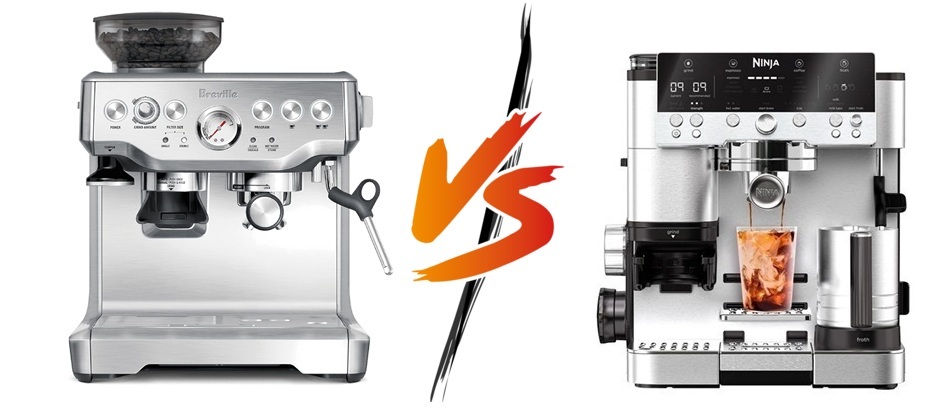
When people start exploring home espresso machines, two models often come up repeatedly: the Breville Barista Express Espresso Machine and the Ninja Luxe Café Pro Series 4‑in‑1 Coffee Machine. Both machines promise café-style coffee at home, both include built-in grinders, and both sit in a similar price bracket. Yet they approach the espresso experience in completely different ways.
The Breville Barista Express has been a staple in the home barista community for years. It’s a semi-automatic machine designed for people who want control over the brewing process. You grind, dose, tamp, and steam milk manually. That hands-on process is part of its appeal.
The Ninja Luxe Café, on the other hand, represents a newer philosophy. It aims to simplify the espresso process through automation and guidance. Its Barista Assist technology suggests grind sizes, manages dosing, and guides the user through the brewing process with a display and assisted controls.
So which one is actually better? The answer depends heavily on what you want from your coffee machine.
In this detailed review, we’ll compare these two espresso machines across the aspects that matter most in real daily use.
Breville Barista Express vs Ninja Luxe Café Comparison Chart
If you click the links below, under the product images, you will be redirected to Amazon.com. In case you then decide to buy anything, Amazon.com will pay me a commission. This doesn’t affect the honesty of this review in any way though.
| Feature | Breville Barista Express | Ninja Luxe Café |
|---|---|---|
 |  | |
| Check the best price on Amazon | Check the best price on Amazon | |
| Machine Type | Semi-automatic espresso machine | Multi-function espresso & coffee system |
| Dimensions | 12.6 × 13.8 × 15.9 in | ~12 × 11 × 15 in |
| Weight | ~22 lbs (10 kg) | ~14–16 lbs |
| Build Materials | Stainless steel housing, metal portafilter | Mixed materials (plastic + metal accents) |
| Grinder Type | Integrated conical burr grinder | Integrated burr grinder |
| Grind Settings | ~16 adjustable grind settings | Multiple automatic grind presets |
| Bean Hopper Capacity | ~8 oz (227 g) | ~12 oz (approx.) |
| Water Reservoir | 67 oz (2 L) removable tank | ~70 oz removable tank |
| Pump Pressure | 15-bar Italian pump | ~15-bar pump |
| Heating System | Thermocoil heating system | Rapid heating / Thermoblock-style system |
| Temperature Control | Digital Temperature Control (PID) | Automated temperature control |
| Pre-Infusion | Low-pressure pre-infusion | Automatic pre-infusion |
| Shot Control | Manual or programmable single/double shot | Preset espresso drink programs |
| Milk Frothing | Manual steam wand | Automatic / assisted milk frothing |
| Milk System | Stainless steel steam wand | Integrated milk frothing system |
| Specialty Drinks | Espresso, Americano, latte, cappuccino (manual preparation) | Espresso, cappuccino, latte, iced coffee, specialty drinks |
| Cup Clearance | Adjustable drip tray | Adjustable cup platform |
| Control Interface | Buttons, dial, pressure gauge | Digital control panel with presets |
| Pressure Gauge | Yes | No |
| Cleaning Alerts | Yes (cleaning indicator) | Yes (maintenance notifications) |
| Removable Drip Tray | Yes | Yes |
| Energy Saving Mode | Auto shut-off | Auto shut-off |
| Best For | Hands-on espresso enthusiasts | Convenience and versatility |
Quick Summary
- Breville Barista Express: Designed for people who want greater control and a traditional espresso workflow, including manual milk texturing and grind adjustments.
- Ninja Luxe Café: Built for ease of use and versatility, offering preset drinks and a more automated brewing experience.
Design & Build Quality
Design and build quality matter more than people often expect when choosing an espresso machine. These machines are used daily, sometimes multiple times per day, and they need to withstand heat, pressure, water exposure, and constant handling. Materials, layout, and durability can make the difference between a machine that feels enjoyable to use and one that quickly becomes frustrating.
The Breville Barista Express and the Ninja Luxe Café take noticeably different approaches to design. One leans toward the traditional espresso machine style found in cafés, while the other is built more like a modern kitchen appliance designed for simplicity and versatility.
Understanding these differences helps clarify who each machine is really built for.
Breville Barista Express design philosophy
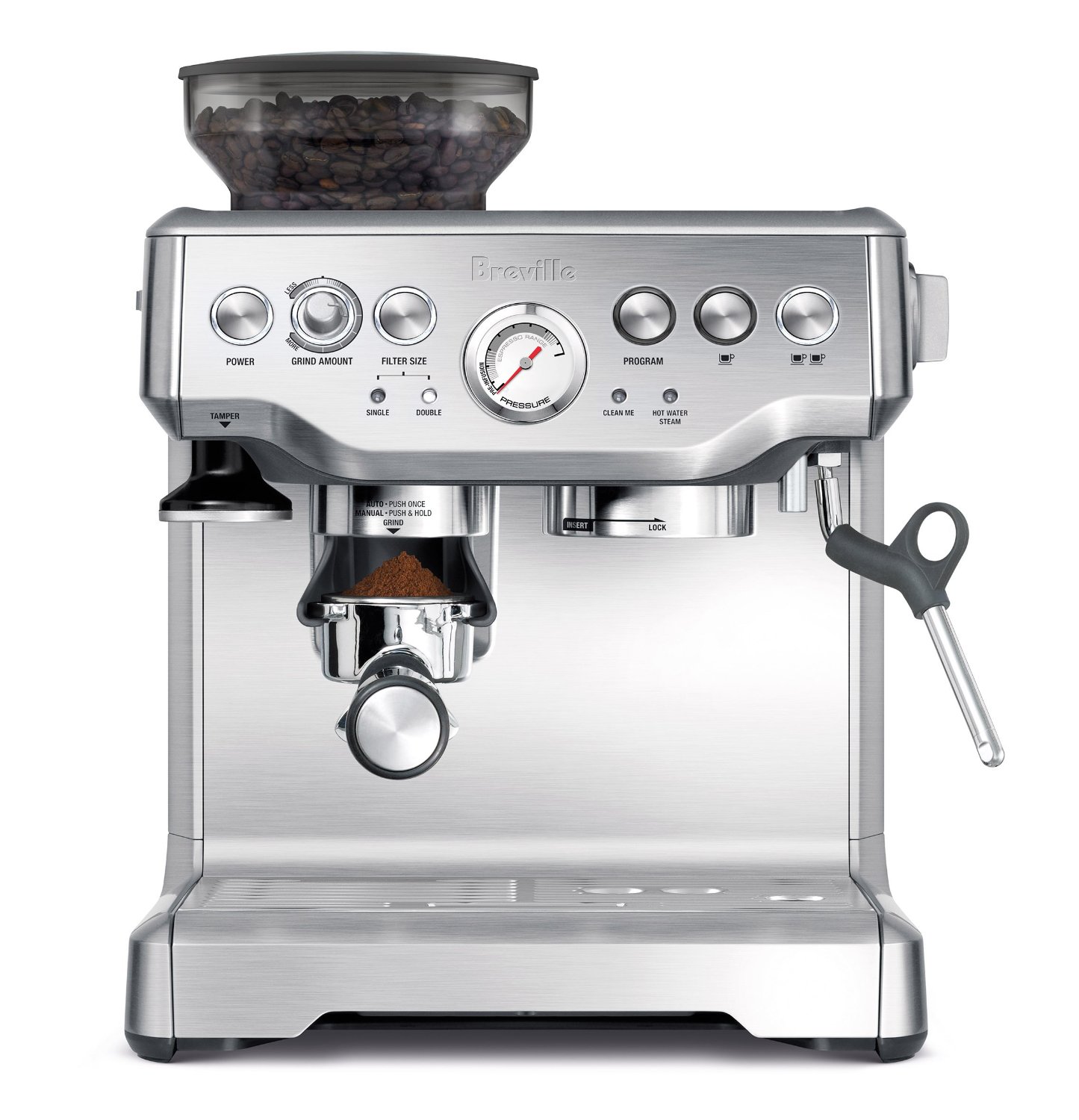
The Breville Barista Express was clearly designed with the classic espresso machine layout in mind. When you look at it on a kitchen counter, it resembles a scaled-down version of the equipment you might see behind the bar in a café.
The exterior is primarily brushed stainless steel. This choice does two things. First, it gives the machine a premium appearance that fits nicely in most kitchens. Second, stainless steel is durable and resistant to heat and moisture, which are unavoidable around espresso machines.
When you handle the machine, the weight and solidity become obvious. The portafilter, which is the handle that holds the coffee grounds, is made from heavy metal and locks firmly into the group head. That weight is intentional. A heavier portafilter helps stabilize the coffee puck during extraction and improves heat retention.
The front of the machine features a large pressure gauge that shows the extraction pressure while a shot is being pulled. While this is technically part of the user interface, it also plays a role in the design aesthetic. It reinforces the feeling that this is a piece of barista equipment rather than a simple coffee maker.
The bean hopper sits on the top of the machine and feeds directly into the built-in burr grinder. Next to the hopper is a grind size adjustment dial. The placement is practical because it allows you to adjust grind settings quickly without reaching awkwardly around the machine.
Below the grinder is a portafilter cradle. This is where you insert the portafilter when grinding beans. The grinder can automatically dispense coffee directly into it, which reduces mess and speeds up the workflow.
On the right side of the machine you’ll find the steam wand. It swivels smoothly and has enough range of motion to make milk steaming comfortable. The steam wand itself is made from metal and feels sturdy.
Another design detail that often goes unnoticed is the drip tray system. The tray is wide enough to catch spills and includes a removable grid on top. When the tray fills up with water, a small red indicator pops up to let you know it needs to be emptied.
The water tank is located at the back of the machine and can be removed by lifting it straight up. This is helpful when refilling the machine at the sink.
Breville also included a small storage compartment behind the drip tray. It’s designed to hold accessories like the cleaning tools, filters, and razor dosing tool that come with the machine. Having these items stored inside the machine keeps the countertop cleaner.
In terms of size, the Barista Express is relatively compact for a machine that includes both a grinder and espresso system. It fits comfortably on most kitchen counters without taking up the entire workspace.
Overall, the design reflects a machine that prioritizes durability, mechanical simplicity, and the experience of making espresso manually.
Ninja Luxe Café design philosophy
The Ninja Luxe Café takes a very different design direction. Instead of copying the layout of traditional espresso machines, it aims to create an all-in-one coffee station that feels modern and approachable.
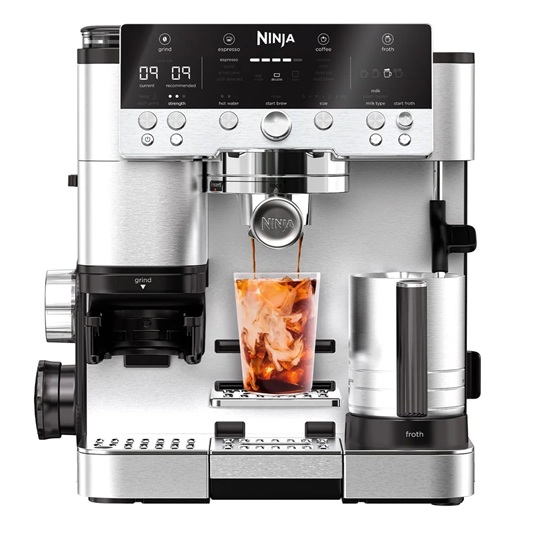
At first glance, the machine looks more like a high-end drip coffee maker than a classic espresso machine. The body is larger and more rectangular, and the front panel is dominated by a digital display and control buttons.
The larger footprint is partly due to the machine’s broader functionality. The Luxe Café is designed to brew espresso, drip coffee, and specialty drinks. Because of this, it includes multiple internal components that require additional space.
The exterior materials combine plastic and metal elements. While some sections use stainless steel accents, much of the housing is plastic. This doesn’t necessarily mean the machine is fragile, but it does give it a slightly lighter and less premium feel compared to the Breville.
However, the plastic construction does have a practical benefit. It reduces the overall weight of the machine, making it easier to move or reposition on the counter.
One of the most distinctive parts of the Ninja design is its digital interface. The display sits at the front and acts as the main control center. From here, users can select drink types, adjust settings, and follow guided brewing instructions.
This screen plays a major role in how the machine operates. Instead of relying on manual dials and gauges, the Ninja system walks users through the brewing process step by step.
The bean hopper is positioned on the top of the machine, similar to the Breville. However, the grinding process is more integrated with the automated system. The machine can suggest grind adjustments depending on the selected drink and previous brewing results.
Another notable feature is the assisted tamping mechanism. On traditional espresso machines, users must manually tamp the coffee grounds using a separate tamper tool. The Ninja system simplifies this process with a built-in mechanism that helps compress the grounds evenly.
This feature is particularly helpful for beginners who might struggle to apply consistent tamping pressure.
The milk frothing system is also integrated into the machine’s design. The frother includes automatic programs for different types of foam, including options for dairy and plant-based milk. This design emphasizes convenience and consistency rather than manual technique.
The water reservoir is larger than the one on the Breville, which reduces how often it needs to be refilled. The drip tray is also wide and easy to remove for cleaning.
Overall, the Ninja Luxe Café feels like a modern appliance designed for convenience and multi-purpose coffee brewing rather than a dedicated espresso machine.
Build quality comparison
When comparing build quality directly, the Breville Barista Express generally feels more robust.
Its stainless steel body, heavy portafilter, and solid mechanical components give it a professional feel. Many owners report using the machine for years with minimal issues when it’s maintained properly.
The Ninja Luxe Café, while still well-constructed, emphasizes functionality and accessibility rather than heavy-duty materials. The increased use of plastic and the more complex digital systems mean it may not feel quite as rugged as the Breville.
However, the Ninja’s design makes it easier for beginners to use and understand. The digital guidance, assisted features, and larger layout remove much of the intimidation factor that traditional espresso machines can create.
Overall design verdict
Both machines are thoughtfully designed, but they clearly target different types of users.
The Breville Barista Express is built for people who want a traditional espresso machine experience. Its design emphasizes durability, manual control, and the tactile feel of making coffee like a barista.
The Ninja Luxe Café is built for convenience and versatility. Its modern interface, guided brewing system, and automated features make it more approachable for beginners or households that want multiple coffee styles from one machine.
Neither design is inherently better. The right choice depends on whether you prefer the craftsmanship and control of a classic espresso machine or the simplicity and flexibility of a modern automated coffee system.
User Interface & Ease of Use
One of the biggest differences between the Breville Barista Express and the Ninja Luxe Café becomes clear the moment you start using them. While both machines aim to help people make café-style drinks at home, they take completely different approaches to how the user interacts with the machine.
The Breville Barista Express follows the philosophy of a traditional semi-automatic espresso machine. It expects the user to be actively involved in the brewing process. You control the grind size, the amount of coffee used, the tamping pressure, and the timing of the shot. This gives you a high level of control, but it also means there is a learning curve.
The Ninja Luxe Café, in contrast, is designed to guide the user through the brewing process with automation and digital assistance. Instead of relying on experience or trial and error, the machine provides recommendations and automated adjustments to simplify the workflow.
Both approaches have their advantages. The choice really depends on whether you enjoy learning the craft of espresso or prefer a system that handles most of the decisions for you.
Learning curve and first impressions
For someone who has never used an espresso machine before, the two machines feel very different right away.
The Breville Barista Express can initially seem intimidating. There are several physical controls, including grind size adjustments, grind amount settings, shot buttons, and a steam control dial. On top of that, you need to understand how to use a portafilter, how to tamp coffee correctly, and how to steam milk.
During the first few uses, many beginners feel unsure about whether they are doing things correctly. You might grind too much coffee, tamp unevenly, or pull a shot that extracts too quickly or too slowly. These mistakes are normal, but they do require patience while learning.
The Ninja Luxe Café is designed to reduce that uncertainty. When you power it on, the digital interface walks you through the process step by step. Instead of figuring everything out manually, you select the type of drink you want and the machine guides you through the necessary steps.
For example, the display might suggest a particular grind size or confirm when the machine is ready to brew. This type of guidance makes the machine feel much more approachable for beginners.
Control layout and physical interface
The Breville Barista Express uses a combination of physical buttons, dials, and mechanical controls. This layout is similar to what you would find on professional espresso machines.
The main brewing controls are located on the front of the machine. There are buttons for single and double espresso shots, along with a power button and a button for activating hot water or steam mode. These controls are simple and easy to understand once you know their purpose.
One of the most useful visual elements is the pressure gauge in the center of the front panel. While brewing, the needle moves to show whether the espresso extraction is occurring within the optimal pressure range. If the pressure is too low or too high, it usually means the grind size or tamping needs adjustment.
This gauge acts as a form of feedback that helps users improve their technique over time.
The grind size adjustment dial is located on the side of the machine near the bean hopper. It allows users to change the coarseness of the grind, which is a critical factor in espresso extraction. There is also a grind amount dial that controls how much coffee the grinder dispenses.
Because these controls are physical rather than digital, changes happen immediately. Many experienced users appreciate this simplicity.
However, the lack of a display means the machine does not provide guidance or instructions. You need to rely on your own judgment and experience when making adjustments.
Digital interface and guided controls
The Ninja Luxe Café takes a more modern approach with its digital control panel. Instead of mechanical gauges and manual settings, the machine relies heavily on a display that shows drink options and brewing guidance.
The screen functions as the central hub for interacting with the machine. Users can select drink types, adjust certain settings, and follow prompts that appear during the brewing process.
For example, when preparing a drink, the display may recommend a particular grind setting or indicate when the portafilter should be inserted. The machine can also guide users through steps like grinding, tamping, and brewing.
This guided workflow removes much of the guesswork that beginners typically face with espresso machines.
Another advantage of the digital system is the ability to store and manage multiple drink styles. The machine supports a range of beverages, including espresso, coffee, and milk-based drinks. Selecting a drink automatically configures the machine for the appropriate brewing parameters.
This makes the process faster and more convenient, especially for households where multiple people have different drink preferences.
Workflow and daily usability
Daily usability is where the two machines reveal their intended audiences most clearly.
With the Breville Barista Express, making a drink involves a sequence of manual steps. First you grind the beans into the portafilter. Then you level and tamp the grounds. After that, you lock the portafilter into the group head and start the extraction.
Once the espresso shot is finished, you may need to steam milk separately using the steam wand.
At first this workflow can feel slow or complicated. However, many users find that it becomes second nature after a few weeks. The routine becomes part of the enjoyment of making coffee.
For people who enjoy the process of crafting their drinks, this level of involvement can actually be satisfying.
The Ninja Luxe Café is designed to streamline that routine as much as possible. Many steps are simplified or assisted by the machine. Grinding, dosing, and brewing are integrated into a guided sequence that reduces manual adjustments.
As a result, making a drink typically requires fewer decisions and less hands-on work.
This can be especially helpful in the morning when people want a quick cup of coffee without focusing on technical details.
Flexibility versus convenience
The Breville Barista Express offers more flexibility because it allows users to control nearly every aspect of the brewing process.
If you want to experiment with different beans, grind sizes, extraction times, or milk textures, the machine gives you the freedom to do so. This is one of the reasons it is popular among coffee enthusiasts who enjoy learning and refining their technique.
However, that flexibility comes with added responsibility. The machine will not correct mistakes or guide the user if something goes wrong.
The Ninja Luxe Café focuses more on convenience and consistency. Its automated systems are designed to produce reliable results with minimal effort.
Instead of adjusting every variable manually, the user relies on the machine’s built-in logic and recommendations. This approach makes it easier to get good results quickly, but it may limit how much experimentation you can do.
Ease of use for different experience levels
For beginners, the Ninja Luxe Café is usually easier to learn. The digital guidance and automated features remove much of the uncertainty involved in making espresso drinks.
Someone with little to no experience can start making decent coffee within a short amount of time.
The Breville Barista Express requires more patience at the beginning. New users often spend time learning how grind size, tamping pressure, and extraction time affect the final taste of the espresso.
But once the learning curve is overcome, many people appreciate the level of control it offers.
Overall ease of use verdict
The Breville Barista Express and Ninja Luxe Café represent two very different philosophies of user interaction.
The Breville focuses on manual control and traditional espresso preparation. It takes time to learn, but it offers flexibility and a more hands-on experience.
The Ninja Luxe Café focuses on simplicity and automation. Its digital interface and guided workflow make it easier for beginners to produce consistent drinks without needing deep knowledge of espresso brewing.
For people who want to learn the craft of making espresso, the Breville provides a more engaging experience. For those who simply want reliable coffee with minimal effort, the Ninja’s interface and automation make it the easier machine to live with on a daily basis.
Coffee Quality & Brewing Performance
At the end of the day, the most important question for any espresso machine is simple: how good is the coffee? Design, features, and convenience all matter, but they ultimately serve one purpose. The machine needs to produce rich, balanced espresso with consistent flavor.
Both the Breville Barista Express and the Ninja Luxe Café are capable of making very enjoyable coffee at home. However, they achieve this in different ways. One relies on traditional espresso mechanics and user control, while the other uses automation and guided brewing to produce reliable results.
Understanding how these systems work helps explain why the flavor and brewing performance of the two machines can feel slightly different in daily use.
The fundamentals of espresso brewing
Before comparing the two machines directly, it helps to briefly explain what makes good espresso.
Espresso is brewed by forcing hot water through finely ground coffee under pressure. To produce a well-balanced shot, several variables must work together:
- Grind size
- Coffee dose
- Water temperature
- Pressure
- Extraction time
If the grind is too coarse, water flows through too quickly and the espresso tastes weak or sour. If the grind is too fine, water struggles to pass through the coffee and the shot becomes bitter or over-extracted.
Temperature also plays a key role. Water that is too cool produces underdeveloped flavors, while overly hot water can extract harsh compounds from the coffee.
Pressure, typically around nine bars in most espresso machines, helps pull oils and soluble compounds from the coffee grounds. This process creates the crema, the golden foam layer that sits on top of a properly extracted espresso.
Both machines aim to manage these variables, but they approach the challenge differently.
Breville Barista Express brewing system
The Breville Barista Express is designed around a semi-automatic brewing system that gives the user control over many of these variables.
One of the most important components is the thermocoil heating system. This system heats water quickly and helps maintain stable brewing temperatures during extraction. Temperature stability is critical for producing consistent espresso shots.
Another key feature is the machine’s pre-infusion process. Before the full pressure of the pump is applied, the machine gently saturates the coffee grounds with a small amount of water. This step allows the coffee to expand evenly and helps prevent channeling, a problem where water finds weak spots in the coffee puck and flows through too quickly.
When pre-infusion is done correctly, it promotes more even extraction and better flavor balance.
The Barista Express uses a 15-bar Italian pump, although the actual brewing pressure is regulated internally to around nine bars during extraction. This pressure range is considered ideal for espresso and helps produce a thick crema and full-bodied shot.
In terms of shot quality, the Breville is capable of producing excellent espresso when properly dialed in. The flavor profile tends to be rich and concentrated, with a noticeable crema layer and strong aromatic intensity.
Many users describe the espresso as having café-quality depth, particularly when using fresh beans that have been roasted recently.
However, the key phrase here is “when properly dialed in.” Because the machine relies heavily on manual input, the quality of the shot depends on how well the user adjusts the grind size and dose.
If the grind is too coarse, the shot may extract in less than 15 seconds and taste thin or sour. If the grind is too fine, the shot may take too long and taste bitter or overly strong.
For experienced users, this flexibility is a major advantage. It allows them to fine-tune the extraction to match different coffee beans and roast levels.
For beginners, though, the first few weeks with the machine can involve some trial and error.
Ninja Luxe Café brewing system
The Ninja Luxe Café approaches espresso brewing from a more automated perspective.
Rather than expecting the user to manage every variable manually, the machine uses software guidance and automated adjustments to help produce consistent results.
The brewing system includes a thermoblock heater that rapidly heats water to the required brewing temperature. Thermoblock systems are known for quick heat-up times, which allows the machine to start brewing faster after being turned on.
The Luxe Café also integrates its brewing system with the digital interface. When a user selects a drink, the machine automatically configures several brewing parameters to match that drink style.
For example, the system may adjust the water volume, shot timing, or grind recommendation depending on whether the user selects espresso, a larger coffee drink, or a milk-based beverage.
One of the most helpful aspects of this system is its ability to guide the user toward better extraction. If the grind size needs adjustment, the machine can provide suggestions through the display.
This type of feedback helps reduce the guesswork that often frustrates beginners when learning espresso.
In terms of flavor, the espresso produced by the Ninja Luxe Café is generally balanced and smooth. The crema layer is usually present, though it may be slightly thinner compared to shots produced by traditional espresso machines.
The flavor profile tends to be consistent rather than highly customizable. That consistency is intentional. The machine is designed to provide a reliable cup of coffee without requiring constant adjustment.
For many households, this reliability is more valuable than the ability to experiment with every brewing variable.
Shot consistency
Consistency is an important factor in daily coffee brewing.
With the Breville Barista Express, consistency improves as the user becomes more familiar with the machine. Once you find the right grind setting and dose for a particular bean, the machine can produce very reliable shots.
However, small changes in grind size, tamping pressure, or bean freshness can still affect the result. Because the process is manual, slight variations are inevitable.
The Ninja Luxe Café aims to reduce these variations through automation. By guiding the user through the process and controlling several variables automatically, the machine can produce similar results from one shot to the next.
This makes it easier for beginners to get good results consistently without spending time adjusting settings.
Flavor complexity
Another area where the two machines differ slightly is flavor complexity.
The Breville Barista Express tends to produce espresso with more pronounced layers of flavor when properly dialed in. Coffee enthusiasts often notice subtle notes such as chocolate, fruit, or caramel depending on the beans being used.
This complexity comes from the machine’s ability to fine-tune extraction parameters.
The Ninja Luxe Café produces espresso that is generally smooth and enjoyable but slightly less nuanced. The automated brewing process prioritizes balance and consistency over precise flavor experimentation.
For many people, this difference is subtle and may not matter much during everyday use.
Brewing versatility
The Ninja Luxe Café has a clear advantage when it comes to brewing versatility.
In addition to espresso, the machine can prepare other types of coffee drinks, including larger brewed coffee servings. This makes it more versatile for households where people prefer different styles of coffee.
The Breville Barista Express focuses almost entirely on espresso and espresso-based drinks. While you can make americanos by adding hot water to espresso, the machine is primarily designed for traditional espresso brewing.
Overall brewing performance
Both machines deliver strong brewing performance, but they serve different priorities.
The Breville Barista Express offers greater potential for high-quality espresso and flavor complexity. With the right grind settings and technique, it can produce shots that rival what you might get in a café.
The Ninja Luxe Café emphasizes reliability and convenience. Its automated brewing system produces consistently good coffee without requiring deep knowledge of espresso extraction.
For people who enjoy experimenting with coffee and refining their technique, the Breville provides a more rewarding brewing experience. For those who want dependable coffee every morning with minimal effort, the Ninja’s guided system makes the process much easier.
Grinder Features & Performance
A built-in grinder is one of the most valuable features in a home espresso machine. Freshly ground coffee is one of the biggest factors affecting flavor, aroma, and overall espresso quality. Even high-quality beans lose much of their complexity within minutes after grinding, which is why grinding directly before brewing is so important.
Both the Breville Barista Express and the Ninja Luxe Café include integrated burr grinders designed to simplify the process of grinding beans for espresso and coffee drinks. While both systems perform the same basic function, their design philosophies and user experiences are quite different.
The Breville grinder focuses on traditional espresso workflow and manual adjustment, while the Ninja grinder emphasizes convenience, automation, and guided control. Understanding how each grinder works can help you decide which machine better fits your coffee routine.
Why a good grinder matters for espresso
Grinding coffee for espresso is much more demanding than grinding for other brewing methods like drip coffee or French press.
Espresso requires very fine grounds that allow water to pass through the coffee puck slowly under pressure. If the grind is too coarse, water flows through too quickly and produces a weak, under-extracted shot. If the grind is too fine, water struggles to pass through the coffee and the shot becomes bitter or overly concentrated.
Because of this, espresso grinders need to produce consistent particle sizes and allow for small adjustments in grind settings.
Consistency is particularly important. If the grinder produces a wide range of particle sizes, the water will extract some grounds more quickly than others. This leads to uneven extraction and less balanced flavor.
Both the Breville Barista Express and the Ninja Luxe Café use burr grinders rather than blade grinders. Burr grinders crush beans between two abrasive surfaces instead of chopping them with spinning blades. This produces more uniform grounds and better control over grind size.
Breville Barista Express grinder design
The grinder built into the Breville Barista Express uses stainless steel conical burrs. Conical burr grinders are popular in espresso machines because they provide good consistency while generating less heat than flat burr grinders.
Heat is an important factor in grinding coffee. Excessive heat can damage the delicate oils and aromas in the beans, which can negatively affect flavor. Conical burr grinders tend to run cooler during operation, making them well suited for home espresso machines.
The Breville grinder offers 16 primary grind settings that range from coarse to very fine. These settings are adjusted using a dial located on the side of the machine near the bean hopper.
Each step on the dial moves the burrs slightly closer together or farther apart, changing the size of the coffee grounds.
For most users, these 16 settings provide enough flexibility to dial in a good espresso shot. However, some experienced coffee enthusiasts feel that the steps between grind settings are slightly larger than ideal. In some cases, the perfect grind may fall between two available settings.
Despite this limitation, the grinder performs well for a built-in system and is capable of producing espresso-fine grounds suitable for proper extraction.
Grinding workflow on the Breville
The Breville Barista Express is designed to grind directly into the portafilter. This workflow mirrors the process used in many cafés.
To grind coffee, you place the portafilter into a cradle beneath the grinder chute. Pressing the portafilter inward activates the grinder, which begins dispensing freshly ground coffee into the basket.
The machine also includes a grind amount dial that controls how long the grinder runs. Adjusting this dial allows users to change the amount of coffee delivered to the portafilter.
This process is simple but requires some experimentation. You may need to adjust both grind size and grind time to achieve the right dose and extraction speed.
Once grinding is complete, the coffee grounds are usually leveled and tamped before brewing.
Many users enjoy this hands-on workflow because it feels similar to the process used by professional baristas.
Grinder consistency and performance
For a built-in grinder, the Breville system performs quite well. It produces relatively uniform grounds and is capable of grinding fine enough for espresso extraction.
However, it does have a few minor limitations.
First, like many integrated grinders, it can produce a small amount of clumping in the grounds. This occurs when fine particles stick together due to static electricity or natural oils in the coffee beans.
Second, the stepped grind adjustment can make very fine tuning slightly difficult for advanced users.
Despite these small issues, the grinder is more than capable of producing excellent espresso when paired with fresh beans and proper technique.
Ninja Luxe Café grinder design
The grinder in the Ninja Luxe Café also uses a burr grinding system, but it is designed with a greater emphasis on automation and guided adjustments.
One of the key differences is the number of grind settings. The Ninja grinder typically offers more adjustment levels than the Breville, allowing users to select from a wider range of grind sizes.
This broader range helps accommodate the machine’s ability to brew different types of drinks, including espresso and larger coffee servings.
Another notable feature is the integration between the grinder and the machine’s digital interface. When a user selects a drink, the system can suggest an appropriate grind setting for that beverage.
This recommendation appears on the display and helps guide beginners toward better results.
Automated dosing and grinding guidance
One of the most user-friendly aspects of the Ninja Luxe Café grinder is its automated dosing system.
Instead of relying solely on a timed grinding dial, the machine can measure and dispense a specific amount of coffee based on the selected drink.
This reduces the chances of overfilling or underfilling the portafilter, which is a common issue for beginners.
The machine can also provide feedback about grind size. If the espresso shot extracts too quickly or too slowly, the display may suggest adjusting the grind setting.
This type of feedback loop makes it much easier for new users to dial in their coffee without understanding the technical details of espresso extraction.
Grind consistency and cleanliness
The Ninja grinder performs well in terms of grind consistency, particularly for a machine designed with convenience in mind.
The system is designed to minimize static buildup and reduce the amount of loose grounds that scatter around the grinder chute. This helps keep the workspace cleaner during daily use.
Another advantage is the way the grinder integrates with the machine’s tamping and brewing system. The workflow feels more streamlined compared to traditional manual grinding.
While the grinder may not match the precision of high-end standalone espresso grinders, it is more than capable of producing consistent grounds for everyday coffee drinks.
Noise levels during grinding
Grinding coffee beans always produces some noise, especially when using hard roasted beans.
The Breville grinder produces a noticeable grinding sound typical of most home burr grinders. It is not excessively loud, but it is clearly audible during operation.
The Ninja grinder tends to operate at a similar noise level, though some users find it slightly quieter depending on the grind setting and bean type.
In practical terms, the noise difference between the two machines is fairly small.
Integrated grinder versus standalone grinders
One thing worth noting is that integrated grinders will almost always have some limitations compared to standalone espresso grinders.
Standalone grinders often offer stepless grind adjustment, larger burrs, and more powerful motors. These features allow for extremely precise grinding control.
However, integrated grinders provide significant convenience and save valuable counter space.
For most home users, the grinders built into both machines offer more than enough performance to produce excellent coffee.
Overall grinder performance verdict
The Breville Barista Express and the Ninja Luxe Café both include capable built-in grinders, but they cater to different types of users.
The Breville grinder is designed for people who enjoy the traditional espresso workflow. It offers solid performance, reliable grind quality, and direct control over grind size and dosing.
The Ninja grinder focuses on simplicity and guidance. Its automated dosing and grind recommendations help beginners achieve consistent results with less experimentation.
For hands-on espresso enthusiasts, the Breville grinder feels more aligned with the craft of coffee making. For users who prefer convenience and automated assistance, the Ninja system provides a smoother and more beginner-friendly experience.
Milk Frothing & Specialty Drinks
For many people, espresso is only part of the coffee experience. A large portion of café drinks are milk-based, including lattes, cappuccinos, flat whites, macchiatos, and many seasonal specialty drinks. Because of this, the milk frothing system on an espresso machine can be just as important as the brewing system itself.
The Breville Barista Express and the Ninja Luxe Café take very different approaches to milk preparation. The Breville follows a traditional manual steam wand design that mirrors the tools used in cafés. The Ninja, by contrast, focuses on automation and convenience, offering assisted milk frothing programs designed to simplify the process.
Both systems can produce good results, but the experience and level of control are quite different.
The basics of milk frothing
To understand how these machines compare, it helps to briefly explain what milk frothing actually involves.
Milk frothing uses steam to heat and aerate milk simultaneously. When steam is injected into milk, it creates tiny air bubbles that become suspended in the liquid. These bubbles form foam, which changes the texture of the milk and gives drinks like cappuccinos their signature creamy consistency.
The goal in most espresso drinks is to create what baristas call microfoam. Microfoam consists of extremely small, uniform bubbles that create a silky texture rather than a stiff or bubbly foam. When done correctly, the milk becomes smooth and glossy, almost like wet paint.
This texture blends well with espresso and allows baristas to create latte art.
Achieving proper microfoam requires controlling several variables:
- Steam pressure
- Milk temperature
- Air incorporation
- Pitcher positioning
Professional baristas train for weeks or months to perfect these techniques, which is why the type of frothing system can significantly influence the overall user experience.
Breville Barista Express steam wand
The Breville Barista Express uses a traditional manual steam wand, similar to what you would find on many commercial espresso machines.
The wand is made from stainless steel and is mounted on a swivel joint that allows it to move freely in multiple directions. This flexibility makes it easier to position a milk pitcher at the correct angle while steaming.
To start steaming milk, the user rotates a dial on the front of the machine that activates the steam function. The thermocoil heating system quickly raises the temperature and produces pressurized steam through the wand.
The process of frothing milk involves placing the steam wand just below the surface of the milk and allowing a small amount of air to be drawn into the liquid. As the milk begins to expand, the pitcher is lowered slightly so the wand stays near the surface.
After the desired amount of foam is created, the wand is submerged deeper into the milk to continue heating without adding more air. This step helps integrate the foam into the milk and create a smooth texture.
While this process sounds simple in theory, it takes practice to perform consistently.
Learning to steam milk on the Breville
The manual steam wand gives users complete control over the milk texture. This is one of the reasons the Barista Express is popular among people who want to learn real barista techniques.
With practice, the machine can produce excellent microfoam suitable for latte art. The steam pressure is strong enough to create silky milk textures for drinks like flat whites and lattes.
However, beginners often struggle during the first few attempts.
Common mistakes include:
- Introducing too much air and creating large bubbles
- Overheating the milk
- Failing to create enough foam for cappuccinos
These issues usually improve as the user becomes more familiar with the steaming process.
Another important part of using a manual steam wand is cleaning it after each use. Milk residue can build up quickly on the wand if it is not wiped and purged immediately after steaming.
The Breville machine includes a simple routine where the user briefly releases steam after wiping the wand. This clears any milk that may have entered the tip.
Milk texture versatility on the Breville
One advantage of manual steaming is flexibility.
Different drinks require different milk textures. For example:
- Lattes require smooth, lightly textured milk
- Cappuccinos need thicker foam
- Flat whites require extremely fine microfoam
With a manual steam wand, users can adjust their technique to create the desired texture for each drink.
This level of control allows experienced users to experiment and refine their drinks in ways that automated systems cannot always replicate.
Ninja Luxe Café automatic frothing system
The Ninja Luxe Café takes a very different approach to milk preparation.
Instead of requiring manual steaming technique, the machine includes an automated milk frothing system designed to handle the process with minimal user involvement.
This system typically uses a combination of heating and mechanical aeration to produce milk foam. Users simply pour milk into the frothing container and select the desired foam style on the machine’s interface.
The machine then controls the temperature and aeration automatically.
This approach dramatically simplifies the process of making milk-based drinks. Instead of practicing steam wand technique, users can achieve consistent foam by selecting the appropriate setting.
Foam customization and drink styles
One of the strengths of the Ninja system is the range of foam options it provides.
The machine typically offers multiple frothing styles such as:
- Light foam for lattes
- Thick foam for cappuccinos
- Cold foam for iced drinks
Some versions also include settings designed specifically for plant-based milk alternatives such as oat milk, almond milk, or soy milk.
These settings adjust the frothing process to account for the different protein and fat structures found in non-dairy milk.
This versatility allows users to easily prepare a wide range of specialty drinks without needing to understand the technical details of milk frothing.
Consistency and reliability
Because the Ninja system is automated, it tends to produce very consistent results.
Each time the same setting is used, the machine follows the same heating and aeration process. This reduces the variability that often occurs when steaming milk manually.
For households where multiple people use the machine, this consistency can be a significant advantage. Anyone can prepare a latte or cappuccino without worrying about mastering barista techniques.
However, automated systems sometimes produce foam that is slightly thicker or less silky than true microfoam created with a steam wand.
For most casual coffee drinkers, this difference is minor. But experienced espresso enthusiasts may notice the difference in texture.
Specialty drink preparation
When it comes to preparing specialty drinks, both machines can handle common café beverages, but the process differs.
With the Breville Barista Express, specialty drinks are created manually. After pulling an espresso shot, the user steams milk separately and pours it into the espresso.
This process allows for artistic presentation, including latte art designs like hearts or rosettas.
The Ninja Luxe Café simplifies specialty drink preparation by automating more steps. In many cases, the machine manages the milk frothing process automatically while the user focuses on assembling the drink.
Some models even include drink presets that coordinate brewing and frothing steps.
This design makes it easier for beginners to prepare café-style beverages quickly.
Cold foam and iced drinks
Another area where the Ninja system stands out is cold foam preparation.
Cold foam has become increasingly popular in iced coffee drinks. Creating cold foam with a traditional steam wand is difficult because steam naturally heats the milk.
The Ninja frothing system can produce cold foam without heating the milk, making it easier to prepare iced lattes and cold brew drinks topped with foam.
The Breville Barista Express does not include a dedicated cold foam function. Users who want cold foam typically need a separate frothing device.
Overall milk frothing verdict
The Breville Barista Express and the Ninja Luxe Café offer two very different milk frothing experiences.
The Breville’s manual steam wand provides full control and the ability to create professional-quality microfoam. For people who enjoy learning barista techniques and experimenting with milk textures, this approach can be extremely rewarding.
The Ninja Luxe Café focuses on convenience and automation. Its guided frothing system allows users to create consistent milk foam with minimal effort, making specialty drinks accessible even to beginners.
For hands-on coffee enthusiasts, the Breville offers a more authentic café-style experience. For households that prioritize simplicity and speed, the Ninja’s automated frothing system makes preparing milk-based drinks far easier in everyday use.
Maintenance & Cleaning
Maintenance and cleaning are often overlooked when people compare espresso machines, but they play a major role in the long-term ownership experience. Espresso machines deal with water, heat, coffee oils, milk residue, and fine coffee particles every day. Without regular cleaning, these elements can build up inside the machine and affect both performance and flavor.
Coffee oils can become rancid over time, milk residue can clog steam wands or frothing systems, and mineral deposits from water can accumulate inside internal pipes and heating systems. When this happens, drinks can start to taste bitter or stale, and the machine may eventually experience mechanical issues.
Because of this, every espresso machine requires routine care. The difference between machines often comes down to how complicated the cleaning process is and how much of the work the machine handles automatically.
The Breville Barista Express and the Ninja Luxe Café both require regular maintenance, but their cleaning routines reflect their different design philosophies. The Breville focuses on traditional manual cleaning methods similar to those used on commercial machines, while the Ninja integrates more automated cleaning reminders and simplified maintenance steps.
Daily cleaning routine
Daily cleaning tasks are the simplest but most important part of espresso machine maintenance. These steps usually take only a few minutes but prevent long-term buildup of coffee oils and milk residue.
With the Breville Barista Express, the daily routine typically includes several small tasks after making drinks.
First, the portafilter and filter basket should be knocked out and rinsed after each shot. Coffee grounds left in the basket can dry and become difficult to remove later.
Next, the group head, which is the area where the portafilter locks into the machine, should be briefly flushed with hot water. This removes leftover coffee particles that may remain in the brewing chamber.
If milk has been steamed, the steam wand must be cleaned immediately after use. This involves wiping the wand with a damp cloth and briefly purging steam through the tip to clear any milk that may have entered the nozzle.
These steps are simple but essential. Milk residue can harden quickly and block the small holes in the steam wand if it is not cleaned right away.
The Ninja Luxe Café also requires basic daily cleaning, but the process is slightly different because of its automated frothing system.
If the machine uses a milk container or frothing attachment, that component usually needs to be rinsed after each use. Many automatic frothers include a quick rinse cycle that flushes milk residue from internal parts.
The portafilter and filter basket still need to be emptied and rinsed, similar to the Breville. Coffee grounds should not be left sitting in the machine for long periods.
Overall, the daily cleaning requirements for both machines are relatively manageable and become part of the normal coffee routine.
Weekly cleaning tasks
Beyond the daily routine, espresso machines benefit from deeper cleaning once a week or every few days depending on how frequently the machine is used.
For the Breville Barista Express, weekly cleaning often includes wiping down the drip tray, cleaning the grinder area, and rinsing removable parts such as the water reservoir.
Coffee grinders can accumulate fine particles of ground coffee, sometimes referred to as coffee dust. Over time, these particles can build up around the burrs or inside the grinder chute. Cleaning the grinder area helps maintain consistent performance and prevents stale coffee from affecting the flavor of fresh grounds.
The drip tray also needs regular attention because it collects excess water from brewing and steam condensation. If left unchecked, it can become messy or develop unpleasant odors.
The Ninja Luxe Café typically requires similar weekly cleaning. The drip tray and water reservoir should be rinsed, and any removable frothing components should be washed thoroughly.
Because the Ninja relies more heavily on automated systems, some models include cleaning reminders on the display. These reminders prompt users when certain maintenance tasks are due.
This feature can be especially helpful for beginners who might otherwise forget routine maintenance steps.
Backflushing the brewing system
One of the most important cleaning processes for traditional espresso machines is backflushing.
Backflushing cleans the internal brewing system by forcing water and cleaning solution through the group head and internal valves. This removes coffee oils and residue that accumulate during brewing.
The Breville Barista Express supports backflushing using a special cleaning disc and cleaning tablets that come with the machine.
To perform a backflush cycle, the user places the cleaning disc in the portafilter, adds a cleaning tablet, and runs a cleaning program that pumps water through the system. This process helps keep the internal brewing components clean and functioning properly.
Backflushing is typically recommended every few weeks depending on usage.
The Ninja Luxe Café may not require traditional backflushing in the same way because its brewing system is designed differently. Instead, it may rely on automated cleaning cycles that flush water through the internal components.
These cycles are triggered either manually or through prompts on the machine’s display.
While the exact process varies by model, the goal is the same: removing coffee oils and residue that can affect flavor.
Descaling and mineral buildup
Another important aspect of espresso machine maintenance is descaling.
Water naturally contains minerals such as calcium and magnesium. When water is heated repeatedly inside an espresso machine, these minerals can accumulate and form hard deposits known as limescale.
Limescale buildup can reduce heating efficiency, clog internal pipes, and eventually damage the machine.
Both the Breville Barista Express and the Ninja Luxe Café require periodic descaling to remove these mineral deposits.
The frequency of descaling depends on the hardness of the water being used. In areas with hard water, descaling may be necessary every one to two months. In areas with softer water, it may only be required a few times per year.
Descaling typically involves running a mixture of water and a descaling solution through the machine’s internal system. The solution dissolves mineral deposits and flushes them out of the machine.
Many machines, including the Ninja Luxe Café, provide alerts when it is time to descale. These reminders make it easier for users to stay on schedule with maintenance.
Grinder cleaning and maintenance
Because both machines include built-in grinders, the grinder components also need occasional attention.
Coffee beans contain natural oils that can accumulate on grinder burrs over time. If too much oil buildup occurs, the grinder may become less efficient or produce inconsistent grind sizes.
For the Breville Barista Express, the burr grinder can be partially disassembled for cleaning. The upper burr can be removed, allowing users to brush away coffee residue and trapped grounds.
This process helps maintain grind consistency and ensures that old coffee particles do not mix with fresh beans.
The Ninja Luxe Café grinder may include removable parts designed for easier cleaning. Some models allow the burr assembly or hopper to be removed so users can clean out leftover grounds.
Regular grinder cleaning improves performance and prevents stale flavors from developing.
Cleaning milk frothing components
Milk residue can be one of the most stubborn cleaning challenges for coffee machines.
The Breville Barista Express steam wand requires manual cleaning after each use. Wiping and purging the wand is usually enough to prevent buildup, but the tip may occasionally need to be removed and soaked if milk residue accumulates.
The Ninja Luxe Café automatic frothing system may include removable components that can be washed separately. Some systems also include automated rinse cycles that flush milk residue from internal tubing.
These features help reduce the effort required to maintain the frothing system.
Long-term maintenance considerations
Over the long term, proper maintenance helps extend the lifespan of an espresso machine.
Machines that are cleaned regularly tend to experience fewer mechanical problems and produce better-tasting coffee.
The Breville Barista Express has a reputation for durability when maintained properly. Because many of its components are mechanical rather than digital, they can often last for many years with regular care.
The Ninja Luxe Café includes more automated systems and electronic components. While these features improve convenience, they also add complexity. Regular cleaning and following the machine’s maintenance alerts can help ensure reliable performance.
Overall maintenance experience
When comparing the two machines, the Breville Barista Express requires a slightly more hands-on cleaning routine. This mirrors the maintenance practices used in professional coffee environments.
The Ninja Luxe Café simplifies some aspects of maintenance through automated cleaning cycles and digital reminders. These features make the process easier for users who prefer minimal manual intervention.
Both machines are manageable to maintain, but they cater to different preferences.
People who enjoy the traditional espresso workflow may not mind the manual cleaning routine of the Breville. Those who prefer guided maintenance and automated reminders may find the Ninja system more convenient for everyday use.
Conclusion
After spending considerable time comparing the Breville Barista Express and the Ninja Luxe Café, it becomes clear that both machines target slightly different types of coffee drinkers, even though they appear to compete in the same general category of home espresso machines. Each one offers a compelling package, but their strengths lie in different areas depending on what you value most in a daily coffee routine.
The Breville Barista Express remains one of the most well-rounded semi-automatic espresso machines available for home use. Its sturdy construction, integrated conical burr grinder, and strong focus on manual control make it especially appealing to coffee enthusiasts who want to actively participate in the brewing process. Adjusting grind size, dialing in shot timing, and manually steaming milk gives users the opportunity to refine their technique over time. When properly dialed in, the machine consistently produces rich, balanced espresso with excellent crema and impressive flavor clarity. While it requires a learning curve and a bit more hands-on involvement, the reward is a more authentic café-style espresso experience at home.
The Ninja Luxe Café, on the other hand, prioritizes accessibility and convenience. Its interface is generally more beginner-friendly, and many of its features are designed to simplify the process of making espresso-based drinks. Rather than focusing heavily on manual tweaking and fine-tuning, the Ninja leans toward guided brewing and ease of use. For households where multiple people want quick, reliable drinks without spending time adjusting grind settings or mastering milk texturing, the Ninja can be an appealing option. It delivers solid espresso performance and a streamlined workflow that suits busy mornings.
In the end, choosing between these two machines comes down to your priorities. If you enjoy experimenting with espresso variables and want greater control over the brewing process, the Breville Barista Express is likely the more satisfying long-term investment. If you prefer a simpler, more approachable machine that still delivers good coffee with minimal effort, the Ninja Luxe Café may be the better fit. Both machines provide good value within their respective design philosophies, but they ultimately serve slightly different styles of home barista.