
Choosing a super-automatic espresso machine today can feel overwhelming, especially when two well-known brands target similar coffee lovers in very different ways. The De’Longhi Eletta Explore and the Jura Z10 sit in two distinct tiers of the market, yet both promise café-style drinks without barista skills. The Eletta Explore aims to be the do-everything machine for busy households: lots of drink options, simple controls, and an approachable price. The Jura Z10, on the other hand, leans into precision engineering, premium materials and extraction technology meant to satisfy people who care deeply about the nuances in their cup. I spent time using both in normal daily routines—morning espressos, afternoon lattes and a few cold drinks—to see where each one shines and where it falls short. This review walks through the design, performance and overall experience so you can decide which machine truly fits your coffee habits.
De’Longhi Eletta Explore vs Jura Z10 Comparison Chart
If you click the links below, under the product images, you will be redirected to Amazon.com. In case you then decide to buy anything, Amazon.com will pay me a commission. This doesn’t affect the honesty of this review in any way though.
| Specification / Feature | De’Longhi Eletta Explore | Jura Z10 |
|---|---|---|
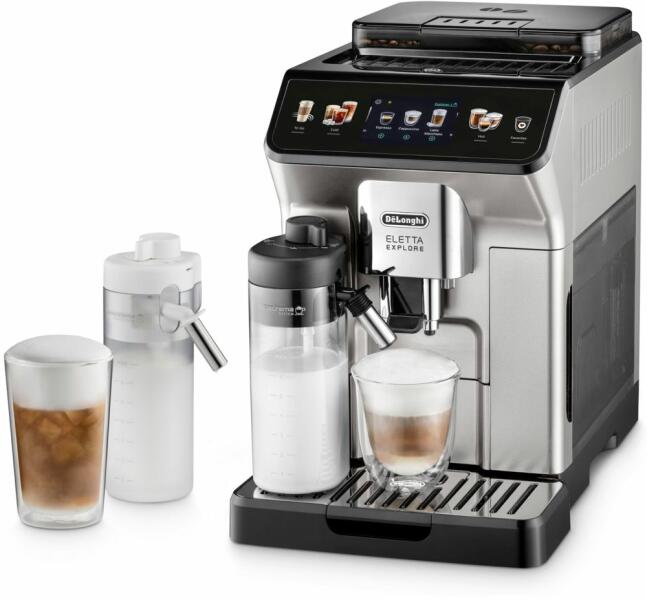 | 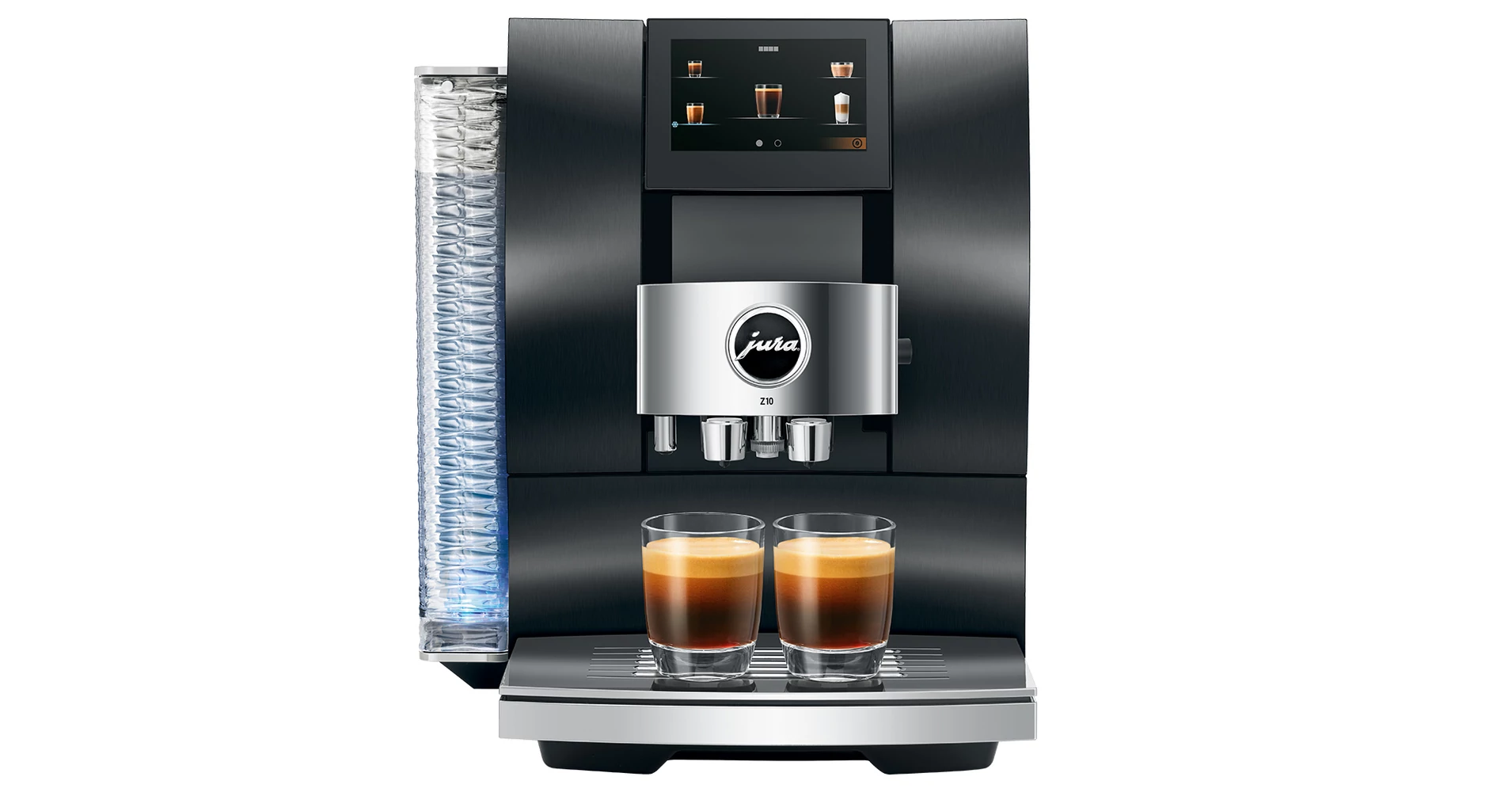 | |
| Check the best price on Amazon | Check the best price on Amazon | |
| Type | Super-automatic bean-to-cup machine | Super-automatic bean-to-cup machine |
| Power / Voltage | 1450 W / 220-240 V | 1450 W / 230 V |
| Pump Pressure | 19 bar | 15 bar |
| Water Tank Capacity | ~1.8 L | 2.4 L |
| Bean Hopper Capacity | ~300 g | 280 g |
| Grounds Container Capacity (used pucks) | ~14 portions (some sources) | ~20 portions |
| Grinder Type | Built-in conical burr grinder; adjustable grind, 7 grind settings per spec sheet | Built-in “Product Recognising Grinder” (P.R.G.), conical burr, with electronic / automatic grind adjustment + manual option |
| Grind & Brew Dose Range | Grinder adjustment via dial inside hopper (manual only) — fewer but sufficient steps; typical for espresso & milk drinks. | Grind consistency and dose adaptability (brew unit 5–16 g) allow switching between espressos, long coffees, cold drinks etc. |
| Display / Controls | Touchscreen display (TFT / colour), simple UI, intuitive for beginners. | 4.3″ colour touchscreen + rotary switch (Blue Crystal), more advanced UI, broader programmability (strength, temperature, milk, etc.) |
| Milk system | Integrated “LatteCrema” carafe — hot and cold milk/foam options, suitable for milk- and cold-based drinks. | HP3 milk system with milk tube + interchange- able milk spout (CX3), one-touch milk drinks, automatic milk cleaning, hot and cold milk/foam. |
| Drink variety / Modes | Wide menu including espresso, coffee, long coffee, milk-based drinks, cold / iced drinks / cold-brew-style recipes. | Extensive list of drinks: espresso, long coffee, milk coffees, hot water, and cold-extraction / cold speciality drinks via “Cold Extraction Process” + full programmability (milk, foam, strength, temperature). |
| Height-adjustable Spout (max cup height) | Up to ~170 mm (≈ 6.7″) | Dual spout adjustable ~78–150 mm (coffee spout) / 82–154 mm (hot-water spout) |
| Water filter support / Descaling / Hygiene cycles | Built-in water filter support to reduce scale; manual descaling & cleaning routines. | Automatic filter detection (CLARIS Smart+), integrated rinsing/cleaning/descaling programs, one-touch milk system cleaning. |
| Energy saving / Standby | Automatic shut-off / standby possible (per manual instructions for energy saving) | Energy Save Mode (E.S.M.), zero-energy switch, programmable shut-off time, stand-by power ≈ 0 W |
| Dimensions (W × H × D) | ~ 260 × 385 × 450 mm | 320 × 363 × 470 mm |
| Weight | ~11.1 kg (varies by exact model specification) | ~12.3 kg |
| Connectivity / Smart features | — (standard UI + manual control; some models may offer app/profile support) | WiFi / app connectivity, programmable drink personalization (strength, milk, temperature, grind, etc.) |
| My individual reviews | De’Longhi Eletta Explore review | Jura Z10 review |
Notes / Observations on the Table
- The Eletta Explore’s water tank (≈ 1.8 L) is noticeably smaller than the Z10’s 2.4 L capacity — something to consider if you make many drinks per day or don’t want to refill often.
- The Eletta’s bean capacity is slightly higher in some published specs (≈ 300 g) compared to the Z10’s 280 g.
- Grinder wise: the Z10’s P.R.G. grinder offers electronic control and integration with drink type, providing automatic grind adjustment and better consistency — a feature not available on the Eletta, which uses a more manual-style grinder dial.
- Milk system design differs fundamentally: Eletta Explore uses a removable carafe (LatteCrema) for milk/foam, whereas Z10 uses a tube-based milk system (HP3 + CX3 spout), which may affect milk-drink workflow and cleaning style.
- The Z10 is more “future-proof” in terms of automation: integrated cleaning, filter detection, programmable settings across many parameters — features that contribute to consistency and convenience for heavy users.
Design & Build Quality
When you compare the De’Longhi Eletta Explore and the Jura Z10 side by side, it becomes clear that they were built with different ideas about what a kitchen appliance should be. Both feel solid and well engineered, but they send very different messages the moment you touch them. This section takes a close look at materials, physical layout, durability, counter presence, day-to-day handling and the kind of experience each machine is meant to deliver.
Overall visual style
The Eletta Explore looks like something designed for everyday kitchens. It has a practical shape, rounded corners and a mix of matte and glossy plastic panels that keep fingerprints manageable. It feels modern without trying to dominate the room. The touchscreen sits front and center, and the machine looks friendly and approachable in a way that makes sense for family use. It does not hide what it is. You see the bean hopper, the milk system and all the functional parts. This transparency works in its favor. You always know where things are and what to press.
The Jura Z10 has a different personality. It feels like a premium appliance you might see in a high-end showroom. The front panel has a sculpted, almost architectural surface that gives it depth and presence. Materials feel dense and carefully finished. When you move a finger across the edges of the display or the housing, you notice the precision. The Z10 is not just a machine that happens to make coffee. It also plays the role of a design object. If you like the idea of a machine that becomes part of the visual identity of your kitchen, the Z10 fits that role very well.
Size and counter presence
Both machines are reasonably large, as most bean-to-cup models are, but the way they occupy space differs. The Eletta Explore blends in. It is tall enough to feel substantial but not oversized. It has a rectangular footprint that is easy to position between other appliances, and its lighter visual weight means it does not demand attention. You can set it next to a toaster, a kettle or a blender, and it still feels at home.
The Z10 has a more dominant presence. It is not dramatically bigger, but the combination of sharp design lines, a large display and high-quality materials makes it stand out. It feels like a centerpiece even if you place it in a corner. Some people will love that. Others might prefer something that disappears a little more into the background. It all depends on how much visual personality you want your coffee machine to have.
Materials and construction
De’Longhi uses a mix of plastics and metal accents for the Eletta Explore. The plastics are well chosen. They are durable, thick and easy to clean. Nothing feels flimsy. The drip tray, water tank and bean hopper all fit smoothly and lock in place without fuss. The machine feels built for regular daily use where multiple people may handle it throughout the day. You can remove parts without worrying about breaking tabs or getting fingerprints on delicate finishes.
Jura takes a premium approach. The Z10 uses higher grade plastics, metal elements and more refined surface treatments. The touch display is glossy and feels similar to the surface of a high-end smartphone. The rotary switch has a smooth, heavy feel that makes each turn satisfying. All moving parts feel tightly engineered. While the machine has more polish, it also feels like something you handle with a little more care. It is not fragile, but you notice the difference in finish and may naturally treat it with more attention.
Build quality in daily use
During daily handling, the Eletta Explore feels like a dependable tool. You open the bean hopper, refill water, remove the drip tray or attach the milk carafe without thinking. Everything is built for simple movement. If you have multiple people in the house who will use the machine, this approach is ideal. No one hesitates to adjust a part or clean something because the machine does not intimidate.
The Z10 has tighter tolerances and a more engineered feel. The way the water tank slides in, the way the spouts adjust, even the feel of the buttons and icons all signal precision. You notice the difference when removing the drip tray or adjusting the grind setting. The Z10 gives the impression of long-term durability, but it also feels like a device that prefers mindful handling rather than rushed motions.
Access to internal components
Access matters because it affects maintenance and long-term ownership. The Eletta Explore makes it easy to reach the main components a household touches most often. The water tank lifts out from the side, which is convenient when the machine sits under cabinets. The drip tray is wide but easy to remove without wobbling. The milk carafe is simple to disconnect. While De’Longhi machines often allow removal of the brewing unit for cleaning, the handling of parts on the Eletta Explore is straightforward enough that daily tasks remain simple.
Jura hides more of its internal components by design. The Z10’s water tank is also easy to remove, but other internal parts are not meant to be taken out by the user. Jura prefers automated cleaning cycles and proprietary cleaning tablets instead of manual access. This creates a neat, sealed experience, which many people appreciate, but it means you depend more on the machine’s built-in cleaning programs rather than hands-on maintenance.
Fit and finish
Fit and finish is where the two machines separate most clearly. The Eletta Explore’s finish is clean and practical, and seams are even. Yet you can tell the focus is on usability over artistry. Surfaces are designed to resist everyday wear and cleaning. They do the job well.
The Z10’s finish is refined. Edges line up with precision. Surfaces feel more polished. Buttons respond with a soft, deliberate touch. The way the display sits within its frame and the way the rotary switch moves show the amount of engineering invested in the design. It gives the machine a feeling of permanence.
Durability expectations
Both machines should last years if maintained, but the sense of durability differs. The Eletta Explore feels like a well-made appliance meant for busy households, heavy use and frequent cleaning. It is sturdy, functional and resilient. The Z10 feels like something engineered for long life with more premium internal components and a structure built to age gracefully. If you want a machine that looks as good five years from now as it does today, the Z10 has an advantage.
Summary
The Eletta Explore focuses on practicality, simplicity and approachability. It fits comfortably in most kitchens and handles daily wear without stress. The Jura Z10 leans into luxury, precision and visual impact. It is built for people who want a machine that performs exceptionally and also looks exceptional.
Both approaches are valid. Your preference comes down to the type of presence you want on your counter and how you expect to interact with your espresso machine day after day.
User Interface & Ease of Use
User experience matters more than most people admit when buying a super-automatic espresso machine. You interact with it several times a day. You scroll through menus before you’ve had your first sip. You adjust strength settings when guests come over, and you rely on prompts when the machine needs cleaning. A good interface disappears into the background. A clumsy one slows you down and chips away at the pleasure you expect from a one-touch coffee maker.
The De’Longhi Eletta Explore and the Jura Z10 take noticeably different approaches to this part of the design. Both are polished and generally intuitive, yet they reflect two different philosophies: De’Longhi prioritizes familiarity and friendliness, while Jura focuses on refinement and efficiency. The result is that each machine will appeal to a different type of user. What follows is a detailed breakdown of what these machines are like to operate day after day.
Getting started
The Eletta Explore is a machine that immediately makes sense before you’ve read a manual. You turn it on, and the touchscreen guides you through setup in clear language. The icons are large, the layout is simple and the instructions feel friendly. Someone who has never used a super-automatic machine can figure out the basics in minutes. De’Longhi knows its audience: families, multiple users, and busy households where the machine needs to be intuitive for everyone from teenagers to grandparents.
The Jura Z10 also offers a guided setup, but the tone is different. The text is concise, the animations are smooth and the interface feels more like a premium appliance than a household gadget. You sense the machine expects you to follow the steps carefully. Nothing is confusing, but you can feel the difference in personality. Where the Eletta Explore helps you along, the Z10 presents instructions and trusts you to follow them.
Layout and interface style
The Eletta Explore’s screen has bright colors, rounded icons and category-based browsing. You can navigate by drink type—espresso, cappuccino, iced drinks, cold brew—or through preset favorites. The screen is responsive and the menu structure is simple. Even the smallest text is easy to read. It feels like the interface of a modern touchscreen appliance, similar to what you might see on a smart refrigerator or microwave.
Jura’s interface on the Z10 is more restrained. Colors are muted, the graphics sharper and the animations slower but smoother. The icons are minimal. It feels more like a premium smartphone interface than a kitchen device. Buttons respond instantly to touch, and every transition feels deliberate. The Blue Crystal Rotary Switch adds a tactile layer that sets Jura apart—turning the dial gives you control in a way tapping alone doesn’t. It skips the overly friendly aesthetic and opts for something more professional.
This is where the differences become obvious.
The Eletta Explore is built for exploration. If you enjoy browsing through drinks—hot lattes, iced macchiatos, cold brew, and a dozen customizable variations—the layout encourages it. You scroll, tap and occasionally get lost in all the options. Some might feel it has too many screens, but people who love choice will appreciate the freedom. The Coffee Link app mirrors the on-screen experience, and for some users it’s even easier. You can tweak drinks from your phone, save profiles, or start a drink remotely.
The Z10 streamlines the process. It shows fewer items at once, but the machine encourages you to select a drink and customize it only when necessary. Jura’s logic is simple: fewer taps, less clutter, faster execution. For many drinks you can start a brew in two motions—turn the dial, tap the drink, and you’re done. Customizing temperature, milk volume or strength is quick because the rotary switch lets you adjust values with a single motion rather than a sequence of taps. It is not built for browsing. It is built for precision, speed and clarity.
Customization options
Both machines allow a lot of customization, but they do it differently.
On the Eletta Explore, customization is visual and friendly. You get sliders and icons that represent strength, volume and milk levels. You see the numbers change in real time. The UI encourages experimentation. If you want a stronger iced latte or a more intense flat white, you can nudge settings until they match your taste. The app expands on this by letting you create personalized profiles for each household member.
On the Z10, customization is tighter and more focused. You can adjust strength, temperature, milk volume and extraction settings quickly, but the machine expects you to know what you want. Instead of colorful sliders, you get precise adjustments through the dial or touch inputs. The options feel deliberate, not playful. Users who enjoy dialing in consistent drinks will appreciate this structure. Users who like browsing and experimenting may find it a bit reserved.
Performance during daily use
Daily use reveals more differences.
With the Eletta Explore, you feel like the machine is encouraging creativity. Want to try a cold latte even though it’s winter? Just tap. Want to switch from normal to extra strong? Three taps. Want to explore new recipes? The machine practically invites you to. The touchscreen is readable from across the kitchen, and the UI never feels intimidating.
With the Z10, the interface becomes invisible once you get used to it. You select a drink quickly without thinking about the UI. It feels less like browsing a menu and more like operating a machine designed to work smoothly once you’ve learned its rhythms. The rotary switch makes fine adjustments quick. You rarely have to dig through extra screens.
App integration
De’Longhi’s app extends the experience nicely. It mirrors the touchscreen and makes it simple to store multiple profiles. If you like the comfort of controlling the machine from your phone—or if several people use the machine—this adds real convenience.
Jura’s app is polished and well designed, but many users find they rely on it less because the machine’s own interface is already so efficient. It’s useful for maintenance reminders and remote operation, but it feels more like a companion than a core part of the experience.
Learning curve
The Eletta Explore has almost no learning curve. If someone unfamiliar with the machine wants a latte, they’ll figure it out on their first try. Even the settings and adjustments are clear at a glance.
The Z10 takes a little longer to understand, mostly because the interface feels more like a precision tool than a casual appliance. Once you learn it, it’s extremely fast. But the first few days might involve more attention.
Daily cleaning prompts and usability
Both machines guide you through cleaning steps on screen, but again, the tone differs.
The Eletta Explore walks you through cleaning with a warm, user-friendly style. It tells you what to press, what to remove and what to attach. Anyone in the household can complete the steps without confusion.
The Z10 gives direct instructions and expects the user to follow them. The guidance is clear but less conversational. It feels like working with a professional tool rather than a family appliance.
Final thoughts
Both machines excel in user experience, but they serve different preferences.
The Eletta Explore is perfect for people who enjoy variety, visual interfaces and a relaxed, inviting design. It’s approachable for households with many users and ideal for anyone who likes browsing and experimenting with drinks.
The Jura Z10 suits users who value precision, speed and a refined interface that gets out of the way. It’s ideal for someone who wants a premium experience and doesn’t need a playful UI to feel comfortable.
Coffee Quality & Brewing Performance
Coffee quality is the reason anyone buys a super-automatic espresso machine, and it’s where the differences between the De’Longhi Eletta Explore and the Jura Z10 come into sharp focus. Both machines can make enjoyable espresso and balanced milk drinks, but they achieve those results in very different ways. One aims for broad appeal and consistency across a wide range of drinks, while the other targets clarity, precision and a higher ceiling for flavor. This section takes a deep look at how each machine actually brews coffee, how they handle different beans, how consistent they are from shot to shot and what the final cup tastes like under everyday conditions.
How the machines approach extraction
The Eletta Explore follows the classic De’Longhi super-automatic style. It uses a conical burr grinder, a pre-infusion stage and a straightforward extraction cycle that is tuned to produce a forgiving, pleasing shot. Its engineering leans toward dependability rather than fine-tuned control. When you change beans, adjust the grind or shift from espresso to longer milk drinks, the machine adapts without needing dramatic tweaking on your part. De’Longhi clearly wants the user to think less and enjoy more.
The Jura Z10 takes a more technical approach. Jura machines are known for tight temperature control and extremely consistent dosing. The Z10 adds multi-level water distribution—Jura calls it 3D brewing—which allows the machine to distribute water through the puck more evenly. This leads to a more balanced extraction, especially with medium or lighter roasts. The machine appears to think more about the coffee. It adjusts flow, pressure and saturation to keep the extraction stable even when the dose or grind is changed.
Flavor profile and espresso quality
The Eletta Explore produces espresso that most people would describe as smooth, rounded and easy to drink. It brings out chocolatey sweetness in darker roasts and softens acidity in lighter beans. There is a gentle quality to its shots. The crema tends to be thick and slightly tan. The structure of the espresso is less intense than what the Jura produces, but for many drinkers this works in its favor. You get a tasty cup without needing to hunt for subtle tasting notes.
The Jura Z10 offers a more expressive result. Shots have greater clarity and definition. If a bean has citrus brightness or floral high notes, the Z10 reveals them. If a roast carries caramel sweetness or a spicy finish, you taste those details more distinctly. The crema is tighter, with finer bubbles. You often end up with a more layered experience: first the aroma, then the acid-sweet balance, then a clean finish. This does not mean it’s better for everyone—but it is more precise.
Handling of different roast levels
The Eletta Explore handles dark and medium roasts well. Its extraction style smooths out harsh edges, making it a great machine for people who prefer classic espresso blends. With lighter roasts, it can still make an enjoyable cup, but you lose some of the brightness and complexity that manual or high-end machines bring out. The shot becomes friendly but not intricate.
The Z10 handles a wider range of roasts. Dark blends still taste rich, but the machine shines when you feed it lighter or single-origin beans. Its ability to control temperature and saturation allows those beans to show more personality. If you like exploring different bags of coffee from roasters, the Z10 makes it more rewarding.
Temperature stability
Temperature directly affects flavor. The Eletta Explore has good stability for its class. The machine heats quickly and delivers espresso at a consistent temperature once warmed. Occasionally, after long idle times, the first shot may run a touch cooler, but the machine stabilizes quickly.
The Z10 excels at temperature control. Jura machines are known for keeping extraction temperatures inside narrow bands, and this model continues that trend. Whether the machine has been idle or busy, the first shot is usually spot-on. If you like repeatability—especially in the early morning when you’re half awake—this matters.
Shot-to-shot consistency
Consistency is the difference between a fun consumer machine and a serious one.
The Eletta Explore is consistent enough that most users will never notice variations. You may see small differences in crema thickness or strength from time to time, especially if the grind setting is tweaked or the beans are oily. But the differences are minor and mostly visible only to trained palates.
The Jura Z10 is extremely consistent. Jura’s dosing system is one of its strengths, and the machine delivers nearly identical shots back to back. If you’re the type of person who sips espresso carefully and expects it to taste the same every morning, the Z10 meets that expectation.
Long coffees and milk-based drinks
Many buyers care more about lattes and cappuccinos than straight espresso, so it’s worth breaking out how each machine performs in mixed beverages.
The Eletta Explore integrates espresso and milk in a way that favors smoothness. Because its espresso has a rounder profile, the flavor blends easily into milk drinks. Lattes taste rich and comforting. Cappuccinos have more sweetness and less edge. If your household drinks mostly milk-based drinks, the Eletta Explore’s approach works beautifully.
The Z10 creates milk drinks with more clarity. The espresso stands out more sharply against the milk. Cappuccinos feel more structured, with a clear espresso bite behind the foam. Lattes feel more balanced and less sweet. Whether you prefer that depends on your taste. If you like tasting the coffee even in a large latte, the Z10 makes that possible.
Cold and iced beverages
Both machines offer cold-oriented drinks, but they do them differently.
The Eletta Explore is the more playful machine. It includes iced coffees, cold foam drinks and cold-brew-style options that brew with adjusted parameters to reduce bitterness at low temperatures. These options feel like they were designed for households that enjoy refreshing coffee drinks in warm weather or want café-style iced lattes without using separate tools.
The Z10 also supports cold extraction, but it focuses more on preserving flavor clarity. Cold drinks from the Z10 taste cleaner and more aromatic. While the Eletta Explore offers variety, the Z10 focuses on capturing nuance even at low temperatures.
Grinder influence on cup quality
Though the grinders are covered in their own section, their effect on brewing deserves mention here.
The Eletta Explore’s grinder produces grounds suited for balanced extraction. It leans slightly toward coarser grinds at its default settings, which contributes to the machine’s forgiving espresso style.
The Z10’s grinder is more precise and produces a narrower particle distribution. This is part of why its shots taste more expressive. The machine extracts more fully and evenly.
Final assessment
The Eletta Explore makes enjoyable, reliable coffee with ease. It produces espresso that suits a wide range of palates, blends smoothly into milk drinks and supports a generous menu of cold and iced options. It’s the machine for everyday drinkers who want good coffee without thinking too much about technique.
The Jura Z10 makes more expressive, more refined espresso. It rewards people who care about flavor nuance, who switch beans often and who value consistency. It is the machine for someone who wants a more elevated cup and is willing to pay for that refinement.
Grinder Features & Performance
A super-automatic espresso machine can only perform as well as its grinder allows. The grinder determines how evenly the coffee extracts, how well flavors develop and how consistent the results are from one cup to the next. With the De’Longhi Eletta Explore and the Jura Z10, the grinders aren’t just components buried inside the machine. They shape the flavor profiles each model tends to produce and influence how each machine behaves with different beans.
Although both use conical burrs, their designs, precision and calibration differ, and those differences show up in the cup. This section takes a close look at grind quality, adjustability, noise, speed, consistency, compatibility with various roast levels and the overall user experience.
Grinder design and engineering approach
The Eletta Explore uses a familiar conical burr grinder that De’Longhi employs across many of its mid-range machines. It’s dependable, reasonably fast and designed to handle a wide variety of beans, including those that are darker or slightly oily. De’Longhi’s philosophy appears to center on reliability and durability rather than pushing the limits of grind refinement. The burrs are built from hardened steel, and the internal mechanics feel robust enough for daily family use.
The Jura Z10 uses Jura’s more advanced grinder design—often referred to as the Product Recognising Grinder (PRG). It’s engineered to adjust its grind level within a narrower, more precise range. The machine can automatically shift between fine and coarser settings depending on the drink selected. This level of automation is part of what sets the Z10 apart. Instead of relying solely on the user to make adjustments, the machine modulates grinding based on extraction requirements, whether you’re brewing an espresso, a longer coffee or one of the cold extraction drinks.
The PRG burrs are also steel, but Jura’s machining and calibration result in a noticeably tighter tolerance. You can see this even in the spent puck: it’s more uniform and dryer compared to what comes out of the Eletta Explore.
Grind adjustability and ease of control
The Eletta Explore offers a manual grind adjustment dial located inside the bean hopper. You adjust it while the grinder is running. The range is adequate for most espresso blends, though the steps between settings feel a little wide. For most household users, this is fine. You pick a setting early on, make a few minor adjustments as needed and rarely touch it again. The machine is forgiving enough that the grind doesn’t need constant fine tuning.
The Jura Z10 handles grind adjustment in two ways: manual and automatic. You can still make physical changes using the adjustment ring, but the machine also adjusts grind settings internally depending on the drink. This is especially noticeable with cold extraction, where the Z10 shifts to a much coarser grind to slow the flow and avoid bitterness. With espresso, it adjusts toward the finer levels. You don’t necessarily see these internal shifts, but you notice them in the consistency of the output.
The ability to adapt in real time gives the Z10 an advantage for people who switch between drink styles often. You don’t have to remember to adjust the grinder when moving from espresso to lungo to cold brew. The machine handles it automatically.
Grind consistency and particle distribution
Grind consistency is where the Z10 pulls ahead.
The Eletta Explore produces respectable grounds with a reasonably tight particle spread. It’s enough to create stable extractions and smooth, rounded flavor. However, the grounds show a slightly broader mix of fine and larger particles, especially when the hopper is full or when the beans are oily. This isn’t a flaw—it’s common in many mid-range super-automatic machines—but it influences the Eletta Explore’s typically soft espresso profile.
The Jura Z10’s grind distribution is more uniform. The grounds feel drier, more evenly textured and less clumpy. When you run your fingers through spent grounds (after they cool), you can feel the difference. The tighter spread leads to balanced extraction, clearer flavor and fewer channeling issues. It’s part of why the Z10 offers more precise espresso without user tinkering.
Performance with different roast levels
Dark and oily beans challenge many super-automatic grinders, but the Eletta Explore handles them better than expected. The burr design and motor strength manage oily beans with minimal clogging. If your household sticks to dark roasts or supermarket blends, the Eletta Explore performs well. The grinder won’t choke, and the machine adjusts the extraction to keep the espresso smooth.
The Z10 can handle darker beans too, but it tends to work best with medium and light roasts. The grinder excels when fed beans with dry surfaces and complex flavor structures. Light roasts, which often taste muted on many super-automatic machines, reveal nuance on the Z10 because the grinder keeps particle size even and fine enough for proper extraction. Jura clearly optimized this machine for people who like premium specialty beans.
Grind speed and workflow efficiency
Both machines grind quickly enough for one-touch convenience, but with different styles.
The Eletta Explore’s grinder works at a comfortable speed, producing a dose in a few seconds. You hear a steady motor sound that’s slightly lower in pitch compared to Jura machines. It finishes quickly enough that you don’t feel delayed while waiting for your drink.
The Z10’s grinder feels a bit sharper in tone but faster in response. Because the machine adjusts internally for each drink, it often grinds exactly the dose needed for each extraction with very little waste. The process feels refined. There’s no hesitation or extra noise as the machine transitions between settings.
Noise levels
Noise is often overlooked until you’re making espresso at six in the morning while the rest of the house sleeps.
The Eletta Explore’s grinder is noticeably quieter. It produces a softer, deeper grinding noise that blends into background kitchen sounds. It’s not silent, but it’s gentler on the ears and less likely to wake anyone.
The Jura Z10 is louder and produces a higher-pitched sound. It’s not unpleasant, but you can tell the grinder is running at a more aggressive speed and tighter tolerance. If you’re sensitive to noise, you might notice it more in a quiet kitchen.
Durability and long-term reliability
De’Longhi grinders are known for longevity. The burrs wear slowly and the motors are built to withstand frequent use. If you maintain the machine and avoid extremely oily beans day after day, the grinder remains stable for years. Even under varied household use, the Eletta Explore holds up well.
Jura grinders are engineered for precision, and with that comes reliability based on accuracy rather than brute strength. The PRG system is finely calibrated, and the machine protects it through careful dosing and motor control. When maintained correctly—cleaning tablets, descaling, and occasional recalibration—it ages well. Jura grinders are famous for maintaining consistency even after thousands of cycles.
Impact on overall coffee taste
The grinder shapes the flavor you taste in the cup.
On the Eletta Explore, the grinder helps create coffee that is friendly, balanced and forgiving. Shots lean toward sweetness and smoothness. Milk drinks blend well because the espresso is not overly sharp. For many households, this is ideal.
On the Jura Z10, the grinder delivers detail, clarity and refinement. You get more distinct acidity, cleaner sweetness and a more structured finish. It’s the grinder that allows the Z10 to reveal more character in premium beans.
Final thoughts
The Eletta Explore’s grinder is steady, reliable and well suited for everyday drinkers who want consistency without fuss. It handles a broad range of beans, stays quiet and performs well for families who appreciate a softer coffee profile.
The Jura Z10’s grinder is more advanced, more precise and far more adaptive. It supports a wider flavor range, works beautifully with higher-end beans and integrates seamlessly with Jura’s automated brewing system. If you care deeply about flavor accuracy and want a grinder that adjusts itself intelligently, the Z10 stands out.
Milk Frothing & Specialty Drinks
When people invest in a super-automatic espresso machine, many do it for the milk drinks. Lattes, cappuccinos, flat whites and iced creations often make up the bulk of daily use. This is why milk frothing performance is one of the clearest ways to see how two machines differ in personality and engineering philosophy. The De’Longhi Eletta Explore and the Jura Z10 both produce high-quality milk drinks, but they approach the task with different tools, priorities and assumptions about what the user wants in taste and texture.
This section walks through milk system design, froth quality, temperature control, speed, cold-milk capabilities, drink variety and how each machine shapes the flavor and feel of specialty beverages.
Milk system design
The Eletta Explore uses De’Longhi’s LatteCrema system, which is a self-contained carafe that clicks into place at the front of the machine. Inside, it regulates airflow and milk flow to produce foam at specific textures. Because the system is self-regulating, you don’t need to think about angles, steam time or technique. You select the drink, the carafe handles the rest, and the machine dispenses foam directly into your cup. When you’re done, you detach the carafe and store it in the fridge. It’s practical and designed for households that make several milk drinks a day.
The Jura Z10 uses Jura’s Fine Foam Technology, which works through a milk tube rather than a detachable carafe. The machine pulls milk from any compatible container—your own glass bottle, Jura’s Cool Control accessory, or a simple jug. The internal frothing chamber aerates the milk in different ways depending on the drink selection. The foam passes through a precisely designed spout that shapes the final texture. The system feels more integrated into the machine and relies heavily on internal engineering rather than an external container with moving parts.
Froth texture and temperature control
The Eletta Explore produces milk foam that is smooth, slightly airy and consistent. It’s ideal for classic cappuccinos and for lattes where you want a soft, velvety top layer. The carafe controls texture automatically, but you can choose between thicker and thinner foam. De’Longhi’s system tends to create warmer foam compared to Jura, which many people associate with comfort and café-style lattes. It blends easily with espresso, especially the rounder shots the Eletta Explore tends to produce.
The Jura Z10 creates foam that feels more precise. The microfoam is finer, with smaller bubbles and a silkier texture. Cappuccinos have a distinct layer of froth that holds shape longer. Flat whites are particularly impressive because the foam pours thin and glossy rather than fluffy. Temperature control is also tighter. Milk arrives at a consistent warmth that doesn’t scald or flatten flavor. If you care about milk quality as much as espresso quality, the Z10’s approach feels more refined.
Adjustability of milk texture
The Eletta Explore offers manual control over foam thickness through a physical slider on the carafe. This is simple and intuitive. You want thick cappuccino foam? Slide it to the top. A smoother latte? Slide down. The adjustment range is broad enough for most use cases, and because it’s manual, you see the results immediately.
The Z10 adjusts texture automatically based on drink selection, though you can fine-tune it through the settings menu. The machine uses internal valves to regulate air injection. The adjustments are more subtle, but they’re very repeatable. If you’re the type who likes consistent results without thinking too much about settings, this design works beautifully.
Performance with popular milk types
Milk choice affects froth quality. Both machines handle regular dairy very well, but there are notable differences with plant-based milks.
The Eletta Explore does well with almond, oat and soy milks as long as they’re labeled “barista” or formulated for steaming. The foam tends to be slightly thicker, and the machine makes the best of lower-protein milks. You may not get glossy microfoam from oat milk, but it’s still enjoyable.
The Z10 generally performs better with plant-based options because its milk aeration is more controlled. Even with standard oat milk, the foam stays more stable and smooth. Soy foam is particularly impressive: creamy, consistent and close to dairy texture. This matters for households that rely on alternatives but still want high-quality milk drinks.
Speed and reliability
Milk preparation time differs slightly between the two machines.
The Eletta Explore works quickly. Once you select a milk drink, it begins dispensing foam in seconds. It transitions smoothly between milk and coffee without long pauses. If you often make back-to-back lattes for a group, this speed helps.
The Jura Z10 takes a bit longer to start dispensing milk because its internal system calibrates for texture and temperature. The extra time is minor—just a few seconds—but noticeable. Once brewing begins, the process feels controlled and steady. It doesn’t rush, but it also never falters.
Cold foam and iced drinks
This is where the Eletta Explore stands out.
De’Longhi built the Eletta Explore around the idea that people want café-style iced drinks at home. The machine produces cold foam that stacks neatly over iced lattes. It also offers several iced and cold-brew-inspired recipes that rely on the milk system to create chilled textures. The cold foam is surprisingly good—dense enough to sit on top of iced coffee without melting immediately. In summer or for users who love iced drinks year-round, this is a major advantage.
The Z10 can also produce cold foam, but the feature feels more like an extension of its cold extraction system rather than a central selling point. The foam is light and silky. It works well with the machine’s cold-brew-style drinks, but it doesn’t have the same menu variety as the Eletta Explore. The Z10 focuses more on clarity and flavor accuracy than on playful iced beverages.
Specialty drink variety
The Eletta Explore is the clear winner in terms of variety. It offers a long list of milk drinks: cappuccino mix, flat white, latte, latte macchiato, espresso macchiato, iced latte, cold brew latte and others. Some feel like café treats you’d normally buy rather than make at home. De’Longhi understands that many buyers want novelty, and the machine delivers it.
The Z10’s menu is more curated. It covers classic drinks with great precision but doesn’t inflate the list with novelty options. The drinks it does offer are extremely well executed, but the list is shorter. If you want a “coffee dessert” menu, the Z10 isn’t trying to be that machine.
Flavor balance in milk drinks
Milk drinks reveal how well each machine blends milk and espresso.
The Eletta Explore produces creamy, sweet drinks where the espresso folds into the milk smoothly. Cappuccinos feel cozy. Lattes lean soft. Flat whites have a slightly milk-forward profile. This aligns with the machine’s overall espresso style: smooth, rounded and gentle.
The Z10 produces more balanced and structured milk drinks. The espresso stays distinct even when mixed with a high milk ratio. The foam sits on top in a clean layer. Flat whites are cleaner and more coffee-forward. If you like tasting the espresso even in a large latte, the Z10 supports that style.
Cleaning the milk system
Milk systems need frequent cleaning to avoid buildup. Both machines make this easy.
The Eletta Explore’s carafe can be rinsed at the touch of a button and disassembled for deeper cleaning. You can store it in the fridge, which reduces waste. It’s very user-friendly.
The Z10 uses an automatic rinsing cycle through the milk tube. You run the cleaning program, and the machine flushes the lines with hot water and cleaner. This system requires slightly more routine attention, but it keeps internal components in top shape.
Final thoughts
The Eletta Explore shines for households that enjoy a wide variety of milk drinks, especially iced and cold foam creations. Its LatteCrema system is consistent, easy to use and quick. The foam is warm, comforting and reliable.
The Jura Z10 offers more refined microfoam, better temperature control and a cleaner, more balanced taste. It’s ideal for people who value precision and drink mostly classic café beverages rather than novelty iced options.
Maintenance & Cleaning
A super-automatic espresso machine should make daily life easier, not burden you with complicated upkeep. How a machine handles cleaning and maintenance ends up affecting long-term satisfaction more than most buyers expect. You interact with these systems constantly—rinsing milk lines, emptying drip trays, descaling, swapping filters and handling the brew group. A machine that guides you clearly and keeps its own internals clean without fuss earns its place on your counter. One that complicates basic tasks becomes a chore.
The De’Longhi Eletta Explore and the Jura Z10 both aim to simplify maintenance, but they take different paths. De’Longhi leans on accessibility and hands-on cleaning, while Jura builds systems that automate large parts of the process and control the environment inside the machine. Both approaches work, though each has strengths and trade-offs depending on what you value in daily use.
This section breaks down all aspects of cleaning and maintenance: brew group access, milk-system upkeep, water filtration, descaling routines, internal rinsing programs, waste handling, durability and long-term ownership experience.
Brew group access and cleaning philosophy
This is the most significant difference between the two machines.
The Eletta Explore uses a removable brew group. You open the side door, pull out the brew unit and rinse it under warm water. The process takes less than a minute once you know the motions. De’Longhi’s design philosophy is clear: let the user access and clean the parts that matter most. You can physically remove coffee residues and keep the brew chamber fresh by hand. This appeals to users who like seeing what’s going on inside the machine.
The Jura Z10 does not allow brew group removal. Jura seals the brew unit inside the machine and relies on a combination of automatic rinsing cycles, cleaning tablets and controlled extraction environments to maintain cleanliness. The idea is that a closed system prevents contamination and reduces wear. You run the cleaning cycle when the machine prompts you, drop in a cleaning tablet and let the Z10 handle everything internally. You never touch the brew group.
This difference often comes down to personality: some users love being hands-on; others prefer never seeing the internals at all.
Daily and weekly cleaning routines
The Eletta Explore’s daily routine is simple. When you turn the machine on and off, it runs an automatic rinse. You should rinse the milk carafe after use and occasionally disassemble it to wash the parts by hand. Once a week, you remove the brew group, rinse it and let it dry. If you skip this step for too long, you may notice buildup, but the process is quick and satisfying for people who appreciate manual control.
The Jura Z10 also rinses itself every time it turns on and off. The key difference is that the machine tells you exactly when to run deeper cleaning cycles. These cycles are automated: add a cleaning tablet when prompted, and the Z10 manages the entire process. Because you can’t reach internal components, you rely on the machine’s programming and chemistry to maintain hygiene. Many users find this liberating. Others prefer the transparency of a removable group.
Milk-system cleaning
Milk systems are the trickiest parts of any espresso machine. They need thorough and regular cleaning to avoid buildup and maintain flavor quality.
On the Eletta Explore, the removable LatteCrema carafe simplifies this. After making a milk drink, you can run the “clean” function, which flushes the spout and internal channels with hot water. When you’re done using the machine for the day, you detach the carafe and store it in the fridge. Every few days, you disassemble the parts—lid, tubes, chamber—and rinse or wash them. The hands-on nature of this system keeps it transparent and easy to manage.
The Jura Z10 uses a milk tube system paired with automatic rinsing. After preparing milk drinks, the machine prompts you to connect the milk line to a cleaning container and runs a targeted rinse cycle. Jura recommends daily milk-system cleaner use, which is easy to do since the process is automated. The benefit of this method is precision: the Z10 forces cleaning solution through all internal valves. The drawback is that you rely on specialty cleaning products regularly.
Water filtration and descaling
Water management plays a major role in both performance and longevity.
The Eletta Explore uses De’Longhi’s water filter system. If you use filtered water and replace the internal filter on schedule, descaling becomes infrequent. When descaling is required, the machine walks you through each step on the screen. You add descaling solution, follow the prompts and empty the drip tray when told. The process is straightforward, though it takes time and requires attention.
The Jura Z10 uses Jura’s CLEARYL filters, which significantly reduce the need for descaling. Jura’s philosophy is simple: if the filter is always used, the machine may never need descaling at all. This is part of the sealed-brew-group approach—a mineral-free environment reduces internal stress and buildup. If descaling ever becomes necessary, the Z10 also guides you step by step. However, the filters are more expensive than De’Longhi’s, and skipping them is not recommended.
Drip tray, grounds container and waste handling
Both machines handle waste intelligently.
The Eletta Explore’s drip tray holds a generous amount of water, and the grounds container supports multiple pucks before needing disposal. Both parts slide out easily and are simple to wash. You can remove the grid, rinse each piece under warm water and reassemble in seconds. The Eletta Explore feels designed for family use, where multiple people may empty the tray throughout the day.
The Jura Z10’s drip tray is engineered more precisely. It fills evenly, has sensors to prevent overflow and feels sturdier. The grounds container produces neat, dry pucks that are easy to discard. Everything fits back into the machine with a firm click. The only drawback is that Jura’s drip tray has more internal pieces, so rinsing them takes slightly longer. Still, the fit and finish feel premium.
Internal rinsing and automated cleaning cycles
Automation is one of Jura’s biggest strengths.
Every time you start or shut down the Z10, it runs a controlled rinse. The machine also keeps track of extraction counts and triggers cleaning programs based on actual usage rather than calendar estimates. When the machine says it’s time to clean, it means it. This level of automation reduces the chance of user neglect.
The Eletta Explore also runs rinses, though the system is simpler. The machine doesn’t track usage with the same level of granularity, but it provides reliable reminders. You have more manual steps over time, but the tasks are easy.
Durability and long-term maintenance
De’Longhi machines are robust and built for long household use. Because you can remove the brew group, you can directly maintain the part of the machine most likely to accumulate residue. This keeps performance stable even after years of service, as long as the user follows basic cleaning routines.
Jura machines, especially high-end models like the Z10, are engineered with tight tolerances and controlled environments. Their closed systems rely heavily on automation to stay clean. With proper filter use and regular cleaning cycles, Jura machines tend to age extremely well. However, repairs can be more specialized because the user cannot service internal components.
User experience over months, not days
Living with these machines reveals how their maintenance styles affect daily life.
The Eletta Explore feels practical and approachable. You do a bit of hands-on rinsing every week, but nothing is complicated. You always see what’s happening inside.
The Jura Z10 feels precise and controlled. The machine manages itself and prompts you only when necessary. Cleaning cycles take a little longer, but you do fewer manual tasks.
Final thoughts
If you like hands-on cleaning, appreciate being able to access the brew group and want a machine you can maintain yourself, the Eletta Explore suits that mindset. It’s simple, approachable and transparent.
If you prefer automation, predictable cleaning routines and a sealed system designed to preserve internal hygiene without user intervention, the Jura Z10 fits that style. It’s more automated, more structured and maintains a high level of internal cleanliness with minimal manual work.
Energy Efficiency & Noise Levels
Energy use and noise may not be the flashiest features to compare, but they affect daily comfort more than most people realize. A quiet grinder at 6 a.m. can mean the difference between a peaceful morning and a household wake-up call. Likewise, a machine that wastes heat or runs long idle cycles might not seem like a big deal at first, but over years of ownership it adds up. Both the De’Longhi Eletta Explore and the Jura Z10 aim to handle these details with minimal fuss, though they take slightly different approaches—one practical and one more engineered.
This section looks closely at warm-up behavior, standby power use, brewing and frothing efficiency, insulation, grinder noise, pump noise, milk-system noise and general acoustic comfort during daily use.
Heat-up time and energy consumption during warm-up
The Eletta Explore warms up quickly. Its thermoblock heating system reaches brewing temperature in under a minute, and milk temperatures follow soon after. Quick heat-up times usually mean the machine is not wasting energy keeping boilers hot. The Eletta’s thermoblock is designed to heat water only when needed, which is useful for households where people make drinks at different times throughout the day. Instead of keeping water hot all morning, the machine heats on demand, using less power in between drinks. The flip side is that thermoblocks can fluctuate slightly in temperature, though De’Longhi manages this well.
The Jura Z10 also uses a thermoblock, though Jura’s implementation tends to be more controlled and better insulated. The Z10 heats up fast—usually around the same speed as the Eletta—but the machine feels more measured in how it manages its temperature states. Jura tries to keep the internal environment stable enough for consistent extraction without wasting heat. The result is a machine that maintains readiness efficiently while avoiding constant reheating cycles. You get the sense that the internal systems communicate more tightly than in most machines, including the Eletta Explore.
Standby power use and energy-saving modes
Both machines include energy-saving features, though Jura leans into them more visibly.
The Eletta Explore automatically enters standby after a set period of inactivity. You can adjust the timer in the settings. When in standby, power drops to a minimal level. The machine does not maintain heat, so a fresh warm-up is needed when you return. Standby mode works exactly as you’d expect from a mid-range super-automatic: simple, effective and basically invisible once you set it.
The Jura Z10 offers adjustable shut-off times, automatic energy-saving modes and a zero-energy switch on some regions’ models. Jura’s internal temperature control helps avoid unnecessary reheating, and the machine is smart about when it needs to remain warm and when it can safely power down parts of the system. It behaves predictably: do nothing for a while, and it powers down to a low-use state. Touch the screen, and it wakes up fast. It feels like Jura spent more time thinking about long-term energy behavior.
Brewing efficiency and thermal stability
During brewing, both machines consume similar amounts of power, but they manage heat quite differently.
The Eletta Explore heats water quickly, pumps it through the coffee and then cools back down. The machine’s temperature stability is good enough for most users, and it doesn’t waste energy trying to reach unnecessary precision. De’Longhi’s approach is “fast and efficient,” not “engineered for absolute consistency.”
The Jura Z10’s system uses its thermoblock, sensors and extraction logic to maintain a more controlled temperature throughout the process. For hot drinks, water temperature stays stable even during longer extractions. For cold brew, the machine pulses water without heating it, which saves energy compared to machines that emulate cold brew using chilled milk or ice. Overall, Jura leans toward efficiency through precision.
Noise from grinder operation
Grinder noise is often the loudest moment during a drink cycle.
The Eletta Explore uses a conical steel grinder that produces a noticeable buzz. The sound is not harsh, but it’s clearly audible in quiet rooms. In a busy kitchen it blends into the background, but early-morning users may find themselves stepping away so they don’t disturb sleepers. The grinder doesn’t vibrate excessively, which helps, but the overall sound profile is typical for mid-range super-automatics.
The Jura Z10 uses Jura’s more advanced grinder system. It’s quieter than many machines, including the Eletta Explore, though not silent. The sound is more controlled, deeper and less rattly. You can tell the grinder engages with smoother mechanics. While still noticeable, it’s a comfortable noise that doesn’t feel disruptive. For households sensitive to sound, the Z10 holds a clear advantage.
Pump and brewing noise
Pump noise varies widely across machines, and both of these fall in the “respectably quiet” category.
The Eletta Explore’s 19-bar pump makes a bit of a hum during extraction. It’s steady and brief. Nothing sounds cheap or strained, but you’re aware the pump is running. The internal layout dampens some vibration, but the machine still produces a mild baseline noise during brewing.
The Jura Z10 runs quieter during extraction. The pump sound is softer, and the internal insulation reduces vibration. Jura machines tend to produce a smoother, lower-frequency hum rather than the quicker buzz of mid-range models. During back-to-back drinks, the Z10 maintains its calm tone consistently. If you’re brewing for guests and want to chat while the machine works, it’s easier to hold a conversation beside the Z10.
Milk frothing noise
Milk systems also contribute to overall noise, especially during suction and steaming.
The Eletta Explore’s LatteCrema system produces a mix of soft hissing and air pull. It’s not loud, but you hear the air intake clearly. In a quiet kitchen it’s noticeable, though not intrusive. Because the Eletta uses an automated frothing carafe, the noise is consistent from drink to drink.
The Jura Z10’s milk system uses a tube connected to an external container. Its frothing noise is slightly softer and more controlled. Jura machines tend to handle milk aeration with less sputtering, and the Z10 follows this pattern. You hear the milk moving through the tube and the frothing chamber, but at a lower volume than the Eletta.
Insulation and general sound dampening
Both machines use internal insulation, though Jura does it more thoroughly. The Z10’s housing feels denser, and sounds inside the machine seem better contained. You notice this mainly in quieter kitchens or open-plan apartments. The Eletta Explore feels sturdy, but sounds bounce around a bit more inside the housing.
Overall quietness during operation
When comparing the entire drink-making cycle, the Jura Z10 is consistently quieter. It’s not dramatically quieter, but enough to matter for:
• early mornings
• shared living spaces
• offices where noise carries
• open-plan kitchens
The Eletta Explore isn’t loud, but it feels more like a standard super-automatic: noticeable grinder noise, moderate frothing noise, normal pump hum.
Environmental considerations and energy footprint
Both machines support modern energy expectations. Neither wastes power unnecessarily, and both meet regional energy standards. The Eletta Explore prioritizes quick heating and simple standby modes. The Jura Z10 prioritizes insulation, smart temperature control and long-term efficiency through filtered water systems that reduce descaling. The Z10’s engineering feels more deliberate, while the Eletta’s design feels practical and straightforward.
Final thoughts
If you want the quietest, most energy-aware experience, the Jura Z10 has the edge. It operates with smoother mechanics, better insulation and more intelligent power management. If you want fast heat-up times, dependable standby options and simple energy behavior, the Eletta Explore handles the job well. Both are efficient machines, but the Z10 feels more refined in the way it handles both power and sound.
Conclusion
After spending real time with both machines, it’s clear that the De’Longhi Eletta Explore and the Jura Z10 are built for two very different types of coffee drinkers. They overlap in functionality, but the experience of living with each one feels distinct. The Eletta Explore aims to give you maximum flexibility for a reasonable price. It offers a wide drink menu, easy customizations, a removable brew group, straightforward cleaning routines and a milk system that works without fuss. It’s the kind of machine that fits well in busy households where several people make drinks throughout the day and want a dependable, affordable way to get café-style coffees.
The Jura Z10 operates on a different level. Everything about it feels more refined: the build quality, the fluid user interface, the quiet grinder, the controlled extraction, the cold-brew capability and the automated cleaning cycles. It’s designed for people who value engineering, consistency and longevity more than an expansive drink menu. The Z10 delivers some of the most polished cups you can get from a super-automatic, and it does so with very little hands-on effort.
Choosing between them comes down to priorities. If you want high-end performance, quieter operation and a machine that manages itself quietly in the background, the Z10 is the better fit—assuming its higher price doesn’t give you pause. If you want strong everyday value, lots of drink options, an easy learning curve and the comfort of being able to clean the brew group yourself, the Eletta Explore is a smart, practical choice.
Both machines deliver excellent coffee for their respective audiences. The real question is which style of ownership feels right for you: hands-on and flexible, or polished and automated.